In the little town of Walton, Georgia, everybody knows your name--but no one knows your secret. At least that's what Lane Kent is counting on when she returns to her hometown with her five-year-old son. Dangerously depressed after the death of her husband, Lane is looking for hope. What she finds instead is a dead body.Lane must work with Walton's newest deputy, Charlie Lynch, to uncover the truth behind the murder. But when that truth hits too close to home, she'll have to decide if saving the life of another is worth the cost of revealing her darkest secret.Debut novelist Natalie Walters pulls you to the edge of your seat on the first page and keeps you there until the last in this riveting story that will have you believing no one is defined by their past.
Independent and tenacious journalist Vivian DeMarco is back in Walton, Georgia, for one reason--to do her job and get out. When her boss suddenly dies under suspicious circumstances, Vivian's only hope for finding the truth--and the next big story--is small-town law enforcement's lanky poster boy, Deputy Ryan Frost. But the deeper they dig, the more twisted the truth becomes, and Vivian finds herself fighting for not only answers but also her life. False leads, incriminating emails, and someone called The Watcher force Vivian to confront the secret of her past and decide: How much is she willing to risk for the sake of a headline?Author Natalie Walters welcomes you back to Walton, Georgia, where everyone knows your name--but no one knows your secret.
Pecca Gallegos moved to the tiny town of Walton, Georgia, to protect her son and escape the dangerous lifestyle that once defined her. When a series of strange circumstances evolve into threats, Pecca finds herself confiding in an unlikely ally--her stubborn patient. Army veteran Colton Crawford is desperate to recover from the undiagnosed disorder that is ruining his life, and his instincts are on high alert when threats against his nurse and her son force him to take action. But Colton's involvement only ramps up the danger when he uncovers a family secret revealing that whoever is after Pecca is closer--and more deadly--than they realized. With this suspenseful new story, Natalie Walters welcomes you once more to Walton, Georgia, where everyone knows your name--but no one knows your secret.
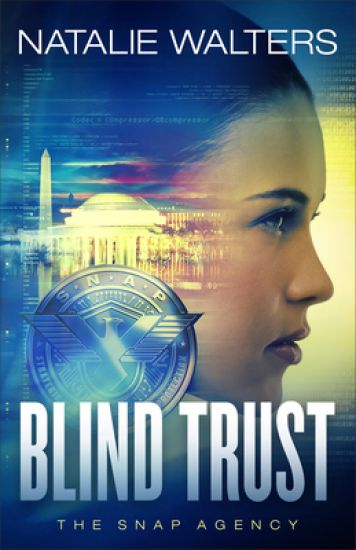
"Natalie Walters is a fabulous new voice in inspirational romantic suspense!"--Susan May Warren, USA Today bestselling authorCIA analyst Brynn Taylor developed a new program to combat terrorism, and she invited members of foreign intelligence agencies to America to foster cooperation between countries. Now one of them, Egyptian spy Remon Riad, is missing.Jack Hudson has been working for the Strategic Neutralization and Protection Agency for almost nine years and takes the lead in hunting down the missing spy. But he isn't at all pleased to find out Brynn is involved. It's hard to trust a woman who's already betrayed you.Every lead they follow draws them dangerously deeper into an international plot. Kidnapping, murder, explosions, poisoning--the terrorists will do anything to accomplish their goal of causing a digital blackout that will blind a strategic US military communications center and throw the world into chaos.Can Brynn surrender control to a man who doesn't trust her? And can Jack ever get over what she did to him? The fate of the world--and their hearts--hangs in the balance."Walters pulls out all the stops in her start to her new SNAP Agency series, presenting a pulse-pounding tale of romantic suspense mixed with a sweet second-chance romance."--Booklist
In 1964, a group of scientists called the Los Alamos Five came close to finishing a nuclear energy project for the United States government when they were abruptly disbanded. Now the granddaughter of one of those five scientists, aerospace engineer Elinor Mitchell, discovers that she has highly sensitive information on the project in her possession--and a target on her back.SNAP agent and former Navy cryptologist Kekoa Young is tasked with monitoring Elinor. This is both convenient since she's his neighbor in Washington, DC, and decidedly inconvenient because . . . well, he kind of likes her.As Elinor follows the clues her grandfather left behind to a top-secret nuclear project, Kekoa has no choice but to step in. When Elinor learns he has been spying on her, she's crushed. But with danger closing in on all sides, she'll have to trust him to ensure her discoveries stay out of enemy hands.Natalie Walters sucks you into the global race for space domination in this perfectly paced second installment of her SNAP Agency romantic suspense series.***"Readers who enjoy a slow-building blend of faith elements, romantic suspense, and history will find much to love here."--Booklist"Fatal Code by Natalie Walters is a wonderful example of the romantic suspense genre. Dramatic and multifaceted, yet also humorous and gratifying."--Life Is Story
Lyla Fox knows she has a reputation at the SNAP Agency for impulsivity, but when she receives a threatening letter from a man she helped put in prison, she can't stop herself from going all in to find out why he's coming after her. Unfortunately, she's going to need the help of the one person who questions her reckless choices more than anyone else.Explosives and weapons specialist Nicolás Garcia agrees to help Lyla in order to keep her safe, but her recklessness continues to be a major concern, especially when her investigation into a conspiracy puts a target on her back. Dealing with bombs is dangerous. Working with Lyla is proving to be just as treacherous--to both the mission and his heart.Natalie Walters closes out her SNAP Agency series with a bang with this nail-biting story of a deadly government conspiracy, an unlikely couple, and an ending that will leave you breathless.
Surviving with cancer, Natalie Davis Spingarn tells us, means seeing yourself differently and recognizing that others may see you differently. It means worrying more about work and money. It means facing your mortality. It means dealing with the medical system by learning how to be a good consumer of health services-including making choices among different doctors, medical centers, and insurance plans. Diagnosed with cancer in the early 1970s and now an independent writer specializing in health and social policy issues (particularly for the Washington Post), Spingarn uses her experiences as the basis for describing and critiquing what experts say about the emotional, physical, family, and practical issues involved. She helps others deal with such issues by relating her own experiences, good and bad, and offering practical encouragement to readers in similar situations. Lively and empathetic, The New Cancer Survivors will appeal to persons with cancer who, thanks to modern medical science, are "hanging in there with illnesses that once evoked only submission or surrender"-as well as to their families, friends, and caregivers. Throughout, the author shines a bright light on the cancer experience, providing good reason to be hopeful as well as insight into how to respond when things do not go so well. Because she has suffered recurrences, she can compare treatment in the seventies (week-long hospital stays, for example, and extensive surgery and chemotherapy) with treatment in the nineties ("drive-through" precision surgery, genetic testing, the incorporation of some "complementary" therapies into mainstream medicine) and weigh the differences. The New Cancer Survivors digs deep for the truth and serves it up with humor and attitude-offering a wealth of information, comfort, and inspiration.
Scenography, the design for live performance, conceives of the creation of an environment rather than merely providing décor or background. Scenography in Canada: Selected Designers, is a new departure in the critical discussion of theatre in Canada, in which Natalie Rewa examines the work of seven of the country's important theatre designers: Susan Benson, Astrid Janson, Mary Kerr, Michael Levine, Ken MacDonald, Jim Plaxton, and Teresa Przybylski. These artists have been responsible for exciting initiatives in design during one of the most dynamic periods in the history of Canadian theatre, from the early 1970s to the late 1990s, when new companies were founded and new theatre facilities were created. Juxtaposing commentary by the artist and her own analysis, Rewa discusses the interactions of light, sets, and costume, and demonstrates how a multifaceted visual text that includes human performance is created in the works of each artist. The volume includes a collection of sketches, photos of work in progress, and completed designs, many of which have not been previously published.
Scenography, the design for live performance, conceives of the creation of an environment rather than merely providing décor or background. Scenography in Canada: Selected Designers, is a new departure in the critical discussion of theatre in Canada, in which Natalie Rewa examines the work of seven of the country's important theatre designers: Susan Benson, Astrid Janson, Mary Kerr, Michael Levine, Ken MacDonald, Jim Plaxton, and Teresa Przybylski. These artists have been responsible for exciting initiatives in design during one of the most dynamic periods in the history of Canadian theatre, from the early 1970s to the late 1990s, when new companies were founded and new theatre facilities were created. Juxtaposing commentary by the artist and her own analysis, Rewa discusses the interactions of light, sets, and costume, and demonstrates how a multifaceted visual text that includes human performance is created in the works of each artist. The volume includes a collection of sketches, photos of work in progress, and completed designs, many of which have not been previously published.
Rethinking the Christian faith from a woman's perspective has been an important advancement in modern theology. This book introduces the methods, ideas, and contributions of recent feminist theology to readers encountering the subject for the first time. Natalie Watson explores the historical background of feminist theology, discusses the value of reading Scripture from a feminist perspective, and shows how this approach can offer a critical, creative, and constructive rereading of the Christian tradition. She also sets forth some fresh ideas encouraging people to see feminism not as a threat to the church but as a challenging perspective that actually enhances its life in today's world. An extensive annotated bibliography invites readers to further study, presenting a wealth of books on feminist theology by many well-known authors. Ideal for classroom instruction, discussion groups, and personal study, this volume is an exceptional, user-friendly guide to contemporary feminist thought.
Sports Nutrition for Health Professionals merges the basic principles and latest evidence-based scientific understanding of sports nutrition with the real-world practical applications that health professional students must master to help their current and future clients to optimize athletic performance, overall satisfaction and success with sports and physical activity. Step-by-by, you'll learn about the scientific basis of sports nutrition and how to apply that knowledge to real-life situations and interactions with clients. You'll follow six different clients as they are evaluated by a variety of health professionals and undergo a series of assessments and self-administered tests. By seeing how the science of Sports Nutrition can be applied to sample clients, you will be able to take that knowledge and apply it to your future clients. Explore MORE online! The access code, inside new, printed texts, unlocks a wealth of instructor and student resources online. You'll also have access to physiology animations, online questions, interactive case studies, and audio podcasts.
What is the interface between social scientists and the media? How does social science come over in news and current affairs in print and broadcasting media? This book examines issues in reception and production studies to build a holistic approach to the study of media representations. The authors give an accessible and authoritative guide to the mass communication process. They examine media production, the nature of media texts, the role of news sources, the general social and political context of mass communication and the ways in which media outputs are assimilated by audiences. The discussions are developed by an examination of the following areas: the interaction between journalists and social scientists; the publicity seeking activities of universities, research institutes and government departments; the attempts of individual social scientists to get noticed; the social policy environment surrounding social scientific research and its dissemination; pressure from funders; and the public understanding of social science in the news.
What is the interface between social scientists and the media? How does social science come over in news and current affairs in print and broadcasting media? This book examines issues in reception and production studies to build a holistic approach to the study of media representations. The authors give an accessible and authoritative guide to the mass communication process. They examine media production, the nature of media texts, the role of news sources, the general social and political context of mass communication and the ways in which media outputs are assimilated by audiences. The discussions are developed by an examination of the following areas: the interaction between journalists and social scientists; the publicity seeking activities of universities, research institutes and government departments; the attempts of individual social scientists to get noticed; the social policy environment surrounding social scientific research and its dissemination; pressure from funders; and the public understanding of social science in the news.
“During the nineteen sixties, following the missile crisis and during the Vietnam War, communitarian societies began to reappear in the United States. Those who were of an invincibly optimistic nature gathered together in agrarian or utopian communes reminiscent of the nineteenth century. Others who believed that these crises and wars augured the end of modern civilization by nuclear warfare, gathered together for a brief season of love in colonies where they hoped to survive the destruction of the world. This is the story of eight people who lived together for nearly a year in such a colony: Duncan's Colony…" - From the Introduction Duncan's Colony is the story of four men and four women, strangers who have joined together, in the desert of the American Southwest, in the hope of surviving a nuclear holocaust they fear is inevitable. Though they have come together to survive the world's destruction, they seem to be dying, one by one, picked off by their emotions. And so, as they rehearse the death of the planet, the colonist learn also the rage to live.
“During the nineteen sixties, following the missile crisis and during the Vietnam War, communitarian societies began to reappear in the United States. Those who were of an invincibly optimistic nature gathered together in agrarian or utopian communes reminiscent of the nineteenth century. Others who believed that these crises and wars augured the end of modern civilization by nuclear warfare, gathered together for a brief season of love in colonies where they hoped to survive the destruction of the world. This is the story of eight people who lived together for nearly a year in such a colony: Duncan's Colony…" - From the Introduction Duncan's Colony is the story of four men and four women, strangers who have joined together, in the desert of the American Southwest, in the hope of surviving a nuclear holocaust they fear is inevitable. Though they have come together to survive the world's destruction, they seem to be dying, one by one, picked off by their emotions. And so, as they rehearse the death of the planet, the colonist learn also the rage to live.
Flowering Mimosa is a story of lost innocence and coming of age among the disinherited of America in the 1980s. Against a backdrop of social and economic disruption in the American southwest, Petesch traces the fates of the Wingfield family, who have lost their Texas farm and moved to a mining town in Silver Valley, Idaho. As various tensions threaten to break the family apart, Tamsen Wingfield reacts most strongly. She cannot accept her new stepmother, married too soon after her mother's death. She cannot accept the new life of her father--once a strong, confident Texas farmer, now a lead miner working miles below the surface in a strange territory her high school textbooks cannot explain. Her flight from family and country is both an illusory attempt to recapture her youth and a courageous act of survival. Flowering Mimosa has the scope of all truly great fiction, combining a sense of history with a vision of the future. Petesch's acute sense of place and detail bring the small towns of Silver Valley (Idaho), of Texas, and of central Mexico alive, and her strong lyric gifts create, especially in Tamsen and her precarious escape with a lover, perhaps the most memorable of what the Chicago Sun-Times has called “her Steinbeck-like children.” In Tamsen, Petesch dramatizes those political and social concerns which led the Times Literary Supplement to comment, “what is impressive is Petesch's ability … to give a sense of what it was like, how it felt, to be an American … .”
Flowering Mimosa is a story of lost innocence and coming of age among the disinherited of America in the 1980s. Against a backdrop of social and economic disruption in the American southwest, Petesch traces the fates of the Wingfield family, who have lost their Texas farm and moved to a mining town in Silver Valley, Idaho. As various tensions threaten to break the family apart, Tamsen Wingfield reacts most strongly. She cannot accept her new stepmother, married too soon after her mother's death. She cannot accept the new life of her father--once a strong, confident Texas farmer, now a lead miner working miles below the surface in a strange territory her high school textbooks cannot explain. Her flight from family and country is both an illusory attempt to recapture her youth and a courageous act of survival. Flowering Mimosa has the scope of all truly great fiction, combining a sense of history with a vision of the future. Petesch's acute sense of place and detail bring the small towns of Silver Valley (Idaho), of Texas, and of central Mexico alive, and her strong lyric gifts create, especially in Tamsen and her precarious escape with a lover, perhaps the most memorable of what the Chicago Sun-Times has called “her Steinbeck-like children.” In Tamsen, Petesch dramatizes those political and social concerns which led the Times Literary Supplement to comment, “what is impressive is Petesch's ability … to give a sense of what it was like, how it felt, to be an American … .”