Kirjojen hintavertailu. Mukana 11 627 220 kirjaa ja 12 kauppaa.

Kirjahaku

Etsi kirjoja tekijän nimen, kirjan nimen tai ISBN:n perusteella.

1000 tulosta hakusanalla Neil T. Sinclair

Medieval Manuscripts in British Libraries

Medieval Manuscripts in British Libraries

Neil Ker

Oxford University Press
2002
sidottu
The four volumes of Neil Ker's Medieval Manuscripts in British Libraries were published by Oxford University Press between 1969 and 1992. They comprise a catalogue of about 3,000 manuscripts in Latin and Western European vernaculars in hitherto uncatalogued or inadequately catalogued institutional collections in the United Kingdom and form a major research tool for humanist scholars. The index volume, produced under the direction of A. G. Watson, a former pupil of Ker's and now his literary executor, and I. C. Cunningham, formerly Keeper of Manuscripts in the National Library of Scotland, provides a variety of indexes, including authors/titles; owners; geographical origins and dates of manuscripts; vernacular manuscripts; Latin and vernacular incipits; manuscripts cited; repertories cited; and iconography. There are also lists of recent accessions to libraries and of manuscripts that have migrated from one institution to another.
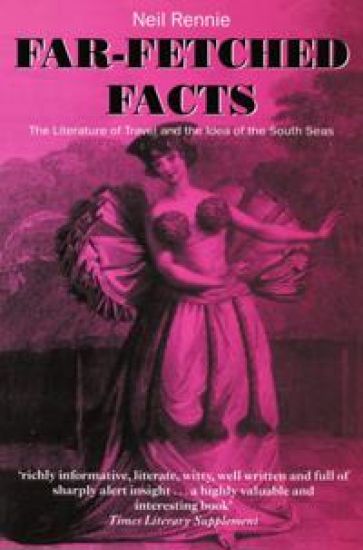
Far-Fetched Facts

Far-Fetched Facts

Neil Rennie

Clarendon Press
1998
nidottu
Far-Fetched Facts is an essay in the history of the literature of travel, real and imaginary, from classical times, via the early accounts of the New World, to the accounts of the South Sea islands that lay beyond. It follows continuities from the Odyssey to the twentieth century and traces the interplay of fact and fiction in a literature with a notorious tendency to deviate from the truth. The late medieval travels of the imaginary Mandeville and the real Marco Polo are explored, and the writings of Columbus as he struggled to reconcile what 'Mandeville' and Polo had written with what he found in the West Indies. The philosophical consequences of the discovery of the New World are followed in the works of Montaigne and Bacon, and the factual travels of Dampier are placed in relation to the fictional travels of Crusoe and Gulliver. The various accounts of the scientific voyages of Cook and Bougainville are examined and their revelation of a Tahiti more mythic than scientific, erotic as well as exotic. All the factual accounts of the mutiny on the Bounty are assessed, and also the fictions that came in its wake. The supposedly factual narrative that is Herman Melville's first novel is read in relation to other travellers' accounts of the South Seas, as are the factual and fictional writings of Loti, Stevenson, Malinowski, Mead, and the Hawaiian Visitors Bureau. Far-Fetched Facts is the first full account of the Western idea of the South Seas as it evolved from the lost paradises of biblical and classical literature to end in the false paradise found by the tourist.
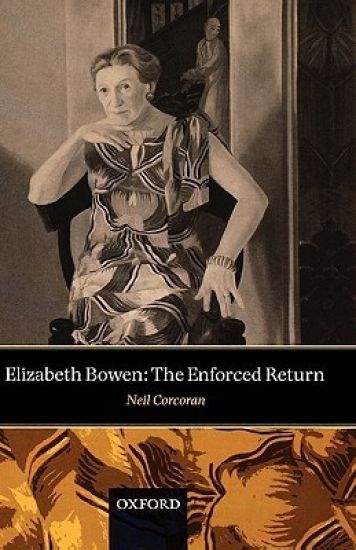
Elizabeth Bowen

Elizabeth Bowen

Neil Corcoran

Oxford University Press
2004
sidottu
Elizabeth Bowen is a writer who is still too little appreciated. Neil Corcoran presents here a critical study of her novels, short stories, family history, and essays, and shows that her work both inherits from the Modernist movement and transforms its experimental traditions. Elizabeth Bowen: The Enforced Return explores how she adapts Irish Protestant Gothic as a means of interpreting Irish experience during the Troubles of the 1920s and the Second World War, and also as a way of defining the defencelessness of those enduring the Blitz in wartime London. She employs versions of the Jamesian child as a way of offering a critique of the treatment of children in the European novel of adultery, and indeed, implicitly, of the Jamesian child itself. Corcoran relates the various kinds of return and reflex in her work-notably the presence of the supernatural, but also the sense of being haunted by reading-to both the Freudian concept of the 'return of the repressed' and to T. S. Eliot's conception of the auditory imagination as a 'return to the origin'. Making greater interpretative use of extra-fictional materials than previous Bowen critics (notably her wartime reports from neutral Ireland to Churchill's government and the diaries of her wartime lover, the Canadian diplomat Charles Ritchie), Corcoran reveals how her fiction merges personal story with public history. Employing a wealth of original research, his radical new readings propose that Bowen is as important as Samuel Beckett to twentieth-century literary studies--a writer who returns us anew to the histories of both her time and ours.
The Taming of the True

The Taming of the True

Neil Tennant

Clarendon Press
1997
sidottu
The Taming of the True poses a broad challenge to the realist views of meaning and truth that have been prominent in recent philosophy. Neil Tennant starts with a careful critical survey of the realism debate, guiding the reader through its complexities; he then presents a sustained defence of the anti-realist view that every truth is knowable in principle, and that grasp of meaning must be able to be made manifest. Sceptical arguments for the indeterminacy or non-factuality of meaning are countered; and the much-maligned notion of analyticity is reinvestigated and rehabilitated. Tennant goes on to show that an effective logical system can be based on his anti-realist view; the logical system that he advocates is justified as a body of analytic truths and inferential principles. Having laid the foundations for global semantic anti-realism, Tennant moves to the world of empirical understanding, and gives an account of the cognitive credentials of natural scientific discourse. He shows that the same canon of constructive and relevant inference suffices both for intuitionistic mathematics and for empirical science. This is an ambitious and contentious book which aims to reform not only theory of meaning, but our deductive practices across a broad range of discourses.
The Diversity of Moral Thinking

The Diversity of Moral Thinking

Neil Cooper

Clarendon Press
1980
sidottu
This book argues for a radically different approach to traditional and important problems of moral philosophy. The book discusses three theses; the diversity of moralities and moral judgements, their normativesness, and their possible rationality.
Anti-Realism and Logic

Anti-Realism and Logic

Neil Tennant

Clarendon Press
1987
sidottu
Anti-realism is a doctrine about logic, language, and meaning with roots in the work of Wittgenstein and Frege. In this book, the author clarifies Dummett's case for anti-realism and develops his arguments further. He concludes by advocating a radical reform of our logical practices.
Legal Right and Social Democracy

Legal Right and Social Democracy

Neil MacCormick

Oxford University Press
1984
nidottu
A controversial collection of interrelated papers which investigate and argue about issues of concern for contemporary lawyers and politicians. The papers combine a scholarly regard for leading thinkers of the past and present, and a stringently argued view about questions of political obligation.
Patterns of American Jurisprudence

Patterns of American Jurisprudence

Neil Duxbury

Clarendon Press
1995
sidottu
This unique study offers a comprehensive analysis of American jurisprudence from its emergence in the later stages of the nineteenth century through to the present day. The author argues that it is a mistake to view American jurisprudence as a collection of movements and schools which have emerged in opposition to each other. By offering a highly original analysis of legal formalism, legal realism, policy science, process jurisprudence has evolved as a collection of themes which reflect broader American intellectual and cultural concerns.
Patterns of American Jurisprudence

Patterns of American Jurisprudence

Neil Duxbury

Clarendon Press
1997
nidottu
This unique study offers a comprehensive analysis of American jurisprudence from its emergence in the later stages of the nineteenth century through to the present day. The author argues that it is a mistake to view American jurisprudence as a collection of movements and schools which have emerged in opposition to each other. By offering a highly original analysis of legal formalism, legal realism, policy science, process jurisprudence, law and economics, and critical legal studies, he demonstrates that American jurisprudence has evolved as a collection of themes which reflect broader American intellectual and cultural concerns.
Institutions of Law

Institutions of Law

Neil MacCormick

Oxford University Press
2007
sidottu
Institutions of Law offers an original account of the nature of law and legal systems in the contemporary world. It provides the definitive statement of Sir Neil MacCormick's well-known 'institutional theory of law', defining law as 'institutional normative order' and explaining each of these three terms in depth. It attempts to fulfil the need for a twenty-first century introduction to legal theory marking a fresh start such as was achieved in the last century by H. L. A. Hart's The Concept of Law. It is written with a view to elucidating law, legal concepts and legal institutions in a manner that takes account of current scholarly controversies but does not get bogged down in them. It shows how law relates to the state and civil society, establishing the conditions of social peace and a functioning economy. In so doing, it takes account of recent developments in the sociology of law, particularly 'system theory'. It also seeks to clarify the nature of claims to 'knowledge of law' and thus indicate the possibility of legal studies having a genuinely 'scientific' character. It shows that there is an essential value-orientation of all work of this kind, so that valid analytical jurisprudence not merely need not, but cannot, be 'positivist' as that term has come to be understood. Nevertheless it is explained why law and morality are genuinely distinct by virtue of the positive character of law contrasted with the autonomy that is foundational for morality.
Regulating Workplace Safety

Regulating Workplace Safety

Neil Gunningham; Richard Johnstone

Clarendon Press
1999
sidottu
Drawing from experience internationally, on recent and important developments in regulatory theory, and upon models and approaches constructed during the author's empirical research, this book addresses the question: how can law influence the internal self-regulation of organisations in order to make them more responsive to occupational health and safety concerns? In this context, it is argued that Occupational Health and Safety management systems have the potential to stimulate models of self-organisation within firms in such a way as to make them self-reflective and to encourage informal self-critical reflection about their occupational health and safety performance. This book argues for a two track system of regulation under which enterprises are offered a choice between a continuation of traditional forms of regulation and the adoption of a safety management system-based approach on the other. The book concludes with a discussion of the use of criminal and administrative sanctions to provide organisations with incentives to adopt effective Occupational Health and Safety management systems. The book proposes a wider range of criminal sanctions and sentencing guidelines to ensure employers receive sentencing discounts where they have introduced effective management systems.
Questioning Sovereignty

Questioning Sovereignty

Neil MacCormick

Oxford University Press
1999
sidottu
This is a book about the transformation of sovereignty in the United Kingdom and the European Union, about the transition from 'sovereign states' to 'post-sovereign states', about devolution and nationalism and the future of the British union. It applies the institutional theory of law to a general inquiry into the relations of law and state, and to the question of the character of a Rechtsstaat or state under the rule of law. This clears the ground for a historical/analytical review of the United Kingdom as union state, and of the Benthamite or Diceyan view of its constitution, grounded in the idea of sovereignty. Can that sovereignty survive diffusion of power within the British state? Or can it survive the development of the European Union and the supremacy in it of European Community law? Was there a revolution in 1972, when Parliament enacted the European Communities Act, or later, when the House of Lords held that subsequent Acts of Parliament should be 'disapplied' when they conflict with Community law? The potential for conflict between member state constitutions and European legal order is no less in other member states - Germany, France, Ireland and the others. Indeed the issue is perhaps whether in the long run constitutional conflicts are inevitable. This leads on into a consideration of pluralistic as against monistic accounts of legal order viewed as a whole, and finally to a review of the concept of sovereignty, and of the possibility that there really could be a new order of post-sovereign states within a non-sovereign confederal union in Europe. If so, what becomes of democracy, and how can the democratic deficit in Europe be redeemed? The existing constitution of the 'European Commonwealth' is reviewed critically as an example of a mixed constitution and an argument is proposed about the value or values attaching to democracy and to subsidiarity in this vast commonwealth. Connected to subsidiarity is the issue of contemporary politics of identity all over Europe and beyond. MacCormick puts forward a carefully argued case for a moderate and liberal form of nationalism that sets universal but non-absolute principles of self-determination. The case is finally pressed home in relation to the relations of Scotland to the other countries of the British Isles, and an argument put for the idea of mutual independence within a Council of the Isles and the European Union.
Practical Reason in Law and Morality

Practical Reason in Law and Morality

Neil MacCormick

Oxford University Press
2008
sidottu
The concept of practical reason is central to contemporary thought on ethics and the philosophy of law - acting well means acting for good reasons. Explaining this requires several stages. How do reasons relate to actions at all, as incentives and in explanations? What are values, how do they relate to human nature, and how do they enter practical reasoning? How do the concepts of 'right and wrong' fit in, and in what way do they involve questions of mutual trust among human beings? How does our moral freedom - our freedom to form our own moral commitments - relate to our responsibilities to each other? How is this final question transposed into law and legal commitments? This book explores these questions, vital to understanding the nature of law and morality. It presents a clear account of practical reason, valuable to students of moral philosophy and jurisprudence at undergraduate or postgraduate levels. For more advanced scholars it also offers a reinterpretation of Kant's views on moral autonomy and Smith's on self-command, marrying Smith's 'moral sentiments' to Kant's 'categorical imperative' in a novel way. The book concludes and underpins the author's Law, State and Practical Reason series. Taken together the books offer an overarching theory of the nature of law and legal reason, the role of the State, and the nature of moral reason and judgement.
Rhetoric and The Rule of Law

Rhetoric and The Rule of Law

Neil MacCormick

Oxford University Press
2005
sidottu
Is legal reasoning rationally persuasive, working within a discernible structure and using recognisable kinds of arguments? Does it belong to rhetoric in this sense, or to the domain of the merely 'rhetorical' in an adversative sense? Is there any reasonable certainty about legal outcomes in dispute-situations? If not, what becomes of the Rule of Law? Neil MacCormick's book tackles these questions in establishing an overall theory of legal reasoning which shows the essential part 'legal syllogism' plays in reasoning aimed at the application of law, while acknowledging that simple deductive reasoning, though always necessary, is very rarely sufficient to justify a decision. There are always problems of relevancy, classification or interpretation in relation to both facts and law. In justifying conclusions about such problems, reasoning has to be universalistic and yet fully sensitive to the particulars of specific cases. How is this possible? Is legal justification at this level consequentialist in character or principled and right-based? Both normative coherence and narrative coherence have a part to play in justification, and in accounting for the validity of arguments by analogy. Looking at such long-discussed subjects as precedent and analogy and the interpretative character of the reasoning involved, Neil MacCormick expands upon his celebrated Legal Reasoning and Legal Theory (OUP 1978 and 1994) and restates his 'institutional theory of law'.
Internal Factors in Russian Foreign Policy

Internal Factors in Russian Foreign Policy

Neil Malcolm; Alex Pravda; Roy Allison; Margot Light

Oxford University Press
1996
sidottu
After the turmoil following the collapse of Soviet power, post-Communist Russia has emerged as an assertively independent force in international affairs. Meanwhile, an intense debate has been underway in Moscow about Russia's national interests and foreign policy priorities. Domestic political conflicts and the close ties with former Soviet partner states have made internal factors particularly particularly important in shaping Russian foreign policy. Internal Factors in Russian Foreign Policy is the first systematic analysis of the domestic political forces which condition the international behaviour of the new Russian state. Four leading specialists examine in turn the areas of foreign policy thinking and debate, how policy is made, the public politics of foreign policy and the role of the military. They explore the changing domestic alignments associated with recent shifts in Russian foreign policy, focusing on the roles played by institutions such as the Security Council and the legislature, by military groupings and by emerging economic interests. The authors throw new light on the domestic foundations of Moscow's more assertive and sef-reliant stance.
Maintaining Nuclear Stability in South Asia

Maintaining Nuclear Stability in South Asia

Neil Joeck

Oxford University Press Inc
2005
nidottu
Argues that, while nuclear weapons and ballistic missiles cast a shadow over Indo-Pakistani relations, they do not create strategic stability. He asserts that the development of command and control mechanisms would enhance stability, but that diplomatic steps focused on missiles must also be considered. Improved command and control and diplomatic engagement will provide some insurance that nuclear weapons are not used in any future conflict.
Twenty First Century Science: Biology for GCSE Combined Science Student Book

Twenty First Century Science: Biology for GCSE Combined Science Student Book

Neil Ingram; Alistair Moore; Gary Skinner; Mark Winterbottom

Oxford University Press
2016
nidottu
Please note this book is suitable for any student studying: Exam board: OCR Level: GCSE (9-1) Subject: Biology First teaching: September 2016 First exams: June 2018 Twenty First Century Science is a motivating and engaging way to study science at GCSE. These resources will prepare students both for progression to further study of science and to be scientifically minded and informed citizens. The Twenty First Century Science suite will: - Develop students' abilities to critically evaluate data and information, by examining evidence and the arguments that link evidence to conclusions - Link science to issues relevant to all students and to the experiences of everyday life - Develop students' understanding of the concepts and models that scientists use to explain the world - Develop students' hands-on scientific skills and their understanding of experimental work in developing scientific explanations - Built on research and evidence-based principles, these Twenty First Century Science resources have been developed alongside the specifications, with close collaboration between OCR, the University of York Science Education Group, and Oxford University Press. Student Books feature: - Content fully matched to the 2016 specifications, presented in interesting and engaging contexts - Differentiation for all abilities in the form of Higher and Foundation books - Integrated maths support throughout - Exam preparation and practical support throughout summary and review questions, worked examples, and plenty of practice and synoptic questions.
Twenty First Century Science:: GCSE Biology Student Book

Twenty First Century Science:: GCSE Biology Student Book

Neil Ingram; Alistair Moore; Gary Skinner; Mark Winterbottom

Oxford University Press
2016
nidottu
Please note this book is suitable for any student studying: Exam board: OCR Level: GCSE (9-1) Subject: Biology First teaching: September 2016 First exams: June 2018 Twenty First Century Science is a motivating and engaging way to study science at GCSE. These resources will prepare students both for progression to further study of science and to be scientifically minded and informed citizens. The Twenty First Century Science suite will: - Develop students' abilities to critically evaluate data and information, by examining evidence and the arguments that link evidence to conclusions - Link science to issues relevant to all students and to the experiences of everyday life - Develop students' understanding of the concepts and models that scientists use to explain the world - Develop students' hands-on scientific skills and their understanding of experimental work in developing scientific explanations. Built on research and evidence-based principles, these Twenty First Century Science resources have been developed alongside the specifications, with close collaboration between OCR, the University of York Science Education Group, and Oxford University Press. Student Books feature: - Content fully matched to the new 2016 OCR Twenty First Century Science GCSE Science (9-1) specifications, presented in interesting and engaging contexts - Differentiation for all abilities in the form of Higher and Foundation books - Integrated maths support throughout - Exam preparation and practical support throughout - Summary and review questions, worked examples, and plenty of practice and synoptic questions.
Intervention in Contemporary World Politics

Intervention in Contemporary World Politics

Neil Macfarlane

Oxford University Press Inc
2005
nidottu
Examines multilateral interventions in civil conflicts and the evolution of the role of such interventions in world politics. It focuses primarily on the Cold War and post-Cold War eras and the differences between them. It contests the notion that there is an emerging norm of humanitarian intervention in international politics, arguing that political interests remain essential to the practice of intervention.
Financial Market Complexity

Financial Market Complexity

Neil F. Johnson; Paul Jefferies; Pak Ming Hui

Oxford University Press
2003
sidottu
Financial markets are a fascinating example of 'complexity in action': a real-world complex system whose evolution is dictated by the decisions of crowds of traders who are continually trying to win in a vast global 'game'. This book draws on recent ideas from the highly-topical science of complexity and complex systems, to address the following questions: how do financial markets behave? Why do financial markets behave in the way that they do? What can we do to minimize risk, given this behavior? Standard finance theory is built around several seemingly innocuous assumptions about market dynamics. This book shows how these assumptions can give misleading answers to crucially important practical problems such as minimizing financial risk, coping with extreme events such as crashes or drawdowns, and pricing derivatives. After discussing the background to the concept of complexity and the structure of financial markets in Chapter 1, Chapter 2 examines the assumptions upon which standard finance theory is built. Reality sets in whith Chapter 3, where data from two seemingly different markets are analyzed and certain universal features uncovered which cannot be explained within standard finance theory. Chapters 4 and 5 mark a significant departure from the philosophy of standard finance theory, being concerned with exploring microscopic models of markets which are faithful to real market microstructure yet, which also reproduce real-world features. Chapter 6 moves to the practical problem of how to quantify and hedge risk in real world markets. Chapter 7 discusses deterministic descriptions of market dynamics, incorporating the topics of chaos and the all-important phenomenon of market crashes.