Kirjojen hintavertailu. Mukana 12 390 323 kirjaa ja 12 kauppaa.

Kirjahaku

Etsi kirjoja tekijän nimen, kirjan nimen tai ISBN:n perusteella.

1000 tulosta hakusanalla PAUL MASON

Paul Volcker

Paul Volcker

Joseph B. Treaster

John Wiley Sons Inc
2005
nidottu
As the Chairman of the Federal Reserve from 1979 to 1982, Paul Volcker established himself as one of the most influential economic thinkers. Currently a major advocate for corporate governance and accounting reforms, Volcker’s reputation as a great business leader with uncompromising ethics continues to this day. Written by award-winning New York Times journalist Joseph Treaster, Paul Volcker: The Making of a Financial Legend takes readers through the most compelling moments of this legend’s life in private and public service. From his early days as a young Treasury Department official through his appointments to the New York Federal Reserve Bank, the Federal Reserve, and James D. Wolfensohn, Inc., this inspiring book captures the significant moments in Volcker life and explores the ethical, economic, and moral dilemmas he faced at every turn.
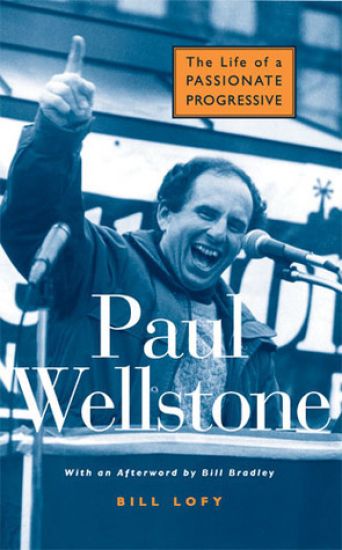
Paul Wellstone

Paul Wellstone

Bill Lofy

The University of Michigan Press
2005
nidottu
"Paul Wellstone, we miss you. Few politicians, especially these days, are as willing to stand up and speak the truth as Wellstone was. In this era of flaccid rhetoric and pre-approved sound bites, he had the rare ability to ignite a fire in his audiences. Bill Lofy's excellent biography rekindles that fire and reminds us just how much politicians of Wellstone's honesty, character, and spine are needed---now more than ever. This book should inspire a new generation of voters and political leaders alike."---Arianna Huffington, columnist and editor of HuffingtonPost.com"This book captures the vibrant spirit of my friend Paul Wellstone---the fierce commitment to justice that defined his life, and that shapes his enduring legacy."---U.S. Senator Russ Feingold"Paul Wellstone was a great leader because he fused progressive idealism with a stubbornly pragmatic politics. Bill Lofy's book captures that dual commitment in his story of Wellstone's life, and also shows us the extraordinary human appeal that Wellstone emanated in his relationships with people in all walks of life. This book is an engaging read that also tells us a lot about the political practice to which we should aspire."---Frances Fox Piven, author of The War at Home"This vividly written book captures the life and personal qualities of the late Senator Paul Wellstone. In so doing it provides an illuminating gloss on Max Weber's seminal exposition of the political vocation. It is a jewel of a book." -Fred Greenstein, Princeton UniversityBill Lofy's fast-paced and readable biography tells the inspirational story of one of the most compelling figures in the history of American politics---Senator Paul Wellstone.Yet Lofy's book is more than just the chronicle of Wellstone's life and political career; it's also an indispensable guide to what ails political life today. Readers politically inclined or not will find in its pages a handbook to the uncertain and often treacherous business of politics and a stirring example for living a courageous and honest life---whether as public servant or private individual.
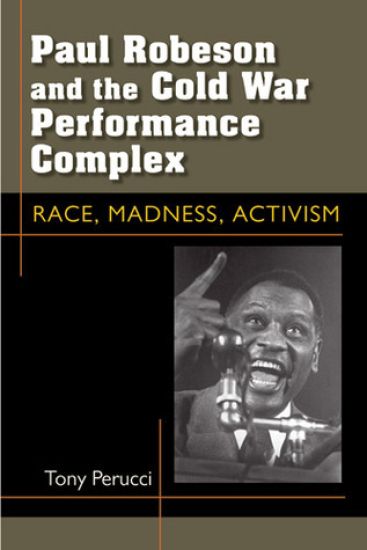
Paul Robeson and the Cold War Performance Complex

Paul Robeson and the Cold War Performance Complex

Tony Perucci

The University of Michigan Press
2012
nidottu
Actor and singer Paul Robeson's performances in Othello, Show Boat, and The Emperor Jones made him famous, but his midcentury appearances in support of causes ranging from labor and civil rights to antilynching and American warmongering made him notorious. When Robeson announced at the 1949 Paris Peace Conference that it was "unthinkable" for blacks to go to war against the Soviet Union, the mainstream American press declared him insane. Notions of Communism, blackness, and insanity were interchangeably deployed during the Cold War to discount activism such as Robeson's, just a part of an array of social and cultural practices that author Tony Perucci calls the Cold War performance complex. Focusing on two key Robeson performances---the concerts in Peekskill, New York, in 1949 and his appearance before the House Committee on Un-American Activities in 1956---Perucci demonstrates how these performances and the government's response to them are central to understanding the history of Cold War culture in the United States. His book provides a transformative new perspective on how the struggle over the politics of performance in the 1950s was also a domestic struggle over freedom and equality. The book closely examines both of these performance events as well as artifacts from Cold War culture---including congressional documents, FBI files, foreign policy papers, the popular literature on mental illness, and government propaganda films---to study the operation of power and activism in American Cold War culture.
Paul Robeson and the Cold War Performance Complex

Paul Robeson and the Cold War Performance Complex

Tony Perucci

The University of Michigan Press
2012
sidottu
Actor and singer Paul Robeson's performances in Othello, Show Boat, and The Emperor Jones made him famous, but his midcentury appearances in support of causes ranging from labor and civil rights to antilynching and American warmongering made him notorious. When Robeson announced at the 1949 Paris Peace Conference that it was "unthinkable" for blacks to go to war against the Soviet Union, the mainstream American press declared him insane. Notions of Communism, blackness, and insanity were interchangeably deployed during the Cold War to discount activism such as Robeson's, just a part of an array of social and cultural practices that author Tony Perucci calls the Cold War performance complex. Focusing on two key Robeson performances---the concerts in Peekskill, New York, in 1949 and his appearance before the House Committee on Un-American Activities in 1956---Perucci demonstrates how these performances and the government's response to them are central to understanding the history of Cold War culture in the United States. His book provides a transformative new perspective on how the struggle over the politics of performance in the 1950s was also a domestic struggle over freedom and equality. The book closely examines both of these performance events as well as artifacts from Cold War culture---including congressional documents, FBI files, foreign policy papers, the popular literature on mental illness, and government propaganda films---to study the operation of power and activism in American Cold War culture.
Paul and Floral

Paul and Floral

Brett Murdoch

Department of Internal Affairs Nz
2023
pokkari
Paul and FloralResidential aged care becomes virtual imprisonment which develops into a brutal life threatening situation.Kind but cynical Paul Moody joins forces with his friend and helper Floral Ramos on a dangerous escapade in search of freedom and a new life for them both.A thrilling adventure of danger, excitement, and fun, ensues.
Paul Poiret

Paul Poiret

Marie-Sophie Carron de la Carrière

THAMES HUDSON LTD
2025
sidottu
An immersion into audacious fashion designer Paul Poiret’s creative universe, bringing together works from his entire career. Paul Poiret (1879–1944) is widely credited with bringing fashion into the modern age. In the vibrant cultural context of the first decades of the 20th century, the man that Elsa Schiaparelli called ‘the Leonardo of fashion’ reshaped the world of style, creating beautiful clothes that freed women from restrictive corsets and allowed them to experience a new kind of liberation. A deep dive into Poiret’s creative realm, this book explores the renowned couturier’s artistry and audacity in fields that extended beyond fashion, into perfume and interior design, gastronomy and glittering events. It draws on the vast collections of the Musée des Arts Décoratifs in Paris, encompassing garments, textiles, sketches, photographs, objects and more, exploring the influences that marked Poiret’s life and work. This captivating volume brings the work of this multi-talented renaissance man to life for a new audience.
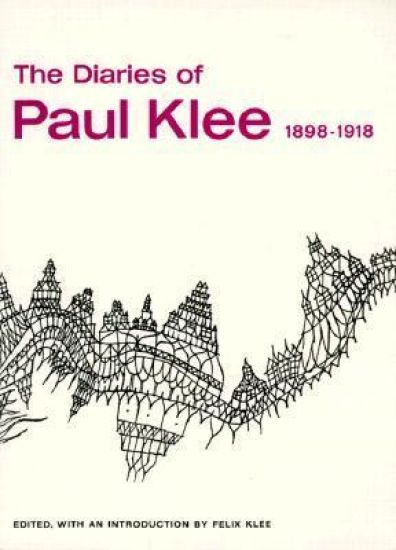
The Diaries of Paul Klee, 1898-1918

The Diaries of Paul Klee, 1898-1918

Paul Klee

University of California Press
1968
nidottu
Paul Klee was endowed with a rich and many-sided personality that was continually spilling over into forms of expression other than his painting and that made him one of the most extraordinary phenomena of modern European art. These abilities have left their record in the four intimate "Diaries" in which he faithfully recorded the events of his inner and outer life from his nineteenth to his fortieth year. Here, together with recollections of his childhood in Bern, his relations with his family and such friends as Kandinsky, Marc, Macke, and many others, his observations on nature and people, his trips to Italy and Tunisia, and his military service, the reader will find Klee's crucial experience with literature and music, as well as many of his essential ideas about his own artistic technique and the creative process.
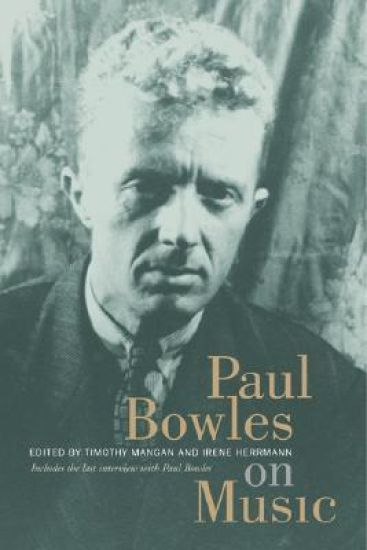
Paul Bowles on Music

Paul Bowles on Music

Paul Bowles

University of California Press
2003
sidottu
'It's an easy enough job if one has something to say', Paul Bowles remarked in a letter to his mother about his first foray into music criticism. And Paul Bowles, indeed, had plenty to say about music. Though known chiefly as a writer of novels and stories, Paul Bowles (1910-99) thought of himself first and foremost as a composer. Drawing together the work he did at the intersection of his two passions and professions, writing and music, this volume collects the music criticism Bowles published between 1935 and 1946 as well as an interview conducted by Irene Herrmann shortly before his death. An intimate of Aaron Copland and protege of Virgil Thomson, Bowles was a musical sophisticate acquainted with an enormous range of music. His criticism collected here brilliantly illuminates not only the whole range of modernist composition but also film music, jazz, Mexican and Moroccan music, and many other genres. As a reviewer he reports on established artists and young hopefuls, symphonic concerts indoors and out, and important premieres of works by Copland, Thomson, Cage, Shostakovich, and Stravinsky, among others. Written with the austere grace of his better-known literary works, Bowles' criticism enhances our picture of an important era in American music history as well as our sense of his accomplishments and extraordinary contribution to twentieth-century culture.
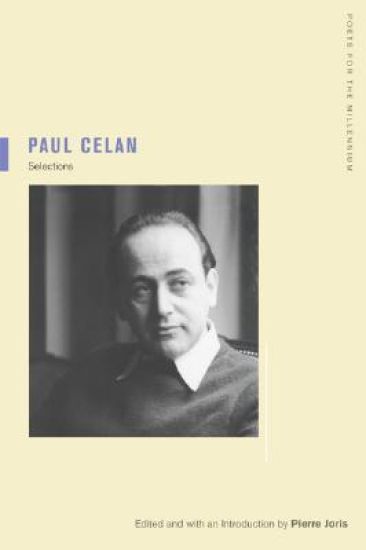
Paul Celan

Paul Celan

Paul Celan

University of California Press
2005
pokkari
The best introduction to the work of Paul Celan, this anthology offers a broad collection of his writing in unsurpassed English translations along with a wealth of commentaries by major writers and philosophers. The present selection is based on Celan's own 1968 selected poems, though enlarged to include both earlier and later poems, as well as two prose works, The Meridian, Celan's core statement on poetics, and the narrative Conversation in the Mountains. This volume also includes letters to Celan's wife, the artist Gisele Celan-Lestrange; to his friend Erich Einhorn; and to Rene Char and Jean-Paul Sartre - all appearing here for the first time in English.
Selected Poems of Paul Verlaine, Bilingual edition

Selected Poems of Paul Verlaine, Bilingual edition

Paul Verlaine

University of California Press
2007
pokkari
The influential French poet, Symbolist leader, and Decadent Paul Verlaine (1844-1896) was recognized as a groundbreaking writer even in his own lifetime--his stylistic innovations brought a new musicality to French poetry and paved the way for free verse and other twentieth-century techniques and experiments. This selection of poems, with the French text en face, provides a comprehensive selection of Verlaine's verse together with a lucid introduction illuminating his life and works.
Paul Broca

Paul Broca

Francis Schiller

University of California Press
2022
pokkari
This elegant and comprehensive scientific biography recounts the life of Paul Broca, one of the world's most inventive and prolific scientists, whose work touched not only the fields of surgery, neuroanatomy, neurophysiology, and the neuropathology of speech, but statistics, hypnosis, blood transfusion, and the grounding of the French school of anthropology, as well. Although Broca is known primarily for providing the working basis for all future cerebral localization (he was the first to identify "Broca's area" --a small patch on the convoluted surface of the brain--as the central organ for speech), this portrait of Broca also describes his fundamental role in the establishment of modern scientific "laboratory" medicine, and his broad capacity and appetite for science as a whole. His enduring curiosity and insistent pursuit of truth led him through an exciting course of study, which often placed him philosophically in the position of utilizing doubt as his strongest investigative impetus. The author, Francis Schiller, --himself a neurologist-- underscores Broca's vast contributions to both practical and moral science with keen insights and scholarly acumen. Historians of science, neuroscientists, and general readers alike will enjoy this enlightening and important biography.This title is part of UC Press's Voices Revived program, which commemorates University of California Press's mission to seek out and cultivate the brightest minds and give them voice, reach, and impact. Drawing on a backlist dating to 1893, Voices Revived makes high-quality, peer-reviewed scholarship accessible once again using print-on-demand technology. This title was originally published in 1979.This elegant and comprehensive scientific biography recounts the life of Paul Broca, one of the world's most inventive and prolific scientists, whose work touched not only the fields of surgery, neuroanatomy, neurophysiology, and the neuropathology of spe
Paul Broca

Paul Broca

Francis Schiller

University of California Press
2022
sidottu
This elegant and comprehensive scientific biography recounts the life of Paul Broca, one of the world's most inventive and prolific scientists, whose work touched not only the fields of surgery, neuroanatomy, neurophysiology, and the neuropathology of speech, but statistics, hypnosis, blood transfusion, and the grounding of the French school of anthropology, as well. Although Broca is known primarily for providing the working basis for all future cerebral localization (he was the first to identify "Broca's area" --a small patch on the convoluted surface of the brain--as the central organ for speech), this portrait of Broca also describes his fundamental role in the establishment of modern scientific "laboratory" medicine, and his broad capacity and appetite for science as a whole. His enduring curiosity and insistent pursuit of truth led him through an exciting course of study, which often placed him philosophically in the position of utilizing doubt as his strongest investigative impetus. The author, Francis Schiller, --himself a neurologist-- underscores Broca's vast contributions to both practical and moral science with keen insights and scholarly acumen. Historians of science, neuroscientists, and general readers alike will enjoy this enlightening and important biography.This title is part of UC Press's Voices Revived program, which commemorates University of California Press's mission to seek out and cultivate the brightest minds and give them voice, reach, and impact. Drawing on a backlist dating to 1893, Voices Revived makes high-quality, peer-reviewed scholarship accessible once again using print-on-demand technology. This title was originally published in 1979.This elegant and comprehensive scientific biography recounts the life of Paul Broca, one of the world's most inventive and prolific scientists, whose work touched not only the fields of surgery, neuroanatomy, neurophysiology, and the neuropathology of spe
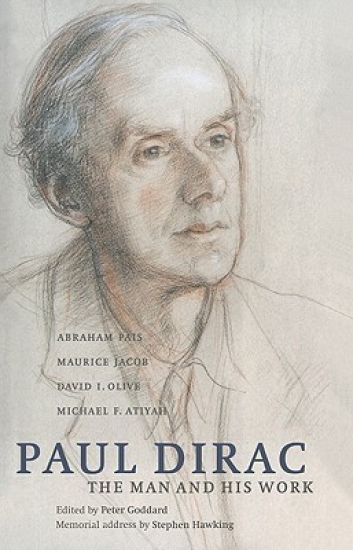
Paul Dirac

Paul Dirac

Abraham Pais; Maurice Jacob; Olive David I.; Atiyah Michael F.

Cambridge University Press
2005
pokkari
Paul Adrien Maurice Dirac was one of the founders of quantum theory. He is numbered alongside Newton, Maxwell and Einstein as one of the greatest physicists of all time. Together the lectures in this volume, originally presented on the occasion of the dedication ceremony for a plaque commemorating Dirac in Westminster Abbey, give a unique insight into the relationship between Dirac's character and his scientific achievements. The text begins with the dedication address given by Stephen Hawking at the ceremony. Then Abraham Pais describes Dirac as a person and his approach to his work. Maurice Jacob explains how Dirac was led to introduce the concept of antimatter, and its central role in modern particle physics and cosmology, followed by an account by David Olive of the origin and enduring influence of Dirac's work on magnetic monopoles. Finally, Sir Michael Atiyah explains the deep and widespread significance of the Dirac equation in mathematics.
Paul's Gift from Philippi

Paul's Gift from Philippi

G. W. Peterman

Cambridge University Press
2005
pokkari
This book is a study of Paul's response to the financial help he received from the church in Philippi whilst he was a prisoner in Rome. Philippians 4.10-20 has always puzzled commentators because of its seemingly strained and tortured mode of thanks. Word studies, psychological studies and literary studies have all failed to provide insight into the text, which is unique in the Pauline corpus. Using contemporary sources Dr Peterman re-examines this difficult passage in the light of Greek and Roman practices and language regarding the exchange of gifts and favours in society. He concludes that 'gift exchange' or 'social reciprocity', with its expectations and obligations, permeated every level of society in Paul's day, and that Paul's seemingly ungracious response was an attempt to create a new, Christian attitude to gifts and to giving.
Paul and the Power of Sin

Paul and the Power of Sin

T. L. Carter

Cambridge University Press
2005
pokkari
Paul and the Power of Sin, first published in 2001, seeks to ground Paul's language of sin in the socio-cultural context of his original letters. T. L. Carter draws on the work of social anthropologist Mary Douglas to conduct a cross-cultural analysis of the symbolism of the power of sin in the letters, examining thoroughly Douglas' 'Grid and Group' model and defending its use as a heuristic tool for New Testament scholars. He uses this model to examine the social location of Paul and the communities to which he wrote and offers a fresh insight into key passages from 1 Corinthians, Galatians and Romans. Carter concludes that an important part of Paul's purpose was to safeguard the position of law-free Gentile believers by redrawing social boundaries along eschatological rather than ethnic lines.
Paul, Judaism, and Judgment According to Deeds

Paul, Judaism, and Judgment According to Deeds

Kent L. Yinger

Cambridge University Press
2007
pokkari
Why does 'judgment according to deeds' produce no discernible theological tension for Paul, the apostle of justification by faith? For students of his writings, paradox, incoherence, or eschatological tension come more readily to mind. Paul felt no such theological tension because there was none - neither within his own soteriology, nor in that of the Judaism from which he learned to speak of 'judgment according to deeds'. For both, salvation is wholly by God's grace and the saved will be repaid (i.e. saved or condemned) in accordance with what they have done. Thus, Paul can promise eternal life to those who 'do good', while threatening wrath upon the disobedient (Rom 2:6-11), and without undermining justification by faith. This thorough 1999 examination of second temple and pauline texts interacts with discussions of 'covenantal nomism', justification, and the 'new perspective' on Paul to explore the Jewishness of the apostle's theology.
Paul and the Crucified Christ in Antioch

Paul and the Crucified Christ in Antioch

Stephen Anthony Cummins

Cambridge University Press
2007
pokkari
The so-called 'Antioch Incident' - the confrontation between the apostles Peter and Paul in Galatians 2.11-21 - continues to be a source of controversy in both scholarly and popular estimations of the emergence of the early Church and the development of Pauline theology. Paul and the Crucified Christ in Antioch offers an interesting interpretation of Paul's account of and response to this event, creatively combining historical reconstruction, detailed exegesis, and theological reflection. S. A. Cummins argues that the nature and significance of the central issue at stake in Antioch - whether the Torah or Jesus Christ determines who are the people of God - gains great clarity and force when viewed in relation to a Maccabean martyr model of Judaism as now christologically reconfigured and redeployed in the life and ministry of the apostle Paul.
Paul's Intercessory Prayers

Paul's Intercessory Prayers

Gordon P. Wiles

Cambridge University Press
2007
pokkari
A study of the communal worship and private prayers of the early Christian Church, in particular the intercessory prayer passages in Paul's seven epistles. Professor Wiles is concerned to discover what these prayers reveal about Paul's ministry and his apostolic strategy. Were his assurances that he was praying continually for his readers merely polite expressions? Were his requests for their prayers sincere and serious? How did this affect his relations with the churches and his influence on them? To answer these questions the book makes a thorough analysis of the prayer passages in the light of ancient epistolary and liturgical style. It places the passages within the structure of each letter, and relates them to the dynamic situation for which each was written.
Paul and the Language of Scripture

Paul and the Language of Scripture

Christopher D. Stanley

Cambridge University Press
2008
pokkari
Explicit quotations from the Jewish Scriptures play a vital role in several of the apostle Paul's letters to struggling Christian congregations. In most cases the wording of these quotations differs markedly from all known versions of the biblical text. Studies of Paul's use of scripture routinely note the problem and suggest possible solutions, but none to date has made this phenomenon the primary object of investigation. The present study aims to remedy this deficiency with a careful examination of the way Paul and other ancient authors handled the wording of their explicit quotations. In drawing general conclusions, Dr Stanley examines the broader social environment that made 'interpretive renderings' a normal and accepted part of the literary landscape of antiquity.
Paul, the Stoics, and the Body of Christ

Paul, the Stoics, and the Body of Christ

Michelle V. Lee

Cambridge University Press
2008
pokkari
At first glance, Paul's words to the Corinthians about being the body of Christ seem simple and straightforward. He compares them with a human body so that they may be encouraged to work together, each member contributing to the good of the whole according to his or her special gift. However, the passage raises several critical questions which point to its deeper implications. Does Paul mean that the community is 'like' a body or is he saying that they are in some sense a real body? What is the significance of being specifically the body of Christ? Is the primary purpose of the passage to instruct on the correct use of spiritual gifts or is Paul making a statement about the identity of the Christian community? Michelle Lee examines Paul's instructions in 1 Corinthians 12-14 against the backdrop of Hellenistic moral philosophy, and especially Stoicism.