Kirjahaku
Etsi kirjoja tekijän nimen, kirjan nimen tai ISBN:n perusteella.
1000 tulosta hakusanalla Peter G Filene
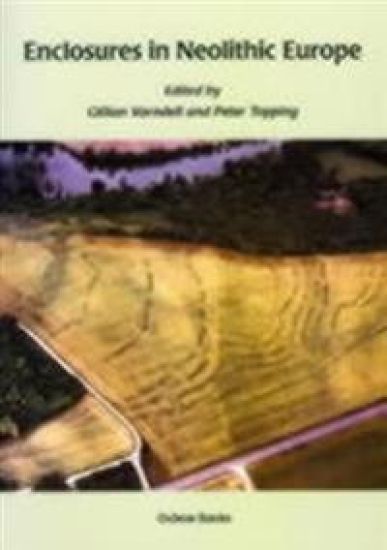
These papers come from a conference on Neolithic Causewayed Enclosures in Europe held in London in 1999. They present a series of snapshots of some of the sites and regions at the forefront of current research on causewayed enclosures in Europe, and as such are a complement to the Royal Commission on the Historical Monuments of England (RCHME) project which has systematically recorded all known Neolithic enclosures in England by both analytical topographic survey techniques and aerial transcription. The detailed regional data collected by the RCHME project has allowed a radical reinterpretation of these sites and the recognition that there are regional groups of enclosures. This series of papers serves to broaden the discussion about the structure and form of causewayed monuments beyond lowland England, looking at a wide geographical range of sites across central Europe, as well as considering some sites which do not conform to the traditional type but which have been proved by excavation to have a Neolithic context. This collection of papers provides a long-awaited and important addition to the debate on these enigmatic prehistoric sites. Contents: Neolithic Enclosures of Scandinavia (Niels H Anderson) ; The Causewayed Enclosures of West-Central France from the beginning of the Fourth to the End of the Third Millennium (Claude Burnez and Catherine Louboutin) ; Le Mourral, Trèbes (Aude) and the Final Neolithic Circular Enclosures of the Languedoc (Jean Vaquer) ; The Late Neolithic Settlement of La Hersonnais, Pléchatel in its Regional Context (Jean-Yves Tinevez) ; The Neolithic Ditched Enclosures of the Tavoliere, South-East Italy (Robin Skeates) ; An Interrupted Ditch Alignment at Rivoli, Italy, in the Context of Neolithic Interrupted Ditch/Pit Systems (Lawrence Barfield) ; Aerial Survey and Neolithic Enclosures in Central Europe (Otto Braasch) ; From Lilliput to Brobdingnag: The Traditions of Enclosure in the Irish Neolithic (Gabriel Cooney) ; Billown Neolithic Enclosures, Isle of Man (Timothy Darvill) ; Lithic Artefacts from Neolithic Causewayed Enclosures: Character and Meaning (Alan Saville) ; A Causewayed Enclosure at Husbands Bosworth, Leicestershire (Adrian Butler, Patrick Clay and John Thomas) ; The Howe Robin Story: An Unusual Enclosure on Crosby Ravensworth Fell (Moraig Brown) ; The Seventieth Causewayed Enclosure in the British Isles? (Peter D Horne, David MacLeod and Alastair Oswald) ; Rethinking the Carrock Fell Enclosure (Trevor Pearson and Peter Topping) .
Untold Mafia Tales from the FBI Top Hoodlum Squad
G P Clemente; Peter C Clemente
Gary Clemente
2026
pokkari
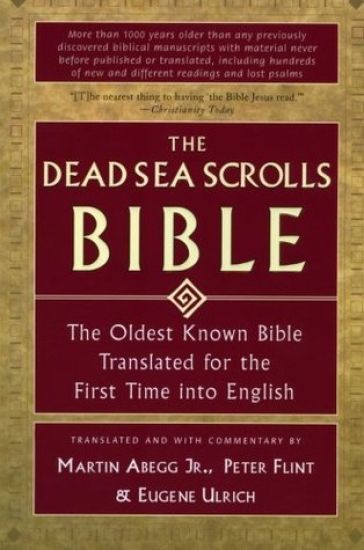
The Dead Sea Scrolls Bible: The Oldest Known Bible Translated for the First Time Into English
Martin G. Abegg; Peter Flint; Eugene Ulrich
HarperOne
2002
nidottu
From the dramatic find in the caves of Qumran, the world's most ancient version of the Bible allows us to read the scriptures as they were in the time of Jesus.
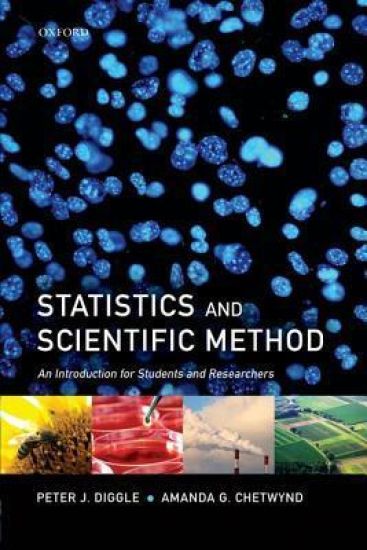
Statistics and Scientific Method
Peter J. Diggle; Amanda G. Chetwynd
Oxford University Press
2011
sidottu
Most introductory statistics text-books are written either in a highly mathematical style for an intended readership of mathematics undergraduate students, or in a recipe-book style for an intended audience of non-mathematically inclined undergraduate or postgraduate students, typically in a single discipline; hence, "statistics for biologists", "statistics for psychologists", and so on. An antidote to technique-oriented service courses, this book is different. It studiously avoids the recipe-book style and keeps algebraic details of specific statistical methods to the minimum extent necessary to understand the underlying concepts. Instead, the text aims to give the reader a clear understanding of how core statistical ideas of experimental design, modelling and data analysis are integral to the scientific method. Aimed primarily at beginning postgraduate students across a range of scientific disciplines (albeit with a bias towards the biological, environmental and health sciences), it therefore assumes some maturity of understanding of scientific method, but does not require any prior knowledge of statistics, or any mathematical knowledge beyond basic algebra and a willingness to come to terms with mathematical notation. Any statistical analysis of a realistically sized data-set requires the use of specially written computer software. An Appendix introduces the reader to our open-source software of choice, R, whilst the book's web-page includes downloadable data and R code that enables the reader to reproduce all of the analyses in the book and, with easy modifications, to adapt the code to analyse their own data if they wish. However, the book is not intended to be a textbook on statistical computing, and all of the material in the book can be understood without using either R or any other computer software.
Statistics and Scientific Method
Peter J. Diggle; Amanda G. Chetwynd
Oxford University Press
2011
nidottu
Most introductory statistics text-books are written either in a highly mathematical style for an intended readership of mathematics undergraduate students, or in a recipe-book style for an intended audience of non-mathematically inclined undergraduate or postgraduate students, typically in a single discipline; hence, "statistics for biologists", "statistics for psychologists", and so on. An antidote to technique-oriented service courses, this book is different. It studiously avoids the recipe-book style and keeps algebraic details of specific statistical methods to the minimum extent necessary to understand the underlying concepts. Instead, the text aims to give the reader a clear understanding of how core statistical ideas of experimental design, modelling and data analysis are integral to the scientific method. Aimed primarily at beginning postgraduate students across a range of scientific disciplines (albeit with a bias towards the biological, environmental and health sciences), it therefore assumes some maturity of understanding of scientific method, but does not require any prior knowledge of statistics, or any mathematical knowledge beyond basic algebra and a willingness to come to terms with mathematical notation. Any statistical analysis of a realistically sized data-set requires the use of specially written computer software. An Appendix introduces the reader to our open-source software of choice, R, whilst the book's web-page includes downloadable data and R code that enables the reader to reproduce all of the analyses in the book and, with easy modifications, to adapt the code to analyse their own data if they wish. However, the book is not intended to be a textbook on statistical computing, and all of the material in the book can be understood without using either R or any other computer software.
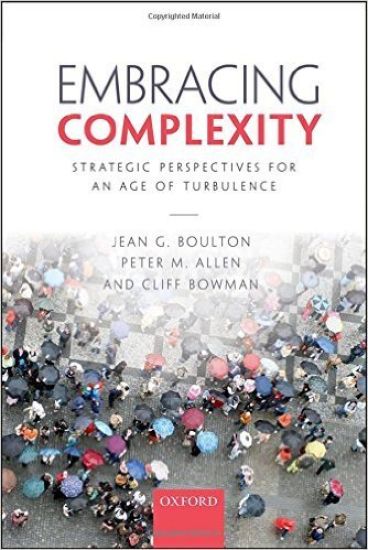
Embracing Complexity
Jean G. Boulton; Peter M. Allen; Cliff Bowman
Oxford University Press
2015
sidottu
The book describes what it means to say the world is complex and explores what that means for managers, policy makers and individuals. The first part of the book is about the theory and ideas of complexity. This is explained in a way that is thorough but not mathematical. It compares differing approaches, and also provides a historical perspective, showing how such thinking has been around since the beginning of civilisation. It emphasises the difference between a complexity worldview and the dominant mechanical worldview that underpins much of current management practice. It defines the complexity worldview as recognising the world is interconnected, shaped by history and the particularities of context. The comparison of the differing approaches to modelling complexity is unique in its depth and accessibility. The second part of the book uses this lens of complexity to explore issues in the fields of management, strategy, economics, and international development. It also explores how to facilitate others to recognise the implications of adopting a complex rather than a mechanical worldview and suggests methods of research to explore systemic, path-dependent emergent aspects of situations. The authors of this book span both science and management, academia and practice, thus the explanations of science are authoritative and yet the examples of changing how you live and work in the world are real and accessible. The aim of the book is to bring alive what complexity is all about and to illustrate the importance of loosening the grip of a modernist worldview with its hope for prediction, certainty and control.
Embracing Complexity
Jean G. Boulton; Peter M. Allen; Cliff Bowman
Oxford University Press
2015
nidottu
The book describes what it means to say the world is complex and explores what that means for managers, policy makers and individuals. The first part of the book is about the theory and ideas of complexity. This is explained in a way that is thorough but not mathematical. It compares differing approaches, and also provides a historical perspective, showing how such thinking has been around since the beginning of civilisation. It emphasises the difference between a complexity worldview and the dominant mechanical worldview that underpins much of current management practice. It defines the complexity worldview as recognising the world is interconnected, shaped by history and the particularities of context. The comparison of the differing approaches to modelling complexity is unique in its depth and accessibility. The second part of the book uses this lens of complexity to explore issues in the fields of management, strategy, economics, and international development. It also explores how to facilitate others to recognise the implications of adopting a complex rather than a mechanical worldview and suggests methods of research to explore systemic, path-dependent emergent aspects of situations. The authors of this book span both science and management, academia and practice, thus the explanations of science are authoritative and yet the examples of changing how you live and work in the world are real and accessible. The aim of the book is to bring alive what complexity is all about and to illustrate the importance of loosening the grip of a modernist worldview with its hope for prediction, certainty and control.
Harking from the golden age of fiction set in American suburbia - the school of John Updike and Cheever - these three works from the great American humorist Peter De Vries look with laughter upon its lawns, its cocktails, and its slightly unreal feeling of comfort. De Vries' classic situation comedy The Tunnel of Love follows the interactions of a socially insecure, pun-loving family man, an officious lady caseworker from an adoption agency, and a chauvinist pig - all suburban neighbors who know far too much about one another's private lives in this goofy and gently hilarious tale of marital quibbles. A manic epic, Reuben, Reuben is really three books in one, tied together by a 1950s suburban Connecticut setting and hyper-literate cast of characters. A corruptible chicken farmer fearful for the fate of his beloved town, a womanizing poet from Wales (Dylan Thomas in disguise), and a hapless British poet-cum-actor-and-agent all take turns as narrator, revealing different, even conflicting views. But alcoholism, sexism, small-mindedness, and calamity challenge the high spirits of De Vries' well-read suburbanites. Without a Stitch in Time, a selection of forty-six articles and stories written for the New Yorker between 1943 and 1973, offers pun-filled autobiographical vignettes that reveal the source of De Vries' nervous wit: the cognitive dissonance between his Calvinist upbringing in 1920s Chicago and the all-too-perfect postwar world.
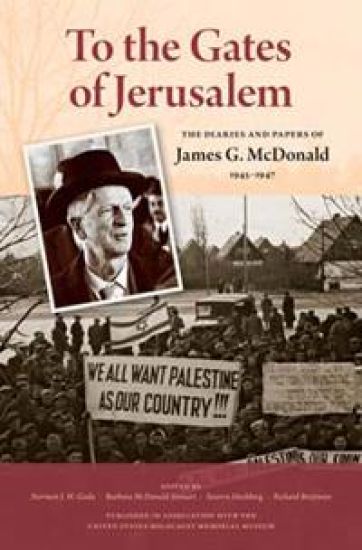
This volume, the third in a series of James G. McDonald's edited diaries and papers, covers his work from 1945, with the formation of the Anglo-American Committee, through 1947, with the United Nations' decision to partition Palestine between Jews and Arabs. The "Anglo-American Committee of Inquiry Regarding the Problems of European Jewry and Palestine" was a group charged with finding a solution to the problem of European Jewish Refugees in the context of the increasingly unstable British Mandate in Palestine. McDonald's diaries and papers offer the most thorough personal account we have of the Committee and the politics surrounding it. His diary is part travelogue through the desolation of postwar Europe and a Middle East being transformed by new Jewish settlements and growing Arab intransigence. McDonald maintained discreet contact with Zionist and moderate Arab leaders throughout the Committee's hearings and deliberations. He was instrumental in the recommendation that 100,000 Jewish refugees enter Palestine and won President Truman's trust in order to counter attempts to nullify the report's recommendations.
Biographical Dictionary of American Mayors, 1820-1980
Melvin G. Holli; Peter D. A. Jones
Greenwood Press
1981
sidottu
Product information not available.
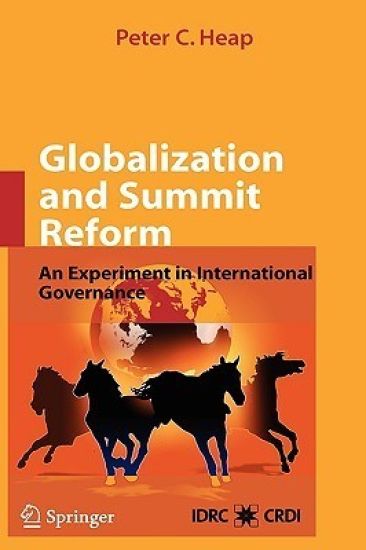
Ever since I was a graduate student at the University of Chicago in October 1962, I have been interested in challenges at the global scale that could affect the future of humanity. The Cuban Missile Crisis brought home to me how vulnerable we are. Indeed it brought home that we could be dead from causes thousands of miles away with a warning of a maximum of thirty minutes. It was obvious the world was becoming smaller. As I looked out the window from my apartment in Chicago, I could see ch- dren of school age at play in the alley – despite it being a weekday. They weren’t in school. One rarely saw adult men with them – only women. What con- quences would that bring? Not far away was the headquarters of a strange group calling themselves the Black Moslems. There was a palpable anger that radiated from there. Where would this lead? Was there not a breaking point in how much difference in wealth and general well-being could be tolerated? I became increasingly interested in international politics, in particular about how we governed ourselves through international institutions and international law. Hans Morgenthau emphasized to us the importance of national interests. It became clear to me that governments needed interests as an incentive to act, c- tainly if there were important consequences in acting. Values were important but were not a sufficient condition.
Risk and Social Change in an African Rural Economy
John G. McPeak; Peter D. Little; Cheryl R. Doss
Routledge
2011
sidottu
Pastoralists’ role in contemporary Africa typically goes underappreciated and misunderstood by development agencies, external observers, and policymakers. Yet, arid and semi-arid lands (ASAL), which are used predominantly for extensive livestock grazing, comprise nearly half of the continent’s land mass, while a substantial proportion of national economies are based on pastoralist activities. Pastoralists use these drylands to generate income for themselves through the use of livestock and for the coffers of national trade and revenue agencies. They are frequently among the continent’s most contested and lawless regions, providing sanctuary to armed rebel groups and exposing residents to widespread insecurity and destructive violence. The continent’s millions of pastoralists thus inhabit some of Africa’s harshest and most remote, but also most ecologically, economically, and politically important regions.This study summarizes the findings of a multi-year interdisciplinary research project in pastoral areas of Kenya and Ethiopia. The cultures and ecology of these areas are described, with a particular focus on the myriad risks that confront people living in these drylands, and how these risks are often triggered by highly variable rainfall conditions. The authors examine the markets used by residents of these areas to sell livestock and livestock products and purchase consumer goods before turning to an analysis of evolving livelihood strategies. Furthermore, they focus on how well-being is conditioned upon access to livestock and access to the cash economy, gender patterns within households and the history of development activities in the area. The book concludes with a report on how these activities are assessed by people in the area and what activities they prioritize for the future. Policy in pastoral areas is often formulated on the basis of assumptions and stereotypes, without adequate empirical foundations. This book provides evidence on livelihood strategies being followed in pastoral areas, and investigates patterns in decision making and well being. It indicates the importance of livestock to the livelihoods of people in these areas, and identifies the critical and widespread importance of access to the cash economy, concluding that future development activities need to be built on the foundation of the livestock economy, instead of seeking to replace it.
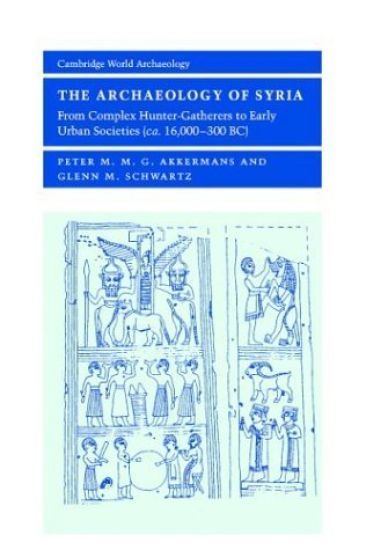
The Archaeology of Syria
Peter M. M. G. Akkermans; Glenn M. Schwartz
Cambridge University Press
2004
sidottu
This was the first book to present a comprehensive review of the archaeology of Syria from the end of the Paleolithic period to 300 BC. Syria has become a prime focus of field archaeology in the Middle East in the past thirty years, and Peter Akkermans and Glenn Schwartz discuss the results of this intensive fieldwork, integrating them with earlier research. Alongside the major material culture types of each period, they examine important contributions of Syrian archaeology to issues like the onset of agriculture, the emergence of private property and social inequality, the rise and collapse of urban life, and the archaeology of early empires. All competing interpretations are set out and considered, alongside the authors' own perspectives and conclusions.
Cyber Criminals on Trial
Russell G. Smith; Peter Grabosky; Gregor Urbas
Cambridge University Press
2004
sidottu
As computer-related crime becomes more widespread globally, both scholarly and journalistic accounts tend to focus on the ways in which the crime has been committed and how it could have been prevented. Very little has been written about what follows: the capture, possible extradition, prosecution, sentencing and incarceration of the cyber criminal. This book provides the first international study of the manner in which cyber-criminals have been dealt with by the judicial process in recent times. Some of the most prominent cases from around the globe have been presented in an attempt to discern trends in the disposition of cases and common factors and problems that emerged during the processes of prosecution, trial and sentencing. This is a valuable resource for all those who seek to recall the facts of some of the world’s most famous prosecutions and to know the reasons why particular sentences were imposed.
We've all heard that a father's involvement enriches the lives of children. But how much have we heard about how having a child affects a father's life? As Peter Gray and Kermyt Anderson reveal, fatherhood actually alters a man's sexuality, rewires his brain, and changes his hormonal profile. His very health may suffer—in the short run—and improve in the long. These are just a few aspects of the scientific side of fatherhood explored in this book, which deciphers the findings of myriad studies and makes them accessible to the interested general reader.Since the mid-1990s Anderson and Gray, themselves fathers of young children, have been studying paternal behavior in places as diverse as Boston, Albuquerque, Cape Town, Kenya, and Jamaica. Their work combines the insights of evolutionary and comparative biology, cross-cultural analysis, and neural physiology to deepen and expand our understanding of fatherhood—from the intense involvement in childcare seen in male hunter-gatherers, to the prodigality of a Genghis Khan leaving millions of descendants, to the anonymous sperm donor in a fertility clinic.Looking at every kind of fatherhood—being a father in and out of marriage, fathering from a distance, stepfathering, and parenting by gay males—this book presents a uniquely detailed picture of how being a parent fits with men's broader social and work lives, how fatherhood evolved, and how it differs across cultures and through time.
Language Acquisition
Jill G. de Villiers; Peter A. de Villiers
Harvard University Press
1978
sidottu
The study of language acquisition has become a center of scientific inquiry into the nature of the human mind. The result is a windfall of new information about language, about learning, and about children themselves.In Language Acquisition Jill and Peter de Villiers provide a lively introduction to this fast-growing field. Their book deals centrally with the way the child acquires the sounds, meanings, and syntax of his language, and the way he learns to use his language to communicate with others. In discussing these issues, the de Villiers provide a clear and insightful treatment of the classic questions about language acquisition: Does the child show a genetic predisposition for speech, or grammar, or semantics which makes him uniquely able to learn human language? What kinds of learning are involved in acquiring language and what kinds of experience with a language are necessary to support such learning? Is there a critical period during the child's development which is optimal for language acquisition? And what kind of psychological disabilities underlie the failure to acquire language?
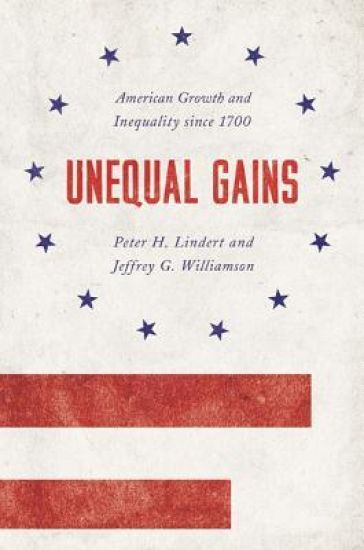
Unequal Gains offers a radically new understanding of the economic evolution of the United States, providing a complete picture of the uneven progress of America from colonial times to today. While other economic historians base their accounts on American wealth, Peter Lindert and Jeffrey Williamson focus instead on income--and the result is a bold reassessment of the American economic experience. America has been exceptional in its rising inequality after an egalitarian start, but not in its long-run growth. America had already achieved world income leadership by 1700, not just in the twentieth century as is commonly thought. Long before independence, American colonists enjoyed higher living standards than Britain--and America's income advantage today is no greater than it was three hundred years ago. But that advantage was lost during the Revolution, lost again during the Civil War, and lost a third time during the Great Depression, though it was regained after each crisis. In addition, Lindert and Williamson show how income inequality among Americans rose steeply in two great waves--from 1774 to 1860 and from the 1970s to today--rising more than in any other wealthy nation in the world. Unequal Gains also demonstrates how the widening income gaps have always touched every social group, from the richest to the poorest. The book sheds critical light on the forces that shaped American income history, and situates that history in a broad global context. Economic writing at its most stimulating, Unequal Gains provides a vitally needed perspective on who has benefited most from American growth, and why.
Graphic Design Rules
Stefan G. Bucher; Peter Dawson; John Foster; Tony Seddon; Sean Adams
Frances Lincoln Publishers Ltd
2012
pokkari
365 daily design mantras from four leading industry experts, providing you with valuable design dos and don'ts for every day of year. Packed with practical advice presented in a fun, lighthearted fashion, this is the perfect book for the ever-growing group of non-designers who want some graphic design guidance. And for more experienced designers, individual entries will either bring forth knowing nods of agreement or hoots of derision, depending on whether or not the reader loves or hates hyphenation, has a pathological fear of beige, or thinks that baseline grids are boring. In the style of a classical almanac, 365 entries combine a specific rule with a commentary from a variety of experienced designers from all fields of the graphic design industry. Covering topics such as typography, colour, layout, imagery, production, and creative thinking, you can either dip in at random or use the book as the source of a daily lesson in how to produce great graphic design.