Kirjojen hintavertailu. Mukana 11 621 554 kirjaa ja 12 kauppaa.

Kirjahaku

Etsi kirjoja tekijän nimen, kirjan nimen tai ISBN:n perusteella.

1000 tulosta hakusanalla Philo

Philosophy for AS and A2
Philosophy for AS and A2 is the definitive textbook for students of Advanced Subsidiary or Advanced Level philosophy courses, structured directly around the specification of the AQA. Following a lively foreword by Nigel Warburton, author of Philosophy: The Basics, a team of experienced teachers devote a chapter each to the six themes covered by the syllabus:Each of the chapters include helpful student-friendly features.a list of key concepts, to introduce students to the topicbite-size sections corresponding to the syllabus topics actual exam questions from previous yearssuggested discussion questions to promote debatetext-boxes with helpful summaries, case-studies and examplesan annotated further-reading list directing students towards the best articles, books and websitesa comprehensive glossary, providing a handy reference pointThere is a final chapter on essay writing and exam preparation, designed to help students get to grips with the examination board requirements.Philosophy for AS and A2 is written by a team of expert teachers based at Heythrop College - part of the University of London - which specializes in teaching philosophy and theology.
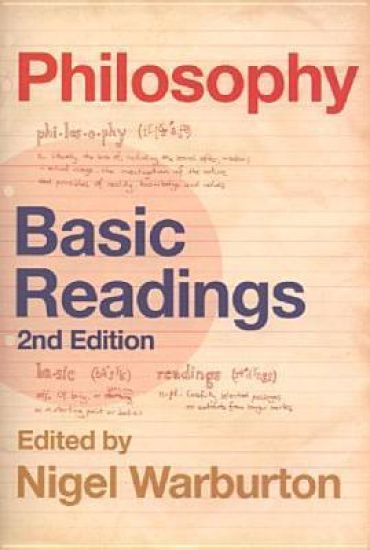
Philosophy: Basic Readings
Nigel Warburton brings philosophy to life with an imaginative selection of philosophical writings on key topics. Philosophy: Basic Readings is the ideal introduction to some of the most accessible and thought-provoking pieces in philosophy, both contemporary and classic.The second edition of Philosophy: Basic Readings has been expanded to include new pieces in each major area of philosophy:What is philosophy?Godright and wrongthe external worldsciencemindart.The readings in Philosophy: Basic Readings complement the chapters in Philosophy: The Basics.
Philosophy: Basic Readings
Nigel Warburton brings philosophy to life with an imaginative selection of philosophical writings on key topics. Philosophy: Basic Readings is the ideal introduction to some of the most accessible and thought-provoking pieces in philosophy, both contemporary and classic. The second edition of Philosophy: Basic Readings has been expanded to include new pieces in each major area of philosophy:· What is philosophy?· God· Right and wrong· The external world· Science· Mind· ArtThe readings in Philosophy: Basic Readings complement the chapters in Philosophy: The Basics (4th edition 2004).
Philosophy: The Essential Study Guide

Philosophy: The Essential Study Guide

Nigel Warburton

Routledge
2004
sidottu
Philosophy: The Essential Study Guide is a compact and straightforward guide to the skills needed to study philosophy, aimed at anyone coming to the subject for the first time or just looking to improve their performance. Nigel Warburton clarifies what is expected of students and offers strategies and guidance to help them make effective use of their study time and improve their marks.The four main skills covered by the book are:reading philosophy - both skimming and in-depth analysis of historical and contemporary work, understanding the examples and terminology usedlistening to philosophy - formal lectures and informal classroom teaching, preparation, picking up on arguments used, note takingdiscussing philosophy - arguing and exploring, asking questions, communicating in concise and understandable wayswriting philosophy - planning and researching essays and other written tasks, thinking up original examples, avoiding plagiarism.
Philosophy: The Essential Study Guide

Philosophy: The Essential Study Guide

Nigel Warburton

Routledge
2004
nidottu
Philosophy: The Essential Study Guide is a compact and straightforward guide to the skills needed to study philosophy, aimed at anyone coming to the subject for the first time or just looking to improve their performance. Nigel Warburton clarifies what is expected of students and offers strategies and guidance to help them make effective use of their study time and improve their marks.The four main skills covered by the book are:reading philosophy - both skimming and in-depth analysis of historical and contemporary work, understanding the examples and terminology usedlistening to philosophy - formal lectures and informal classroom teaching, preparation, picking up on arguments used, note takingdiscussing philosophy - arguing and exploring, asking questions, communicating in concise and understandable wayswriting philosophy - planning and researching essays and other written tasks, thinking up original examples, avoiding plagiarism.
Philosophy of Law
Edited by a leading scholar in the field, Philosophy of Law is a new title in the Routledge Major Works series Critical Concepts in Philosophy. It is a four-volume collection of canonical and cutting-edge research and covers a significant range of topics in the field.The first two volumes of the collection are devoted primarily to analytical legal theory—in particular, theories about the nature of law. This is the idea of legal philosophy most familiar to jurisprudential students in the English-speaking world, and many of the civil-law countries. The last two volumes sample schools and theorists who mostly come from outside the analytical tradition, and who are, in one sense or another, critical theorists—theorists more interested in offering systematic critiques of law or general prescriptions.The four volumes of the collection are divided into six parts. Part one brings together key work on the methodology of analytical philosophy and Part two collects the most important scholarship on forms of legal positivism, including material in the Austin–Hart tradition, ‘inclusive vs. exclusive legal positivism’ and Kelsenian legal positivism. Part three (‘Critics of Legal Positivism’) gathers material in the natural-law tradition; the work and influence of Lon Fuller and Ronald Dworkin are also fully explored here.Parts four to six are an assembly of the best and most important thinking by and about normative and critical theorists working outside the analytical tradition. Part four gathers material under the rubric of legal realism, exploring both the American and Scandinavian schools as well as their predecessors. Part five examines one of the most influential movements in modern legal theory and legal practice: known as ‘law and economics’ or the ‘economic analysis of law’, this approach has come to dominate American scholarship, and its role is growing in other countries too. Finally, part six makes available key research on a variety of critical theories of law that have grown up around systematic critiques of Western legal systems. Included here is work by the American legal realists, as well as work by feminists and scholars pursuing critical race theory. The intersection of law and literature is also examined, as are other approaches to law and legal theory: Habermas’s ‘proceduralist paradigm’; the concept of ‘autopoiesis’; and the work of Rorty and Fish.This Routledge Major Work illustrates the many ways in which philosophical methods and theories have been used to explore aspects of law and legal practice, and with a comprehensive introduction, newly written by the editor, which places the collected material in its historical and intellectual context, Philosophy of Law is an essential collection destined to be valued by scholars and students as a vital research resource.
Philosophy of the Arts

Philosophy of the Arts

Gordon Graham

Routledge
2005
sidottu
Philosophy of the Arts presents a comprehensive and accessible introduction to those coming to aesthetics and the philosophy of art for the first time. The third edition is greatly enhanced by new sections on art and beauty, modern art, Aristotle and katharsis, and Hegel. Each chapter has been thoroughly revised with fresh material and extended discussions. As with previous editions, the book:is jargon-free and will appeal to students of music, art history and literature as well as philosophylooks at a wide range of the arts from film, painting and architecture to fiction, music and poetrydiscusses a range of philosophical theories of thinkers such as Hume, Kant, Gaender, Collingwood, Derrida, Hegel and Crocecontains regular summaries and suggestions for further reading.
Philosophy of the Arts

Philosophy of the Arts

Gordon Graham

Routledge
2005
nidottu
Philosophy of the Arts presents a comprehensive and accessible introduction to those coming to aesthetics and the philosophy of art for the first time. The third edition is greatly enhanced by new sections on art and beauty, modern art, Aristotle and katharsis, and Hegel. Each chapter has been thoroughly revised with fresh material and extended discussions. As with previous editions, the book:is jargon-free and will appeal to students of music, art history and literature as well as philosophylooks at a wide range of the arts from film, painting and architecture to fiction, music and poetrydiscusses a range of philosophical theories of thinkers such as Hume, Kant, Gaender, Collingwood, Derrida, Hegel and Crocecontains regular summaries and suggestions for further reading.
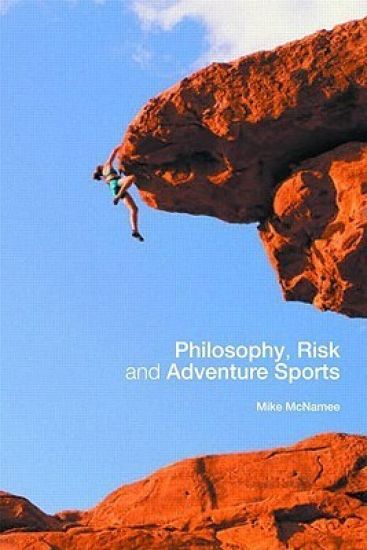
Philosophy, Risk and Adventure Sports
With interest and participation in extreme and adventure sports growing year on year, the time is ripe for a thoughtful and analytical assessment of this phenomenon from a rigorous philosophical perspective. This collection of essays is the first single-source treatment of adventure sports from an exclusively philosophical standpoint. The text offers students a uniquely focused reader of this burgeoning area of interest and provides scholars with a source book for further studies in this area. Featuring contributions from well-respected writers in the field who each also have personal familiarity of participation in adventure and extreme sports, this is set to become a classic analysis of the intersections between philosophy and extreme experiences, encompassing essential related concepts of elation, danger, death, wilderness and authenticity.
Philosophy, Risk and Adventure Sports
With interest and participation in extreme and adventure sports growing year on year, the time is ripe for a thoughtful and analytical assessment of this phenomenon from a rigorous philosophical perspective. This collection of essays is the first single-source treatment of adventure sports from an exclusively philosophical standpoint. The text offers students a uniquely focused reader of this burgeoning area of interest and provides scholars with a source book for further studies in this area. Featuring contributions from well-respected writers in the field who each also have personal familiarity of participation in adventure and extreme sports, this is set to become a classic analysis of the intersections between philosophy and extreme experiences, encompassing essential related concepts of elation, danger, death, wilderness and authenticity.
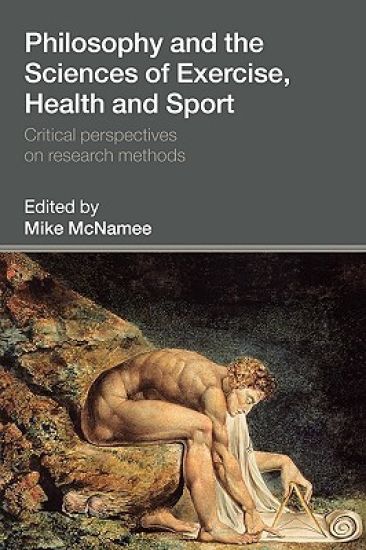
Philosophy and the Sciences of Exercise, Health and Sport
Should we trust scientific research? Do 'the facts' really speak for themselves?Philosophy and the Sciences of Exercise, Health and Sport critically reflects on the nature and aims of scientific enquiry in these disciplines. The book addresses the underlying assumptions and development of both the very idea of science itself and what shape scientific enquiries ought to take in the fields of exercise, health and sport.Written by a range of prestigious and internationally respected philosophers, scientists and social scientists, each chapter addresses a key issue in research methodology. Questions raised by the authors include: * Do natural and social scientists need to understand philosophy of science?* Are statistics are misused in sport and exercise science research?* Is sport science research gender-biased?* How do external and commercial interests skew professional guidelines in health and sport research?* Can scientists make claims without attempting to falsify as well as to confirm their theses?
Philosophy, God and Motion

Philosophy, God and Motion

Simon Oliver

Routledge
2005
sidottu
In the post-Newtonian world motion is assumed to be a simple category which relates to the locomotion of bodies in space, and is usually associated only with physics. This book shows this to be a relatively recent understanding of motion and that prior to the scientific revolution motion was a broader and more mysterious category, applying to moral as well as physical movements.Simon Oliver presents fresh interpretations of key figures in the history of western thought including Plato, Aristotle, Aquinas and Newton, examining the thinkers’ handling of the concept of motion. Through close readings of seminal texts in ancient and medieval cosmology and early modern natural philosophy, the books moves from antique to modern times investigating how motion has been of great significance within theology, philosophy and science. Particularly important is the relation between motion and God, following Aristotle traditional doctrines of God have understood the divine as the ‘unmoved mover’ while post-Holocaust theologians have suggested that in order to be compassionate God must undergo the motion of suffering. The text argues that there may be an authentically theological, as well as a natural scientific understanding of motion.This volume will prove a major contribution to theology, the history of Christian thought and to the growing field of science and religion.
Philosophy of Psychology: Contemporary Readings
Philosophy of Psychology: Contemporary Readings is a comprehensive anthology that includes classic and contemporary readings from leading philosophers. Addressing in depth the major topics within philosophy of psychology, the editor has carefully selected articles under the following headings:pictures of the mind commonsense psychology representation and cognitive architecture.Articles by the following philosophers are included: Blackburn, Churchland, Clark, Cummins, Dennett, Davidson, Fodor, Kitcher, Lewis, Lycan, McDowell, McLeod, Rey, Segal, Stich.Each section includes a helpful introduction by the editor which aims to guide the student gently into the topic. The book is highly accessible and provides a broad-ranging exploration of the subject, including discussion of the leading philosophers in the field. Ideal for any student of philosophy of psychology or philosophy of mind.
Philosophy of Psychology: Contemporary Readings
Philosophy of Psychology: Contemporary Readings is a comprehensive anthology that includes classic and contemporary readings from leading philosophers. Addressing in depth the major topics within philosophy of psychology, the editor has carefully selected articles under the following headings:pictures of the mind commonsense psychology representation and cognitive architecture.Articles by the following philosophers are included: Blackburn, Churchland, Clark, Cummins, Dennett, Davidson, Fodor, Kitcher, Lewis, Lycan, McDowell, McLeod, Rey, Segal, Stich.Each section includes a helpful introduction by the editor which aims to guide the student gently into the topic. The book is highly accessible and provides a broad-ranging exploration of the subject, including discussion of the leading philosophers in the field. Ideal for any student of philosophy of psychology or philosophy of mind.
Philosophy and Educational Policy

Philosophy and Educational Policy

John Gingell; Christopher Winch

Routledge
2004
sidottu
What are the concepts and theories behind current debates about education?This comprehensive introduction to philosophy of education discusses issues that are of current public interest and debate. It locates education at the heart of questions concerned with culture, ethics, politics, economics and shows how key educational issues have to be approached in a contextual way. Written in a clear and accessible manner with current issues in mind the book covers:the curriculumteaching and learningeducational researchassessmentmoral, personal and civic educationautonomy and multicultural issues in a liberal societyeducation and workprivatisation and marketsThis book will be particularly useful to students on Education Studies courses, to those preparing for a career in teaching, to students of politics and to serving teachers undertaking further study in education.
Philosophy and Educational Policy

Philosophy and Educational Policy

John Gingell; Christopher Winch

Routledge
2004
nidottu
What are the concepts and theories behind current debates about education?This comprehensive introduction to philosophy of education discusses issues that are of current public interest and debate. It locates education at the heart of questions concerned with culture, ethics, politics, economics and shows how key educational issues have to be approached in a contextual way. Written in a clear and accessible manner with current issues in mind the book covers:the curriculumteaching and learningeducational researchassessmentmoral, personal and civic educationautonomy and multicultural issues in a liberal societyeducation and workprivatisation and marketsThis book will be particularly useful to students on Education Studies courses, to those preparing for a career in teaching, to students of politics and to serving teachers undertaking further study in education.
Philosophy and Organization
Featuring original contributions from some of the most exciting scholars writing at the intersection of philosophy and organization today, this accessible volume provides readers with a complete overview of this complex subject.Ground-breaking and drawing on recent efforts in management and organization studies to take philosophy seriously, it critically engages with the way that philosophy might inform organization and illuminates a range of issues, including idleness, aesthetics, singularity, transparency, power and cruelty. Exploring why philosophy matters to organization and why organization matters to philosophy, this book is essential reading for philosophy and business and management students as well as of interest to all those who seek to think seriously about the way their lives are organized.
Philosophy and Organization
Featuring original contributions from some of the most exciting scholars writing at the intersection of philosophy and organization today, this accessible volume provides readers with a complete overview of this complex subject.Ground-breaking and drawing on recent efforts in management and organization studies to take philosophy seriously, it critically engages with the way that philosophy might inform organization and illuminates a range of issues, including idleness, aesthetics, singularity, transparency, power and cruelty. Exploring why philosophy matters to organization and why organization matters to philosophy, this book is essential reading for philosophy and business and management students as well as of interest to all those who seek to think seriously about the way their lives are organized.
Philosophy of Education: The Key Concepts

Philosophy of Education: The Key Concepts

John Gingell; Christopher Winch

Routledge
2008
sidottu
This new edition of Philosophy of Education: The Key Concepts is an easy to use A-Z guide summarizing all the key terms, ideas and issues central to the study of educational theory today. Fully updated, the book is cross-referenced throughout and contains pointers to further reading, as well as new entries on such topics as: Citizenship and Civic Education Liberalism Capability Well-being Patriotism Globalisation Open-mindedness Creationism and Intelligent Design. Comprehensive and authoritative this highly accessible guide provides all that a student, teacher or policy-maker needs to know about the latest thinking on education in the 21st century.'