
Kirjahaku
Etsi kirjoja tekijän nimen, kirjan nimen tai ISBN:n perusteella.
1000 tulosta hakusanalla Rachel Firth

11 - 11 - 11: Book 1 of John Rachel's End-Of-The-World Trilogy
John Rachel
Literary Vagabond
2015
nidottu
Meet Noah Tass. Follow him as he tries to escape his hayseed hometown in Missouri. This is not a movie. This is someone's life.Noah was turning 23 and desperate leave. Pulnick had forever been a blemish on the anemic face of rural Bible-belt America. Always bland and soporific, it was now being invaded by white supremacist meth heads, visited by an unprecedented crime wave, exploited by spiritualists and local politicos, and driven to hysteria by paranoid rumors that the world would end on November 11th. Moreover, Noah's personal life was becoming more convoluted by the day. Everything seemed to conspire against his singular need to get out of this dreary, dead-end, death-wish armpit of a town."11-11-11" is what you call a feel good novel.You'll feel good about your own life when you get a load of the losers who populate this living graveyard
PROUD RACHEL
RowmanLittlefield
2035
nidottu
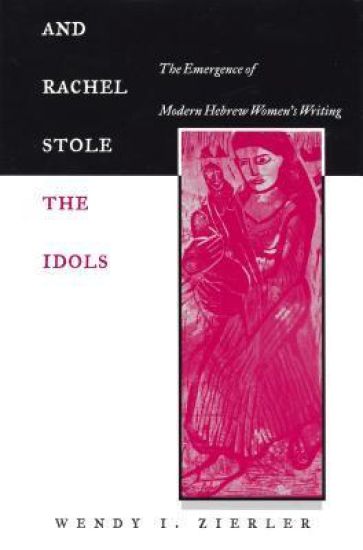
Pointing to an early instance in Hebrew literary history, And Rachel Stole the Idols takes its title from a biblical episode in which a daughter seizes control of a paternal spiritual legacy and makes it her own. This episode is the thematic key to Wendy Zierler's in-depth research of the ways modern Hebrew women writers - after centuries of silence - took control of the language of Hebrew literary culture, laying claim to icons of femininity and recasting them for their own purposes. Zierler picks up where other Hebrew scholars have left off, offering original analysis that brings feminist theory to bear on the study of modern Hebrew women writers. In recognition that there is no single feminist approach, nor a universally accepted definition of gender, this book incorporates a broad range of feminist reading strategies including Anglo-American gynocriticism, French feminist theory, and feminist critical methods in anthropology, biblical studies, and geography. The chapters within examine the translated work of women who made early and significant contributions to nineteenth- and early-twentieth-century Hebrew literature. These range from prose writers Sarah Feige Meinkin Foner, H
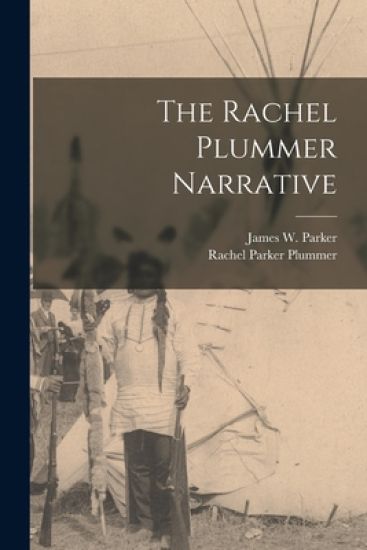
The Rachel Plummer Narrative
James W. 1797-1865 Parker; Rachel Parker D. 1839 Plummer
Hassell Street Press
2021
nidottu
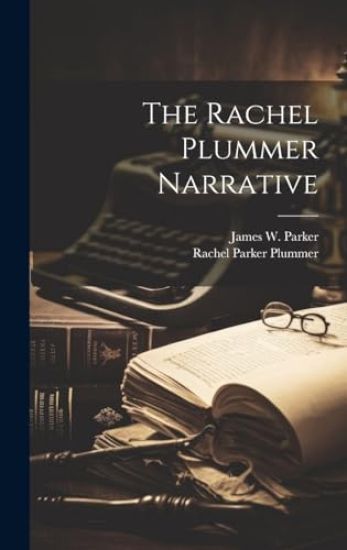
The Rachel Plummer Narrative
James W. 1797-1865 Parker; Rachel Parker D. 1839 Plummer
Hassell Street Press
2023
sidottu
A powerful autobiography of Rachel Parker, a Texan woman who was abducted during a Comanche raid in 1836 and spent nearly two years of her life in captivity while pregnant. Her story is one of courage and resilience in the face of unimaginable hardship.This work has been selected by scholars as being culturally important, and is part of the knowledge base of civilization as we know it.This work is in the "public domain in the United States of America, and possibly other nations. Within the United States, you may freely copy and distribute this work, as no entity (individual or corporate) has a copyright on the body of the work.Scholars believe, and we concur, that this work is important enough to be preserved, reproduced, and made generally available to the public. We appreciate your support of the preservation process, and thank you for being an important part of keeping this knowledge alive and relevant.

Aunt Rachel's Letters About Water And Air (1871)
Caroline Anne Martineau
KESSINGER PUBLISHING CO
2009
pokkari


Aunt Rachel. a Rustic Sentimental Comedy, Vol. I
David Christie Murray
British Library, Historical Print Editions
2011
pokkari
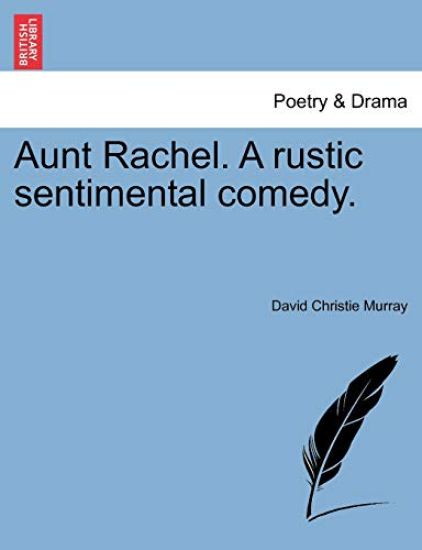
Aunt Rachel. a Rustic Sentimental Comedy.
David Christie Murray
British Library, Historical Print Editions
2011
pokkari
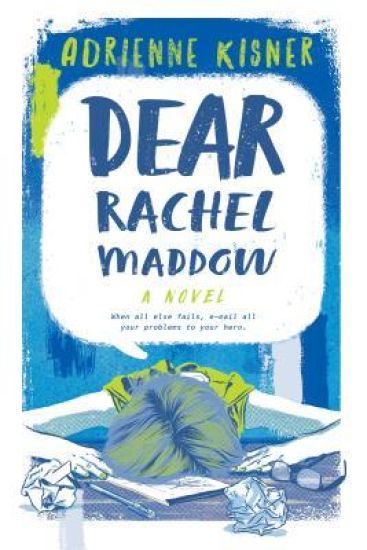
Brynn Harper’s life has one steadying force - Rachel Maddow. She watches her daily, and after writing to Rachel for a school project, Brynn drafts emails to Rachel but never sends them. Brynn tells Rachel about breaking up with her first girlfriend, about her brother Nick’s death, her passive mother and even worse stepfather, about how she’s stuck in remedial courses at school and is considering dropping out. Then Brynn is confronted with a moral dilemma. One student representative will have a voice among administration in the selection of a school superintendent. Brynn’s nemesis John believes only honors students are worthy of the committee seat. Brynn feels all students deserve a voice. She asks herself: What would Rachel Maddow do?
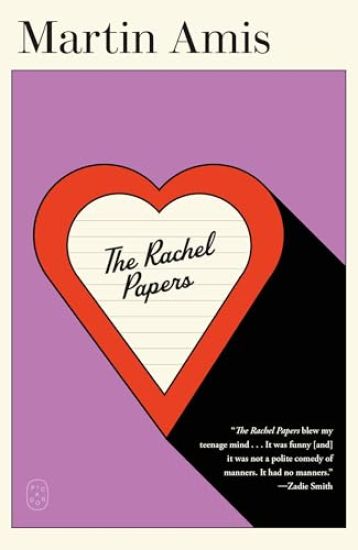
Martin Amis's first novel, The Rachel Papers, tells the story of Charles Highway and his relationship with his girlfriend in the year before going to university--with a new introduction by Paul Murray. Charles Highway, a bright, egotistical Oxford student and soon-to-be Great Novelist, spends the eve of his twentieth birthday reflecting on his adolescence--at times stimulating, often embarrassing, and never nearly as debauched as he'd have liked. Until he meets Rachel Noyes, an elusive, unattainable, manic pixie mystery of a girl whom Charles quickly becomes entranced by. He meticulously draws up battle plans and strategies for how to seduce Rachel, and thus the "Rachel Papers" are born. Unflinchingly honest, comedically brilliant, and unapologetically original, Martin Amis's first novel, The Rachel Papers, is a masterful account of the passion and fickleness of first lust--and love.

Meet Noah Tass. Follow him as he tries to escape his hayseed hometown in Missouri. This is not a movie. This is someone's life. Noah was turning 23 and desperate leave. Pulnick had forever been a blemish on the anemic face of rural Bible-belt America. Always bland and soporific, it was now being invaded by white supremacist meth heads, visited by an unprecedented crime wave, exploited by spiritualists and local politicos, and driven to hysteria by paranoid rumors that the world would end on November 11th. Moreover, Noah's personal life was becoming more convoluted by the day. Everything seemed to conspire against his singular need to get out of this dreary, dead-end, death-wish armpit of a town. "11-11-11" is what you call a feel good novel. You'll feel good about your own life when you get a load of the losers who populate this living graveyard!
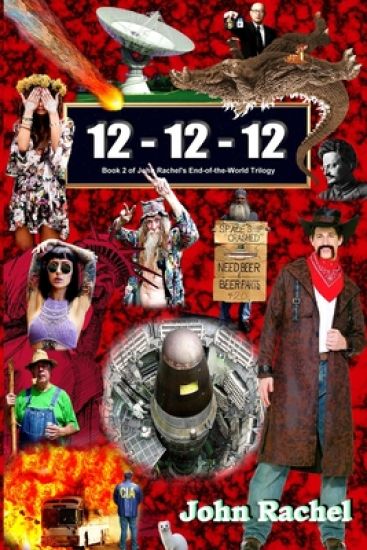
"12-12-12" is the story of a great nation falling apart and one young man's quest for meaning in the midst of chaos. It takes the stuff of reality and pitches it to a high scream. Open your mind but cover your ears. Knowledge is bliss but it's loud and painful. Yet somehow still funny. "12-12-12" manages to tell it like it is by telling it like it isn't. Granted, this is not what actually happened during 2012. But what unfolds is not more implausible. Nor is it less implausible. It's dark, ironic, witty, at times surrealistic and just plain weird. One reviewer calls it "laugh-out-loud brain food for hungry minds."

Journal Of Rachel Wilson Moore, Kept During A Tour To The West Indies And South America, In 1863-64
Moore Rachel Wilson; Truman George
Sagwan Press
2015
sidottu

Originally published in 1987. Lady Rachel Russell (1637–1723) was regarded as "one of the best women" by many of the most powerful people of her time. Wife of Lord William Russell, the prominent Whig opponent of King Charles II who was executed for treason in 1683, Lady Russell emerged as a political figure in her own right during the Glorious Revolution and throughout her forty-year widowhood. Award-winning historian Lois G. Schwoerer has written a biography that illuminates both the political life and the lives of women in late Stuart England. Lady Russell's interest in politics and religion blossomed during her marriage to Lord Russell and after his death: "as William became a Whig martyr, Rachel became a Whig saint." Her wealth, contacts, and role as her husband's surrogate gave her considerable influence to intercede in high government appointments, lend support in elections, and exchange favors with her friend Mary of Orange. In her domestic life she similarly took steps usually reserved to men, managing large estates in London and Hampshire and negotiating favorable marriage contracts for each of her three children. Although Lady Russell was unusual for her time, she was by no means unique. Other notable women shared her concerns and traits, although to differing degrees and effects. Schwoerer suggests that the horizons of women's lives in the seventeenth century may have extended farther than is often supposed.