

Kirjahaku
Etsi kirjoja tekijän nimen, kirjan nimen tai ISBN:n perusteella.
1000 tulosta hakusanalla Ray Burt



Cosmic ray modulation and interplanetary turbulences
GRIN Verlag
2023
nidottu

Reprint of the original, first published in 1873.

Reprint of the original, first published in 1873.

Reprint of the original, first published in 1863.

Reprint of the original, first published in 1863.

Reprint of the original, first published in 1863.

Reprint of the original, first published in 1863.

The Ray Society
Salzwasser-Verlag
2022
pokkari

The Ray Society
Salzwasser-Verlag
2022
sidottu

X-Ray Crystallography of Biomacromolecules
Albrecht Messerschmidt
Wiley-VCH Verlag GmbH
2007
sidottu
Written by one of the most significant contributors to the progress of protein crystallography, this practical guide contains case studies, a troubleshooting section and pointers on data interpretation. It covers the theory, practice and latest achievements in x-ray crystallography, such that any researcher in structural biology will benefit from this extremely clearly written book. Part A covers the theoretical basis and such experimental techniques as principles of x-ray diffraction, solutions for the phase problem and time-resolved x-ray crystallography. Part B includes case studies for different kinds of x-ray crystal structure determination, such as the MIRAS and MAD techniques, molecular replacement, and the difference Fourier technique.
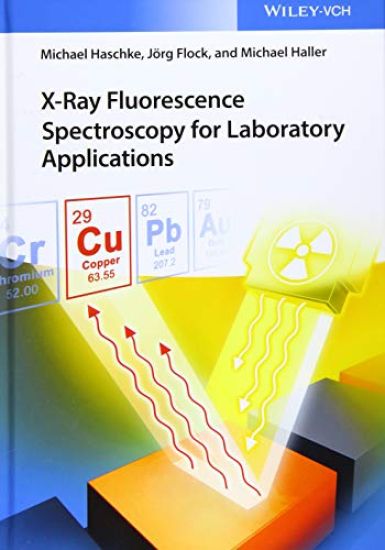
X-Ray Fluorescence Spectroscopy for Laboratory Applications
Michael Haschke; Jörg Flock; Michael Haller
Wiley-VCH Verlag GmbH
2021
sidottu
Provides comprehensive coverage on using X-ray fluorescence for laboratory applications This book focuses on the practical aspects of X-ray fluorescence (XRF) spectroscopy and discusses the requirements for a successful sample analysis, such as sample preparation, measurement techniques and calibration, as well as the quality of the analysis results. X-Ray Fluorescence Spectroscopy for Laboratory Applications begins with a short overview of the physical fundamentals of the generation of X-rays and their interaction with the sample material, followed by a presentation of the different methods of sample preparation in dependence on the quality of the source material and the objective of the measurement. After a short description of the different available equipment types and their respective performance, the book provides in-depth information on the choice of the optimal measurement conditions and the processing of the measurement results. It covers instrument types for XRF; acquisition and evaluation of X-Ray spectra; analytical errors; analysis of homogeneous materials, powders, and liquids; special applications of XRF; process control and automation. An important resource for the analytical chemist, providing concrete guidelines and support for everyday analysesFocuses on daily laboratory work with commercially available devicesOffers a unique compilation of knowledge and best practices from equipment manufacturers and usersCovers the entire work process: sample preparation, the actual measurement, data processing, assessment of uncertainty, and accuracy of the obtained results X-Ray Fluorescence Spectroscopy for Laboratory Applications appeals to analytical chemists, analytical laboratories, materials scientists, environmental chemists, chemical engineers, biotechnologists, and pharma engineers.

X-Ray Measurements in the Auroral Zone from July to October 1964
G. Kremser; E. Keppler; A. Bewersdorff; K. H. Saeger; G. Pfotzer; W. Riedler; J. P. Legrand
Springer-Verlag Berlin and Heidelberg GmbH Co. K
1965
nidottu

X-Ray Diffuse Scattering from Self-Organized Mesoscopic Semiconductor Structures
Martin Schmidbauer
Springer-Verlag Berlin and Heidelberg GmbH Co. K
2004
sidottu
This monograph represents a critical survey of the outstanding capabilities of X-ray diffuse scattering for the structural characterization of mesoscopic material systems. The mesoscopic regime comprises length scales ranging from a few up to some hundreds of nanometers. It is of particular relevance at semiconductor layer systems where, for example, interface roughness or low-dimensional objects such as quantum dots and quantum wires have attracted much interest. An extensive overview of the present state-of-the-art theory of X-ray diffuse scattering at mesoscopic structures is given followed by a valuable description of various experimental techniques. Selected up-to-date examples are discussed. The aim of the present book is to combine aspects of self-organized growth of mesoscopic structures with corresponding X-ray diffuse scattering experiments.

X-Ray Multiple-Wave Diffraction
Shih-Lin Chang
Springer-Verlag Berlin and Heidelberg GmbH Co. K
2004
sidottu
X-ray multiple-wave diffraction, sometimes called multiple diffraction or N-beam diffraction, results from the scattering of X-rays from periodic two or higher-dimensional structures, like 2-d and 3-d crystals and even quasi crystals. The interaction of the X-rays with the periodic arrangement of atoms usually provides structural information about the scatterer. Unlike the usual Bragg reflection, the so-called two-wave diffraction, the multiply diffracted intensities are sensitive to the phases of the structure factors in volved. This gives X-ray multiple-wave diffraction the chance to solve the X-ray phase problem. On the other hand, the condition for generating an X ray multiple-wave diffraction is much more strict than in two-wave cases. This makes X-ray multiple-wave diffraction a useful technique for precise measure ments of crystal lattice constants and the wavelength of radiation sources. Recent progress in the application of this particular diffraction technique to surfaces, thin films, and less ordered systems has demonstrated the diver sity and practicability of the technique for structural research in condensed matter physics, materials sciences, crystallography, and X-ray optics. The first book on this subject, Multiple Diffraction of X-Rays in Crystals, was published in 1984, and intended to give a contemporary review on the fundamental and application aspects of this diffraction.

The use of x rays has moved in the forefront of science and technology in the second half of the 20th century. This progress has been greatly stimulated by the advent of synchrotron x-ray sources in the 1960s. The undulator-based synchrotron radiation sources which have appeared in the last decade of the 20th century gave a new impetus to such development. The brilliance of the x-ray sources has increased by 12 orders of magnitude in 40 years and this trend does not show any signs of stagnation. The future x-ray sources of the 21th century based on free-electron lasers driven by linear accelerators will provide sub-picosecond radiation pulses with by many orders of magnitude higher brilliance and full transverse coherence. The x-ray sources of the newest generation offer a possibility to realize more than ever before the great potential of x-ray optics and, as a consequence, to elaborate new sophisticated instrumentation with unprecedented resolution and eventually to move in new directions of research in x-ray technology, materials science, fundamental physics, life sciences, etc.

Gamma-Ray Bursts
Gilbert Vedrenne; Jean-Luc Atteia
Springer-Verlag Berlin and Heidelberg GmbH Co. K
2009
sidottu
Since their discovery was first announced in 1973, gamma-ray bursts (GRBs) have been among the most fascination objects in the universe. While the initial mystery has gone, the fascination continues, sustained by the close connection linking GRBs with some of the most fundamental topics in modern astrophysics and cosmology. Both authors have been active in GRB observations for over two decades and have produced an outstanding account on both the history and the perspectives of GRB research.