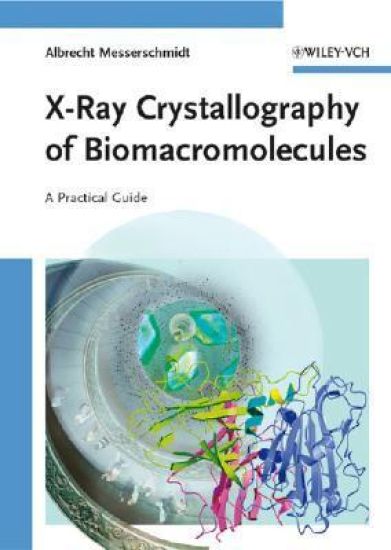
Written by one of the most significant contributors to the progress of protein crystallography, this practical guide contains case studies, a troubleshooting section and pointers on data interpretation. It covers the theory, practice and latest achievements in x-ray crystallography, such that any researcher in structural biology will benefit from this extremely clearly written book. Part A covers the theoretical basis and such experimental techniques as principles of x-ray diffraction, solutions for the phase problem and time-resolved x-ray crystallography. Part B includes case studies for different kinds of x-ray crystal structure determination, such as the MIRAS and MAD techniques, molecular replacement, and the difference Fourier technique.
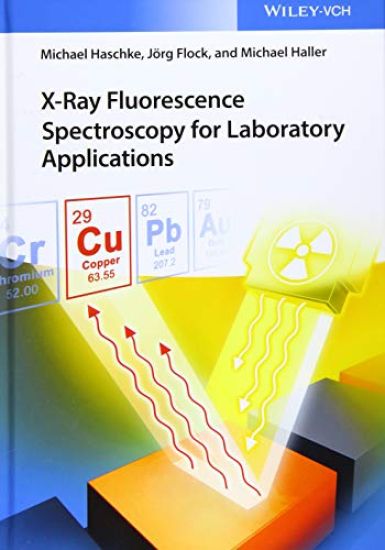
Provides comprehensive coverage on using X-ray fluorescence for laboratory applications This book focuses on the practical aspects of X-ray fluorescence (XRF) spectroscopy and discusses the requirements for a successful sample analysis, such as sample preparation, measurement techniques and calibration, as well as the quality of the analysis results. X-Ray Fluorescence Spectroscopy for Laboratory Applications begins with a short overview of the physical fundamentals of the generation of X-rays and their interaction with the sample material, followed by a presentation of the different methods of sample preparation in dependence on the quality of the source material and the objective of the measurement. After a short description of the different available equipment types and their respective performance, the book provides in-depth information on the choice of the optimal measurement conditions and the processing of the measurement results. It covers instrument types for XRF; acquisition and evaluation of X-Ray spectra; analytical errors; analysis of homogeneous materials, powders, and liquids; special applications of XRF; process control and automation. An important resource for the analytical chemist, providing concrete guidelines and support for everyday analysesFocuses on daily laboratory work with commercially available devicesOffers a unique compilation of knowledge and best practices from equipment manufacturers and usersCovers the entire work process: sample preparation, the actual measurement, data processing, assessment of uncertainty, and accuracy of the obtained results X-Ray Fluorescence Spectroscopy for Laboratory Applications appeals to analytical chemists, analytical laboratories, materials scientists, environmental chemists, chemical engineers, biotechnologists, and pharma engineers.
This monograph represents a critical survey of the outstanding capabilities of X-ray diffuse scattering for the structural characterization of mesoscopic material systems. The mesoscopic regime comprises length scales ranging from a few up to some hundreds of nanometers. It is of particular relevance at semiconductor layer systems where, for example, interface roughness or low-dimensional objects such as quantum dots and quantum wires have attracted much interest. An extensive overview of the present state-of-the-art theory of X-ray diffuse scattering at mesoscopic structures is given followed by a valuable description of various experimental techniques. Selected up-to-date examples are discussed. The aim of the present book is to combine aspects of self-organized growth of mesoscopic structures with corresponding X-ray diffuse scattering experiments.