Kirjojen hintavertailu. Mukana 11 342 296 kirjaa ja 12 kauppaa.

Kirjahaku

Etsi kirjoja tekijän nimen, kirjan nimen tai ISBN:n perusteella.

1000 tulosta hakusanalla Robert Cornforth

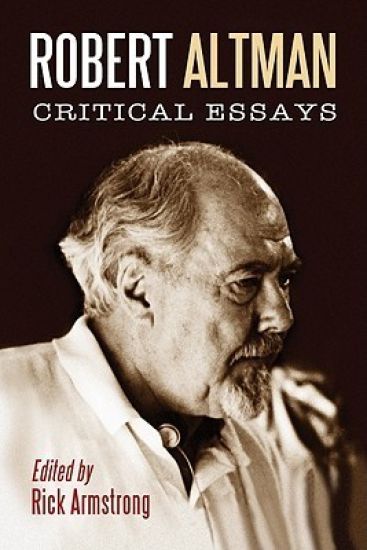
Robert Altman

Robert Altman

McFarland Co Inc
2011
pokkari
The life and work of motion picture director Robert Altman (1925-2006) are interpreted from a variety of perspectives in this collection of essays. Actors, historians, film scholars, and cultural theorists reflect on Altman and his five-decade career and discuss the significance of music, history and genre in his films. Two actors who have appeared in some of the filmmaker's most important works are prominently represented, with a statement from Elliot Gould (MASH, The Long Goodbye, California Split) and an essay by Michael Murphy (McCabe and Mrs. Miller, Nashville, Tanner '88). The collection ends with an essay on the importance of death in the director's final productions The Company (2003) and Prairie Home Companion (2006) by noted Altman scholar Robert T. Self.
Robert Morgan

Robert Morgan

MCFARLAND CO INC
2022
pokkari
For more than fifty years Robert Morgan has brought to life the landscape, history and culture of the Southern Appalachia of his youth. In 30 acclaimed volumes, including poetry, short story collections, novels and nonfiction prose, he has celebrated an often marginalized region. His many honors include four NEA Fellowships, a Guggenheim Fellowship and an award from the American Academy of Arts and Letters, as well as television appearances (The Best American Poetry: New Stories from the South, Prize Stories: The O. Henry Awards). This first book on Morgan collects appreciations and analyses by some of his most dedicated readers, including fellow poets, authors, critics and scholars. An unpublished interview with him is included, along with an essay by him on the importance of sense of place, and a bibliography of publications by and about him.
Robert F. Kennedy and the Shaping of Civil Rights, 1960-1964
From the 1960 John F. Kennedy presidential campaign to the signing of the Civil Rights Act of 1964, Attorney General Robert F. Kennedy and the Department of Justice worked tirelessly to change the climate of civil rights in the nation. This book explores how the Kennedy brothers and leaders such as Martin Luther King, Jr., John Lewis and James Meredith, among others, pushed for change at a critical time. Through an analysis of White House memoranda, speeches, telephone conversations and recorded discussions as well as secondary sources, this study explores Robert Kennedy's role in key events of the civil rights movement, which include the Freedom Rides in 1961, the Ole Miss crisis in 1962 and the Birmingham campaign and March on Washington in 1963. The combined efforts of the Kennedys and these leaders helped change the atmosphere in the nation to one of acceptance and opportunity for African Americans and other minorities.
Robert E. Howard

Robert E. Howard

Leon Nielsen

McFarland Co Inc
2010
pokkari
Robert E. Howard published primarily in pulp magazines, creating memorable characters like Conan of Cimmeria. After his suicide at the age of 30, pulps continued publishing Howard material posthumously. His first hardcover book appeared in 1937, a year after his death. That book, A Gent from Bear Creek, is the holy grail for Howard collectors--only 12 original copies are known to exist. This invaluable resource for Howard collectors has information for every known published work. Initial chapters provide a biography, discuss Howard's literary legacy, and give basic tips about book collecting and selling. The main body of the work is a bibliography of Howard's published works from 1925 through 2005. A thorough index locates the publication of every Howard story or poem.
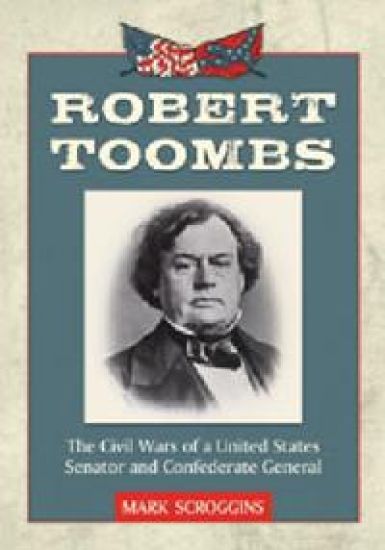
Robert Toombs

Robert Toombs

Mark Scroggins

McFarland Co Inc
2011
pokkari
Robert Toombs of Georgia stands as one of the most fiery and influential politicians of the nineteenth century. Sarcastic, charming, egotistical, and gracious, he rose quickly from state office to congressman to senator in the decades before the Civil War. Though he sought sectional reconciliation throughout the 1840s and 1850s, he eventually became one of the South's most ardent secessionists. This thorough biography chronicles his days as a student and young lawyer in Georgia, his boisterous political career, his appointment as the Confederacy's first Secretary of State, his unsuccessful stint as a Confederate general, and his role as a proud, unreconstructed rebel after the war. An exploration of Toombs' career reveals the political forces and missteps that drove him--and people like him--to want to secede from the United States.
Robert Louis Stevenson

Robert Louis Stevenson

Scott Allen Nollen

McFarland Co Inc
2011
pokkari
Robert Louis Stevenson's cinematic legacy is studied in-depth here, with a look at his life and his body of work. From The Sire De Maletroit's Door (1877) to St. Ives (1896), each adapted story and all relevant film versions are examined, including exhaustive analyses of the 1931 adaptation of Dr. Jekyll and Mr. Hyde and the 1945 version of The Body Snatcher. A discussion of the process of adapting literature for the movies, demonstrating how Stevenson's stories have been misrepresented for more than 80 years, is also provided.
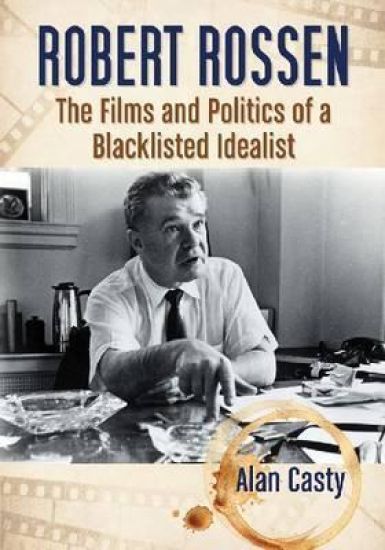
Robert Rossen

Robert Rossen

Alan Casty

McFarland Co Inc
2013
pokkari
This book calls for a re-evaluation of the films of Robert Rossen. Over a 30-year period, he was the most accomplished writer and director who was also a longtime member of the Communist Party, but his achievement has not been recognized, his films have been belittled or ignored, his legacy denied. Rossen's films reflected his times and the American scene with a dramatic intensity and personal expression unmatched by any other filmmaker of the period. The stages of his political journey, from idealism about Communism to his rebellion against the Party's betrayal of those ideals, influenced the rendering of his concerns and themes--the flaws of human nature, the complexities of motives, the paradoxes of betrayal, personal and political. Yet Rossen testified against his fellow filmmakers, and so his morals and character have been denounced, his work diminished as fatally marred by his moral flaws. The opposite is true. Here is a thorough analysis of each of his 22 films and their place in the developing themes of his body of work. It integrates this study of the films with a documented narrative of his relationship to the Party, its history and conflicts, its duplicities--especially the relations of the Party and its followers to the oppressions of the Soviet Union. And so it challenges the validity of the conventional wisdom about the moral issues of the blacklist period.
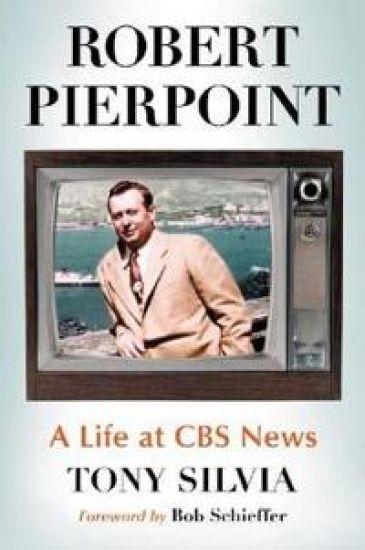
Robert Pierpoint

Robert Pierpoint

Tony Silvia

McFarland Co Inc
2014
pokkari
This is the first biography of journalist Robert Pierpoint, a contemporary of Edward R. Murrow, hired by him to cover the Korean War for CBS. He went on to cover the White House, through six presidents. In more than 40 years with the network, he covered the Kennedy assassination, Watergate, Nixon's resignation, and the State Department, culminating in memorable reporting for CBS Sunday Morning. He was the winner of two Emmy Awards for investigative reporting and helped shape the careers of many of today's journalists, including Bob Schieffer, Dan Rather, Lesley Stahl, and Diane Sawyer.
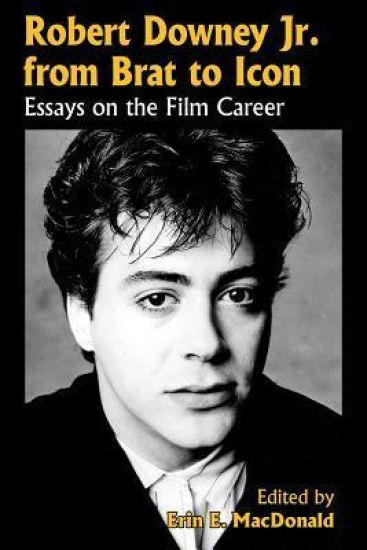
Robert Downey Jr. from Brat to Icon
Robert Downey Jr. may be best known as Iron Man, but his career as an actor stretches back to the 1970s and features several Oscar-quality roles. He has worked with a wide range of innovative directors from Oliver Stone and Robert Altman to Richard Linklater and Shane Black, and has played punk kids, detectives, journalists and even a serial killer. This collection of new essays examines, in roughly chronological order, more than 25 of Downey's best performances in films as diverse as Less Than Zero, Chaplin, Natural Born Killers, A Scanner Darkly, The Soloist and Tropic Thunder. Including a biography, chronology and filmography, the book highlights the inseparability of the actor's biography from his works and from the unique combination of talents he brings to his roles.
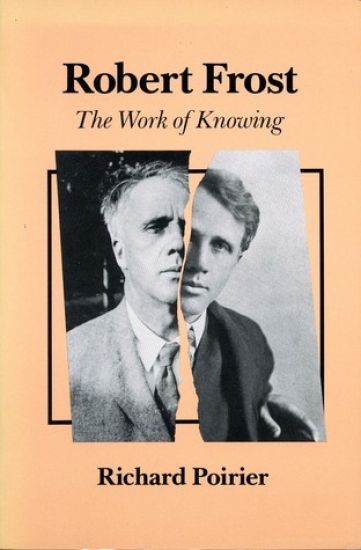
Robert Frost's Poetry of Rural Life

Robert Frost's Poetry of Rural Life

George Monteiro

McFarland Co Inc
2015
pokkari
"Wise old Vergil says in one of his Georgics, 'Praise large farms, stick to small ones,'" Robert Frost said. "Twenty acres are just about enough." Frost started out as a school teacher living the rural life of a would-be farmer, and later turned to farming full time when he bought a place of his own. After a sojourn in England where his first two books were published to critical acclaim, he returned to New England, acquired a new farm and became a rustic for much of the rest of his life. Frost claimed that all of his poetry was farm poetry. His deep admiration for Virgil's Georgics, or poems of rural life, inspired the creation of his own New England "georgics," his answer to the haughty 20th-century modernism that seemed certain to define the future of Western poetry. Like the "West-Running Brook" in his poem of the same name, Frost's poetry can be seen as an embodiment of contrariness.
Robert Maxwell, Israel's Superspy: The Life and Murder of a Media Mogul

Robert Maxwell, Israel's Superspy: The Life and Murder of a Media Mogul

Gordon Thomas; Martin Dillon

Grand Central Publishing
2003
nidottu
Robert Maxwell -- ruthless, volatile, defiant; a man of gargantuan appetites, for food, wine, women, power, money -- unabashedly bared his ambition to the world, as he strove to build a publishing empire. But, throughout his career, Robert Maxwell also nurtured another, more driving, and -- until now -- altogether hidden ambition, and that was to spy for Israel's Mossad. In the end, as Gordon Thomas, an author who has long been trolling the murky waters of international intelligence, shows in this gripping narrative, the conflict between the tycoon's public interests and spy's secret pursuits led to his mystifying death, officially by drowning, in November 1991, offshore of the Canary Islands. According to Thomas's well-placed sources in Israel, Washington, and London, Maxwell first came into Mossad's orbit in the 1970s, when the crack Israeli spy organization stole from the United States its most sophisticated piece of intelligence-gathering software, Enhanced Promis. Of it Mossad made an electronic Trojan horse, secretly amassing strictly classified information from inside the very organizations worldwide to which they were selling it. Mossad's representative for these extremely sensitive transactions costing tens of millions of dollars in China, Russia, India, and twenty other countries was Robert Maxwell. Only Maxwell was also helping himself to some of Mossad's profits -- as well as 750 million from his employees' pension fund -- in desperate attempts to maintain his empire and to meet the demands of increasingly intolerant creditors. Aboard his yacht that November night in 1991 Maxwell no doubt still clung to the hope of a bailout by Mossad. But Mossad's spy masters could not afford to smile on blackmail. This book reveals all the shocking reasons why. Eight pages of black-and-white photographs add to this astonishing tale of international intrigue, espionage, the Mossad, and murder.
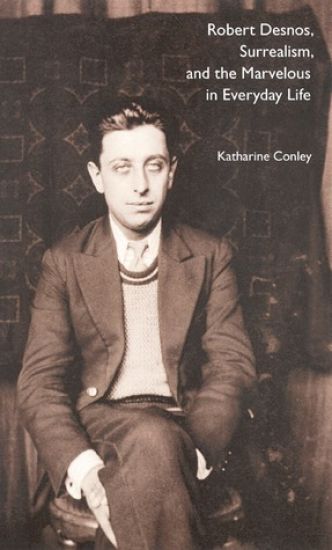
Robert Desnos, Surrealism, and the Marvelous in Ev eryday Life

Robert Desnos, Surrealism, and the Marvelous in Ev eryday Life

Katharine Conley

University of Nebraska Press
2004
sidottu
In this critical biography of Robert Desnos (1900-1945), Katharine Conley reevaluates the surrealist movement through the life and works of one of its founders. Desnos was as famous among the surrealists for his independence of mind as for his elaborate "automatic" drawings and his brilliant oral and written performances during the incubational period of the group. He stayed with the official surrealist movement in Paris for only six years but was pivotal during that time in shaping the surrealist notion of "transforming the world" through radical experiments with language and art.After leaving the group, Desnos continued his career of radio broadcasting and writing for commercials. Though no longer part of the official movement, he remained committed to his own version of popular surrealism: Desnosian surrealism and the search for the "marvelous" in everyday life. Near the end of World War II he was deported and imprisoned for his work in the French resistance and died at the newly liberated camp of Terezin in Czechoslovakia. Reports from within the camp indicate that Desnos took with him into Terezin his most deeply held surrealist beliefs. Katharine Conley is an associate professor of French at Dartmouth College. She is the author of "Automatic Woman: The Representation of Woman in Surrealism" (Nebraska 1996).
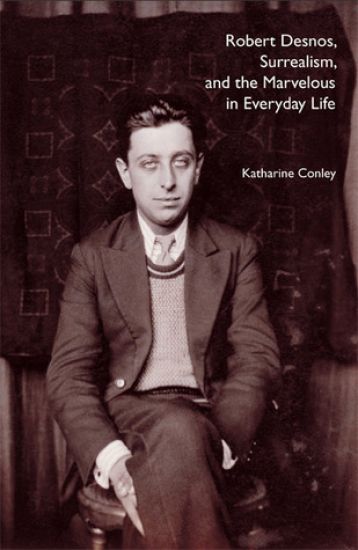
Robert Desnos, Surrealism, and the Marvelous in Everyday Life

Robert Desnos, Surrealism, and the Marvelous in Everyday Life

Katharine Conley

University of Nebraska Press
2008
pokkari
In this critical biography of Robert Desnos (1900–1945), Katharine Conley reevaluates the surrealist movement through the life and works of one of its founders. Desnos was as famous among the surrealists for his independence of mind as for his elaborate "automatic" drawings and his brilliant oral and written performances during the incubational period of the group. He stayed with the official surrealist movement in Paris for only six years but was pivotal during that time in shaping the surrealist notion of "transforming the world" through radical experiments with language and art. After leaving the group, Desnos continued his career of radio broadcasting and writing for commercials. Though no longer part of the official movement, he remained committed to his own version of popular surrealism: Desnosian surrealism and the search for the "marvelous" in everyday life. Near the end of World War II he was deported and imprisoned for his work in the French Resistance and died at the newly liberated camp of Terezin in Czechoslovakia. Reports from within the camp indicate that Desnos took with him into Terezin his most deeply held surrealist beliefs.
Robert Nozick

Robert Nozick

Jonathan Wolff

Stanford University Press
1991
pokkari
Robert Nozick's Anarchy, State, and Utopia is one of the works which dominate contemporary debate in political philosophy. Drawing on traditional assumptions associated with individualism and libertarianism, Nozick mounts a powerful argument for a minimal "night-watchman" state and challenges the views of many contemporary philosophers, most notably John Rawls. This book is the first full-length study of Nozick's work and of the debates to which it has given rise. Wolff situates Nozick's work in the context of current debates and examines the traditions which have influenced his thought. He then critically reconstructs the key arguments of Anarchy, State, and Utopia, focusing on Nozick's doctrine of rights, his derivation of the minimal state, and his Entitlement Theory of Justice. Wolff subjects Nozick's reasoning to rigorous scrutiny and argues that, despite the seductive simplicity of Nozick's libertarianism, it is, in the end, neither plausible nor wholly coherent. The book concludes by assessing Nozick's place in contemporary political philosophy.
Robert Oppenheimer

Robert Oppenheimer

Stanford University Press
1995
pokkari
Robert Oppenheimer (1904-1967) is one of the few American scientists who have become public and controversial figures in the twentieth century.T his book adds a new dimension to the Oppenheimer story by offering a look at the private man behind the public figure. It consists of letters spanning the period from his Harvard student days in 1922 to his departure from Los Alamos in 1945. The letters are supplemented by recollections of those who knew Oppenheimer and by his own recollections from an interview a few years before his death. 'A beautifully organized collection of letters and reminiscences ...The editors have interviewed those who knew and worked with him, stirred in the necessary explanatory background, and produced an account, both scholarly and highly readable, which throws fresh light on a man who will probably always remain something of an enigma. Amid devotional defense and almost rabid attack, their book is a model of objectivity.' New York Times Book RevieW 'An intimate, carefully documented, and honest book.' Scientific American 'The first scholarly attempt to come to grips with the development of Oppenheimer's elusive personality, it is all the more impressive because its many revealing letters and candid commentary were gathered from those who knew him best.' Science 'A milestone in Oppenheimer scholarship ...The full measure of Oppenheimer the man, the scientist, and the public figure remains to be taken, but the publication of this rich volume will markedly aid the accomplishment of that ultimate and demanding task.'
The Letters of Robert Duncan and Denise Levertov

The Letters of Robert Duncan and Denise Levertov

Robert J. Bertholf; Albert Gelpi

Stanford University Press
2003
sidottu
This volume presents the complete correspondence between two of the most important and influential American poets of the postwar period. The almost 500 letters range widely over the poetry scene and the issues that made the period so lively and productive. But what gives the exchange its special personal and literary resonance is the sense of spiritual affinity and shared conviction about the power of the visionary imagination. Duncan and Levertov explore these matters in rich detail until, under the stress of dealing with the Vietnam War in poetry, they discover deep-seated differences in the religious and ethical convictions underlying their politics and poetic stance. The issues that drew them together and those that drove them apart create a powerful personal drama with far-reaching historical and cultural significance. The editors have provided a critical Introduction, full notes, a chronology, and a glossary of names.