Kirjojen hintavertailu. Mukana 11 342 296 kirjaa ja 12 kauppaa.

Kirjahaku

Etsi kirjoja tekijän nimen, kirjan nimen tai ISBN:n perusteella.

1000 tulosta hakusanalla Samuel Butler; Samuel Johnson

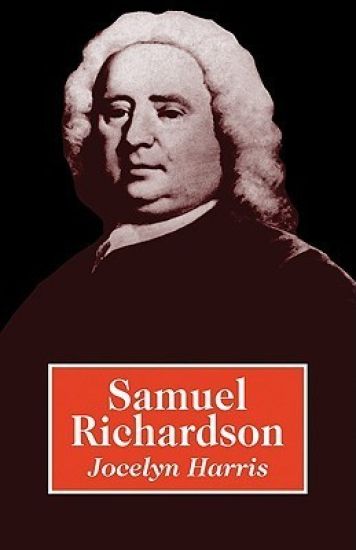
Samuel Richardson

Samuel Richardson

Cambridge University Press
1989
sidottu
This 1989 volume was created to mark the three-hundredth anniversary of Samuel Richardson's birth, with fifteen essays, some illustrated, by contributors who investigate various aspects of the novelist's work. The essays offer fresh readings of individual novels and of Richardson's whole oeuvre. Subjects range from an examination of reactions to Pamela to observations on patterns of male friendship in the novels. Richardson's personal epistolary production is studied by several of the contributors, one of whom makes a strong appeal for the publication of Richardson's complete correspondence. A strikingly original essay explores the novelist's temporal and geographical world, in relation to the real London of the time. This important collection, festive in spirit but sharp, scholarly and brilliantly multi-faceted, is a landmark in Richardson studies.
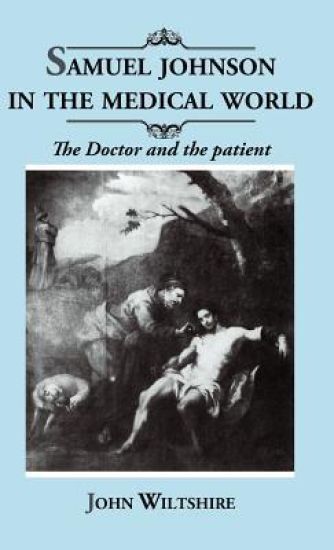
Samuel Johnson in the Medical World

Samuel Johnson in the Medical World

John Wiltshire

Cambridge University Press
1991
sidottu
Samuel Johnson has become known to posterity in two capacities: through his own works as the great literary essayist of the eighteenth century, and, through Boswell's Life, as a man - notoriously a medical patient with a string of physical and psychological ailments. John Wiltshire brings the two together in this 1991 study of Johnson the writer as 'Doctor' and patient. The subject of modern medical historians' case studies, Johnson also cultivated the acquaintance of doctors in his own day, and was himself a 'dabbler in physics'. John Wiltshire illuminates Johnson's life and work by setting them in their medical context, and also examines the importance of medical themes in Johnson's own writings. He discusses the many parts of Johnson's work touching on doctors, medicines, hospitals and medical experimentation, and analyses the central theme of human suffering - in body and mind - and its alleviation.
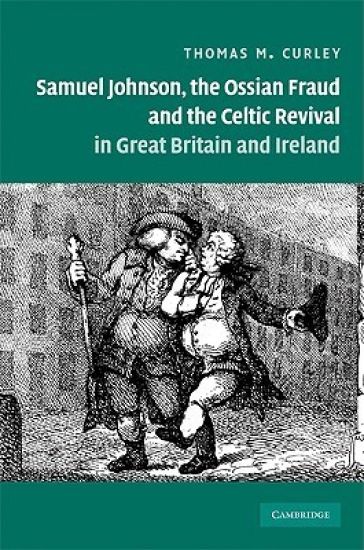
Samuel Johnson, the Ossian Fraud, and the Celtic Revival in Great Britain and Ireland
James Macpherson's famous hoax, publishing his own poems as the writings of the ancient Scots bard Ossian in the 1760s, remains fascinating to scholars as the most successful literary fraud in history. This study presents the fullest investigation of his deception to date, by looking at the controversy from the point of view of Samuel Johnson. Johnson's dispute with Macpherson was an argument with wide implications not only for literature, but for the emerging national identities of the British nations during the Celtic revival. Thomas M. Curley offers a wealth of genuinely new information, detailing as never before Johnson's involvement in the Ossian controversy, his insistence on truth-telling, and his interaction with others in the debate. The appendix reproduces a rare pamphlet against Ossian written with the assistance of Johnson himself. This book will be an important addition to knowledge about both the Ossian controversy and Samuel Johnson.
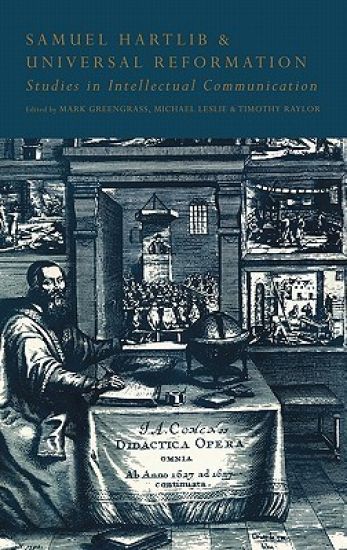
Samuel Hartlib and Universal Reformation
Samuel Hartlib was a key figure in the intellectual revolution of the seventeenth century. Originally from Elbing, in Prussig, Hartlib settled permanently in England from the late 1620s until his death in 1662. His aspirations formed a distinctive and influential strand in English intellectual life during those revolutionary decades. This volume reflects the variety of the theoretical and practical interests of Hartlib's circle and presents them in their continental context. The editors of the volume are all attached to the Hartlib Papers Project at the University of Sheffield, a major collaborative research effort to exploit the largely untapped resources of the surviving Hartlib manuscripts. In an introduction to the volume they explore the background to the Hartlib circle and provide the context in which the essays should be read.
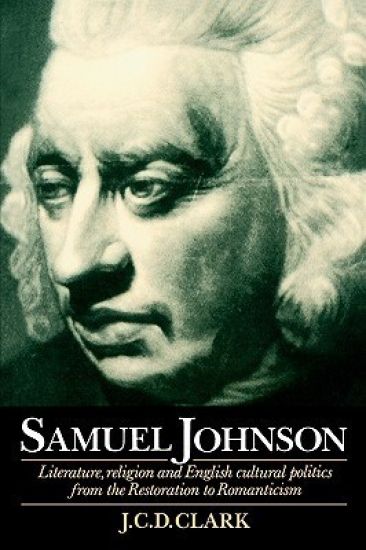
Samuel Johnson

Samuel Johnson

J. C. D. Clark

Cambridge University Press
1994
sidottu
This book offers the first analysis of the life and thought of the writer Samuel Johnson from an historian’s viewpoint, reversing the orthodoxy which has dominated the subject for over thirty years. Jonathan Clark, who has written extensively on English and American religion, ideology and politics in the eighteenth century, presents here a Johnson strikingly different from the apolitical, pragmatic and eccentric figure who emerges from the pages of most students of English literature. Johnson’s commitments and conflicts in religion and politics, obscured since Macaulay, are reconstructed; his role in the literary dynamics of his age is revealed against a new context for English cultural politics between the Restoration and the age of Romanticism. This book will therefore be of interest not only to Johnsonians but to historians of ideas and students of English literature.
Samuel Johnson

Samuel Johnson

J. C. D. Clark

Cambridge University Press
1994
pokkari
This book offers the first analysis of the life and thought of the writer Samuel Johnson from an historian’s viewpoint, reversing the orthodoxy which has dominated the subject for over thirty years. Jonathan Clark, who has written extensively on English and American religion, ideology and politics in the eighteenth century, presents here a Johnson strikingly different from the apolitical, pragmatic and eccentric figure who emerges from the pages of most students of English literature. Johnson’s commitments and conflicts in religion and politics, obscured since Macaulay, are reconstructed; his role in the literary dynamics of his age is revealed against a new context for English cultural politics between the Restoration and the age of Romanticism. This book will therefore be of interest not only to Johnsonians but to historians of ideas and students of English literature.
Samuel Hartlib and Universal Reformation
Samuel Hartlib was a key figure in the intellectual revolution of the seventeenth century. Originally from Elbing, in Prussig, Hartlib settled permanently in England from the late 1620s until his death in 1662. His aspirations formed a distinctive and influential strand in English intellectual life during those revolutionary decades. This volume reflects the variety of the theoretical and practical interests of Hartlib's circle and presents them in their continental context. The editors of the volume are all attached to the Hartlib Papers Project at the University of Sheffield, a major collaborative research effort to exploit the largely untapped resources of the surviving Hartlib manuscripts. In an introduction to the volume they explore the background to the Hartlib circle and provide the context in which the essays should be read.
Samuel Clarke: A Demonstration of the Being and Attributes of God
Samuel Clarke was by far the most gifted and influential Newtonian philosopher of his generation, and A Demonstration of the Being and Attributes of God, which constituted the 1704 Boyle Lectures, was one of the most important works of the first half of the eighteenth century, generating a great deal of controversy about the relation between space and God, the nature of divine necessary existence, the adequacy of the Cosmological Argument, agent causation, and the immateriality of the soul. Together with the other texts presented in this edition, it also provides the best introduction to Clarke's philosophical views, which, in addition to their intrinsic interest, are historically important for the light they shed both on the philosophical positions within the Newtonian circle and on the exchange between Clarke and Leibniz, the most famous philosophical controversy of the eighteenth century.
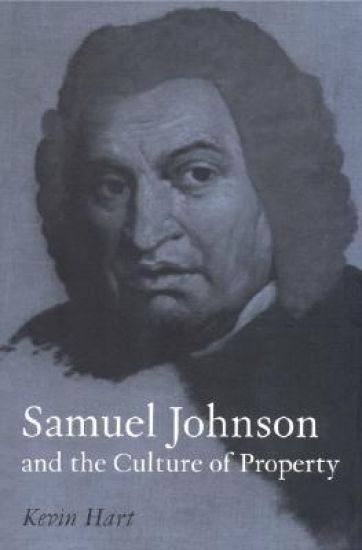
Samuel Johnson and the Culture of Property

Samuel Johnson and the Culture of Property

Kevin Hart

Cambridge University Press
1999
sidottu
Kevin Hart traces the vast literary legacy and reputation of Samuel Johnson. Through detailed analyses of the biographers, critics and epigones who carefully crafted and preserved Johnson’s life for posterity, Hart explores the emergence of what came to be called ‘The Age of Johnson’. Hart shows how late seventeenth- and early eighteenth-century Britain experienced the emergence and consolidation of a rich and diverse culture of property. In dedicating himself to Johnson’s death, Hart argues, James Boswell turned his friend into a monument, a piece of public property. Through subtle analyses of copyright, forgery and heritage in eighteenth-century life, this study traces the emergence of competing forms of cultural property: a Hanoverian politics of property engages a Jacobite politics of land. Kevin Hart places Samuel Johnson within this rich cultural context, demonstrating how Johnson came to occupy a place at the heart of the English literary canon.
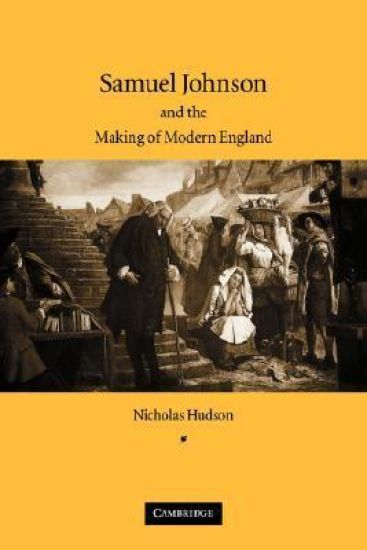
Samuel Johnson and the Making of Modern England

Samuel Johnson and the Making of Modern England

Nicholas Hudson

Cambridge University Press
2003
sidottu
Samuel Johnson, one of the most renowned authors of the eighteenth century, became virtually a symbol of English national identity in the century following his death in 1784. In Samuel Johnson and the Making of Modern England Nicholas Hudson argues that Johnson not only came to personify English cultural identity but did much to shape it. Hudson examines his contribution to the creation of the modern English identity, approaching Johnson's writing and conversation from scarcely explored directions of cultural criticism - class politics, feminism, party politics, the public sphere, nationalism and imperialism. Hudson charts the career of an author who rose from obscurity to fame during precisely the period that England became the dominant ideological force in the Western world. In exploring the relations between Johnson's career and the development of England's modern national identity, Hudson develops provocative arguments concerning both Johnson's literary achievement and the nature of English Nationhood.
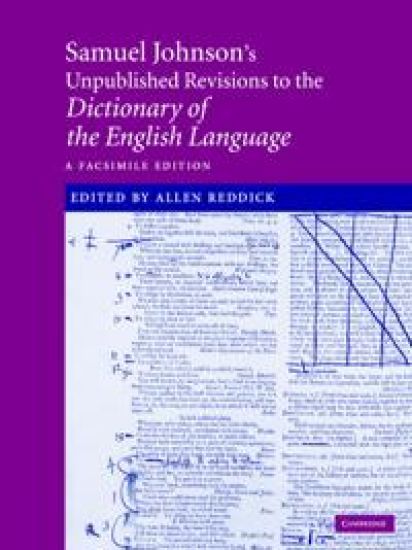
Samuel Johnson's Unpublished Revisions to the Dictionary of the English Language
This edition makes available for the first time the largest collection of unpublished material by the great eighteenth-century writer and lexicographer Samuel Johnson in existence. For the revised fourth edition (1773) of Johnson's Dictionary of the English Language, Johnson and his amanuensis annotated over one hundred and twenty interleaved folio pages of the first edition, but the printer for unknown reasons failed to include the corrections. These pages, including hundreds of authorial additions and changes to the text, are reproduced here in facsimile, along with a transcription, an extensive commentary and notes. This extraordinary archive offers a unique record of Johnson's methods of revision, his collaboration with his assistants, and the preparation of printer's copy in general. Johnson's deletion and editing of hundreds of new quotations, notes, and definitions contributed by others sheds much new light on his intentions for his work and his attitudes towards language and literature.
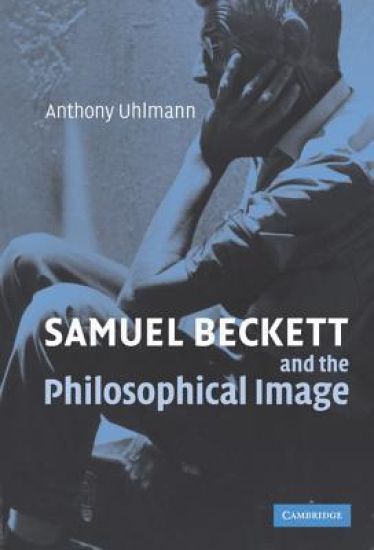
Samuel Beckett and the Philosophical Image

Samuel Beckett and the Philosophical Image

Anthony Uhlmann

Cambridge University Press
2006
sidottu
Beckett often made use of images from the visual arts and readapted them, staging them in his plays, or using them in his fiction. Anthony Uhlmann sets out to explain how an image differs from other terms, like 'metaphor' or 'representation', and, in the process, to analyse Beckett's use of images borrowed from philosophy and aesthetics. This study, first published in 2006, carefully examines Beckett's thoughts on the image in his literary works and his extensive notes to the philosopher Arnold Geulincx. Uhlmann considers how images might allow one kind of interaction between philosophy and literature, and how Beckett makes use of images which are borrowed from, or drawn into dialogue with, philosophical images from Geulincx, Berkeley, Bergson, and the ancient Stoics. Uhlmann's reading of Beckett's aesthetic and philosophical interests provides a revolutionary reading of the importance of the image in his work.
The Letters of Samuel Beckett: Volume 1, 1929–1940

The Letters of Samuel Beckett: Volume 1, 1929–1940

Samuel Beckett

Cambridge University Press
2009
sidottu
The letters written by Samuel Beckett between 1929 and 1940 provide a vivid and personal view of Western Europe in the 1930s, and mark the gradual emergence of Beckett's unique voice and sensibility. The Cambridge University Press edition of The Letters of Samuel Beckett offers for the first time a comprehensive range of letters of one of the greatest literary figures of the twentieth century. Selected for their bearing on his work from over 15,000 extant letters, the letters published in this four-volume edition encompass sixty years of Beckett's writing life (1929–1989), and include letters to friends, painters and musicians, as well as to students, publishers, translators, and colleagues in the world of literature and theatre. For anyone interested in twentieth-century literature and theatre this edition is essential reading, offering not only a record of Beckett's achievements but a powerful literary experience in itself.
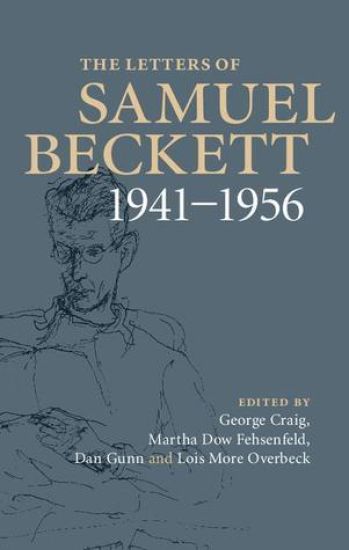
The Letters of Samuel Beckett: Volume 2, 1941–1956

The Letters of Samuel Beckett: Volume 2, 1941–1956

Samuel Beckett

Cambridge University Press
2011
sidottu
This second volume of The Letters of Samuel Beckett opens with the war years, when it was often impossible or too dangerous to correspond. The surge of letters beginning in 1945, and their variety, are matched by the outpouring and the range of Beckett's published work. Primarily written in French and later translated by the author, the work includes stories, a series of novels (Molloy, Malone meurt and L'Innommable), essays and plays – most notably En attendant Godot. The letters chronicle a passionately committed but little known writer evolving into a figure of international reputation, and his response to such fame. The volume provides detailed introductions which discuss Beckett's situation during the war and his crucial move into the French language, as well as translations of the letters, explanatory notes, year-by-year chronologies, profiles of correspondents and other contextual information.
The Letters of Samuel Beckett: Volume 3, 1957–1965

The Letters of Samuel Beckett: Volume 3, 1957–1965

Samuel Beckett

Cambridge University Press
2014
sidottu
This third volume of The Letters of Samuel Beckett focuses on the years when Beckett is striving to find a balance between the demands put upon him by his growing international fame, and his need for the peace and silence from which new writing might emerge. This is the period in which Beckett launches into work for radio, film and, later, into television. It also marks his return to writing fiction, with his first major piece for a decade, Comment c'est (How It Is). Where hitherto he has been reticent about the writing process, now he devotes letter after letter to describing and explaining his work in progress. For the first time Beckett has a woman as his major correspondent: a relationship shown in his intense and abundant letters to Barbara Bray. The volume also provides critical introductions, chronologies, explanatory notes and profiles of Beckett's main correspondents.
The Letters of Samuel Beckett: Volume 4, 1966–1989

The Letters of Samuel Beckett: Volume 4, 1966–1989

Samuel Beckett

Cambridge University Press
2016
sidottu
This fourth and final volume, which completes the Cambridge edition of The Letters of Samuel Beckett, covers the final twenty-four years of what was, as Beckett saw it, a surprisingly long life. During these years he produced many of his finest and most concentrated works for theatre, plays that included Not I, Ohio Impromptu, and Catastrophe; for television he wrote Eh Joe and Ghost Trio; while in prose, he produced the late 'trilogy' that comprises Company, Ill Seen Ill Said, and Worstward Ho. In 1969, Beckett was awarded the Nobel Prize in Literature, and the letters from this period show him struggling to cope with the pressures created by his ever-growing international fame. The letters reveal how, later, he turned his mind to his legacy, as seen through his interactions with biographers and archivists. This volume also provides chronologies, explanatory notes, translations, and profiles of Beckett's chief correspondents.
Samuel Johnson after 300 Years

Samuel Johnson after 300 Years

Cambridge University Press
2009
sidottu
To mark the tercentenary of Samuel Johnson's birth in 2009, the specially-commissioned essays contained here review his scholarly reputation. An international team of experts reflects authoritatively on the various dimensions of literary, historical, critical and ethical life touched by Johnson's extraordinary achievement. The volume distinctively casts its net widely and combines consistently innovative thinking on Johnson's historical role with a fresh sense of present criticism. Chapters cover subjects as diverse as Johnson's moral philosophy, his legal thought, his influence on Jane Austen, and the question of the Johnson canon. The contributors examine the larger theoretical and scholarly contexts in which it is now possible to situate his work, and from which it may often be necessary to differentiate it. All the contributors have a distinguished record of scholarship in eighteenth-century studies, Johnson scholarship, and cultural history and theory.