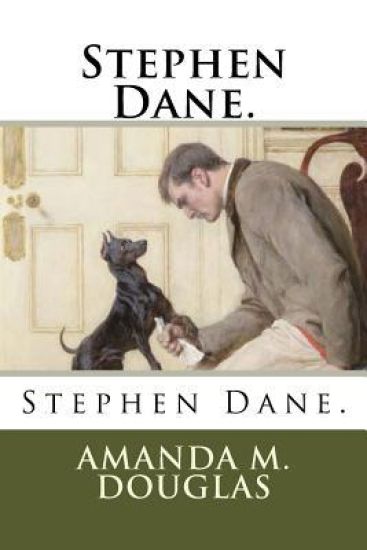
Amanda Minnie Douglas (July 14, 1831 - July 18, 1916) was an American writer of adult and juvenile fiction. She was probably best remembered by young readers of her day for the Little Girl and Helen Grant series published over the decades flanking the turn of the twentieth century.Born in New York City, the eldest daughter of John Douglas and Elizabeth Horton was raised in the city of her birth with the exception of several years spent on a farm near Poughkeepsie, New York. She studied art design at the City Institute of New York City for a time before circumstances forced her to fall back on her greater talent as a writer to help support her family. In 1853, Douglas and her family moved from New York City to Newark, New Jersey, where she would remain a resident for the balance of her life.Douglas began by submitting short stories and poems to local publications. In time her stories appeared in editions of The New York Ledger, Saturday Evening Post and the Lady's Friend Magazine. Her first novel, In Trust, was published in 1866 and sold some 20,000 copies. Learning from this first experience, Douglas made sure to retain the copyrights on all of her future works. She would go on to publish at least a novel a year until her retirement in 1913
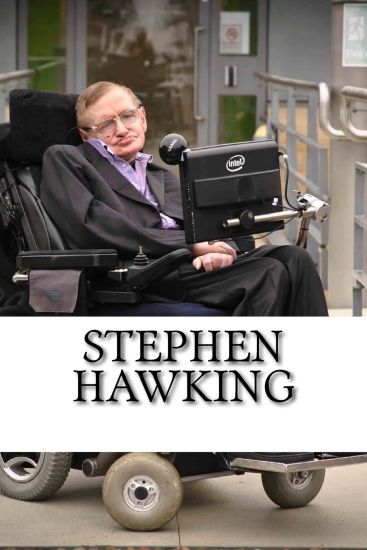
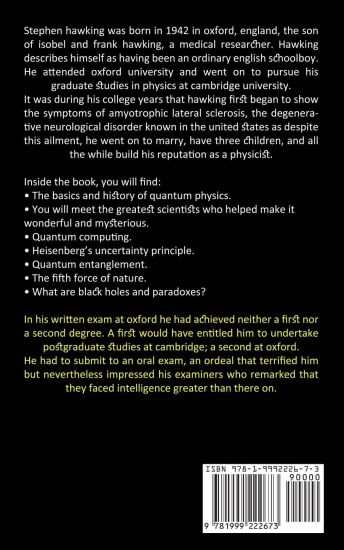
Stephen Hawking was an English theoretical physicist, cosmologist, author, and Director of Research at the Centre for Theoretical Cosmology within the University of Cambridge. His scientific works included a collaboration with Roger Penrose on gravitational singularity theorems in the framework of general relativity and the theoretical prediction that black holes emit radiation, often called Hawking radiation. Hawking was the first to set out a theory of cosmology explained by a union of the general theory of relativity and quantum mechanics. He was a vigorous supporter of the many-worlds interpretation of quantum mechanics. Hawking was a Fellow of the Royal Society (FRS), a lifetime member of the Pontifical Academy of Sciences, and a recipient of the Presidential Medal of Freedom, the highest civilian award in the United States. In 2002, Hawking was ranked number 25 in the BBC's poll of the 100 Greatest Britons. He was the Lucasian Professor of Mathematics at the University of Cambridge between 1979 and 2009 and achieved commercial success with works of popular science in which he discusses his own theories and cosmology in general. His book A Brief History of Time appeared on the British Sunday Times best-seller list for a record-breaking 237 weeks. Hawking had a rare early-onset slow-progressing form of motor neurone disease (also known as amyotrophic lateral sclerosis "ALS" or Lou Gehrig's disease) that gradually paralysed him over the decades. Even after the loss of his speech, he was still able to communicate through a speech-generating device, initially through use of a hand-held switch, and eventually by using a single cheek muscle.
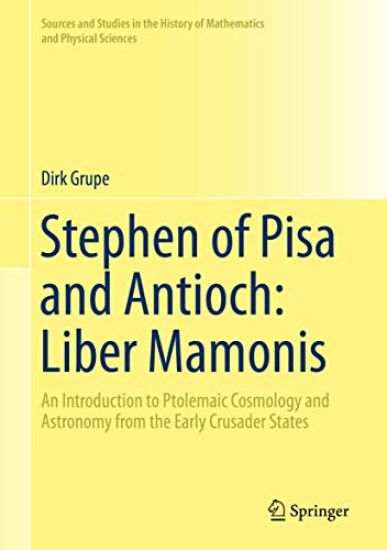
This volume aims to make Stephen of Pisa and Antioch’s work on the celestial sciences accessible to a wider readership, providing not just the text but a translation and introduction as well. The edition is based on the only known manuscript of the Liber Mamonis, MS Cambrai, Médiathèque d’Agglomération, A 930. It is split into two parts: the first provides an extensive introduction to Stephen and his work, while the second features the edition and translation. A comprehensive glossary and collection of photographs of plates are also included.
This volume aims to make Stephen of Pisa and Antioch’s work on the celestial sciences accessible to a wider readership, providing not just the text but a translation and introduction as well. The edition is based on the only known manuscript of the Liber Mamonis, MS Cambrai, Médiathèque d’Agglomération, A 930. It is split into two parts: the first provides an extensive introduction to Stephen and his work, while the second features the edition and translation. A comprehensive glossary and collection of photographs of plates are also included.
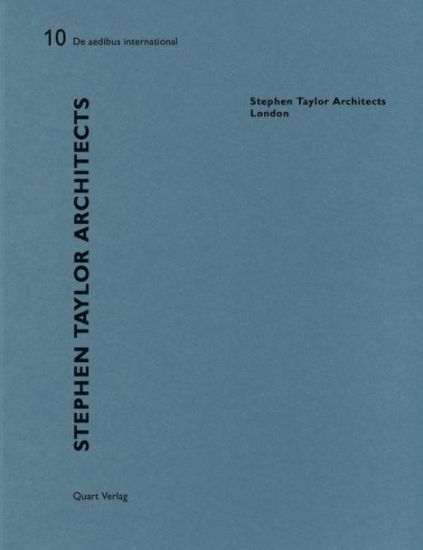
Buildings by the London architect Stephen Taylor use their powerfully innovative nature to smoothly integrate themselves into the surroundings, thereby becoming a valuable part of the London environment. At the same time, the form, materials and details of the buildings are reduced to produce a meditative, consistent character.
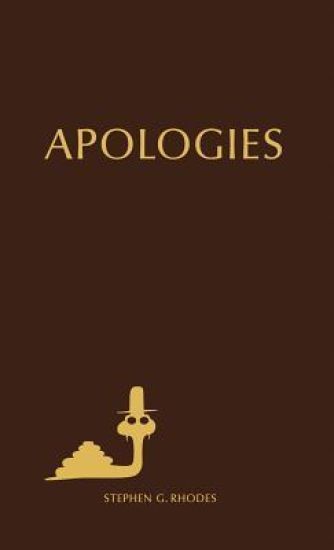
"Apologies" is the first monograph on Berlin-based artist Stephen G. Rhodes (born 1977), looking at works from the last ten years. Rhodes' multimedia installations are often based on American cultural references such as the "Uncle Remus" stories that he politicizes through references to slavery.
Life of Stephen A. Douglas - United States Senator from Illinois is an unchanged, high-quality reprint of the original edition of 1860. Hansebooks is editor of the literature on different topic areas such as research and science, travel and expeditions, cooking and nutrition, medicine, and other genres. As a publisher we focus on the preservation of historical literature. Many works of historical writers and scientists are available today as antiques only. Hansebooks newly publishes these books and contributes to the preservation of literature which has become rare and historical knowledge for the future.