Learn how small changes can make a big difference in your powers of persuasion with this New York Times bestselling introduction to fifty scientifically proven techniques for increasing your persuasive powers in business and life. Every day we face the challenge of persuading others to do what we want. But what makes people say yes to our requests? Persuasion is not only an art, it is also a science, and researchers who study it have uncovered a series of hidden rules for moving people in your direction. Based on more than sixty years of research into the psychology of persuasion, Yes reveals fifty simple but remarkably effective strategies that will make you much more persuasive at work and in your personal life, too. Cowritten by the world's most quoted expert on influence, Professor Robert Cialdini, Yes presents dozens of surprising discoveries from the science of persuasion in short, enjoyable, and insightful chapters that you can apply immediately to become a more effective persuader. Often counterintuitive, the findings presented in Yes will steer you away from common pitfalls while empowering you with little known but proven wisdom. Whether you are in advertising, marketing, management, on sales, or just curious about how to be more influential in everyday life, Yes shows how making small, scientifically proven changes to your approach can have a dramatic effect on your persuasive powers.
Kirsty Horsey; Erika Rackley; Steve Wilson; Helen Rutherford; Tony Storey; Natalie Wortley; Emily Finch; Stefan Fafinski; Nicola Monaghan; Richard Taylor; Damian Taylor; Matthew Dyson; Lisa Webley; Harriet Samuels; Robert G. Lee
Profiles distinguished Asian Americans ranging from historical figures to athletes and including both prominent and less familiar individuals who have made significant contributions in their fields.
This report, the second in the series from the Upper Tisza Project, examines the lowland zone of the Bodrogkoz Block in northeastern Hungary. After outlining the theoretical and methodological frmaework for the project, the book seeks to "define some of the principle changes in the landscape in Block 2 over the last 12,000 years, and to characterise the main trends in settlement in the Bodrogkoz area".
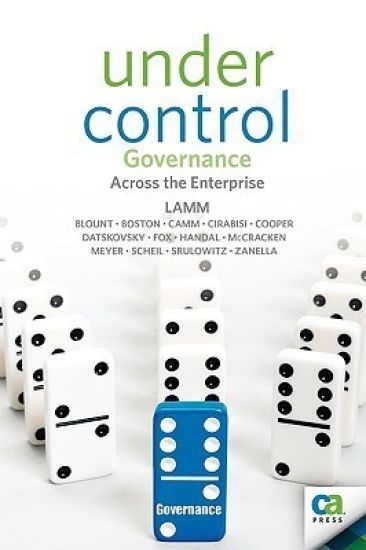
Jacob Lamm; Sumner Blount; William McCracken; Kenneth Handal; Robert Cirabisi; Robert Zanella; Helge Scheil; John Meyer; Marc Camm; Christopher Fox; Nancy Cooper; Alan Srulowitz; Galina Datskovsky; Steve Boston; Jim Keogh; Karen Sleeth; Kenneth Cooper
With the economic crisis that began in 2008, a long-standing trend toward increased regulation is becoming a flood. The clamor for improved enterprise risk management and the complexity of multinational compliance present executives with a dramatically new array of challenges. Governance should offer solutions, but it is clear that yesterday’s governance practices aren’t up to the task. In both design and implementation, they are too disconnected and incomplete to fully address our complex compliance and risk management puzzle. Executives get only fragmented views of their true business performance, and inefficiencies drive up costs. The consequences of inadequate governance were demonstrated in the economic meltdown of 2008. As the world struggles to recover from that crisis, business is now faced with a confusing array of evolving regulations, the challenge of managing compliance across multinational organizations and a new imperative for risk management that is coordinated across the enterprise. It’s clear that yesterday’s governance practices don’t meet today’s need for centralized controls, integrated compliance and risk management and greater transparency. The need for organizations to change—and change now—is clear. Under Control captures decades of business governance experience from many of the leading authorities at CA, Inc. This book sets out not only to explain the essential challenges of effective business governance, but to help you build solutions for your organization based on lessons learned at CA from its customers and in its own corporate structure. From governing the organization’s policies as a whole instead of in silos, to a department-by-department look at the role and impact of governance, to governing your green initiatives, to the role of the board of directors, to the importance of risk management, this book lays out some of the strategies and processes that may help yourorganization manage its risk and regulatory requirements. It is clear that the governance standards in the past were inadequate, and that risks have not been properly assessed or understood. This book is a first step in solving this problem so that your organization is prepared and able to respond and thrive in today’s rapidly evolving environment. Under Control is the first book published in the new CAPress imprint, a joint publishing program between Apress and CA Inc. “One of the defining factors of the first decade of the 21st century has been the increase of regulation and governance. To explain these trends, and the various best practices for ensuring governance, enterprise IT management solutions provider CA Inc. enlisted more than a dozen subject matter experts from its ranks to contribute content. The resulting book explores the need for broad governance, different areas where governance is important, and various ways for organizations to manage and implement compliance, including IT governance, project portfolio management, information governance and sustainability management. The book, while largely vendor-neutral, draws on CA's experience creating governance solutions as well as managing its own governance issues.” —Aaron Smith, Projects@Work
Michael J. Rutter; Edmund J. Sonuga-Barke; Celia Beckett; Jennifer Castle; Jana Kreppner; Robert Kumsta; Wolff Schlotz; Suzanne Stevens; Christopher A. Bell
Wiley-Blackwell (an imprint of John Wiley Sons Ltd)
The English and Romanian Adoptees (ERA) study constituted an invaluable "natural experiment" in which there was a rapid, easily-timed transition from a profoundly depriving environment in Romanian institutions to generally well-functioning adoptive families in England. Multimodal methods of assessment were used throughout the assessments at 4, 6, 11, and 15 years of age. Four key findings were particularly striking. First, institutional deprivation was associated with an apparently deprivation-specific pattern of combinations of quasiautism, disinhibited attachment, cognitive impairment, and inattention/overactivity. Second, longitudinal growth curves showed a relative deceleration of growth between 11 and 15 years (possibly due to early puberty). Third, institutional deprivation without subnutrition was associated with a major impairment in head growth. Fourth, the effects of institutional deprivation were as strong at 15 years as they had been earlier in childhood.
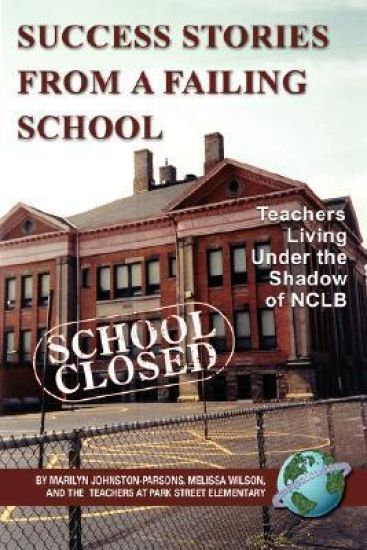
Marilyn Johnston-Parsons; Jeff Bernardi; Martha Bowling; Marilyn Karl; Elizabeth Lloyd; Melanie McCualsky; Gerrie McManamon; Andrew Nash; Robert Owens; Steve Schack
This book tells stories of life in a “failing” school. These are insider stories of the daily lives of children and educators in an urban school during a time when accountability weighs heavy on both teachers and students. Most educators are in favor of accountability. The kind and amount of testing associated with the current accountability movement, however, influence teachers’ and students’ lives in a way not often apparent to parents and politicians.
Dr. Niama Williams' Steven is a psychological triumph. This long overdue Song of Survival, punctuated by the cataclysmic overtures of epiphany, minimalist agreement, and happenstance, is proof that the arrival of the truth does not always come via verbal messenger. From the beginning with "Schindler's List," Dr. Williams asks the film's director to explain, "robbing a people of their origins." She poignantly points out that Middle Passage descendants live without a traceable identity and unlike the majority, "...cannot fabricate what was deliberately stamped out of existence." Dr. Williams' text provides a tracing of the indelible markings each of us makes on the other, and on the collective consciousness of American society.
His father abused his mother and he witnessed it. Sometimes as a 3 year old, he would hide in the closet, and cry while his daddy abused his mother.By the time he was 5 years old he had witnessed a neighbor enter his living room with a butcher knife protruding from her back. Her husband had stabbed her. Her husband had tried to pull the knife out of her back to stab her again, but the knife had gotten stuck between her rib bone. She was able to run for help while he went to get another knife. At 11 he watched a man chase his wife around their home shooting at her. She was able to make it into her home and blockade the door with her body, her husband shot her through the door. That same year "he" stood at the the threshold of his mother and fathers bedroom door with a knife in his right hand, confronting his father and prepared to kill him if he continued to assault his mother. "Take your mutha fucking hands off my mama " Those words should have never been spoken by a 11 year old boy.This book "Steven" represents the horrors of domestic violence.
Bamboozled and lured to the big city, who will offer Steven a plumbing job that he'll love?Steven has and it's not a good feeling. After escaping a small town where he doesn't fit in, Steven's luck turns around when he sits next into a mature and magnetic, plumbing company owner. Sparks soon fly between the Little and his new boss, Joe.Showing up in several Dr. Richards' Littles novels, the two plumbers have gained the attention of readers who have begged for their story. Who knew that a chance encounter could lead to an instant partnership that would be so sweet and burn so hot?Addiction Warning: Pepper's stories will touch your heart and may warm your bottom. While both sweet & spicy, the Dr. Richards' Littles stories may contain more heat than some will find comfortable. Playing doctor with Dr. Richards can be an intense experience that borders on electrifying. The greatest risk, however, is developing an intense craving for more after reading just one. Proceed with caution.
"Steven-A Runner's Life" is my first book and was inspired by being able to attend many of Steven's race events with my husband, Jay, and recording our experiences in my journal. This book includes several of Steven's own blog posts, posted on the Art of [email protected] These posts explain his motivation for trail running and his experiences at many of his races. Also it includes his discipline where he used a special diet, to avoid stomach cramps, and training habits that could be helpful to anyone involved in ultrarunning or ultra sports. (According to Wikipedia, an ultramarathon, also called ultra distance or ultra running, is any footrace longer than the traditional marathon length, which is 26.2 miles. In the last two years of Steven's training for the Ultra trail du Mont Blanc in Chamonix France, he bought and began renovating a cabin in Oregon. This book shows with muti-tasking, discipline and many prayers that all things are possible. I hope you enjoy this book as much as I have enjoyed reliving our experiences.
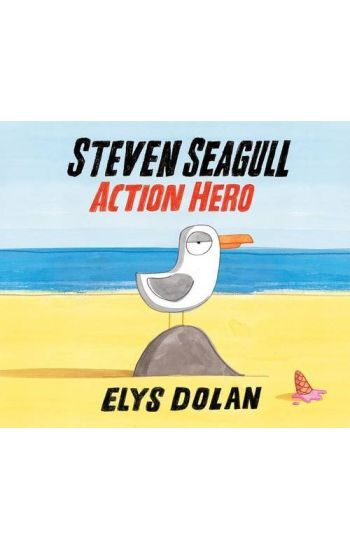
Find out how Steven Seagull saves Beach City in this hilarious action-packed picture book from the creator of Weasels, Elys Dolan. It's packed with cross-over jokes to appeal to children and adults too. The artwork is full of details for poring over time and time again. And you'll get to see sharks playing volleyball, a goldfish driving a speedboat, crabs building sandcastles . . . oh, and the most hilarious life-guard ever!
After a year of being unlawfully detained in an assessment and treatment unit Steven Neary came home and started to build a life that works for him. Steven is autistic and has learning disabilities and this book reveals his wisdom and humour whilst constructing a fulfilling life.
A Hollywood director who blends substance with the mainstream Steven Soderbergh's feature films present a diverse range of subject matter and formal styles: from the self-absorption of his breakthrough hit Sex, Lies, and Videotape to populist social problem films such as Erin Brockovich, and from the modernist discontinuity of Full Frontal and filmed performance art of Gray's Anatomy to a glossy, star-studded action blockbuster such as Ocean's Eleven. Using a combination of realism and expressive stylization of character subjectivity, Soderbergh's films diverge from the contemporary Hollywood mainstream through the statements they offer on issues including political repression, illegal drugs, violence, environmental degradation, the empowering and controlling potential of digital technology, and economic inequality. Arguing that Soderbergh practices an eclectic type of moviemaking indebted both to the European art cinema and the Hollywood genre film, Aaron Baker charts the common thematic and formal patterns present across Soderbergh's oeuvre. Almost every movie centers on an alienated main character, and Soderbergh has repeatedly emphasized place as a major factor in his narratives. Formally, he represents the unconventional thinking of his outsider protagonists through a discontinuous editing style. Including detailed analyses of major films as well as two interviews with the director, this volume illustrates Soderbergh's hybrid flexibility in bringing an independent aesthetic to wide audiences.
Steven Dietz is one of America’s most widely produced and published contemporary playwrights. Since 1983, his forty-plus plays have been seen at over one hundred regional theatres in the United States, as well as Off-Broadway, and in eighteen foreign countries and ten languages. He is a two-time winner of the Kennedy Center Fund for New American Plays Award, as well as a two-time finalist for the Steinberg New Play Award. He has received the PEN USA West Award in Drama, the Edgar Award for Drama, and the Yomuiri Shimbun Award (the Japanese “Tony.”)While Dietz is best-known for his adult plays, he has also written important plays for younger audiences. This anthology gathers four of them-The Rememberer, Still Life with Iris, Honus & Me, and Jackie & Me. Though diverse in subject matter, the plays share several hallmarks of Dietz’s writing, including realistic dialogue, strong protagonists, an emphasis on memory and magic, a blue-collar sensibility filled with often loopy humor, and a witty and intelligent playing with the boundaries of reality. Setting the plays in context are essays about Dietz and his creative process, his success in working with other theatre professionals, and the profession of theatre for youth. This introduction to Steven Dietz’s work and anthology of plays will be a valuable resource for teachers, directors, writers, and students.
A film-centric portrait of the extraordinarily gifted movie director whose decades-long influence on American popular culture is unprecedented “Everything about me is in my films,” Steven Spielberg has said. Taking this as a key to understanding the hugely successful moviemaker, Molly Haskell explores the full range of Spielberg’s works for the light they shine upon the man himself. Through such powerhouse hits as Close Encounters of the Third Kind, E.T., Jurassic Park, and Indiana Jones, to lesser-known masterworks like A.I. and Empire of the Sun, to the haunting Schindler’s List, Haskell shows how Spielberg’s uniquely evocative filmmaking and story-telling reveal the many ways in which his life, work, and times are entwined. Organizing chapters around specific films, the distinguished critic discusses how Spielberg’s childhood in non-Jewish suburbs, his parents’ traumatic divorce, his return to Judaism upon his son’s birth, and other events echo in his work. She offers a brilliant portrait of the extraordinary director—a fearful boy living through his imagination who grew into a man whose openness, generosity of spirit, and creativity have enchanted audiences for more than 40 years.