The first Ted Gorse adventure - a contemporary fantasy starring Salisbury's unlikeliest hero. On Ted's first day at work he sees an apparition in the Old George Mall. This is not a good start. The job is meant to keep him out of trouble ...His parents have left him in charge of home and the cat for a week. His brother has been catatonic in the hospice for the last four years and he has a final warning from the police hanging over his head. Ted just wants to keep his head down, get a girlfriend, be a good human being, and become a software millionaire, not necessarily in that order. The Thief and the Witch, who wield forces that have shaped his life since before he was born, have other ideas. For them, Ted is the key to destroying the world, or to saving it.
On America's first modern dance company and its many collaborators, with reproductions of costumes, sets, ephemera and more Ruth St Denis (1879–1968) and Ted Shawn (1891–1972) pioneered modern dance in the US with their company Denishawn, founded in 1914. Incorporating elements from ancient, non-Western and Native American sources, Denishawn became the first important American dance company. A generation of dancers and choreographers, including Martha Graham, trained and performed with the company, and many artists, including Auguste Rodin, John Singer Sargent, Katherine Dreier, Marcel Duchamp and Joseph Cornell, collaborated with them. This catalog reproduces artwork, sets, ephemera and especially costumes, many of which have not been seen since the 1930s. Some of the materials and costumes, as well as the choreography, borrow from East and South Asian and Native American cultures, and the publication interrogates the legacy of cultural appropriation in dance. The materials also demonstrate St. Denis and Shawn’s stylistic and personal connections to American and European modernists, broadening an understanding of American dance in early modernism.
Stuck for a speech presentation because of lack of a speech topic idea? Do you want to Rock at your college, community, toastmasters or TED talks? "Public Speaking Topic Secrets for College, Community, Toastmasters and TED talks" will help you discover your perfect topic. You'll be able generate topics based on your purpose, whether you want to inform, entertain, persuade or inspire. 70+ Pathways to Help You Find the Best Speech Topic Idea That You'd Love to Present: Hence, you'll be able to: - Stop wasting days and nights thinking of a speech topic - Invest your time productively by only focusing on crafting your speech - Get 27 surefire ways to find an Idea for writing Informational Speeches - Get ideas to write your short description to send to TED curator about your TED talk - Focus on 7 key areas in your life to generate topic ideas for entertaining speeches - Get ideas for writing memorable speeches at your toastmasters club - Get 15 surefire ways to find ideas for Persuasive speeches inspired by 4 World Championship speeches and 11 TED speeches - Stand out with your presentation in your community or college - Get topic ideas for toastmasters humorous or International speech contests - Get 21 surefire ways to find ideas for Inspiring speeches inspired by 11 World Championship speeches and 8 TED speeches Ready to get started? Claim your copy NOW
This book provides a theological lens through which to view Ted Lasso. The volume explores themes such as faith, belief, hope, imagination, and more. The volume is written from a particularly Christian viewpoint and is organized in two parts. The first, “On the Road,” examines what Ted Lasso can teach us about our own personal journeys of spiritual transformation. The second, “The Lasso Way,” focuses on spiritual transformation from the perspective of Ted as the spiritual guide. Contributors begin by examining personal growth before moving on to think more deeply about individual roles as disciples and spiritual guides to others.
The Pursuit of Myth in the Poetry of Frank O'Hara, Ted Berrigan and John Forbes traces a tradition of revolutionary self-mythologising in the lives and works of Frank O’Hara, Ted Berrigan and John Forbes, as a significant trefoil in twentieth-century English language poetry. All three had untimely deaths, excited a collective homage, and developed cult followings that reverberate today. This book tracks the transmission of the poem as charm, the poet as charmer, and the reinstitution of troubadour erotics as a kind of social poetics. Starting with Orpheus, the book refreshes the myth of the poet as mythmaker, examining how myths of “self” and “nation” are regenerated for the twenty-first century and how persons-as-myths are made in community through coteries of artists and beyond. Duncan Bruce Hose’s critical vocabulary, with its nucleus of mythos, searches the edges of phenomenal enquiry, closing in on the work of “glamour”, “aura”, “charm”, “possession”, “phantasm”, the “daemonic”, and the logic of haunting in the continuing being of these three poets as “charismatic animals”.
The Pursuit of Myth in the Poetry of Frank O'Hara, Ted Berrigan and John Forbes traces a tradition of revolutionary self-mythologising in the lives and works of Frank O’Hara, Ted Berrigan and John Forbes, as a significant trefoil in twentieth-century English language poetry. All three had untimely deaths, excited a collective homage, and developed cult followings that reverberate today. This book tracks the transmission of the poem as charm, the poet as charmer, and the reinstitution of troubadour erotics as a kind of social poetics. Starting with Orpheus, the book refreshes the myth of the poet as mythmaker, examining how myths of “self” and “nation” are regenerated for the twenty-first century and how persons-as-myths are made in community through coteries of artists and beyond. Duncan Bruce Hose’s critical vocabulary, with its nucleus of mythos, searches the edges of phenomenal enquiry, closing in on the work of “glamour”, “aura”, “charm”, “possession”, “phantasm”, the “daemonic”, and the logic of haunting in the continuing being of these three poets as “charismatic animals”.
This fantastic range of fiction for Shared, Guided and Independent reading gives you stories your children will love to read over and over again. Gaelic and Scottish teaching support also accompanies this reading series.
This fantastic range of fiction for Shared, Guided and Independent reading gives you stories your children will love to read over and over again. Gaelic and Scottish teaching support also accompanies this reading series.
CASEY Award Finalist for Best Baseball Book of the Year The untold story of the unique fifty-year friendship between two American icons: John Glenn, the unassailable pioneer of space exploration and Ted Williams, indisputably the greatest hitter in baseball history. It was 1953, the Korean War in full throttle, when two men--already experts in their fields--crossed the fabled 38th Parallel into Communist airspace aboard matching Panther jets. John Glenn was an ambitious operations officer with fifty-nine World War II combat missions under his belt. His wingman was Ted Williams, the two-time American League Triple Crown winner who, at the pinnacle of his career, had been inexplicably recalled to active service in the United States Marine Corps. Together, the affable flier and the notoriously tempestuous left fielder soared into North Korea, creating a death-defying bond. Although, over the next half century, their contrasting lives were challenged by exhilarating highs and devastating lows, that bond would endure. Through unpublished letters, unit diaries, declassified military records, manuscripts, and new and illuminating interviews, The Wingmen reveals an epic and intimate portrait of two heroes--larger-than-life and yet ineffably human, ordinary men who accomplished the extraordinary. At its heart, this was a conflicted friendship that found commonality in mutual respect--throughout the perils of war, sports dominance, scientific innovation, cutthroat national politics, the burden of celebrity, and the meaning of bravery. Now, author Adam Lazarus sheds light on a largely forgotten chapter in these legends' lives--as singular individuals, inspiring patriots, and eventually, however improbable, profoundly close friends.
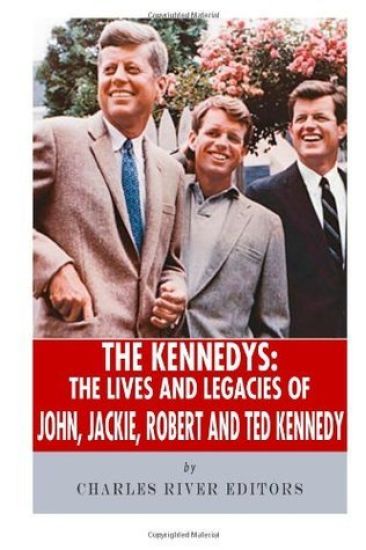
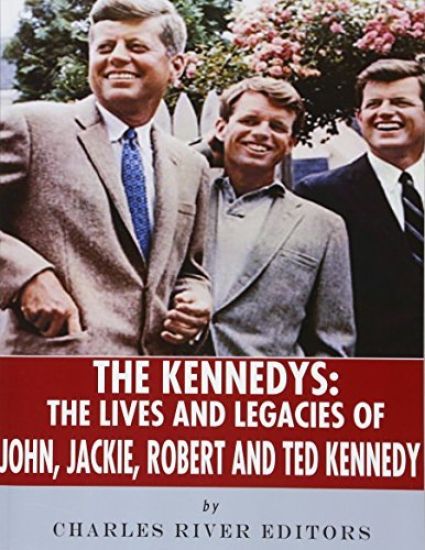
*Includes pictures of the Kennedys and important people, places, and events in their lives. *Includes an introduction for each of the 4. Over the last 50 years, the name Kennedy has become the most famous one in America, with the Kennedy brothers coming to political power during the mid-20th century, while John's beautiful wife Jackie became a political wife and First Lady unlike any the nation had ever witnessed. In time, the Kennedys forged a political dynasty, leaving a lasting legacy in American politics that endures to this day. In many ways, John Fitzgerald Kennedy and his young family were the perfect embodiment of the '60s. The decade began with a sense of idealism, personified by the attractive Kennedy, his beautiful and fashionable wife Jackie, and his young children. Months into his presidency, Kennedy exhorted the country to reach for the stars, calling upon the nation to send a man to the Moon and back by the end of the decade. In 1961, Kennedy made it seem like anything was possible, and Americans were eager to believe him. The Kennedy years were fondly and famously labeled "Camelot," suggesting an almost mythical quality about the young President and his family. The famous label came from John's fashionable and beautiful wife, Jackie, whose elegance and grace made her the most popular woman in the world. Her popularity threatened to eclipse even her husband's, who famously quipped on one presidential trip to France that he was "the man who accompanied Jacqueline Kennedy to Paris." Americans were fascinated by the young First Lady's style, and the manner in which she glamorously positioned both the First Family and the White House in those years, and Jackie remains one of the country's most popular First Ladies. Robert Francis Kennedy (1925-1968) is the quintessential middle brother among the Kennedys, eclipsed in life while working in his brother John's administration, eclipsed in death both by his older brother's assassination and his younger brother's long, influential career in the Senate as a liberal lion. And yet, the politics of the 1960s and the ultimate legacy of the Kennedys, including the "Kennedy Curse," would have been incomplete without Bobby's place in the narrative. Today, unfortunately, Bobby is best remembered for his assassination, the way in which it helped perpetuate the "Kennedy Curse," and the fact that his political promise, including potentially becoming president in 1968, was never fulfilled. Ted may not have been the center of attention in the Kennedy family then or now, but he had the same charisma and skills of his older brothers, as well as the same controversial vices. And as fate would have it, Ted's political legacy may have eclipsed them all. His brothers were victims of two of the country's most tragic assassinations, two other siblings died in plane crashes, and he would have to eulogize nephews. But Ted had the extra gift of length of years, surviving his encounter with the "Kennedy Curse," a 1964 plane crash that severely injured and nearly killed him. Although controversy ensured Ted would never be president, he spent nearly half a century in the U.S. Senate, forging a legacy that earned him the nickname "The Lion of the Senate." Indeed, in the course of becoming the 4th longest serving Senator in American history, Ted became the patriarch of both the Kennedy family and the Democratic Party, as well as one of the most forceful and outspoken advocates of progressivism. The Kennedys tells the story of John, Jackie, Robert, and Ted, weaving their lives and legacies together into one narrative. Along with pictures of the Kennedy family and important people, places, and events in their lives, you will learn about the Kennedys like you never have before, in no time at all.
*Includes pictures *Includes accounts *Includes online resources and a bibliography for further reading The legends of vampires like Dracula have generated massive interest throughout time. Indeed, the story of a man (in some versions a very handsome, dashing man), who feeds on the blood of virgins in order to survive, and who walks the earth only at night, has been revived throughout the centuries in different forms. However, one famous tale that has been lost among the legends is the story of a female Dracula, an educated woman from a well-known family of 16th century Hungary who was so afraid to lose her beauty and young looks that she engaged in dangerous practices, combining witchcraft with exsanguination. Countess Elizabeth B thory is this female Dracula. She is said to have drained the blood of approximately 600 young women, in order to drink it, spread it all over her body as a nurturing blend, or simply to bathe in it. There have been a countless number of serial killers throughout history, and certainly more prolific ones, but the timing, circumstances, and unsolved nature of the case continue to make Jack the Ripper the most famous serial killer in history. The murders came at a time when media coverage could be both more acute and more widespread, and it allowed the public a closer look into how police agencies operated at the time, exposing both their strengths and shortcomings. Around the same time the Zodiac Killer was murdering people on the West Coast, the Son of Sam terrorized New York City in much the same way by killing at random and writing letters to the police. Serial killers often use a set pattern and/or rituals as part of their modus operandi, so in that regard the actions of the Zodiac Killer didn't exactly distinguish him from other serial killers. The main difference, of course, is that most serial killers are caught, including the Son of Sam (David Berkowitz), while the Zodiac Killer's identity remains an unsolved mystery. By both remaining unidentified and leaving seemingly tantalizing clues in his writing, the Zodiac Killer ensured his notorious legacy in American history, much the same way the attempt to identify Jack the Ripper continues to fascinate people across the world today. For most people, Ted Bundy is the quintessential serial killer - a good-looking, highly intelligent man who used his charm to lure an untold number of women to their deaths. In fact, as the judge announced his death sentence, he noted Bundy's intellect and mused that he would have enjoyed hearing Bundy try a case before him had he remained simply the genius law student he had once been. Bundy, of course, ended up choosing a far different path, going on a historic crime spree during the 1970s so prolific that estimates of his kill count vary by dozens, a debate Bundy was only too happy to stoke. On one occasion, when the FBI estimated he was responsible for 3 dozen murders, Bundy replied, "Add one digit to that, and you'll have it." On another occasion, he claimed the estimate of 3 dozen was close to accurate. The case of the Boston Strangler is as confusing and mystifying as it is terrifying. In fact, the mythology and debate lingering over the crime spree only heightened when Albert DeSalvo confessed to the crimes, provided both accurate and inaccurate details about some of them, and had his DNA tied to several of the crime scenes. However, before DeSalvo himself was murdered by an unknown assailant in jail in 1973, he had recanted his confession, and ultimately, he was never tried for the murders in Boston. 50 years after the Boston Strangler stopped killing, investigators and amateurs alike are still debating the very messy and all too real 18 month reign of terror that gripped the city of Boston in the early 1960s and haunts many to this day.
*Includes pictures *Includes accounts *Includes online resources and a bibliography for further reading The legends of vampires like Dracula have generated massive interest throughout time. Indeed, the story of a man (in some versions a very handsome, dashing man), who feeds on the blood of virgins in order to survive, and who walks the earth only at night, has been revived throughout the centuries in different forms. However, one famous tale that has been lost among the legends is the story of a female Dracula, an educated woman from a well-known family of 16th century Hungary who was so afraid to lose her beauty and young looks that she engaged in dangerous practices, combining witchcraft with exsanguination. Countess Elizabeth B thory is this female Dracula. She is said to have drained the blood of approximately 600 young women, in order to drink it, spread it all over her body as a nurturing blend, or simply to bathe in it. There have been a countless number of serial killers throughout history, and certainly more prolific ones, but the timing, circumstances, and unsolved nature of the case continue to make Jack the Ripper the most famous serial killer in history. The murders came at a time when media coverage could be both more acute and more widespread, and it allowed the public a closer look into how police agencies operated at the time, exposing both their strengths and shortcomings. Around the same time the Zodiac Killer was murdering people on the West Coast, the Son of Sam terrorized New York City in much the same way by killing at random and writing letters to the police. Serial killers often use a set pattern and/or rituals as part of their modus operandi, so in that regard the actions of the Zodiac Killer didn't exactly distinguish him from other serial killers. The main difference, of course, is that most serial killers are caught, including the Son of Sam (David Berkowitz), while the Zodiac Killer's identity remains an unsolved mystery. By both remaining unidentified and leaving seemingly tantalizing clues in his writing, the Zodiac Killer ensured his notorious legacy in American history, much the same way the attempt to identify Jack the Ripper continues to fascinate people across the world today. For most people, Ted Bundy is the quintessential serial killer - a good-looking, highly intelligent man who used his charm to lure an untold number of women to their deaths. In fact, as the judge announced his death sentence, he noted Bundy's intellect and mused that he would have enjoyed hearing Bundy try a case before him had he remained simply the genius law student he had once been. Bundy, of course, ended up choosing a far different path, going on a historic crime spree during the 1970s so prolific that estimates of his kill count vary by dozens, a debate Bundy was only too happy to stoke. On one occasion, when the FBI estimated he was responsible for 3 dozen murders, Bundy replied, "Add one digit to that, and you'll have it." On another occasion, he claimed the estimate of 3 dozen was close to accurate. The case of the Boston Strangler is as confusing and mystifying as it is terrifying. In fact, the mythology and debate lingering over the crime spree only heightened when Albert DeSalvo confessed to the crimes, provided both accurate and inaccurate details about some of them, and had his DNA tied to several of the crime scenes. However, before DeSalvo himself was murdered by an unknown assailant in jail in 1973, he had recanted his confession, and ultimately, he was never tried for the murders in Boston. 50 years after the Boston Strangler stopped killing, investigators and amateurs alike are still debating the very messy and all too real 18 month reign of terror that gripped the city of Boston in the early 1960s and haunts many to this day.
*Includes pictures of the Kennedys and important people, places, and events in their lives. *Includes an introduction for each of the 4. Over the last 50 years, the name Kennedy has become the most famous one in America, with the Kennedy brothers coming to political power during the mid-20th century, while John's beautiful wife Jackie became a political wife and First Lady unlike any the nation had ever witnessed. In time, the Kennedys forged a political dynasty, leaving a lasting legacy in American politics that endures to this day. In many ways, John Fitzgerald Kennedy and his young family were the perfect embodiment of the '60s. The decade began with a sense of idealism, personified by the attractive Kennedy, his beautiful and fashionable wife Jackie, and his young children. Months into his presidency, Kennedy exhorted the country to reach for the stars, calling upon the nation to send a man to the Moon and back by the end of the decade. In 1961, Kennedy made it seem like anything was possible, and Americans were eager to believe him. The Kennedy years were fondly and famously labeled "Camelot," suggesting an almost mythical quality about the young President and his family. The famous label came from John's fashionable and beautiful wife, Jackie, whose elegance and grace made her the most popular woman in the world. Her popularity threatened to eclipse even her husband's, who famously quipped on one presidential trip to France that he was "the man who accompanied Jacqueline Kennedy to Paris." Americans were fascinated by the young First Lady's style, and the manner in which she glamorously positioned both the First Family and the White House in those years, and Jackie remains one of the country's most popular First Ladies. Robert Francis Kennedy (1925-1968) is the quintessential middle brother among the Kennedys, eclipsed in life while working in his brother John's administration, eclipsed in death both by his older brother's assassination and his younger brother's long, influential career in the Senate as a liberal lion. And yet, the politics of the 1960s and the ultimate legacy of the Kennedys, including the "Kennedy Curse", would have been incomplete without Bobby's place in the narrative. Today, unfortunately, Bobby is best remembered for his assassination, the way in which it helped perpetuate the "Kennedy Curse", and the fact that his political promise, including potentially becoming president in 1968, was never fulfilled. Ted may not have been the center of attention in the Kennedy family then or now, but he had the same charisma and skills of his older brothers, as well as the same controversial vices. And as fate would have it, Ted's political legacy may have eclipsed them all. His brothers were victims of two of the country's most tragic assassinations, two other siblings died in plane crashes, and he would have to eulogize nephews. But Ted had the extra gift of length of years, surviving his encounter with the "Kennedy Curse", a 1964 plane crash that severely injured and nearly killed him. Although controversy ensured Ted would never be president, he spent nearly half a century in the U.S. Senate, forging a legacy that earned him the nickname "The Lion of the Senate". Indeed, in the course of becoming the 4th longest serving Senator in American history, Ted became the patriarch of both the Kennedy family and the Democratic Party, as well as one of the most forceful and outspoken advocates of progressivism. The Kennedys tells the story of John, Jackie, Robert, and Ted, weaving their lives and legacies together into one narrative. Along with pictures of the Kennedy family and important people, places, and events in their lives, you will learn about the Kennedys like you never have before, in no time at all.
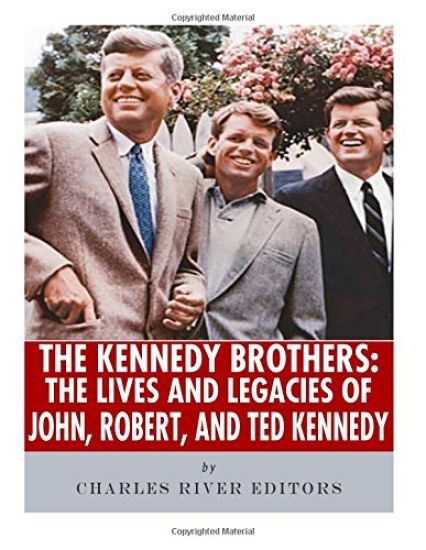
*Includes pictures of the Kennedys and important people, places, and events in their lives. *Includes an introduction for each brother. Over 50 years after the Kennedy Brothers rose to political power in the United States, the name Kennedy remains the nation's most famous political name. From Curse to Camelot, the word evokes poignant memories of young men holding great promise, their ill-fated destinies, and their grasp on both political power and the national conscience. At the same time, each brother was his own man, and they all offered America something different. In many ways, John Fitzgerald Kennedy and his young family were the perfect embodiment of the '60s. The decade began with a sense of idealism, personified by the attractive Kennedy, his beautiful and fashionable wife Jackie, and his young children. Months into his presidency, Kennedy exhorted the country to reach for the stars, calling upon the nation to send a man to the Moon and back by the end of the decade. In 1961, Kennedy made it seem like anything was possible, and Americans were eager to believe him. The Kennedy years were fondly and famously labeled "Camelot," by Jackie herself, suggesting an almost mythical quality about the young President and his family. As it turned out, the '60s closely reflected the glossy, idealistic portrayal of John F. Kennedy, as well as the uglier truths. The country would achieve Kennedy's goal of a manned moon mission, and the landmark Civil Rights Act of 1964 finally guaranteed minorities their civil rights and restored equality, ensuring that the country "would live out the true meaning of its creed." But the idealism and optimism of the decade was quickly shattered, starting with Kennedy's assassination in 1963. The '60s were permanently marred by the Vietnam War, and by the time Robert F. Kennedy and Martin Luther King, Jr. were assassinated in 1968, the country was irreversibly jaded. The events of the decade produced protests and countercultures unlike anything the country had seen before, as young people came of age more quickly than ever. Robert Francis Kennedy (1925-1968) was the quintessential middle brother among the Kennedys, eclipsed in life while working in his brother John's administration, eclipsed in death both by his older brother's assassination and his younger brother's long, influential career in the Senate as a liberal lion. And yet, the politics of the 1960s and the ultimate legacy of the Kennedys, including the "Kennedy Curse", would have been incomplete without Bobby's place in the narrative. Ted may not have been the center of attention in the Kennedy family then or now, but he had the same charisma and skills of his older brothers, as well as the same controversial vices. And as fate would have it, Ted's political legacy may have eclipsed them all. His brothers were victims of two of the country's most tragic assassinations, two other siblings died in plane crashes, and he would have to eulogize nephews. But Ted had the extra gift of length of years, surviving his encounter with the "Kennedy Curse", a 1964 plane crash that severely injured and nearly killed him. Together, the three men blazed different political paths, each forging their own legacy and combining to create the Kennedy family's legacy, one that still captures the imagination of the American public nearly 50 years after John's presidency. The Kennedy Brothers looks at their lives in detail, weaving them together in one chronological narrative that humanizes and highlights the similarities and differences of the brothers, their lives, and their legacies. Along with pictures of the important people, places, and events in their lives, you will learn about the Kennedy Brothers like you never have before, in no time at all.