With Let Us Build Us a City Tracy Daugherty considers the principles of literary art in a series of essays that focus on the nature of artistic vision and the creative individual’s relationship to the world. The book reads like a master class on writing as practice, while performing a deep reading of art and life and looking to discern why liberal education matters so much to our society.At its core, Let Us Build Us a City is a work of cultural and literary history, combining memoir (of the author’s experiences as a student and teacher of literature and writing) with analysis and speculation. Daugherty exploits a variety of forms to explore literary apprenticeship and mentoring, philosophy, politics, metaphysics, and American history.In particular, Daugherty focuses on the creative impulse and the diverse ways in which individual writers apply their imaginations to their craft. Along the way, he offers multiple lace of creative practice within it. Let Us Build Us a City is a stirring defense and timely renewal of our national literary vision.
In an era defined by the threat of nuclear annihilation, Western nations attempted to prepare civilian populations for atomic attack through staged drills, evacuations, and field exercises. In Stages of Emergency the distinguished performance historian Tracy C. Davis investigates the fundamentally theatrical nature of these Cold War civil defense exercises. Asking what it meant for civilians to be rehearsing nuclear war, she provides a comparative study of the civil defense maneuvers conducted by three NATO allies-the United States, Canada, and the United Kingdom-during the 1950s and 1960s. Delving deep into the three countries’ archives, she analyzes public exercises involving private citizens-Boy Scouts serving as mock casualties, housewives arranging home protection, clergy training to be shelter managers-as well as covert exercises undertaken by civil servants.Stages of Emergency covers public education campaigns and school programs-such as the ubiquitous “duck and cover” drills-meant to heighten awareness of the dangers of a possible attack, the occupancy tests in which people stayed sequestered for up to two weeks to simulate post-attack living conditions as well as the effects of confinement on interpersonal dynamics, and the British first-aid training in which participants acted out psychological and physical trauma requiring immediate treatment. Davis also brings to light unpublicized government exercises aimed at anticipating the global effects of nuclear war. Her comparative analysis shows how the differing priorities, contingencies, and social policies of the three countries influenced their rehearsals of nuclear catastrophe. When the Cold War ended, so did these exercises, but, as Davis points out in her perceptive afterword, they have been revived-with strikingly similar recommendations-in response to twenty-first-century fears of terrorists, dirty bombs, and rogue states.
In an era defined by the threat of nuclear annihilation, Western nations attempted to prepare civilian populations for atomic attack through staged drills, evacuations, and field exercises. In Stages of Emergency the distinguished performance historian Tracy C. Davis investigates the fundamentally theatrical nature of these Cold War civil defense exercises. Asking what it meant for civilians to be rehearsing nuclear war, she provides a comparative study of the civil defense maneuvers conducted by three NATO allies-the United States, Canada, and the United Kingdom-during the 1950s and 1960s. Delving deep into the three countries’ archives, she analyzes public exercises involving private citizens-Boy Scouts serving as mock casualties, housewives arranging home protection, clergy training to be shelter managers-as well as covert exercises undertaken by civil servants.Stages of Emergency covers public education campaigns and school programs-such as the ubiquitous “duck and cover” drills-meant to heighten awareness of the dangers of a possible attack, the occupancy tests in which people stayed sequestered for up to two weeks to simulate post-attack living conditions as well as the effects of confinement on interpersonal dynamics, and the British first-aid training in which participants acted out psychological and physical trauma requiring immediate treatment. Davis also brings to light unpublicized government exercises aimed at anticipating the global effects of nuclear war. Her comparative analysis shows how the differing priorities, contingencies, and social policies of the three countries influenced their rehearsals of nuclear catastrophe. When the Cold War ended, so did these exercises, but, as Davis points out in her perceptive afterword, they have been revived-with strikingly similar recommendations-in response to twenty-first-century fears of terrorists, dirty bombs, and rogue states.
In about:blank, Tracy Fuad builds a poetics of contemporary dissociation. Funny, plaintive, and cutting, this formally inventive debut probes alienation in place and in language through the author's consideration of her own relationship to Iraqi Kurdistan. about:blank - the title of which is the universal URL for a blank web page - complicates questions of longing and belonging. Interrogating the language of internet chatrooms, Yelp reviews, and the Kurdish dictionary, the poems here leap surprisingly between subjects to find new meaning. Written before and during the years the author spent living in Iraqi Kurdistan, the collection documents the alienation of being inside, outside, and between language(s) and the always-already terror of grammar. At once haunted and humorous, about:blank inhabits and exhibits the disorientation and fragmentation that is endemic to the internet era, and mourns the loss of a more embodied existence.
A Trip Through the Bible is an entertaining, interactive way to learn about the people and places that are significant in a child's favorite Bible stories. This 24-page book is filled with details, maps, and facts from the Old and New Testaments. Trivia questions at the end of the book offer a playful way for children to quiz themselves--or their friends--about what they have learned, helping them remember the details and importance of Bible characters and events.
The only comprehensive interviewing and counseling text grounded in a strong multi-theoretical foundation Structured around CACREP standards, Essential Interviewing and Counseling Skills Second Edition uniquely encompasses both theory and practice from the perspectives of a diverse array of theoretical schools and practice strategies. While continuing to disseminate counseling fundamentals, the second edition focuses extensively on the acquisition of robust interviewing and counseling skills including special preparation for the initial assessment and counseling session. It is also distinguished by its integration of cognitive behavioral and psychodynamic therapy approaches. Throughout, the text emphasizes the importance of multicultural humility and a multicultural orientation to counseling—including challenging students to examine their own backgrounds and biases. This latest edition also addresses key aspects of telehealth that have come to the fore during the COVID pandemic. The use of case examples throughout highlights multiple theoretical approaches and illustrates how to integrate a wide range of perspectives. With an emphasis on counseling clients from diverse cultural backgrounds, each chapter focuses on strategies for working with varied populations, with an emphasis on intersectionality. The authors consider many forms of diversity including race, ethnicity, immigration, and country of origin along with age, gender, sexual orientation, religion, language, and physical and cognitive abilities. Purchase includes digital access for use on most mobile devices or computers. Updates to the instructor's resources include an Instructor's Manual, Power Points and a new test bank. New to the Second Edition: Includes a new chapter on Theoretical Integration of Approaches in Counseling New discussions on how to successfully use telehealth for interviewing and counseling Includes "Hot off the Press" boxes highlighting cutting edge research to inform strategies for counseling and professional development The entire text has been updated with the latest research and clinical references. Key Features: Includes an emphasis on multicultural competence and humility throughout the text and features a "Spotlight on Culture" focusing on specific cultural considerations in each chapter Provides a balanced, integrated theoretical and practical approach to interviewing and counseling with a focus on skills development Discusses evidence-based practice, assessment, diagnosis, and when/how to end treatment Teaches the fundamental skills of empathy, active listening, treatment planning and developing a strong therapeutic alliance with the client
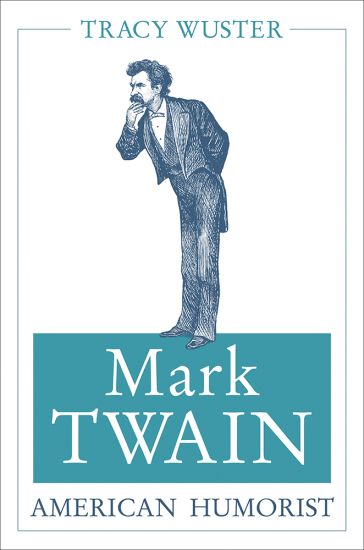
Mark Twain, American Humorist examines the ways that Mark Twain's reputation developed at home and abroad in the period between 1865 and 1882, years in which he went from a regional humorist to national and international fame. In the late 1860s, Mark Twain became the exemplar of a school of humor that was thought to be uniquely American. As he moved into more respectable venues in the 1870s, especially through the promotion of William Dean Howells in the Atlantic Monthly, Mark Twain muddied the hierarchical distinctions between class-appropriate leisure and burgeoning forms of mass entertainment, between uplifting humor and debased laughter, and between the literature of high culture and the passing whim of the merely popular.
This work is part of the Continuum Contemporaries series giving readers accessible and informative introductions to 30 of the most popular, most acclaimed and most influential contemporary novels. It contains a biography of the novelist, a full-length study of the novel, a summary of how the novel was received upon publication, a summary of how the novel has performed since publication, and a wide range of suggestions for further reading.
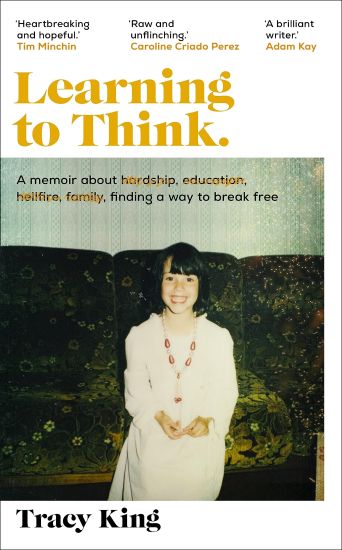
Discover the inspirational coming-of-age memoir about modern poverty in Britain and the liberating power of education.'An astonishing tale, well structured and punchily told.’ - Sunday Times'Impossible not to read in one sitting.' - Stylist, Best Books for 2024'A memoir you read with the same breathlessness as you read the most gripping of novels' - i news*******When you have nothing, you cling to whatever gives you hope.Put yourself in Tracy King's shoes. Growing up in an ordinary council estate outside Birmingham; a house filled with creativity, curiosity and love, but marked by her father's alcoholism and her mother's agoraphobia.By the time she turns twelve her father has been killed, her sister taken into care and her mother ensnared by the promises of born-again Christianity.This isn't the stuff of cult documentaries; this is the story of an ordinary family trapped in a broken system. It's a story that could happen to anyone without the tools to transform their circumstances.And it's the story of how Tracy discovered the truth about her father’s death and how she found her way out.Shocking, inspiring and ultimately hopeful, Learning to Think. is a testament to the power of books and holds up a mirror to the everyday realities of poverty in Britain.*******Praise for Learning to Think.:‘A raw and unflinching account of growing up in poverty, which tackles the false narratives we tell ourselves to survive.’ – Caroline Criado Perez‘Tracy King’s memoir is heartbreaking and hopeful ... An incredible true story of survival and forgiveness.’ – Tim Minchin'What would you do if you began to suspect the events of your childhood didn't happen as you remembered them? In this evocative memoir, Tracy King confronts the stories we all tell ourselves in order to live.' – Helen Lewis, author of Difficult Women‘[An] extraordinary book. It’s compelling and courageous, and it couldn’t be more timely. It’s written with such clarity and compassion, and I think it will leave every reader wiser and stronger.’ – Daisy Buchanan, author of How to Be a Grownup and Sisterhood‘A brilliant writer’ – Adam Kay‘You won’t often read a book so driven by raw emotion. A book of tragedy, hope and ultimately of triumph.’ – HH Wendy Joseph KC, author of Unlawful Killings
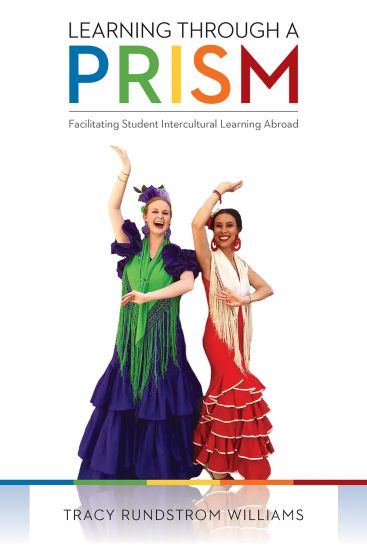
In the emerging field of intercultural competence, this book is one of the first to propose a pedagogical framework and provide both the theory and tools to implement it. With the increased focus on educating students to be global citizens, Learning through a PRISM offers a deeper understanding of intercultural competence and an intentional and academic approach to intercultural experiences.This book introduces the PRISM, an academically grounded and experientially driven pedagogy for faculty who aim to design courses and experiences that holistically develop students’ intercultural competence. It provides concrete tools and academic framing, and includes suggested readings, adaptable assignments, and clear rubrics. While the book focuses on study abroad settings, its concepts and resources can be broadly adapted to any course focused on the development of intercultural competence.The PRISM will challenge faculty and students to engage, interact, and create meaning in study abroad, intercultural, and global contexts.
Arguably the most respected Catholic systematic theologian in the English-speaking world, David Tracy's growing influence internationally and on persons of other Christian traditions and his ability to communicate with representatives of the secular academy stem from the unique quality of his voice. Still, Tracy's views on Catholicism, the mission of the church, and how plurality of worldviews and hermeneutics affect the church mission are largely unknown. Containing both new material and articles written over the past decade for Concilium, the international journal of progressive Catholic theology, these essays reveal dimensions of Tracy's thought on these topics foreshadowed in his books and philosophical theological reflections. In addition, On Naming the Present shows the best of the spirit of Concilium and its project of fostering a critical and prophetic yet world-welcoming Christian future rooted in a troubled present.
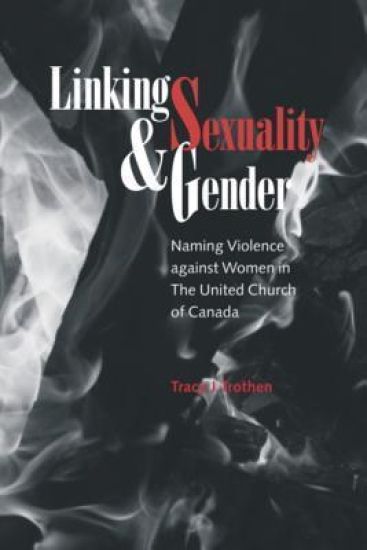
Why did it take so long for the United Church of Canada to respond to violence against women? Tracy J. Trothen looks at the United Church as a uniquely Canadian institution, and explores how it has approached gender and sexuality issues. She argues that how the Church deals with these issues influences its ability to name violence against women. In examining the Church's early approaches to gender and sexuality, Tracy J. Trothen discovered that the United Church had tended to see certain structures or roles as sacred and others as demonic. For example, while sex outside marriage was bad or improper, sexual expression within marriage was largely deemed as proper or good, no matter what manifestation it took. This assumption allowed much violence within families and marriages to go unchallenged. Trothen uncovers significant shifts in this approach through the examination of such issues as redemptive homes, marriage, pornography, abortion, the ordination of women, and family. Then, analyzing three recent case studies, she demonstrates the value of women's voices in challenging dominant world views. Finally, she suggests how the Church's approach to human sexuality and gender has facilitated or obstructed the move to address violence against women. The findings in Linking Sexuality and Gender can be applied to faiths outside the United Church and will be important to anyone interested in church and society, sexuality, gender, or the causal dynamics behind one Canadian institution's response to violence against women. Tracy J. Trothen is an assistant professor of systematic theology and ethics, and director of field education at Queen's Theological College, Queen's University, Canada. She was ordained in the United Church of Canada. Why did it take so long for the United Church of Canada to respond to violence against women?
There has been a revival of all things Celtic in recent decades, producing everything from Irish folk music to a rise in pagan mysticism. By contrast, Tracy Balzer's book, THIN PLACES: An Evangelical Journey into Celtic Christianity is written to introduce contemporary Christians to the great spiritual legacy of the early Celts, a legacy that has remained undiscovered or inaccessible for many in the evangelical tradition. Thin Places not only reveals the deeply scriptural, sacramental faith of the Celts, but also provides ways for us to learn from this ancient faith expression, applying fresh and lively spiritual disciplines to our lives today.
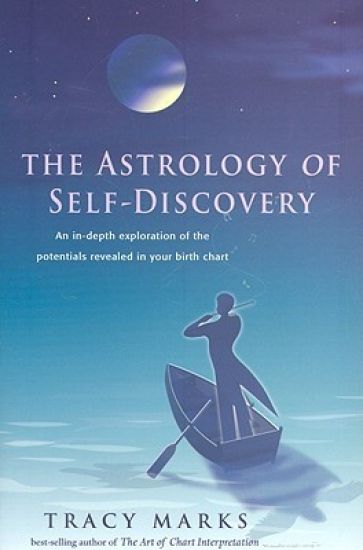
The Astrology of Self Discovery provides guidance for achieving self-development through attunement to planetary influences and gives direction to those struggling with life's issues. Combining astrology, depth psychology, and spiritual teachings, Marks helps the reader make contact with the planets as they function as internal archetypes and personalities, as well as gain insight, perspective, and the tools for self-empowerment. She has helpful advice on how to prepare for and handle outer planet transits, especially Neptune and Pluto, which she covers indepth. She also addresses the healing of the 'inner child' and the feminine principle as expressed by the Moon, and the lunar nodes as an expression of life purpose. Provocative questions and worksheets help the reader apply the life lessons she presents.Marks' experience as a psychotherapist and spiritual teacher has enabled her to synthesize her knowledge of psychology with her astrological work to elucidate a path of deepening personal awareness and cooperation with planetary energies. The unique insights in The Astrology of Self Discovery give fresh, new life to the practice of astrology.
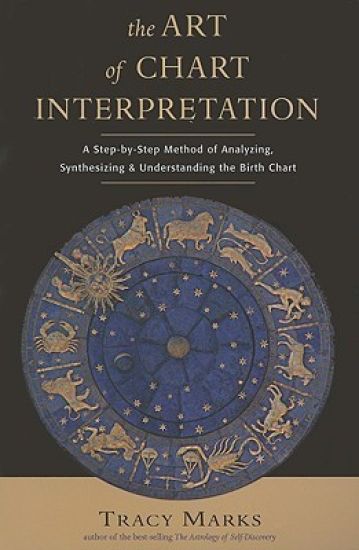
Learn how to determine and interpret the essential personality traits indicated by the birth chart. Interpreting a horoscope effectively and determining an individual's primary qualities, strengths, and weaknesses requires skill in collecting and organizing astrological information. The Art of Chart Interpretation presents a practical system for amateur and professional astrologers confused by the many details of the birth chart. With clarity and insight, Tracy Marks provides a comprehensive method for collecting and evaluating astrological data. Her step-by-step techniques and worksheets aid astrology students in developing their abilities to analyze and synthesize the many facets of the chart and to grasp the essential features of the personality.
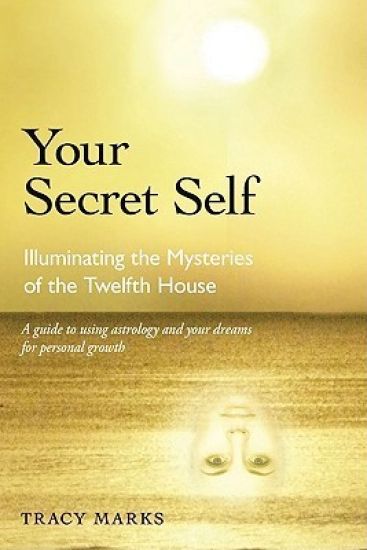
The Twelfth House is where the angels of our creative inspiration and spirituality and the demons of our shadow self reside. Tracy Marks, psychotherapist/astrologer, provides penetrating insights into the inner workings of both the hidden weaknesses and strength of the Twelfth House, and provides practical and easy-to-use worksheets to support the process.The book explores the profile and meanings of the Hidden wisdom of the 12th house and the influences and patterns that is contained therein and also the 12th house Planets and Signs by rulers and placements and their meaning. Marks also explains the psychodynamics of the Twelfth House-its conflicts and process of Integration and Liberation and the deeper psychological exploration of the process and contents. Readers are also guided through self transformation through Dreamwork and the dream experience using case studies.
Administrators of academic professional and technical communication (PTSC) programs have long relied upon lore--stories of what works--to understand and communicate about the work of program administration. Stories are interesting, telling, engaging, and necessary. But a discipline focused primarily on stories, especially the ephemeral stories narrated at conferences and deliberated at department meetings, usually suffice primarily to solve immediate problems and address day-to-day concerns and activities. This edited collection captures some of those stories and layers them with theoretical perspectives and reflection, to enhance their usefulness to the PTSC program administration community at large. Like the ephemeral stories PTSC program administrators are accustomed to, the stories told in this volume are set within specific institutional contexts that reflect specific institutional challenges. They emphasize the intellectual traces--the debts the authors owe to those who have informed and transformed their administrative work. In so doing, this collection creates another conversation--albeit a robust, diverse, and theoretically informed one--around which program leaders might define or redefine their roles and re-envision their administrative work as the rich, complex, intellectual engagement that we find it to be. This volume asks authors to move beyond a notion of administration as an activity based solely in institutional details and processes. In so doing, they emphasize theory as they share their reflections on core administrative processes and significant moments in the histories of their associated programs, thereby affording opportunities for critical examination in conjunction with practical advice.
Administrators of academic professional and technical communication (PTSC) programs have long relied upon lore--stories of what works--to understand and communicate about the work of program administration. Stories are interesting, telling, engaging, and necessary. But a discipline focused primarily on stories, especially the ephemeral stories narrated at conferences and deliberated at department meetings, usually suffice primarily to solve immediate problems and address day-to-day concerns and activities. This edited collection captures some of those stories and layers them with theoretical perspectives and reflection, to enhance their usefulness to the PTSC program administration community at large. Like the ephemeral stories PTSC program administrators are accustomed to, the stories told in this volume are set within specific institutional contexts that reflect specific institutional challenges. They emphasize the intellectual traces--the debts the authors owe to those who have informed and transformed their administrative work. In so doing, this collection creates another conversation--albeit a robust, diverse, and theoretically informed one--around which program leaders might define or redefine their roles and re-envision their administrative work as the rich, complex, intellectual engagement that we find it to be. This volume asks authors to move beyond a notion of administration as an activity based solely in institutional details and processes. In so doing, they emphasize theory as they share their reflections on core administrative processes and significant moments in the histories of their associated programs, thereby affording opportunities for critical examination in conjunction with practical advice.
In the field of technical communication, academics and industry practitioners alike regularly encounter the same question: "What exactly is it you do?" Their responses often reveal a fundamental difference of perspective on what the field is and how it operates. For example, academics might discuss ideas in terms of rhetorical theory, while practitioners might explain concepts through more practical approaches involving best business practices. And such differences can have important implications for how the field, as a whole, moves forward over time. This collection explores ideas related to forging effective academia-industry relationships and partnerships so members of the field can begin a dialogue designed to foster communication and collaboration among academics and industry practitioners in technical communication. To address the various factors that can affect such interactions, the contributions in this collection represent a broad range of approaches that technical communicators can use to establish effective academy-industry partnerships and relationships in relation to an area of central interest to both: education. The 11 chapters thus present different perspectives on and ideas for achieving this goal. In so doing, the contributors discuss programmatic concerns, workplace contexts, outreach programs, and research and writing. The result is a text that examines different general contexts in which academia-industry relationships and partnerships can be established and maintained. It also provides readers with a reference for exploring such interactions.