Kirjojen hintavertailu. Mukana 11 717 486 kirjaa ja 12 kauppaa.

Kirjahaku

Etsi kirjoja tekijän nimen, kirjan nimen tai ISBN:n perusteella.

1000 tulosta hakusanalla Victoria Ferrante

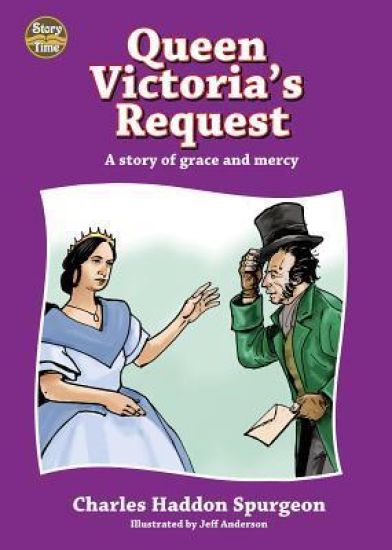
Queen Victoria's Request

Queen Victoria's Request

C. H. Spurgeon

Christian Focus 4Kids
2008
sidottu
A dirty, coal begrimed beggar has received an invitation from the Queen to attend a function at the palace. He thinks about buying some soap and cleaning himself up - but the invitation says, 'Come just as you are.' You can't ignore a request like that from the Queen so the beggar arrives at the Palace door anxious about what he is going to find.Will he be accepted into the Queen's presence or will he just be sent away?A Classic story of grace and mercy told by the Prince of Preachers, Charles Spurgeon.
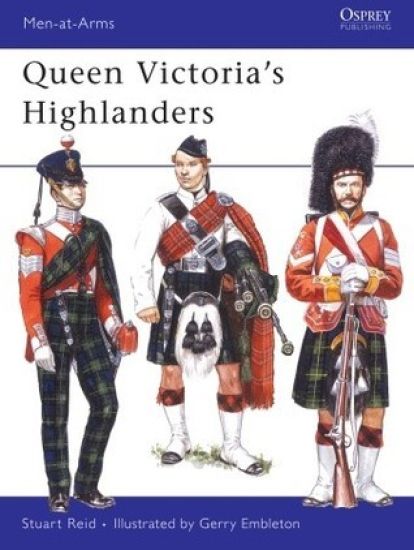
Queen Victoria’s Highlanders

Queen Victoria’s Highlanders

Stuart Reid

Osprey Publishing
2007
nidottu
This book is not only a tribute to the proud Highlander regiments who have served with distinction for over two centuries but will also be an insightful study of the period in which they made their name. As the British Empire dominated every corner of the globe, Queen Victoria's Highlanders served in a variety of campaigns from the Indian subcontinent to Africa. This title will study their organization, histories, and evolution of uniforms. Each of the famous regiments - including the Black Watch, the Gordons, the Argylls, the Camerons - will be covered and the full glory of their romantic, tartan uniforms revealed.
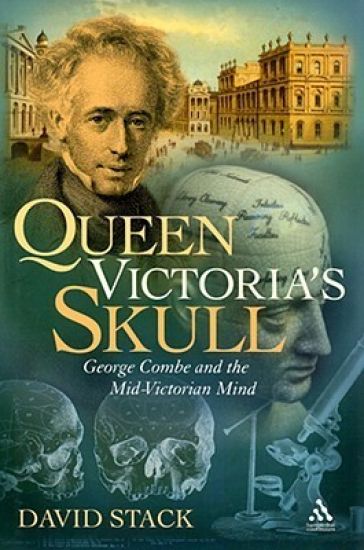
Queen Victoria's Skull

Queen Victoria's Skull

David Stack

Hambledon Continuum
2008
sidottu
This is a hugely entertaining study that goes beyond biography to vividly portray Victorian life in a wider framework."Queen Victoria's Skull" explores the life and thinking of the Edinburgh phrenologist George Combe. Phrenology is a theory which claims to be able to detect personality traits, character and predisposition to criminality on the basis of the shape of the skull. Now dismissed as risible, it was treated with reverence by many Victorians.George Combe was the author of "The Constitution of Man", an ethical treatise that sold over 100,000 copies in Britain and 200,000 copies in America by 1900. The quirkiness of his life and work, and the fact that he befriended and influenced many public figures - from Prince Albert to George Eliot - make for an engaging story. "Queen Victoria's Skull", however, does more than tell the tale of one idiosyncratic individual. By tracing the development of Combe's intellectual interests it provides a prism through which to view Victorian culture, science and politics, covering themes of class, religion, sex, crime, art and the theatre. David Stack has written an entertaining and erudite study of an important, and now neglected, Victorian figure.
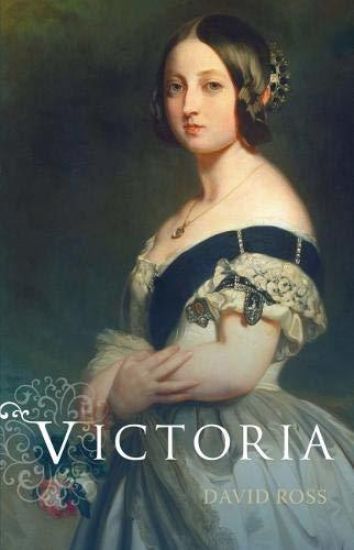
Queen Victoria

Queen Victoria

David Ross

The Gresham Publishing Co. Ltd
2019
pokkari
Queen Victoria (24 May 1819 - 22 Jan 1901) is the UK's second longest-reigning monarch after Queen Elizabeth II, with 64 years between becoming queen in 1837 and her death in 1901. This book describes her extraordinary life and reign, her strength and achievements. 24 May 2019 is the 200th anniversary of Queen Victoria's birth.
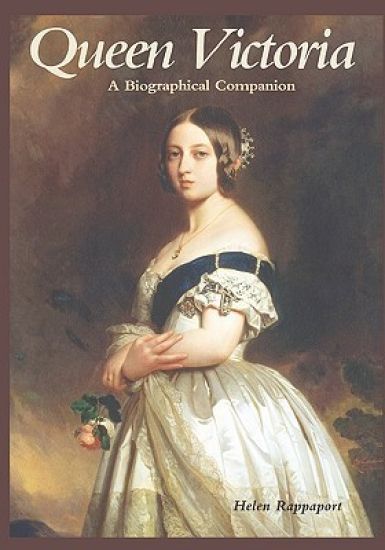
Queen Victoria

Queen Victoria

Helen Rappaport

ABC-CLIO
2003
sidottu
This resource covers the life, times, and relationships of Queen Victoria, providing information about her children, her personal interests, the historic times in which she ruled, and the leaders she influenced. In this fascinating guide to every aspect of Queen Victoria's life, author Helen Rappaport analyzes the queen's personality, celebrates her achievements, and details the shortcomings of her empire, both in Britain, with its continuing divide between rich and poor, and overseas, where Britain's great empire was won by repression and exploitation. A–Z entries—including topics barely touched in standard biographies—cover things like the various assassination attempts on her life, her interest in dancing and Jack the Ripper's murders, and how her husband Prince Albert introduced the celebration of Christmas to England. Queen Victoria also describes individuals such as her companion Lady Jane Churchill, her physician Sir James Clark, and politicians such as William Gladstone and Benjamin Disraeli; events like the Irish potato famine; inventions like steam power; and issues such as missionary activity and prostitution. It also includes bibliographies both for each entry and overall, and a chronology.
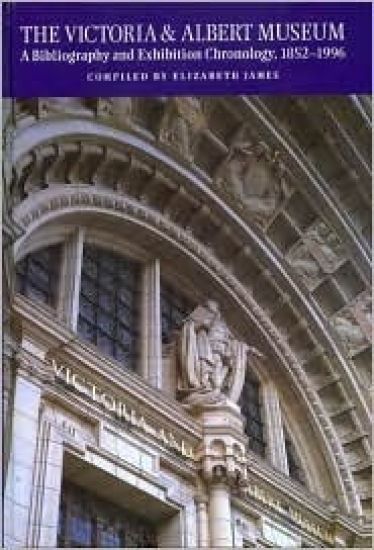
The Victoria and Albert Museum

The Victoria and Albert Museum

Routledge Member of the Taylor and Francis Group
1998
sidottu
A comprehensive bibliography and exhibition chronology of the world's greatest museum of the decorative arts and design. The Victoria and Albert Museum, or South Kensington Museum as it used to be known, was founded by the British Government in 1852, out of the proceeds from the Great Exhibition of 1851. Like the Exhibition, it aimed to improve the expertise of designers, and the taste of the public, by exposing them to examples of good design from all countries and periods. 2,500 publications have to date been produced by, for, or in association with the V&A. The National Art Library, which is part of the Museum, has prepared this detailed catalogue, supplemented by a secondary list of 500 other books closely related to the V&A. The 1,500 exhibitions and displays recorded include those held in the main Museum and at its branches, the Bethnal Green Museum (now the National Museum of Childhood) and the Theatre Museum, Covent Garden, and additionally those it has organized at external venues, in Great Britain and abroad. The exhibitions and publications are fully cross-referenced, and there are name, title and subject indexes to the whole work, as well as an explanatory introduction.
The Victoria History of the County of Northampton
Cleley comprises a dozen parishes in the south on either side of Watling Street, and includes the royal estate, the honor of Grafton. This new volume, the first to be published for Northamptonshire since 1937, deals with a group of a dozen parishes in the south of the county, on either side of Watling Street between Towcester and Stony Stratford. Essentially a group of typical Midland open-field parishes, the main interest of the area lies in the creation of a great royal estate, the honor of Grafton, in 1542, which occupied about half the hundred. In 1706 the honor passed to the secondDuke of Grafton under a grant made by his grandfather, Charles II. The dukes remained the principal owners in the district until a series of sales just after the First World War.Researched with the thoroughness for which the Victoria County History has long been well known, and illustrated with numerous maps and plates, this volume will be of great interest to local residents who wish to know about the past history of their community, and also to a widerange of academic readers, especially historians interested in landed estates between the sixteenth and the twenty-first century.
The Victoria History of the County of Northampton
This latest volume in the history of Northamptonshire covers the history of its industry in the nineteenth and twentieth centuries, including, of course, its most celebrated products: boots and shoes. Particular attention is givento the impact of industrial development upon the infrastructure, topography and environment of the county.
The Victoria History of the County of Stafford
Classic VCH account of the important town of Tutbury and its environs. Tutbury and Needwood forest have a rich history, fully explored here from the earliest times to the present day: the former with its great medieval castle, the heart of a major feudal honor held from the 13th century by the royalearls and dukes of Lancaster, and the latter with its medieval parks and hunting lodges. The volume also covers the important early Anglo-Saxon monastic and royal site of Hanbury, the burial place of St Werburh, a Mercian princess; and offers accounts of the mansion houses built in and around the ancient forest area by members of the Bass brewing family and others, and the magnificent late 19th-century church of Hoar Cross, one of Bodley's masterpieces. NIGEL TRINGHAM is County Editor for VCH Stafforshire and lecturer in history at the University of Keele.
The Victoria History of the County of Oxford: Volume XX
Unique multi-disciplinary study of a key part of the Oxfordshire Chilterns over a thousand years, based on intensive new research and exploring landscape, settlement, farming, and social and religious life. Drawing on intensive new research, this volume covers a dozen ancient parishes straddling the south-west end of the Chiltern hills, set within a large southwards loop of the Thames close to Reading, Wallingford, and Henley-on-Thames. London, connected by river, road, and (later) rail, lies some 40 miles east. The uplands feature the dispersed settlement and wood-pasture typical of the Chilterns, contrasted with nucleated riverside villages such as Whitchurch and Goring. Caversham, formerly "a little hamlet at the bridge", developed from the 19th century into a densely settled suburb of Reading (across the river), while other recent changes have largely obliterated the ancient pattern of "strip" parishes stretching from the river into the hills, which bound vale and upland together and had its origins in 10th-century estate structures. The economy was predominantly agricultural until the 20th century, with woodland playing a significant role alongside rural crafts and industry. Crowmarsh Gifford (near Wallingford) had an early market and fair. Gentrification and tourism gained momentum from the mid 19th century, accelerated by the arrival of the railway from 1840 and especially affecting riverside villages such as Goring and Shiplake, which saw extensive new building by wealthy incomers. Goring was earlier the site of an Augustinian nunnery and (probably) of a small pre-Conquest minster, while Mapledurham and several other places became foci for post-Reformation Roman Catholic recusancy, with Protestant Nonconformity expanding from the 19th century. Major buildings include mansion houses at Hardwick (in Whitchurch) and Mapledurham, alongside timber or brick vernacular structures and some striking modernist additions.
Maria Victoria Atencia

Maria Victoria Atencia

Atencia Maria Victoria

Aris Phillips Ltd
2014
sidottu
In this collection of 65 short poems, Roberta Quance exemplifies the range, vitality and mysticism of work by one of Spain's foremost, if controversial, contemporary female poets, drawing on the contents of a number of Spanish collections. In Atencia's poetry the poetic subject is often seen as someone who occupies an interior space, either crossing over the threshold from the outside world to an inner one (a garden, a house, a castle), or moving from the inner, home space to one even more interior: the world of dreams and imagination and hope, which can project outward into liminal spaces of the sky or the sea. A very basic paradox of Christian mystical experience- of abasement and magnification - haunts Atencia's work. She has made her own one of its fundamental tenets: the purging of self, the shedding of all trace of worldly attachment in order to ‘make room' for experience of a different reality: the self's sense of ‘nothingness' in the face of beauty is a prized moment in and of itself; it is sublime. Atencia's definitive manner: classically shaped verse in the tradition of the‘pure poetry' of the Generation of 1927, which makes myth of a womanly self, is amply explored in this first major English edition of her work to appear since 1987. Maria Victoria Atencia was born in Malaga (Andalusia) in 1931 and has lived there or in the country thereabouts all of her life Although trained originally as a pianist she chose a vocation for poetry, instead, publishing her first work in 1953 and continuing to publish to the present day. In 2010 she was given the Federico Garcia Lorca prize for poetry, in recognition of a lifetime of achievement. Roberta Quance is Senior Lecturer in Spanish and Portuguese Studies at Queen's University Belfast. She is author of books on mythology and modernity in modern literature and desire in the poetry of Lorca as well as articles on women writers and artists associated with the Generation of 1927 and translations of work by Carlos Piera.
Maria Victoria Atencia

Maria Victoria Atencia

Maria Victoria Atencia

Aris Phillips Ltd
2014
nidottu
In this collection of 65 short poems, Roberta Quance exemplifies the range, vitality and mysticism of work by one of Spain's foremost, if controversial, contemporary female poets, drawing on the contents of a number of Spanish collections. In Atencia's poetry the poetic subject is often seen as someone who occupies an interior space, either crossing over the threshold from the outside world to an inner one (a garden, a house, a castle), or moving from the inner, home space to one even more interior: the world of dreams and imagination and hope, which can project outward into liminal spaces of the sky or the sea. A very basic paradox of Christian mystical experience- of abasement and magnification - haunts Atencia's work. She has made her own one of its fundamental tenets: the purging of self, the shedding of all trace of worldly attachment in order to ‘make room' for experience of a different reality: the self's sense of ‘nothingness' in the face of beauty is a prized moment in and of itself; it is sublime. Atencia's definitive manner: classically shaped verse in the tradition of the‘pure poetry' of the Generation of 1927, which makes myth of a womanly self, is amply explored in this first major English edition of her work to appear since 1987. Maria Victoria Atencia was born in Malaga (Andalusia) in 1931 and has lived there or in the country thereabouts all of her life Although trained originally as a pianist she chose a vocation for poetry, instead, publishing her first work in 1953 and continuing to publish to the present day. In 2010 she was given the Federico Garcia Lorca prize for poetry, in recognition of a lifetime of achievement. Roberta Quance is Senior Lecturer in Spanish and Portuguese Studies at Queen's University Belfast. She is author of books on mythology and modernity in modern literature and desire in the poetry of Lorca as well as articles on women writers and artists associated with the Generation of 1927 and translations of work by Carlos Piera.
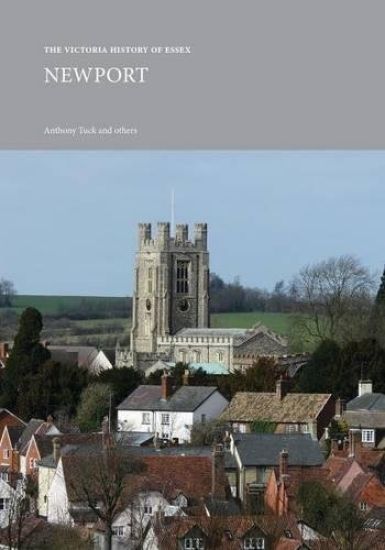
The Victoria History of Essex: Newport

The Victoria History of Essex: Newport

Institute of Historical Research
2015
pokkari
The parish of Newport lies in the valley of the river Cam in north-west Essex about three and a half miles south-west of the market town of Saffron Walden, and a short distance from the Hertfordshire and Cambridgeshire borders. It probably originated in the early 10th century as a royal foundation, and it soon developed some urban features such as a market. Its position on an important through route between London and East Anglia gave it a more varied character than some of its neighbouring villages, and the coming of the railway in the 19th century led to the establishment of a gas works and maltings. Even so, it remained a largely agricultural community until the mid 20th century, but thereafter its position as a thoroughfare village helped to establish Newport as a community with most of its adult population finding work elsewhere, some in London.This book explores the varying character of Newport over eleven centuries. It examines the changing patterns of landownership, social structure and economy of the village and its institutions, not least its 16th-century grammar school. It also discusses the part played, especially in the 18th, 19th and 20th centuries, by the owners of Shortgrove Hall, within the parish, and Quendon Hall, a few miles to the south.
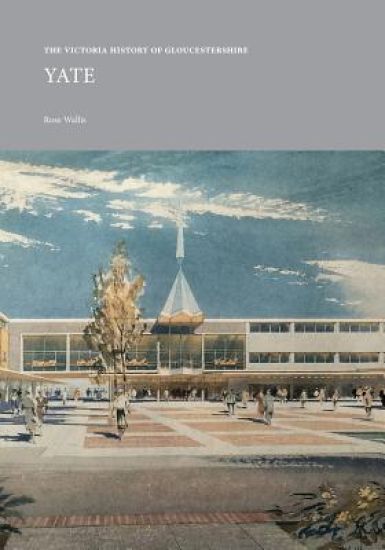
The Victoria History of Gloucestershire: Yate

The Victoria History of Gloucestershire: Yate

Rose Wallis

Institute of Historical Research
2015
pokkari
Yate is a town in South Gloucestershire, north-east of Bristol. Its ancient parish extended across a largely flat vale, which until the 13th century lay within Horwood forest, and was then cleared, inclosed and farmed as rich pasture by the tenants of the influential owners of its three manors. A limestone ridge fringing the vale provided good building stone, and across the parish seams of coal and a rare mineral - celestine - have been exploited until recent times. Yate lay on an important early route between Bristol and Oxford, and its mineral wealth attracted early railway links, so that it was well placed for industrial development. Bristol-based industries moved there during the decades after 1900, including wartime aviation production, so that Yate's population and housing began to increase.During the 1950s a 'new town' plan was devised which carefully controlled Yate's expansion, and included pioneering housing estate design, diverse industrial development and a large and progressive shopping mall. Yate's boundaries were redrawn in 1988, and the population of this vibrant, modern town now exceeds 20,000.
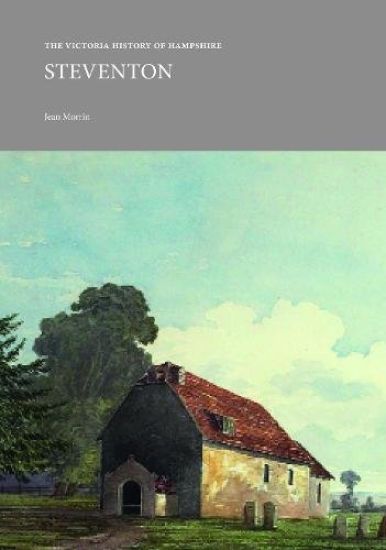
The Victoria History of Hampshire: Steventon

The Victoria History of Hampshire: Steventon

Jean Morrin

Institute of Historical Research
2016
pokkari
Steventon, a chalkland village near Basingstoke, is best known because Jane Austen, the famous novelist and daughter of the local rector, spent the first 25 years of her life here. Unlike Chawton and Bath, no house or museum commemorates the author's memory in Steventon but this new history explains how family life and observation of north Hampshire society shaped her early literary career. She wrote early versions of Pride and Prejudice, Sense and Sensibility and Northanger Abbey in Steventon from 1796 to 1798, drawing on local society for inspiration for characters, manners and sentiments.But the village had a rich history before and after its famous novelist and there are many other reasons to enjoy this book. Steventon is a typical southern chalkland settlement whose history provides examples of downland agriculture, of agricultural improvements, a scandalous landlord who was driven out of the village by his son and excommunicated by the archbishop of Canterbury, a new Victorian manor house, of landlord-tenant relations and much else. It discusses the social, economic and religious lives of the ordinary people of the village together with the lords of the manor.This is the second parish history to be published by the new Victoria History of Hampshire group, providing scholarly studies of individual places. It should be of interest to those living in and beyond the county. The first new parish history by the group, Mapledurwell, was published in 2012.