Kirjahaku
Etsi kirjoja tekijän nimen, kirjan nimen tai ISBN:n perusteella.
1000 tulosta hakusanalla Virginia Woolf
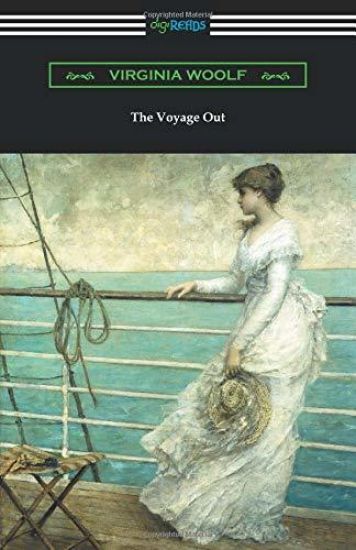
First published in 1915, "The Voyage Out," Virginia Woolf's first novel, may be her most accessible. It is a witty social satire that chronicles the maturity of the young Englishwoman Rachel Vinrace as she takes a long voyage to South America from London on her father's ship. Rachel encounters an eclectic array of passengers on the boat and through them Woolf satirizes Edwardian life. This physical passage also becomes a journey of self-discovery for Rachel. She takes both a literal and mythical journey as she enters adulthood and moves from the sheltered world of her upbringing to the wide world full of potential and knowledge. While the novel is witty and satirical, it is also haunting and melancholic, with the beautifully flowing language uniquely characteristic of Woolf's writing. Many of the themes that come to dominate Woolf's later works, such as sexuality, consciousness, and death, are first explored in "The Voyage Out." Rachel's coming-of-age tale is that of the spiritual growth of a young woman that spans continents, a journey that paralleled that of Woolf's own life as she left her repressive upbringing to enter the world of art and intellectualism. This edition is printed on premium acid-free paper.

First published in 1922, "Jacob's Room" is Virginia Woolf's third novel and a surprising and innovative departure from her other work. It is the life story of the character Jacob Flanders, from his childhood in pre-war England, through his time at Cambridge, and following him into his adulthood and travels abroad. The novel is told entirely from other character's viewpoints, most often from the women in Jacob's life, and focuses on their memories and feelings. Considered to be a highly experimental novel, "Jacob's Room" is a study in character development, as well as perception and emotion. Jacob primarily exists as a character or object in the lives of others and the reader experiences him through the eyes of the women rather than as an individual in his own right. Woolf, through the use of symbology, stream of consciousness, monologue, and brief dialogues, brilliantly focuses her novel on the psychology of her characters instead of any specific plot or action of the story. "Jacob's Room" is a critically acclaimed impressionistic work that focuses on the very meaning of existence and identity. This edition is printed on premium acid-free paper.
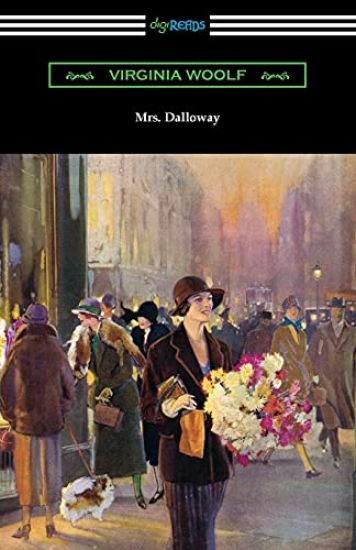
Widely heralded as one of the first truly modern novels, Virginia Woolf's "Mrs. Dalloway" was published in 1925 and is one of the author's most popular and critically acclaimed works. All of the events of the novel take place on a single day in June 1923 and the novel's perspective varies often as Woolf journeys inside the minds of many characters as they each experience the day and connect its events to the memories of their past. The two main characters are Clarissa Dalloway, a wealthy woman of high society who is planning a party for that evening, and Septimus Warren Smith, a veteran of the First World War, who continues to suffer from the trauma he experienced on the battlefield. Both characters are constantly aware of the passage of time, as Clarissa often reflects on her happy youth and her missed opportunities for love and passion and Septimus is haunted by his memories of the horror he witnessed and feels death looming ever closer and closer. Heartbreaking and powerfully evocative, "Mrs. Dalloway" is a timeless masterpiece about finding the joy in little things while never completely forgetting the fleetingness of life and the inevitably of death. This edition is printed on premium acid-free paper.
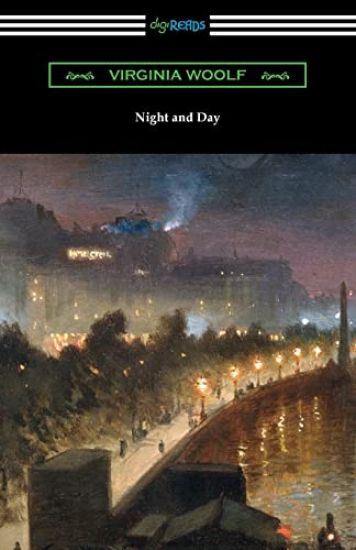
Virginia Woolf's 1919 novel "Night and Day", her second novel, is an examination of the relationships of its four main characters: Katharine Hilbery, Mary Datchet, Ralph Denham, and William Rodney. The granddaughter of a distinguished poet, Katherine Hilbery, is struggling with the expectation that she will be a great writer. She is torn between the prospect of marrying either William Rodney, a budding poet who attempts to impress her with his mediocre verse, and Ralph Denham, a lawyer who occasionally has articles published by Katharine's father. Mary Datchet, a champion for woman's suffrage, is the character whom the others in the novel often seek out to confess their true feelings with regard to their own love or anguish. Woolf's "Night and Day" is considerably one of her most traditional works. While it lacks the stylistic flair that fans of her later works will be accustomed to, it dramatically explores the issues of woman's suffrage and the struggle of women in modern society to balance endeavors of love, marriage, and vocation. This edition is printed on premium acid-free paper.

First published in 1928, "Orlando: A Biography" is Virginia Woolf's sixth novel. Inspired by the life of Woolf's friend and sometimes lover, Vita Sackville-West, the novel chronicles the several century long life of its titular character, Orlando, a man living in Elizabethan times, who through some mysterious process changes gender at age thirty. Possibly as a byproduct of the sex change, Orlando lives for another three hundred years into modern times. Through the adventures of the poet Orlando, Woolf creates a satirical history of English Literature. An instant commercial success, "Orlando" was not originally recognized as great literature, but rather as a gossipy roman clef of Sackville-West. However, in the many decades since its first publication, Woolf's short novel has become recognized as an important feminist classic, often part of many gender studies curriculum, as well as an important contribution to the modernist literature movement. This edition is printed on premium acid-free paper.


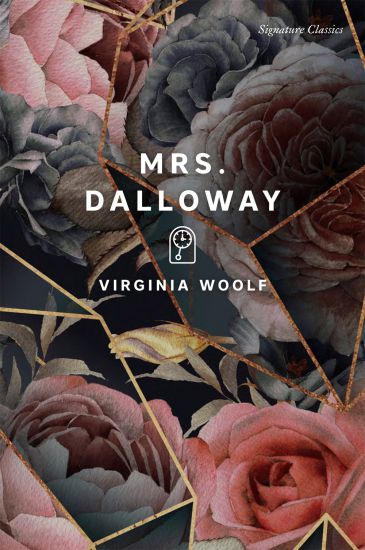
In the wake of World War I and the 1918 flu pandemic, Clarissa Dalloway, elegant and vivacious, is preparing for a party and remembering those she once loved. In another part of London, Septimus Smith is suffering from shell shock and is on the brink of madness. Their days interweave and their lives converge as the party reaches its glittering climax.Over the course of a single day, from first light to the dark of night, Woolf achieves an uncanny simulacrum of consciousness, bringing past, present, and future together, and recording, impression by impression, minute by minute, the feel of life itself.
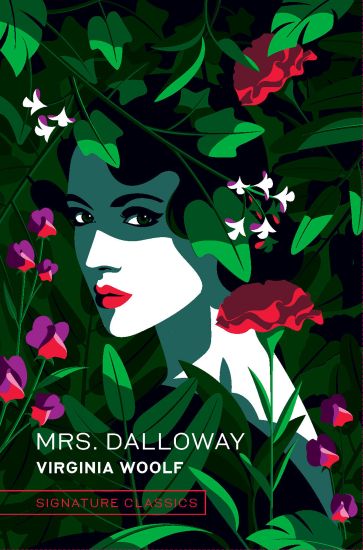
In the wake of World War I and the 1918 flu pandemic, Clarissa Dalloway, elegant and vivacious, is preparing for a party and remembering those she once loved. In another part of London, Septimus Smith is suffering from shell shock and is on the brink of madness. Their days interweave and their lives converge as the party reaches its glittering climax. Over the course of a single day, Woolf achieves an uncanny simulacrum of consciousness, bringing past, present, and future together, and recording, minute by minute, the feel of life itself.

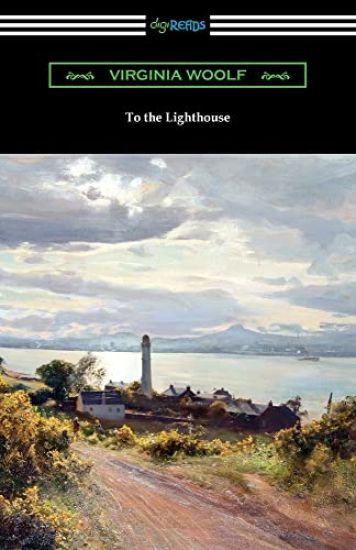
The Ramsays spend their summers on the Isle of Skye, where they happily entertain friends and family and make idle plans to visit the nearby lighthouse. Over the course of the book, the lighthouse becomes a silent witness to the ebbs and flows, the births and deaths, that punctuate the individual lives of the Ramsays.
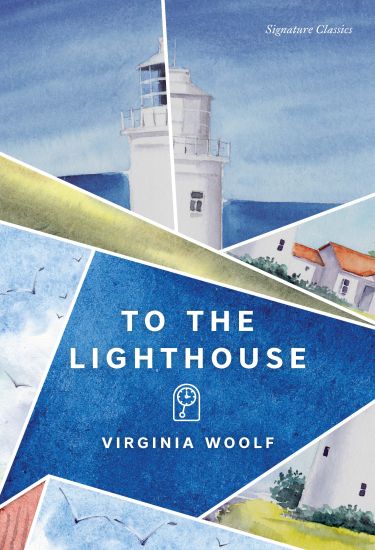
The Ramsays spend their summers on the Isle of Skye, where they happily entertain friends and family and make idle plans to visit the nearby lighthouse. Over the course of the book, the lighthouse becomes a silent witness to the ebbs and flows, the births and deaths, that punctuate the individual lives of the Ramsays.