
Kirjahaku
Etsi kirjoja tekijän nimen, kirjan nimen tai ISBN:n perusteella.
1000 tulosta hakusanalla Wanda D Cook
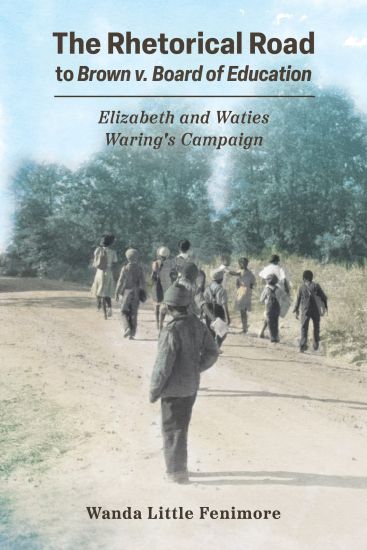
The Rhetorical Road to Brown V. Board of Education
Wanda Little Fenimore
UNIVERSITY PRESS OF MISSISSIPPI
2023
sidottu
As early as 1947, Black parents in rural South Carolina began seeking equal educational opportunities for their children. After two unsuccessful lawsuits, these families directly challenged legally mandated segregation in public schools with a third lawsuit in 1950, which was eventually decided in Brown v. Board of Education.Amidst the Black parents’ resistance, Elizabeth Avery Waring, a twice-divorced northern socialite, and her third husband, federal judge J. Waties Waring, launched a rhetorical campaign condemning white supremacy and segregation. In a series of speeches, the Warings exposed the incongruity between American democratic ideals and the reality for Black Americans in the Jim Crow South. They urged audiences to pressure elected representatives to force southern states to end legal segregation.Wanda Little Fenimore employs innovative research methods to recover the Warings’ speeches that said the unsayable about white supremacy. When the couple poked at the contradiction between segregation and "all men are created equal," white supremacists pushed back. As a result, the couple received both damning and congratulatory letters that reveal the terms upon which segregation was defended and the reasons those who opposed white supremacy remained silent.Using rich archival materials, Fenimore crafts an engaging narrative that illustrates the rhetorical context from which Brown v. Board of Education arose and dispels the notion that the decision was inevitable. The first full-length account of the Warings’ rhetoric, this multilayered story of social progress traces the symbolic battle that provided a locus for change in the landmark Supreme Court decision.
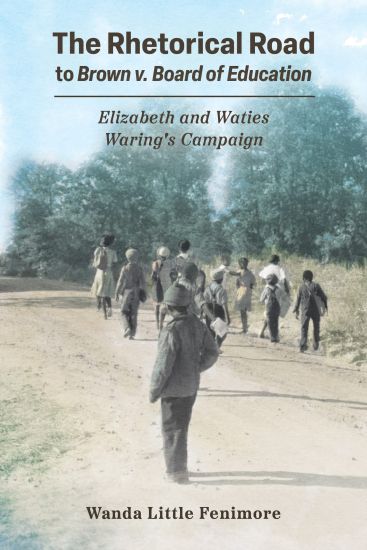
The Rhetorical Road to Brown V. Board of Education
Wanda Little Fenimore
UNIVERSITY PRESS OF MISSISSIPPI
2023
pokkari
As early as 1947, Black parents in rural South Carolina began seeking equal educational opportunities for their children. After two unsuccessful lawsuits, these families directly challenged legally mandated segregation in public schools with a third lawsuit in 1950, which was eventually decided in Brown v. Board of Education.Amidst the Black parents’ resistance, Elizabeth Avery Waring, a twice-divorced northern socialite, and her third husband, federal judge J. Waties Waring, launched a rhetorical campaign condemning white supremacy and segregation. In a series of speeches, the Warings exposed the incongruity between American democratic ideals and the reality for Black Americans in the Jim Crow South. They urged audiences to pressure elected representatives to force southern states to end legal segregation.Wanda Little Fenimore employs innovative research methods to recover the Warings’ speeches that said the unsayable about white supremacy. When the couple poked at the contradiction between segregation and "all men are created equal," white supremacists pushed back. As a result, the couple received both damning and congratulatory letters that reveal the terms upon which segregation was defended and the reasons those who opposed white supremacy remained silent.Using rich archival materials, Fenimore crafts an engaging narrative that illustrates the rhetorical context from which Brown v. Board of Education arose and dispels the notion that the decision was inevitable. The first full-length account of the Warings’ rhetoric, this multilayered story of social progress traces the symbolic battle that provided a locus for change in the landmark Supreme Court decision.

Wolfgang Amadeus Mozart what a mouthful for a little dog] or Motezy, as we called him, was a beautiful buff Cocker Spaniel. He was given to me by my daughter, Kathy. He was about eight months old, an adorable ball of fluff, with the biggest brown eyes and big floppy ears. We just couldn't help showering him with hugs and kisses. In 1987, my husband, Ray, and I moved to Utah. Motezy was almost a year old. I was writing letters to my son who lived in California, but soon they became very boring. What was there to write about? Fall is in the air. The leaves are turning to beautiful hues of gold, orange and brown. The frost is on the pumpkin. Nothing I wrote sounded interesting to me. I looked at Motezy and asked, "Why don't you write to your old buddy Pat?" He looked at me with that quizzical expression, the look I have seen so often.










The Intersection of Race and Gender in National Politics
Wanda Parham-Payne
Lexington Books
2016
sidottu
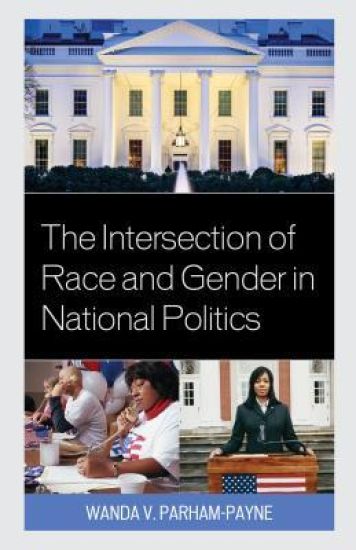
The Intersection of Race and Gender in National Politics is an exploratory analysis that not only looks at the role black women have played in the national political arena but also examines the sociohistorical forces that have facilitated and/or prevented the presence of black women in this arena—most specifically, in the White House. The book utilizes refereed journal articles, newspaper accounts, semi-structured interviews, focus groups, and secondary data analyses to identify and detail the individual and reciprocating impact of race and gender on black women in national politics. Looking at the experiences of select black women in the national political arena, challenges and opportunities for black women in the pursuit of the U.S. presidency are identified. Special attention is paid to the media, recent changes to the Voting Rights Act, and campaign finance.
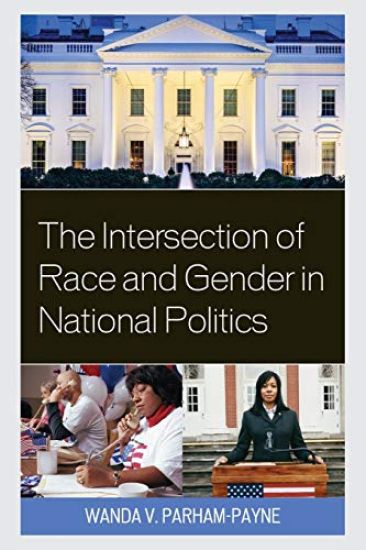
The Intersection of Race and Gender in National Politics
Wanda Parham-Payne
Lexington Books
2018
nidottu
The Intersection of Race and Gender in National Politics is an exploratory analysis that not only looks at the role black women have played in the national political arena but also examines the sociohistorical forces that have facilitated and/or prevented the presence of black women in this arena—most specifically, in the White House. The book utilizes refereed journal articles, newspaper accounts, semi-structured interviews, focus groups, and secondary data analyses to identify and detail the individual and reciprocating impact of race and gender on black women in national politics. Looking at the experiences of select black women in the national political arena, challenges and opportunities for black women in the pursuit of the U.S. presidency are identified. Special attention is paid to the media, recent changes to the Voting Rights Act, and campaign finance.