Kirjojen hintavertailu. Mukana 11 699 587 kirjaa ja 12 kauppaa.

Kirjahaku

Etsi kirjoja tekijän nimen, kirjan nimen tai ISBN:n perusteella.

1000 tulosta hakusanalla Wauter Mannaert

Walter Lippmann's Philosophy of International Politics

Walter Lippmann's Philosophy of International Politics

Anwar Hussain Syed

University of Pennsylvania Press
1964
sidottu
A journalist and a political philosopher of international repute, Walter Lippman was the author of more than twenty books, scores of essays, and countless newspaper editorials, articles, and columns. There can be no doubt that during the last half century he exercised considerable influence on American public and official opinion regarding international as well as domestic politics. His syndicated column "Today and Tomorrow" regularly appeared in the New York Herald Tribune from 1931 to 1967. It was carried by a large number of other newspapers in the United States and abroad. The present work attempts to discover and state Lippmann's philosophy of international politics as it developed over the years 1913 to 1963. The book brings out the evolution of his thought on such basic questions as human nature, nation-states and nationalism, the national interest, alliances, the balance of power, idealism and realism, regionalism, the universal society, and the enforcement of international peace. Lippmann's general theory of government is examined. Also presented are his views on topical questions such as the Atlantic Community, NATO, the current French rivalry with the "Anglo-Saxons," the place of Germany in Europe, the containment of Castro's Cuba, the future of Formosa, and America's stake in the battle for the minds of men in Asia and Africa. Necessarily, the author refers to major events and developments in international politics during the past half century. On important problems and issues the views of Lippmann's contemporaries, as well as those of distinguished statesmen and philosophers of the past, have been placed alongside his own in order to indicate his connection with the main currents of thought on the subjects under discussion. Thus, while the book concerns Lippmann primarily, it contains useful references to other writers, debates, and schools of thought. The importance of Lippmann's penetrating thought on problems of world politics grew with the destructive potential of national power confrontations. This careful study is therefore a timely one, and should be of interest to professional and also lay students of international politics.
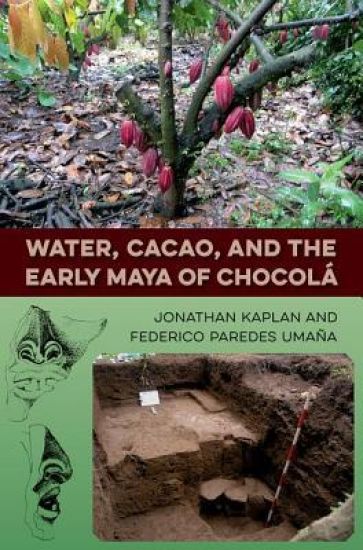
Water, Cacao, and the Early Maya of Chocolá

Water, Cacao, and the Early Maya of Chocolá

Jonathan Kaplan; Federico Paredes Umana

University Press of Florida
2018
sidottu
This exciting book brings the often-overlooked southern Maya region of Guatemala into the spotlight by closely examining the ""lost city"" of Chocola. Jonathan Kaplan and Federico Paredes Umana prove that Chocola was a major Maya polity and reveal exactly why it was so influential.In their fieldwork at the site, Kaplan and Paredes Umana discovered an extraordinarily sophisticated underground water-control system. They also discovered cacao residues in ceramic vessels. Based on these and other findings, the authors believe that cacao was consumed and grown intensively at Chocola and that the city was the center of a large cacao trade. They contend that the city’s wealth and power were built on its abundant supply of water and its command of cacao, which was significant not just to cuisine and trade but also to Maya ideology and cosmology. Moreover, Kaplan and Paredes Umana detail the ancient city's ceramics and add over thirty stone sculptures to the site's inventory.Because the southern Maya region was likely the origin of Maya hieroglyphic writing and the Long Count calendar, scholars have long suspected the area to be important. This pioneering field research at Chocola helps explain how and why the region played a leading role in the rise of the Maya civilization.
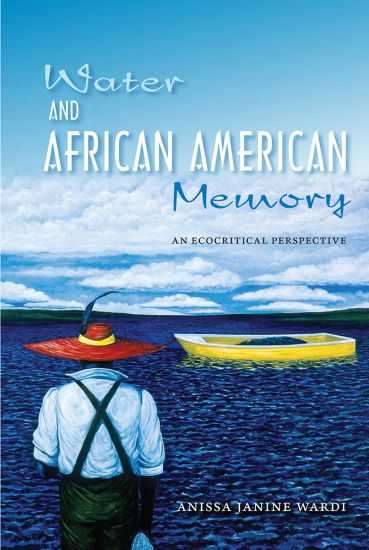
Water and African American Memory

Water and African American Memory

Anissa J. Wardi

University Press of Florida
2016
nidottu
While there is no lack of scholarship on the trans-Atlantic voyage and the Middle Passage as tropes in African diasporic writing, to date there has not been a comprehensive analysis of bodies of water in African American literature and culture.In Water and African American Memory, Anissa Wardi offers the first sustained treatise on watercourses in the African American expressive tradition. Her holistic approach especially highlights the ways that water acts not only as a metaphorical site of trauma, memory, and healing but also as a material site.Using the trans-Atlantic voyage as a starting point and ending with a discussion of Hurricane Katrina, this pioneering ecocritical study delves deeply into the environmental dimension of African American writing. Beyond proposing a new theoretical map for conceptualizing the African Diaspora, Wardi offers a series of engaging and original close readings of major literary, filmic, and blues texts, including the works of Toni Morrison, Ntozake Shange, Julie Dash, Henry Dumas, and Kasi Lemmons.
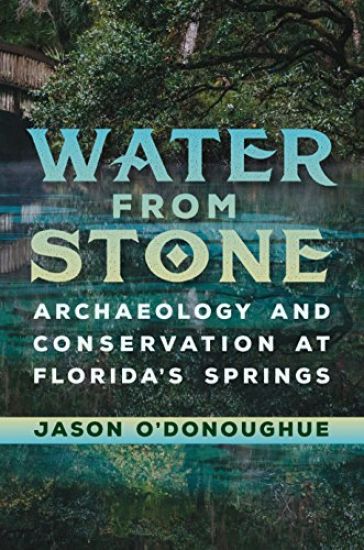
Water from Stone

Water from Stone

Jason O'Donoughue

University Press of Florida
2025
pokkari
Southern Anthropological Society James Mooney Award An archaeological study of Florida's springs that shows the importance of springs to Florida's people over thousands of years. Throughout their history, Florida’s springs have been gathering places for far-flung peoples. In Water from Stone, Jason O’Donoughue discusses the genesis of springs and their role as sites of habitation, burials, ritualized feasting, and monument building for Florida’s earliest peoples. O’Donoughue moves beyond a focus on the ecological roles of springs and the popular image of springs as timeless and pristine—approaches taken by many archaeologists and conservationists. Instead, he foregrounds the social and historical importance of springs and their ongoing use as gathering places that draw people for ritual purposes even today. This archaeological viewpoint creates a bridge between past and present, encouraging conservation efforts that focus on the intrinsic value of springs as places of personal experience and social interaction with deep historical significance. To save the springs, O’Donoughue argues, we must recognize the relevance of the past to the problems Florida’s artesian springs face today. A volume in the Florida Museum of Natural History: Ripley P. Bullen Series
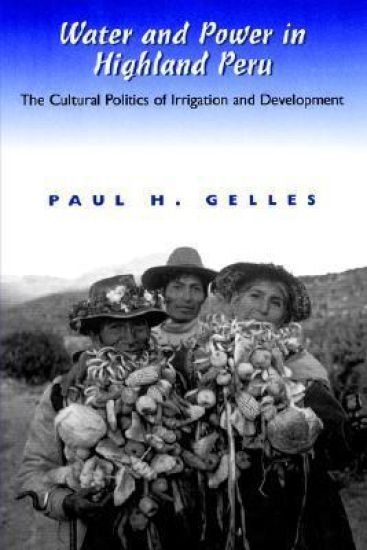
Water and Power in Highland Peru

Water and Power in Highland Peru

Paul Gelles

Rutgers University Press
2000
nidottu
Cabanaconde, a town of 5,000 people, is located in the arid Andean highlands. It is dominated by the foreboding Hualca Hualca mountain peak that is the source of this town’s much-needed water. How the villagers obtain this water, Paul Gelles writes, is not a simple process: the politics of irrigation in this area reflect a struggle for control of vital resources, deeply rooted in the clash between local, ritualized models of water distribution and the secular model put forth by the Peruvian state. Water and Power in Highland Peru provides an insightful case study on the intense conflicts over water rights, and a framework for studying ethnic conflict and the effects of “development,” not only in Peru, but in other areas as well.Most of the inhabitants of Cabanaconde do not identify themselves with the dominant Spanish-speaking culture found in Peru. And the Peruvian state, grounded in a racist, post-Colonial ethos, challenges the village’s long-standing, non-Western framework for organizing water management.Gelles demonstrates that Andean culture is dynamic and adaptive, and it is a powerful source of ethnic identity, even for those who leave the village to live elsewhere. Indigenous rituals developed in this part of the world, he states, have become powerful tools of resistance against interference by local elites and the present-day Peruvian state. Most importantly, the micropolitics of Cabanaconde provide a window into a struggle that is taking place around the world.
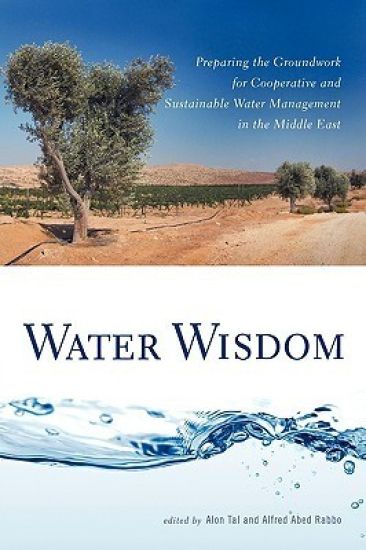
Water Wisdom

Water Wisdom

Rutgers University Press
2010
sidottu
Israel and Palestine are, by international criteria, water scarce. As the peace process continues amidst ongoing violence, water remains a political and environmental issue. Thirty leading Palestinian and Israeli activists, water scientists, politicians, and others met and worked together to develop a future vision for the sustainable shared management of water resources that is presented in Water Wisdom. Their essays explore the full range of scientific, political, social, and economic issues related to water use in the region; acknowledge areas of continuing controversy, from access rights to the Mountain Aquifer to utilization of waters from the Jordan River; and identify areas of agreement, disagreement, and options for resolution. Water Wisdom is model for those who believe that water conflict can be an opportunity for cooperation rather than violence.
Water Wisdom

Water Wisdom

Rutgers University Press
2010
nidottu
Israel and Palestine are, by international criteria, water scarce. As the peace process continues amidst ongoing violence, water remains a political and environmental issue. Thirty leading Palestinian and Israeli activists, water scientists, politicians, and others met and worked together to develop a future vision for the sustainable shared management of water resources that is presented in Water Wisdom. Their essays explore the full range of scientific, political, social, and economic issues related to water use in the region; acknowledge areas of continuing controversy, from access rights to the Mountain Aquifer to utilization of waters from the Jordan River; and identify areas of agreement, disagreement, and options for resolution. Water Wisdom is a model for those who believe that water conflict can be an opportunity for cooperation rather than violence.
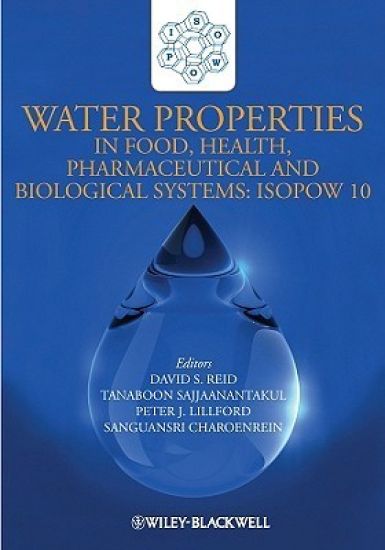
Water Properties in Food, Health, Pharmaceutical and Biological Systems
This title focuses on the comprehension of the properties of water in foods, enriched by the approaches from polymer and materials sciences, and by the advances of analytical techniques. The International Symposium on the Properties of Water (ISOPOW) promotes the exchange of knowledge between scientists involved in the study of food materials and scientists interested in water from a more basic point of view and the dialogue between academic and industrial scientists/technologists. This comprehensive book covers the topics presented at the 10th ISOPOW held in Bangkok, Thailand in 2007, including water dynamics in various systems, the role of water in functional food and nano-structured biomaterials. Special features include: Latest findings in the properties of water in food, pharmaceutical and biological systemsCoverage of the 10th International Symposium on the Properties of Water (ISOPOW)Includes water dynamics, water in foods stability, and water in micro and nano-structured food and biomaterialsReflects the vast array of research and applications of water world wide
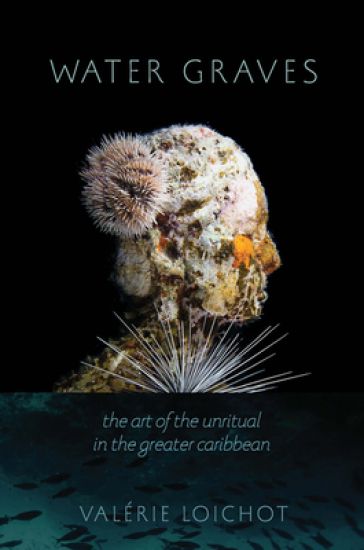
Water Graves

Water Graves

Valérie Loichot

University of Virginia Press
2020
sidottu
Water Graves considers representations of lives lost to water in contemporary poetry, fiction, theory, mixed media art, video production, and underwater sculptures. From sunken slave ships to the devastation of Hurricane Katrina, Valérie Loichot investigates the lack of official funeral rites in the Atlantic, the Caribbean Sea, and the Gulf of Mexico, waters that constitute both early and contemporary sites of loss for the enslaved, the migrant, the refugee, and the destitute. Unritual, or the privation of ritual, Loichot argues, is a state more absolute than desecration. Desecration implies a previous sacred observance--a temple, a grave, a ceremony. Unritual, by contrast, denies the sacred from the beginning.In coastal Louisiana, Mississippi, Georgia, Miami, Haiti, Martinique, Cancun, and Trinidad and Tobago, the artists and writers featured in Water Graves—an eclectic cast that includes Beyoncé, Radcliffe Bailey, Edwidge Danticat, Édouard Glissant, M. NourbeSe Philip, Jason deCaires Taylor, Édouard Duval-Carrié, Natasha Trethewey, and Kara Walker, among others—are an archipelago connected by a history of the slave trade and environmental vulnerability. In addition to figuring death by drowning in the unritual—whether in the context of the aftermath of slavery or of ecological and human-made catastrophes—their aesthetic creations serve as memorials, dirges, tombstones, and even material supports for the regrowth of life underwater.
Water Graves

Water Graves

Valérie Loichot

University of Virginia Press
2020
pokkari
Water Graves considers representations of lives lost to water in contemporary poetry, fiction, theory, mixed media art, video production, and underwater sculptures. From sunken slave ships to the devastation of Hurricane Katrina, Valerie Loichot investigates the lack of official funeral rites in the Atlantic, the Caribbean Sea, and the Gulf of Mexico, waters that constitute both early and contemporary sites of loss for the enslaved, the migrant, the refugee, and the destitute. Unritual, or the privation of ritual, Loichot argues, is a state more absolute than desecration. Desecration implies a previous sacred observance--a temple, a grave, a ceremony. Unritual, by contrast, denies the sacred from the beginning.In coastal Louisiana, Mississippi, Georgia, Miami, Haiti, Martinique, Cancun, and Trinidad and Tobago, the artists and writers featured in Water Graves—an eclectic cast that includes Beyoncé, Radcliffe Bailey, Edwidge Danticat, Édouard Glissant, M. NourbeSe Philip, Jason deCaires Taylor, Édouard Duval-Carrié, Natasha Trethewey, and Kara Walker, among others—are an archipelago connected by a history of the slave trade and environmental vulnerability. In addition to figuring death by drowning in the unritual—whether in the context of the aftermath of slavery or of ecological and human-made catastrophes—their aesthetic creations serve as memorials, dirges, tombstones, and even material supports for the regrowth of life underwater.
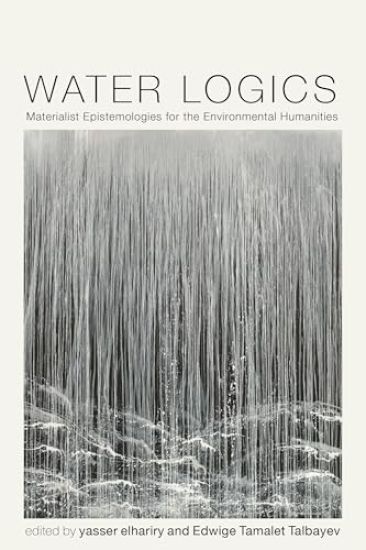
Water Logics

Water Logics

UNIVERSITY OF VIRGINIA PRESS
2026
sidottu
Investigating the material imprint of water on thought itself Water Logics examines the epistemological adjustments that take place when we make water the source and medium for thinking about the world. Eschewing metaphorical readings of rivers, seas, and oceans, it brings together leading voices from across the social sciences and the humanities to argue rather for a distinct focus on materiality, engaging posthumanism, biotheory, and other cutting-edge theoretical approaches. From the Caribbean Sea to the Indian Ocean, this rich collection is inhabited by migrants, port cities, and coral reefs. It explores the fruitful potential of water for literary, anthropological, and ethical studies, bringing both cohesive transdisciplinarity and fresh comparative perspectives to hydro-criticism. Taken together, the wide range of critical interpretative practices constitutes a signal contribution to the blue humanities.
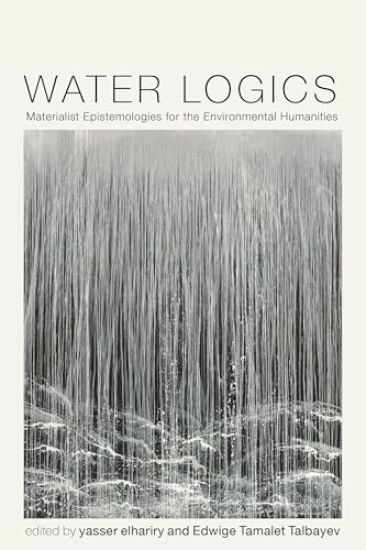
Water Logics

Water Logics

UNIVERSITY OF VIRGINIA PRESS
2026
pokkari
Investigating the material imprint of water on thought itself Water Logics examines the epistemological adjustments that take place when we make water the source and medium for thinking about the world. Eschewing metaphorical readings of rivers, seas, and oceans, it brings together leading voices from across the social sciences and the humanities to argue rather for a distinct focus on materiality, engaging posthumanism, biotheory, and other cutting-edge theoretical approaches. From the Caribbean Sea to the Indian Ocean, this rich collection is inhabited by migrants, port cities, and coral reefs. It explores the fruitful potential of water for literary, anthropological, and ethical studies, bringing both cohesive transdisciplinarity and fresh comparative perspectives to hydro-criticism. Taken together, the wide range of critical interpretative practices constitutes a signal contribution to the blue humanities.
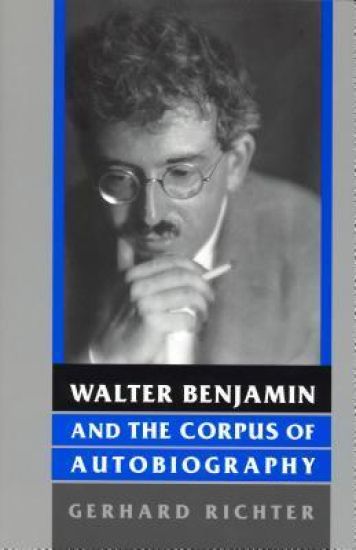
Walter Benjamin and the Corpus of Autobiography

Walter Benjamin and the Corpus of Autobiography

Gerhard Richter

Wayne State University Press
2002
nidottu
Walter Benjamin is considered one of the most significant writers and theorists in 20th-century Western culture. The author of this work shows that Benjamin's engagement with the political cannot be understood in terms of unified concepts, but rather should be understood from his language.
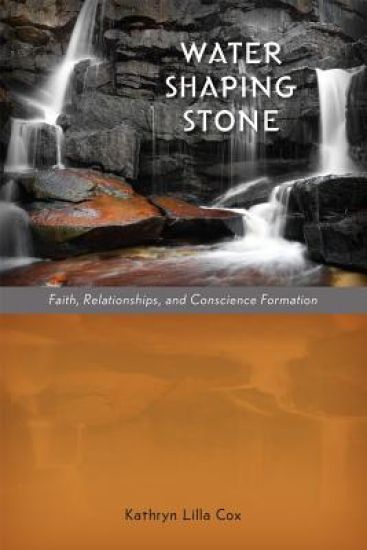
Water Shaping Stone

Water Shaping Stone

Kathryn Lilla Cox

Liturgical Press
2015
pokkari
The Catholic Tradition requires the faithful to form and follow their conscience. This is the case even with the recognition that consciences can be malformed and one can make errors in practical judgments. Water Shaping Stone examines various aspects of this tradition regarding conscience by using, among other sources, twentieth-century magisterial documents, theologians’ works, and Scripture. Kathryn Lilla Cox argues that while the Magisterium retains teaching authority, and a responsibility to help form consciences through its teaching, focusing only on the Magisterium leads to incomplete formation. A more holistic vision of conscience formation means considering the formation of the moral agent to be a multifaceted process that draws on, for example, teaching, prayer, rituals, Scripture, practices, and virtues, along with relationships with the Triune God and communities of accountability. This vision of conscience formation retains the magisterial teaching authority while acknowledging discipleship as the theological basis for making and assessing practical judgments of conscience.
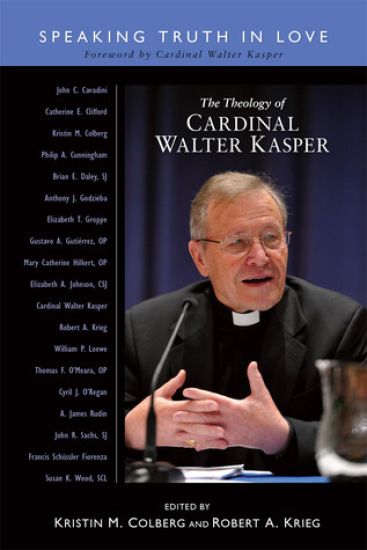
The Theology of Cardinal Walter Kasper

The Theology of Cardinal Walter Kasper

Walter Kasper

Liturgical Press
2014
pokkari
Cardinal Walter Kasper's contributions to theology, ecumenism, Jewish-Christian relations, and the pastoral life of the church have shaped Catholicism in the twentieth and twenty-first centuries. Acknowledging this, Pope Francis has praised Kasper's “profound and serene” theology. In The Theology of Cardinal Walter Kasper: Speaking Truth in Love, leading theologians from across the United States and Canada explore the full scope of Kasper’s thought on topics such as the character of ecumenical and interreligious dialogue, Christology, theological method, and the nature of the church-world relationship. Kasper himself presents four previously unpublished texts: on the interpretation of Vatican II, on forgiveness, on Christian hope, and on the approach to theology today. This volume originated at a conference, at which Kasper was an active participant, in honor of his eightieth birthday. It provides an introduction to Kasper's thought and also an overview of major issues in contemporary Catholic theology.
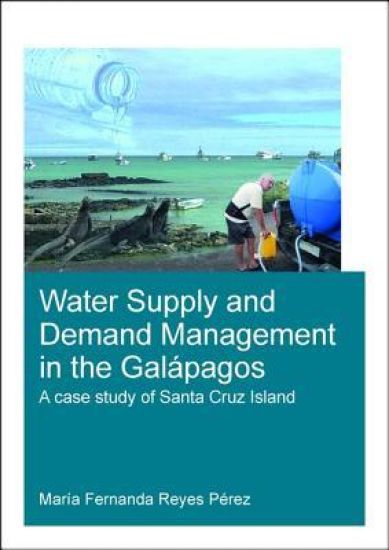
Water Supply and Demand Management in the Galápagos
Water resources in tourist islands have been severely threatened, especially in the Galápagos Islands, where the increased local population has generated attractive income from the tourist services. In addition, the data regarding water supply and demand are scarce. This study investigates water supply and demand in Santa Cruz, the most populated island of Galápagos. The research encompasses a thorough assessment of the water supply crisis, as well as the quantification of water demand from different categories (domestic, tourist, restaurants and laundries) through surveys, in the absence of water metering. Also, specific water demand was assessed by installing 18 water meters. The results yield a wide range of water consumption, questioning the current assumption of water scarcity. Furthermore, a prognosis of water supply and demand was carried out, and also several intervention strategies were proposed such as rainwater harvesting, greywater recycling, leakage reduction, water meter installation, water demand reduction, as well as seawater desalination to cope with the future population growth. Due to the fragility of the ecosystem, these strategies were assessed through a Multi-Criteria Decision Analysis, considering environmental, technical, economic and social aspects, as well as relevant stakeholders’ perspectives. finally, the water supply network of Puerto Ayora was evaluated in order to understand the need of the current intermittent supply regime. A methodology was developed to estimate the overflow of the domestic roof tanks (a common incidence amongst local population). The results question the practicality of individual household storage. The final results show that the current situation in terms of the lack of water quantity may not be real, as it has been thought for the last decades. The water issues refer more importantly to the water quality, as well as to the lack of proper water management practices.
Water Distribution System Monitoring

Water Distribution System Monitoring

Abigail F. Cantor

CRC Press Inc
2018
sidottu
To keep drinking water safe involves more than following the letter of the law. This book introduces a comprehensive perspective and a proactive step-by-step approach to maintaining drinking water quality in distribution systems, and aids in delivering verifiably safe and economical water to end users. This second edition is updated throughout, and reflects the latest processes for improving drinking water quality in water systems and bringing those systems into compliance with the Lead and Copper Rule, the Disinfection By-Products Rule, and the Total Coliform Rule. It also presents the latest techniques for calming discolored water issues, keeping microbiological growth and biofilm formation in check, and preventing the formation of pinhole leaks in copper pipes. The book also aids in determining side effects of treatment chemicals, achieving simultaneous compliance with multiple regulations, and optimizing treatment chemical dosages. A typical water distribution system is complex and chaotic with varying piping configurations, water flows, chemical reactions, and microbiological activity. It is, therefore, no surprise that monitoring and assessing water quality can be a daunting task. Water Distribution System Monitoring: A Practical Approach for Evaluating Drinking Water Quality simplifies this task by providing the tools for well-defined and measurable control of water quality.
Water Ethics

Water Ethics

David Groenfeldt

CRC Press Inc
2019
sidottu
Fully revised and updated, this second edition of Water Ethics continues to consolidate water ethics as a key dimension of water-related decisions. The book introduces the idea that ethics are an intrinsic dimension of any water policy, program, or practice, and that understanding what ethics are being acted out in water policies is fundamental to an understanding of water resource management. Alongside updated references and the introduction of discussion questions and recommended further reading, this new edition discusses in depth three significant developments since the publication of the first edition in 2013. The first is the growing awareness of the climate crisis as an existential threat, and associated concern about adaptive strategies for sustainable water management and ways of using water management for climate mitigation (e.g., practically through agricultural soil management and conceptually through ethics awareness). Second, there has been increased clarity among the religious community, Indigenous leaders, and progressive academics that ethics needs to become an arena for application and action (e.g., the Vatican encyclical Laudato Si, protests at Standing Rock and Flint, Michigan, in the US, and climate demonstrations worldwide). Thirdly, there have been new normative water standards ranging from "water stewardship" (industry initiative), water charters (Berlin) and the on-going initiative to develop a global water ethics charter.Drawing on case studies from countries including Australia, India, the Philippines, South Africa, and the United States, this textbook is essential reading for students of environmental ethics and water governance and management.
Water Ethics

Water Ethics

David Groenfeldt

CRC Press Inc
2019
nidottu
Fully revised and updated, this second edition of Water Ethics continues to consolidate water ethics as a key dimension of water-related decisions. The book introduces the idea that ethics are an intrinsic dimension of any water policy, program, or practice, and that understanding what ethics are being acted out in water policies is fundamental to an understanding of water resource management. Alongside updated references and the introduction of discussion questions and recommended further reading, this new edition discusses in depth three significant developments since the publication of the first edition in 2013. The first is the growing awareness of the climate crisis as an existential threat, and associated concern about adaptive strategies for sustainable water management and ways of using water management for climate mitigation (e.g., practically through agricultural soil management and conceptually through ethics awareness). Second, there has been increased clarity among the religious community, Indigenous leaders, and progressive academics that ethics needs to become an arena for application and action (e.g., the Vatican encyclical Laudato Si, protests at Standing Rock and Flint, Michigan, in the US, and climate demonstrations worldwide). Thirdly, there have been new normative water standards ranging from "water stewardship" (industry initiative), water charters (Berlin) and the on-going initiative to develop a global water ethics charter.Drawing on case studies from countries including Australia, India, the Philippines, South Africa, and the United States, this textbook is essential reading for students of environmental ethics and water governance and management.