This book has been considered by academicians and scholars of great significance and value to literature. This forms a part of the knowledge base for future generations. So that the book is never forgotten we have represented this book in a print format as the same form as it was originally first published. Hence any marks or annotations seen are left intentionally to preserve its true nature.
The definitive pioneering blueprint covering the what, why and how of the blockchain. Blockchains are new technology layers that rewire the Internet and threaten to side-step older legacy constructs and centrally served businesses. At its core, a blockchain injects trust into the network, cutting off some intermediaries from serving that function and creatively disrupting how they operate. Metaphorically, blockchains are the ultimate non-stop computers. Once launched, they never go down, and offer an incredible amount of resiliency, making them dependable and attractive for running a new generation of decentralized services and software applications. The Business Blockchain charts new territory in advancing our understanding of the blockchain by unpacking its elements like no other before. William Mougayar anticipates a future that consists of thousands, if not millions of blockchains that will enable not only frictionless value exchange, but also a new flow of value, redefining roles, relationships, power and governance. In this book, Mougayar makes two other strategic assertions. First, the blockchain has polymorphic characteristics; its application will result in a multiplicity of effects. Second, we shouldn’t ask ourselves what problems the blockchain solves, because that gives us a narrow view on its potential. Rather, we should imagine new opportunities, and tackle even more ambitious problems that cross organizational, regulatory and mental boundaries. Drawing on 34 years of technology industry experience as an executive, analyst, consultant, entrepreneur, startup mentor, author, blogger, educator, thought leader and investor, William Mougayar describes a future that is influenced by fundamental shifts brought by blockchain technology as the catalyst for change. William Mougayar has been described as the most sophisticated blockchain business thinker. He is a blockchain industry insider whose work has already shaped and influenced the understanding of blockchain for people around the world, via his generous blogging and rigorous research insights. He is a direct participant in the crypto-technology market, working alongside startups, entrepreneurs, pioneers, leaders, innovators, creators, enterprise executives and practitioners; in addition to being an investor, advisor, and board member in some of the leading organizations in this space, such as the Ethereum Foundation, OpenBazaar and Coin Center. Just as the Internet created new possibilities that we didn’t foresee in its early years, the blockchain will give rise to new business models and ideas that may still be invisible. Following an engaging Foreword by Vitalik Buterin, this book is organized along these 7 chapters: 1. What is the Blockchain? 2. How Blockchain Trust Infiltrates 3. Obstacles, Challenges & Mental Blocks 4. Blockchain in Financial Services 5. Lighthouse Industries & New Intermediaries 6. Implementing Blockchain Technology 7. Decentralization as the Way Forward The Business Blockchain is an invitation for technologists to better understand the business potential of the blockchain, and for business minded people to grasp the many facets of blockchain technology. This book teaches you how to think about the blockchain.
Mary Go RoundA Cautionary Tale for our TimeThe story of Mary Go Round is focused on the aftermath of World War I, and of the death and destruction drilled into the mind and soul of a man who became a monster. He retuned from duty as "The Prince," and he rained abuse and cruelty on the three innocents who eagerly awaited his glorious homecoming. That dream was not to be realized. Now forced from the prison shack, a.k.a. "The Castle," Mary faced a strange new world as she plodded through many difficult encounters in her troubled young life to find invigorating freedom with a new-age entrepreneur who offered her security and the promise of love in the future.
Healthcare training programs that require coursework in microbiology and immunology typically focus on diseases and maladies affecting the adult population, but many such issues can be traced to events in the critical window of development, the period from conception to puberty. Yet, nutrition is less often adequately discussed, even though it is a cornerstone of health during the critical window. This text fills these coverage gaps with an emphasis on nutrition, genetics, immunology, and the microbiome. The text also highlights events in the critical window, the importance of the interdependence of lifeforms, and major concepts that link the medical disciplines and basic biology.The initial six chapters focus on events within the critical window, including fetal and neonatal development, nutrition, and the role of the microbiome in health. It also discusses the impact of antibodies, regulatory factors, pathogens, pharmaceuticals, and environmental contaminants that are transferred to the fetus in utero or the infant through breast feeding. Special attention is given to internal protection provided by the innate and adaptive immune systems. An additional chapter is devoted to evaluating medical evidence (including drug and vaccine trials) and a concluding chapter discusses the myths, misconceptions, and controversies in healthcare.Appendix I is included for the student seeking more in-depth coverage of the underlying basic science such as molecular genetics, the role of meiosis and horizontal gene transfer in creating genetic diversity, and the genetics of adaptive immunity. Appendix I also describes the tools of biotechnology, while discussing bioengineering and modern vaccine development. Appendix II describes mammalian diversity and the value of animal models. Reflecting recent medical events, another appendix reviews the immuno-virology of COVID-19. Numerous figures and tables illustrate and extend the text, and a glossary helps the student navigate the thicket of common acronyms in these fields.Nutrition, Immunology, and Microbiology: The Critical Window of Development is an ideal textbook for professional healthcare training programs. J.E. Butler is professor emeritus of microbiology and immunology at the University of Iowa Carver College of Medicine with cross-over experience in comparative immunology.Kirsten Bennett is a pediatrics registered dietitian currently in private practice with clinical and teaching experience as part of the Pediatrics Department of the University of New Mexico School of Medicine and the Nutrition and Dietetics Program at the University of New Mexico.Larry Williams served as Associate Professor of Pediatrics at Duke University and recently retired as medical director at Abbott Nutrition Research and Development. He currently consults on scientific, medical, and nutritional issues.Ekhard Ziegler is professor emeritus in the Department of Pediatrics, Carver College of Medicine, and former Director of the Foman Infant Nutrition Unit.
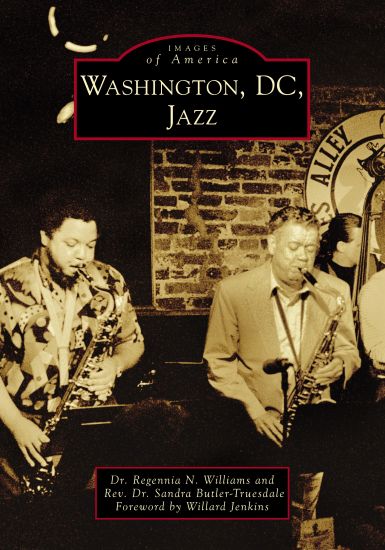
Washington, DC, Jazz focuses, primarily, on the history of straight-ahead jazz, using oral histories, materials from the William P. Gottlieb Collection at the Library of Congress, the Felix E. Grant Jazz Archives at the University of the District of Columbia, and Smithsonian Jazz.Home to Black Broadway and the Howard Theatre in the Greater U Street area, Washington, DC, has long been associated with American jazz. Duke Ellington and Billy Eckstine launched their careers there in the early 20th century. Decades later, Shirley Horn and Buck Hill would follow their leads, and DC's jazz millennials include graduates of the Duke Ellington School of the Arts. For years, Bohemian Caverns and One Step Down were among the clubs serving as gathering places for producers and consumers of jazz, even as Rusty Hassan and other programmers used radio to promote the music. This volume also features the work of photographers Nathaniel Rhodes, Michael Wilderman, and Lawrence A. Randall.
Families, in whatever form they may take, are at the center of all our lives. In the absence of a comprehensive national family policy, any policy that attempts to alter our lives peripherally can affect the stability, composition, and future of our families. In the United States, all policy becomes family policy. Such is the position of the authors of The Dynamics of Family Policy. This book challenges readers to redefine and broaden definitions of the family to reflect fundamental and recent demographic shifts in its structure. Devolution and managed care are among the nine major themes that weave their way through the chapters of the book. The book provides an approach to policy analysis and advocacy that takes politics, power, and social problems into account. The authors provide an in-depth and detailed coverage of social policy in areas such as poverty, work and employment, food, housing, and welfare, health care, and family violence. Additional chapters address family-focused policy initiatives such as marriage incentives, family caregiving across the lifespan, and the care and support of children. The book includes exercises and assignments for readers who want to become more actively involved in advocacy and policy practice. The Dynamics of Family Policy explores the roles professionals play in developing, implementing, and monitoring family policy. The book's combination of a comprehensive government policy account and a family-focused analytic perspective will enable students to maximize their understanding as they begin their careers in the helping professions.
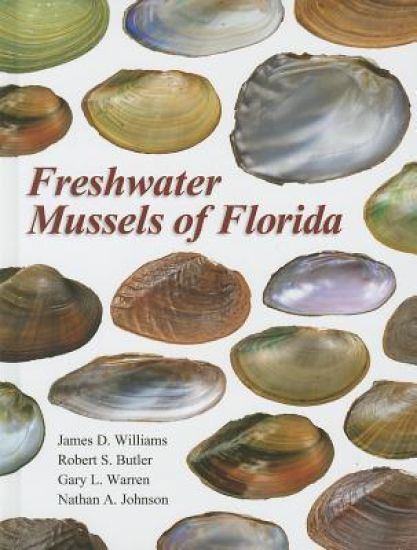
Freshwater Mussels of Florida is the only comprehensive, illustrated encyclopedia of all recorded species of mussels in the state on Florida.An exhaustive guide to all aspects of the freshwater mussel fauna in Florida, Freshwater Mussels of Florida covers the ecology, biology, distribution, and conservation of the many species of bivalve mollusks in the Sunshine State. In the past three decades, researchers, the public, businesses that depend on wildlife, and policy makers have given more attention to the threatened natural diversity of the Southeast, including freshwater mussels. This compendium meets the increasingly urgent need to catalog this imperiled group of aquatic organisms in the United States.Each entry in this definitive guide provides a detailed description and multiple depictions of the species as well as select characteristics of its soft anatomy and miscellaneous notes of interest. Individual distribution maps pinpoint the historical and present occurrence of each bivalve species and are just one component of the rich set of 307 mussel and habitat photographs, seventy-four maps, and thirteen tables that illustrate the book. Of particular interest are remarkable electron micrographs of glochidia, the specialized larval life history stage parasitic upon fishes.Freshwater Mussels of Florida will be of lasting value to state and federal conservation agencies as well as other government and nongovernment entities that manage aquatic resources in Florida. The research provides a key baseline for future study of Florida mussels. The survey results in this guide, along with extensive reviews of historical mussel collections in natural history museums, provide a complete picture of the Florida mussel fauna, past and present.
Both visitor attractions and events play pivotal roles in the appeal of tourism destination regions to visitors by virtue of being the main motivator of tourist trips and determining consumers’ choices. However, more recently visitor attractions have become more multifaceted, have proliferated and fragmented in terms of form, location, scale and style, and their role is undergoing major changes in a post-modern world as a result of consumer demands and competitive innovations. Visitor Attractions and Events for the first time theoretically and empirically explores the relations between events and attractions to offer new thinking of the role of space and place in shaping development, management practices and strategies in the sector as well as future implications. The book reveals how location is pivotal in the development, planning, and management of visitor attractions and events. Whereas the location of natural attractions is relatively fixed in space and their locations cannot be predetermined or relocated, human-made or contrived attractions are more influenced by the planning process in the context of the locational decision-making process. Competition and cooperation between visitor attractions and the aspects which shape these relations, including complementarities, compatibility, knowledge spill overs and diffusion of innovations, product similarities and spatial proximity remain largely ignored in the visitor attraction sector and thus are major elements in the focus of this book. Comparative examples ranging from small to major attractions in a wide variety of locations are included.This significant volume will appeal widely to all those interested in the visitor sector, such as tourism, events, leisure studies, destination management and sociology.
Both visitor attractions and events play pivotal roles in the appeal of tourism destination regions to visitors by virtue of being the main motivator of tourist trips and determining consumers’ choices. However, more recently visitor attractions have become more multifaceted, have proliferated and fragmented in terms of form, location, scale and style, and their role is undergoing major changes in a post-modern world as a result of consumer demands and competitive innovations. Visitor Attractions and Events for the first time theoretically and empirically explores the relations between events and attractions to offer new thinking of the role of space and place in shaping development, management practices and strategies in the sector as well as future implications. The book reveals how location is pivotal in the development, planning, and management of visitor attractions and events. Whereas the location of natural attractions is relatively fixed in space and their locations cannot be predetermined or relocated, human-made or contrived attractions are more influenced by the planning process in the context of the locational decision-making process. Competition and cooperation between visitor attractions and the aspects which shape these relations, including complementarities, compatibility, knowledge spill overs and diffusion of innovations, product similarities and spatial proximity remain largely ignored in the visitor attraction sector and thus are major elements in the focus of this book. Comparative examples ranging from small to major attractions in a wide variety of locations are included.This significant volume will appeal widely to all those interested in the visitor sector, such as tourism, events, leisure studies, destination management and sociology.






![The Peacock 'at Home', By A Lady [c.a. Dorset] And Butterfly's Ball](/covers/9781024483895.jpg)
![The Peacock 'at Home', By A Lady [c.a. Dorset] And Butterfly's Ball](/covers/9781024486728.jpg)