Kirjojen hintavertailu. Mukana 12 081 029 kirjaa ja 12 kauppaa.

Kirjahaku

Etsi kirjoja tekijän nimen, kirjan nimen tai ISBN:n perusteella.

1000 tulosta hakusanalla William R Cook

Malaika

Malaika

William R. Powell

Createspace Independent Publishing Platform
2012
nidottu
Fifteen years after the tragic death of her husband, Malaika receives his private journals and an odd invitation to write his biography. Financially strapped, Malaika accepts the invitation only to find that her husband's death is not nearly as straight forward or as simple as it once seemed. In the final entry in his diary, Malaika reads something that will change the course of her life. Her husband, Paul Mondeson, did not die of natural causes. Driven by guilt and a relentless quest for the truth, Malaika's research takes her back to Tanzania in the early 1980's when a young, idealistic American Peace Corps Volunteer comes out to Tanzania to teach physics at a "bush school". As his project officer, Malaika attempts to teach Paul the "rules of engagement" for working in a desperately poor African country. Soon the couple falls in love against a brutal background of corruption, racism, witchcraft, betrayal and murder. Malaika's journey into the past is also one of self-discovery as she pursues the absolution that always seems just beyond her reach.
The Learning Skills Cycle

The Learning Skills Cycle

William R. Klemm

Rowman Littlefield
2017
sidottu
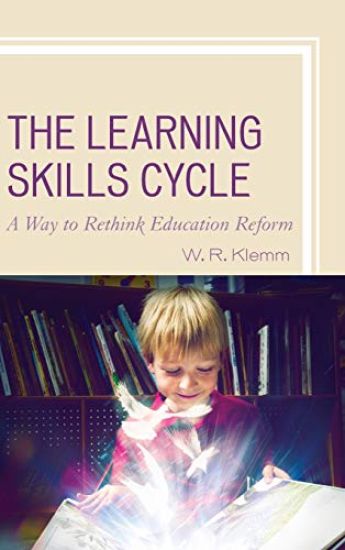
This book's ideas demonstrate how students are not adequately taught the learning skills necessary for superior academic achievement. The major reason schools are failing is that there is less emphasis on teaching students how to learn, the focus is on what to learn instead. This book provides teachers and parents with many concepts and tactics that they can use to teach children how to learn more efficiently and effectively. This book identifies and explains those skills and frames them as interacting in a mutually interacting and reinforcing cycle that I call the Learning Skills Cycle.
The Learning Skills Cycle

The Learning Skills Cycle

William R. Klemm

Rowman Littlefield
2017
nidottu
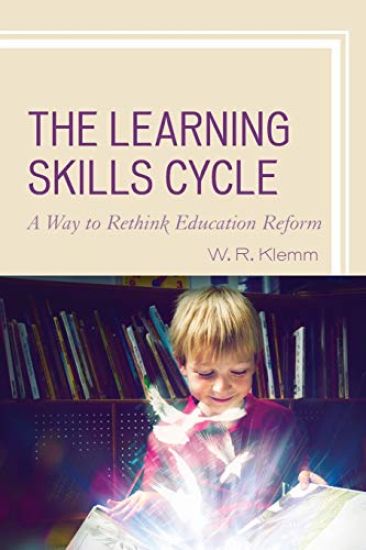
This book's ideas demonstrate how students are not adequately taught the learning skills necessary for superior academic achievement. The major reason schools are failing is that there is less emphasis on teaching students how to learn, the focus is on what to learn instead. This book provides teachers and parents with many concepts and tactics that they can use to teach children how to learn more efficiently and effectively. This book identifies and explains those skills and frames them as interacting in a mutually interacting and reinforcing cycle that I call the Learning Skills Cycle.
Adolph Sutro

Adolph Sutro

William R. Huber

McFarland Co Inc
2020
pokkari
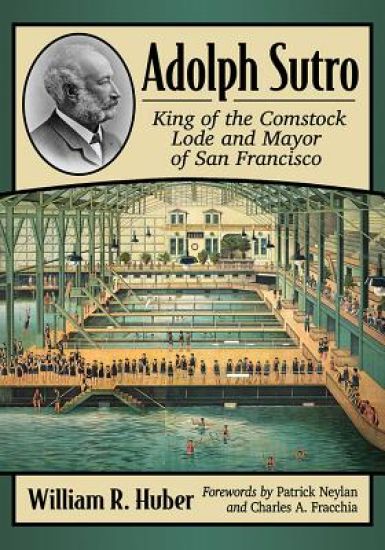
Adolph Sutro was forever seeking challenges. Emigrating from Prussia to the U.S. at age 20, the California gold rush lured him west. At the Comstock Lode in Nevada, he conceived an idea for a tunnel to drain the hot water that made the mines perilous and inefficient. But he would have to overcome both physical obstacles and powerful opposition by the Bank of California to realize his vision. Back in San Francisco, Sutro bought one twelfth of the city, including the famous Cliff House perched over the Pacific Ocean. When it burned to cinders on Christmas Day, 1894, he built a massive, eight-story Victorian replacement. He used his expertise in tunneling and water solutions to create the world's largest enclosed swimming structure, the Sutro Baths--six glass-covered heated saltwater pools with capacity of 1,000 swimmers. Other challenges followed but Sutro was not invincible. After a two-year term as mayor of San Francisco, he succumbed to debilitating strokes which left him senile. His death in 1898 started disputes among his heirs--six children by his wife and two by his mistress--that lasted more than a decade.
George Westinghouse

George Westinghouse

William R. Huber

MCFARLAND CO INC
2022
pokkari
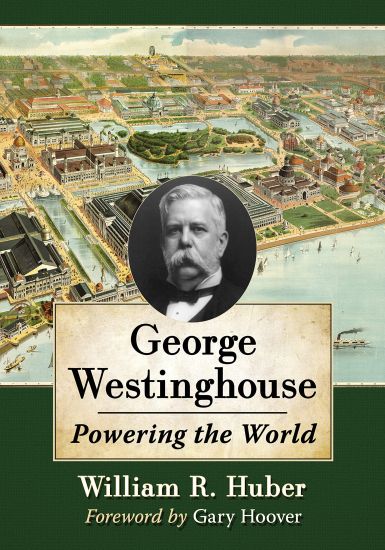
While most know Thomas Edison for his invention of the light bulb, his counterpart, George Westinghouse, is too often overlooked. Westinghouse, however, became known as one of the most prolific inventors and businessmen of the Industrial Revolution. This biography reveals the man whose teachers suspected was mentally disabled and who quit college after one semester, yet founded more than 60 different companies employing 50,000 people, and received 361 U.S. patents. He later fought the "Battle of the Currents" (AC vs. DC) with Thomas Edison and won. Westinghouse, with his engineers, provided power and light for the 1893 World's Columbian Exposition in Chicago. They harnessed the massive power of Niagara Falls and sent it over wires to light Buffalo and eventually the Northeast. His electric engines powered trains, and his air brakes stopped them. His scientific contributions forever changed the world.
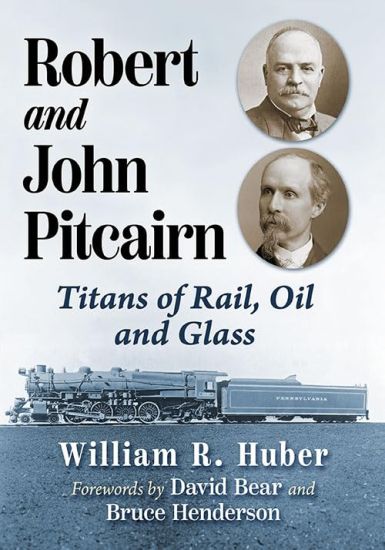
Robert and John Pitcairn

Robert and John Pitcairn

William R Huber

MCFARLAND CO INC
2025
nidottu
John and Robert Pitcairn were born in Scotland and emigrated to the United States, where they played crucial roles in the Civil War. Following their friend Andrew Carnegie, the brothers worked for the Pennsylvania Railroad, transporting troops and supplies for the Union army. After the war, John co-founded the Pittsburgh Plate Glass Company which came to dominate the U.S. glass industry. Meanwhile, Robert managed the Pittsburgh Division of the Pennsylvania Railroad through the destruction and rebuilding that followed the Johnstown flood. The history of the Pitcairn brothers parallels the evolution of American industry and transportation during and after the Civil War. This book provides a historical perspective on the 1877 railroad strike, the 1889 Johnstown flood, and other events that shaped the transportation industry and American industrialization. It also examines the spiritual and philanthropic impact of the Pitcairn brothers: Robert at the Shadyside Presbyterian Church near Pittsburgh, and John at the Bryn Athyn religious community near Philadelphia. Today, the legacy of the Pitcairn brothers remains woven into the fabric of American industrialization, revealing the intricate connections between industry, transportation, and philanthropy during the late 19th and early 20th centuries.