Kirjojen hintavertailu. Mukana 12 016 292 kirjaa ja 12 kauppaa.

Kirjahaku

Etsi kirjoja tekijän nimen, kirjan nimen tai ISBN:n perusteella.

1000 tulosta hakusanalla Alison Case

Researching English Language

Researching English Language

Alison Sealey

Routledge
2010
sidottu
Routledge English Language Introductions cover core areas of language study and are one-stop resources for students.Assuming no prior knowledge, books in the series offer an accessible overview of the subject, with activities, study questions, sample analyses, commentaries and key readings – all in the same volume. The innovative and flexible 'two-dimensional' structure is built around four sections – introduction, development, exploration and extension – which offer self-contained stages for study. Each topic can also be read across these sections, enabling the reader to build gradually on the knowledge gained.Researching English Language: provides comprehensive support for readers tackling their first independent research projects offers advice about research methods with reference to an extensive range of English Language topics including variation in accents, news discourse, forensic linguistics, child language development and many more guides readers step-by-step through the research process, from initial ideas to the submission of the dissertation includes an extensive range of activities and points for discussionillustrates each topic with examples from actual student projects and published studiesincludes key readings from leading English language researchers, including Ronald Carter; Jennifer Coates; Ruqaiya Hasan; Roz Ivanic; Ben Rampton; John Sinclair.This title will be essential reading for students undertaking research within the areas of English Language, Linguistics and Applied Linguistics.
Researching English Language

Researching English Language

Alison Sealey

Routledge
2010
nidottu
Routledge English Language Introductions cover core areas of language study and are one-stop resources for students.Assuming no prior knowledge, books in the series offer an accessible overview of the subject, with activities, study questions, sample analyses, commentaries and key readings – all in the same volume. The innovative and flexible 'two-dimensional' structure is built around four sections – introduction, development, exploration and extension – which offer self-contained stages for study. Each topic can also be read across these sections, enabling the reader to build gradually on the knowledge gained.Researching English Language: provides comprehensive support for readers tackling their first independent research projects offers advice about research methods with reference to an extensive range of English Language topics including variation in accents, news discourse, forensic linguistics, child language development and many more guides readers step-by-step through the research process, from initial ideas to the submission of the dissertation includes an extensive range of activities and points for discussionillustrates each topic with examples from actual student projects and published studiesincludes key readings from leading English language researchers, including Ronald Carter; Jennifer Coates; Ruqaiya Hasan; Roz Ivanic; Ben Rampton; John Sinclair.This title will be essential reading for students undertaking research within the areas of English Language, Linguistics and Applied Linguistics.
Actor Training

Actor Training

Alison Hodge

Routledge
2010
nidottu
Actor Training expands on Alison Hodge’s highly-acclaimed and best-selling Twentieth Century Actor Training. This exciting second edition radically updates the original book making it even more valuable for any student of the history and practice of actor training. The bibliography is brought right up to date and many chapters are revised. In addition, eight more practitioners are included - and forty more photographs - to create a stunningly comprehensive study. The practitioners included are:Stella Adler; Eugenio Barba; Augusto Boal; Anne Bogart; Bertolt Brecht; Peter Brook; Michael Chekhov; Joseph Chaikin; Jacques Copeau; Philippe Gaulier; Jerzy Grotowski; Maria Knebel; Jacques Lecoq; Joan Littlewood; Sanford Meisner; Vsevolod Meyerhold; Ariane Mnouchkine; Monika Pagneux; Michel Saint-Denis; Wlodzimierz Staniewski; Konstantin Stanislavsky; Lee StrasbergThe historical, cultural and political context of each practitioner’s work is clearly set out by leading experts and accompanied by an incisive and enlightening analysis of the main principles of their training, practical exercises and key productions.This book is an invaluable introduction to the principles and practice of actor training and its role in shaping modern theatre.
The Scene of Violence

The Scene of Violence

Alison Young

Routledge Cavendish
2009
sidottu
In the contemporary fascination with images of crime, violence gets under our skin and keeps us enthralled. The Scene of Violence explores the spectator’s encounter with the cinematic scene of violence – rape and revenge, homicide and serial killing, torture and terrorism. Providing a detailed reading of both classical and contemporary films – for example, Kill Bill, Blue Velvet, Reservoir Dogs, The Matrix, Psycho, The Accused, Elephant, Seven, Thelma & Louise, United 93, Zodiac, and No Country for Old Men – Alison Young returns the affective processes of the cinematic image to the study of law, crime and violence. Engaging with legal theory, cultural criminology and film studies, the book unfolds both our attachment to the authority of law and our identification with the illicit. Its original contribution is to bring together the cultural fascination of crime with a nuanced account of what it means to watch cinema. The Scene of Violence shows how the spectator is bound by the laws of film to the judgment of the crime-image.
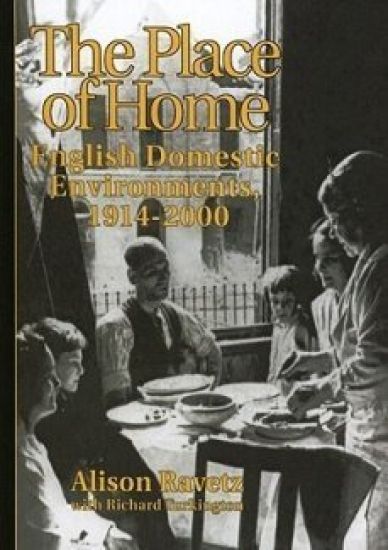
The Place of Home

The Place of Home

Alison Ravetz; Professor Alison Ravetz; R. Turkington

Routledge
2011
nidottu
**This book was originally printed as a hardback in 1995. The paperback released in 2011 is a reprint of the original**A comprehensive and in-depth history of the 20th century English home, how it has been created, and how it works for people. It focuses on the various influences bearing on the development of domestic space since 1914 and covers both design and housing policy. Current debates from participation to co-operative housing are examined and several themes not previously brought together are linked, e.g. urban development/house design; technology at home/women and home; social meaning of home.
The Foundations of Female Entrepreneurship
The Foundations of Female Entrepreneurship explores the relationship between home, household headship and enterprise in Victorian London. It examines the notions of duty, honor and suitability in how women’s ventures are represented by themselves and others and engages in a comparison of the interpretation of historical female entrepreneurship by contemporaries and historians in the UK, Europe and America. It argues that just as women in business have often been hidden by men, they have often also been hidden by the ‘home’ and the conceptualization of separate spheres of public and private agency and of ‘the’ entrepreneur. Drawing on contextual evidence from 1747 to 1880, including fire insurance records, directories, trade cards, newspapers, memoirs, the census and extensive record linkage, this study concentrates on the early to mid-Victorian period when ideals about gender roles and appropriate work for women were vigorously debated.Alison Kay offers new insight into the motivations of the Victorian women who opted to pursue enterprises of their own. By engaging in empirical comparisons with men's business, it also reveals similarities and differences with the small to medium sized ventures of male business proprietors. The link between home and enterprise is then further excavated by detailed record linkage, revealing the households and domestic circumstances and responsibilities of female proprietors. Using both discourse and data to connect enterprise, proprietor and household, The Foundations of Female Entrepreneurship provides a multi-dimensional picture of the Victorian female proprietor and moves beyond the stereotypes. It argues that active business did not exclude women, although careful representation was vital and this has obscured the similarities of their businesses with those of many male business proprietors.
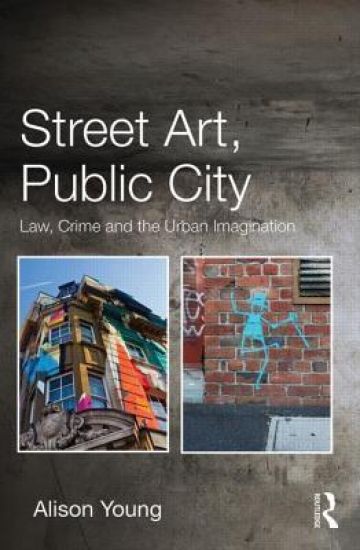
Street Art, Public City

Street Art, Public City

Alison Young

Routledge
2013
sidottu
What is street art? Who is the street artist? Why is street art a crime? Since the late 1990s, a distinctive cultural practice has emerged in many cities: street art, involving the placement of uncommissioned artworks in public places. Sometimes regarded as a variant of graffiti, sometimes called a new art movement, its practitioners engage in illicit activities while at the same time the resulting artworks can command high prices at auction and have become collectable aesthetic commodities. Such paradoxical responses show that street art challenges conventional understandings of culture, law, crime and art. Street Art, Public City: Law, Crime and the Urban Imagination engages with those paradoxes in order to understand how street art reveals new modes of citizenship in the contemporary city. It examines the histories of street art and the motivations of street artists, and the experiences both of making street art and looking at street art in public space. It considers the ways in which street art has become an integral part of the identity of cities such as London, New York, Berlin, and Melbourne, at the same time as street art has become increasingly criminalised. It investigates the implications of street art for conceptions of property and authority, and suggests that street art and the urban imagination can point us towards a different kind of city: the public city. Street Art, Public City will be of interest to readers concerned with art, culture, law, cities and urban space, and also to readers in the fields of legal studies, cultural criminology, urban geography, cultural studies and art more generally.
Improving Literacy at Work

Improving Literacy at Work

Alison Wolf; Karen Evans

Routledge
2010
sidottu
Modern societies demand high levels of literacy. The written word is pervasive; individuals with poor literacy skills are deeply disadvantaged; and governments are increasingly pre-occupied with the contribution that skills can make to economic growth. As a result, the basic skills of adult workers are of concern as never before, a focus for workplace and education policy and practice.While Improving Literacy at Work builds on detailed research from the UK, the issue is a universal one and rising skill requirements mean the conclusions drawn will be of equal interest elsewhere in Europe, USA, Canada, Australia and New Zealand. The research findings have very direct implications and practical relevance for teaching and learning, as this valuable book demonstrates, providing clear advice on how to develop effective provision and how best to support learners at work.Throughout the study, the authors address the following fundamental questions:How do adults’ literacy skills impact on their working lives, and on the enterprises where they work?How can we develop these essential skills in the workforce?When and how can literacy instruction change individuals’ employability and engagement with further learning?Essential reading for trainers and managers in industry, teachers, researchers and lecturers in adult and further education and stakeholders implementing evidence-based policy, this book maps the fundamental changes taking place in workplace literacy.
Improving Literacy at Work

Improving Literacy at Work

Alison Wolf; Karen Evans

Routledge
2010
nidottu
Modern societies demand high levels of literacy. The written word is pervasive; individuals with poor literacy skills are deeply disadvantaged; and governments are increasingly pre-occupied with the contribution that skills can make to economic growth. As a result, the basic skills of adult workers are of concern as never before, a focus for workplace and education policy and practice.While Improving Literacy at Work builds on detailed research from the UK, the issue is a universal one and rising skill requirements mean the conclusions drawn will be of equal interest elsewhere in Europe, USA, Canada, Australia and New Zealand. The research findings have very direct implications and practical relevance for teaching and learning, as this valuable book demonstrates, providing clear advice on how to develop effective provision and how best to support learners at work.Throughout the study, the authors address the following fundamental questions:How do adults’ literacy skills impact on their working lives, and on the enterprises where they work?How can we develop these essential skills in the workforce?When and how can literacy instruction change individuals’ employability and engagement with further learning?Essential reading for trainers and managers in industry, teachers, researchers and lecturers in adult and further education and stakeholders implementing evidence-based policy, this book maps the fundamental changes taking place in workplace literacy.
Madness in International Relations

Madness in International Relations

Alison Howell

Routledge
2011
sidottu
Madness in International Relations provides an important and innovative account of the role of psychology and psychiatry in global politics, showing how mental health governance has become a means of securing various populations, often with questionable effects.Through the analysis of three key case studies Howell illustrates how such therapeutic interventions can at times be coercive and sovereign, at other times disciplinary, and at still other times benevolent, though not benign. In each case a ‘diagnostic competition’ is traced, that is, a contestation over how best to diagnose and treat the population in question. The book examines the populations of Guantánamo Bay, post-conflict societies and western militaries, identifying how these diagnostic competitions ultimately rest on shared assumptions about the value of psychology and psychiatry in managing global security, about the value of achieving security through mental health governance, and ultimately about the medicalization of security.This work will be of great interest to all scholars of International relations, critical theory and security studies.
The Scene of Violence

The Scene of Violence

Alison Young

Routledge Cavendish
2010
nidottu
In the contemporary fascination with images of crime, violence gets under our skin and keeps us enthralled. The Scene of Violence explores the spectator’s encounter with the cinematic scene of violence – rape and revenge, homicide and serial killing, torture and terrorism. Providing a detailed reading of both classical and contemporary films – for example, Kill Bill, Blue Velvet, Reservoir Dogs, The Matrix, Psycho, The Accused, Elephant, Seven, Thelma & Louise, United 93, Zodiac, and No Country for Old Men – Alison Young returns the affective processes of the cinematic image to the study of law, crime and violence. Engaging with legal theory, cultural criminology and film studies, the book unfolds both our attachment to the authority of law and our identification with the illicit. Its original contribution is to bring together the cultural fascination of crime with a nuanced account of what it means to watch cinema. The Scene of Violence shows how the spectator is bound by the laws of film to the judgment of the crime-image.
Drama Sessions for Primary Schools and Drama Clubs
Drama Sessions for Primary Schools and Drama Clubs is an indispensable guide designed to help you run effective and enjoyable drama sessions in your primary school for a whole academic year.The author outlines thirty-three practical and user-friendly sessions, each one built around developing the social skills needed by children to become effective and positive communicators. Each session has guided time allocations and thorough explanations of what each exercise should achieve. The final session of the term culminates in a ‘show and tell’ performance in which children can show their family and friends what they have learnt.As well as the sessions, this book also includes: Links to the national curriculum and SEAL; Notes on ‘performance’; Health and safety; Extra sessions for use in smaller spaces; Explanations of the pedagogical benefits of every exercise.This unique and practical book will be of interest to all teachers who need to incorporate drama into everyday classroom learning as well as drama teachers and practitioners looking to run successful, interesting and fun drama sessions for their primary pupils.
English Language Knowledge for Secondary Teachers
If teachers are to successfully develop their students' English language skills it is vital that they overcome any existing lack of confidence and training in grammar and language concepts. Language Knowledge for Secondary Teachers is an accessible book aiming to equip secondary teachers with the knowledge they need to teach language effectively. It clearly explains the essential concepts for language study, introduces the terminology needed for ‘talking about language’ and shows how this knowledge can be applied to the skills of reading, writing, speaking and listening. This new edition has been fully updated to take into account changes to the curriculum and developments in digital and new media language. Written by an experienced teacher and consultant the book includes: All the grammar knowledge that a secondary teacher needs; Contemporary language examples to which new teachers can relate; A companion website with a numerous activities for use in the classroom linked to each chapter and supported by detailed commentaries to explain how these work in practice (www.routledge.com/ross). By making language teaching a fun and enjoyable experience, this text offers a refreshing resource for any secondary teacher daunted by the prospect of teaching grammar and language.
English Language Knowledge for Secondary Teachers
If teachers are to successfully develop their students' English language skills it is vital that they overcome any existing lack of confidence and training in grammar and language concepts. Language Knowledge for Secondary Teachers is an accessible book aiming to equip secondary teachers with the knowledge they need to teach language effectively. It clearly explains the essential concepts for language study, introduces the terminology needed for ‘talking about language’ and shows how this knowledge can be applied to the skills of reading, writing, speaking and listening. This new edition has been fully updated to take into account changes to the curriculum and developments in digital and new media language. Written by an experienced teacher and consultant the book includes: All the grammar knowledge that a secondary teacher needs; Contemporary language examples to which new teachers can relate; A companion website with a numerous activities for use in the classroom linked to each chapter and supported by detailed commentaries to explain how these work in practice (www.routledge.com/ross). By making language teaching a fun and enjoyable experience, this text offers a refreshing resource for any secondary teacher daunted by the prospect of teaching grammar and language.
Patrons and Patron Saints in Early Modern English Literature
This book visits the fact that, in the pre-modern world, saints and lords served structurally similar roles, acting as patrons to those beneath them on the spiritual or social ladder with the word "patron" used to designate both types of elite sponsor. Chapman argues that this elision of patron saints and patron lords remained a distinctive feature of the early modern English imagination and that it is central to some of the key works of literature in the period. Writers like Jonson, Shakespeare, Spenser, Drayton, Donne and, Milton all use medieval patron saints in order to represent and to challenge early modern ideas of patronage -- not just patronage in the narrow sense of the immediate economic relations obtaining between client and sponsor, but also patronage as a society-wide system of obligation and reward that itself crystallized a whole culture’s assumptions about order and degree. The works studied in this book -- ranging from Shakespeare’s 2 Henry VI, written early in the 1590s, to Milton’s Masque Performed at Ludlow Castle, written in 1634 -- are patronage works, either aimed at a specific patron or showing a keen awareness of the larger patronage system. This volume challenges the idea that the early modern world had shrugged off its own medieval past, instead arguing that Protestant writers in the period were actively using the medieval Catholic ideal of the saint as a means to represent contemporary systems of hierarchy and dependence. Saints had been the ideal -- and idealized -- patrons of the medieval world and remained so for early modern English recusants. As a result, their legends and iconographies provided early modern Protestant authors with the perfect tool for thinking about the urgent and complex question of who owed allegiance to whom in a rapidly changing world.
Group Music Therapy

Group Music Therapy

Alison Davies; Eleanor Richards; Nick Barwick

Routledge
2014
sidottu
In Group Music Therapy Alison Davies, Eleanor Richards and Nick Barwick bring together developments in theory and clinical practice in music therapy group work, celebrating the richness of what group analytic thinking and music therapy can offer one another. The book explores the dynamic elements of the processes that take place in both group analytic therapy and group music therapy, exploring both the commonalities and the distinctive characteristics of the two modalities.To music therapists, psychotherapists and other arts therapists Group Music Therapy offers a body of knowledge and enquiry through which to understand the music therapy group process through some of the central proposals of group analysis; to group analysts it offers insight into the possibilities of non-verbal communication through improvised music and, more widely, invites thought in musical terms about the nature of events and exchanges in a therapy group. Links are made with group analytic theory as well as with other associated theoretical traditions, such as attachment theory and theories of early infant development. The book explores the history of group music therapy and the history of group analysis, looking both at core concepts and at more recent developments. Attention is also given to developmental issues, drawing upon theories of infant development and attachment theory and clinical vignettes drawn from music therapy practice with a wide range of patient groups illustrates these ideas. The book concludes with a discussion of the possibilities of co-therapy and other collaborative working and of the value of experiential groups in training. Group Music Therapy will be a key text for clinicians and students seeking to expand their theoretical thinking and enrich their practice, and offers a grounding in group analytic ideas to professionals in other disciplines considering referrals to group work.
Group Music Therapy

Group Music Therapy

Alison Davies; Eleanor Richards; Nick Barwick

Routledge
2014
nidottu
In Group Music Therapy Alison Davies, Eleanor Richards and Nick Barwick bring together developments in theory and clinical practice in music therapy group work, celebrating the richness of what group analytic thinking and music therapy can offer one another. The book explores the dynamic elements of the processes that take place in both group analytic therapy and group music therapy, exploring both the commonalities and the distinctive characteristics of the two modalities.To music therapists, psychotherapists and other arts therapists Group Music Therapy offers a body of knowledge and enquiry through which to understand the music therapy group process through some of the central proposals of group analysis; to group analysts it offers insight into the possibilities of non-verbal communication through improvised music and, more widely, invites thought in musical terms about the nature of events and exchanges in a therapy group. Links are made with group analytic theory as well as with other associated theoretical traditions, such as attachment theory and theories of early infant development. The book explores the history of group music therapy and the history of group analysis, looking both at core concepts and at more recent developments. Attention is also given to developmental issues, drawing upon theories of infant development and attachment theory and clinical vignettes drawn from music therapy practice with a wide range of patient groups illustrates these ideas. The book concludes with a discussion of the possibilities of co-therapy and other collaborative working and of the value of experiential groups in training. Group Music Therapy will be a key text for clinicians and students seeking to expand their theoretical thinking and enrich their practice, and offers a grounding in group analytic ideas to professionals in other disciplines considering referrals to group work.
Pompeii and Herculaneum

Pompeii and Herculaneum

Alison E. Cooley; M. G. L. Cooley

Routledge
2013
sidottu
The original edition of Pompeii: A Sourcebook was a crucial resource for students of the site. Now updated to include material from Herculaneum, the neighbouring town also buried in the eruption of Vesuvius, Pompeii and Herculaneum: A Sourcebook allows readers to form a richer and more diverse picture of urban life on the Bay of Naples. Focusing upon inscriptions and ancient texts, it translates and sets into context a representative sample of the huge range of source material uncovered in these towns. From the labels on wine jars to scribbled insults, and from advertisements for gladiatorial contests to love poetry, the individual chapters explore the early history of Pompeii and Herculaneum, their destruction, leisure pursuits, politics, commerce, religion, the family and society. Information about Pompeii and Herculaneum from authors based in Rome is included, but the great majority of sources come from the cities themselves, written by their ordinary inhabitants – men and women, citizens and slaves. Encorporating the latest research and finds from the two cities and enhanced with more photographs, maps, and plans, Pompeii and Herculaneum: A Sourcebook offers an invaluable resource for anyone studying or visiting the sites.
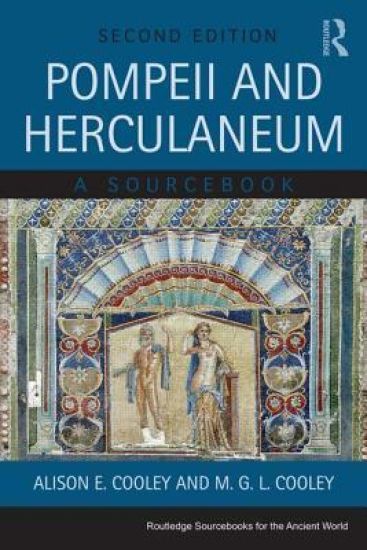
Pompeii and Herculaneum

Pompeii and Herculaneum

Alison E. Cooley; M. G. L. Cooley

Routledge
2013
nidottu
The original edition of Pompeii: A Sourcebook was a crucial resource for students of the site. Now updated to include material from Herculaneum, the neighbouring town also buried in the eruption of Vesuvius, Pompeii and Herculaneum: A Sourcebook allows readers to form a richer and more diverse picture of urban life on the Bay of Naples. Focusing upon inscriptions and ancient texts, it translates and sets into context a representative sample of the huge range of source material uncovered in these towns. From the labels on wine jars to scribbled insults, and from advertisements for gladiatorial contests to love poetry, the individual chapters explore the early history of Pompeii and Herculaneum, their destruction, leisure pursuits, politics, commerce, religion, the family and society. Information about Pompeii and Herculaneum from authors based in Rome is included, but the great majority of sources come from the cities themselves, written by their ordinary inhabitants – men and women, citizens and slaves. Encorporating the latest research and finds from the two cities and enhanced with more photographs, maps, and plans, Pompeii and Herculaneum: A Sourcebook offers an invaluable resource for anyone studying or visiting the sites.
The Government of Space (Routledge Revivals)
Britain’s planning system began as ‘town and country planning’ to repair the ravages of unplanned industrialism and promote ideal environments for the future. Steering a course between left and right, public control and for-profit development, it survived successive booms and busts, broadening to include new concerns like ecology, conservation and community participation.By the 1986, when this book was first published, the system’s survival beyond the year 2000 was in doubt. It did endure, but it is now under serious threat from the right, which sees it as obstructing enterprise and the restoration of ‘growth’. It has been stripped of some of its core aims and mechanisms, while as yet there is no agenda distinguishing growth that will be sustainable from growth which self-evidently is not.The Government of Space was written as a concise guide for the non-specialist to the origins and evolution of British planning, its intellectual pedigree, achievements and cruxes. It is an invaluable background to the state of planning and the cases for and against it today.