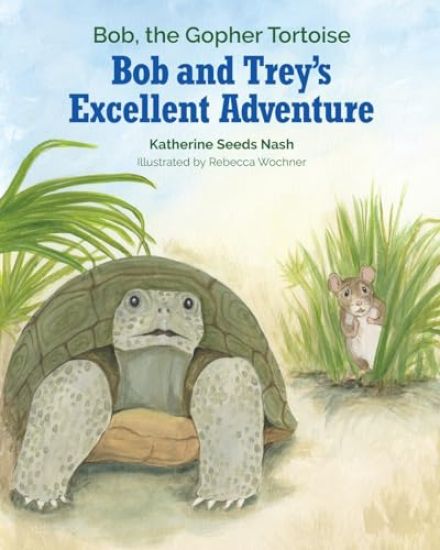
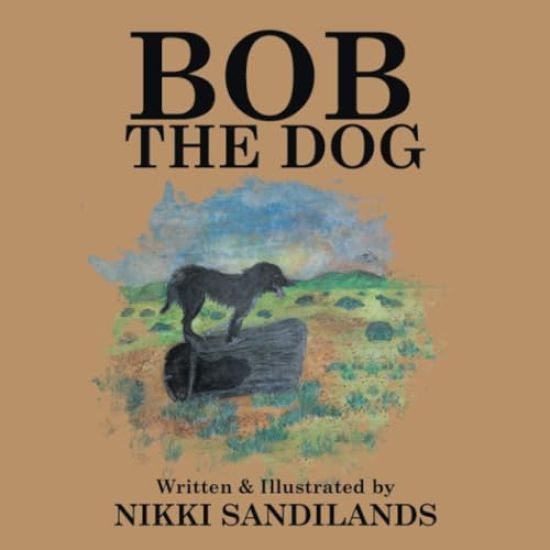
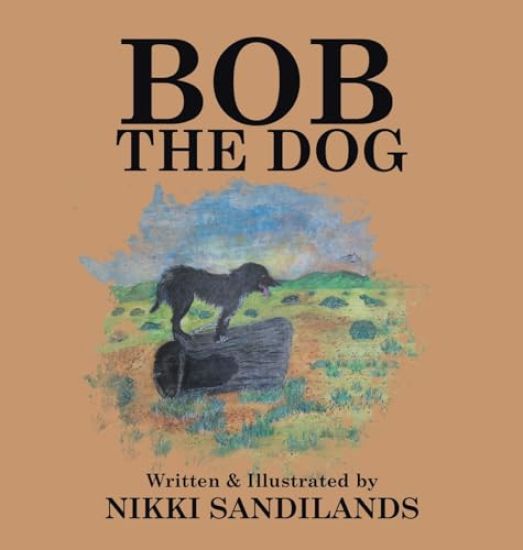
Bob, the Gopher Tortoise, is being forced out of his home, sweet home. He is relocated to a strange, new world. After some terrifying experiences, he adjusts to the new environment full of new species of plants and animals. The present is becoming comfortable, but what will the future hold...?
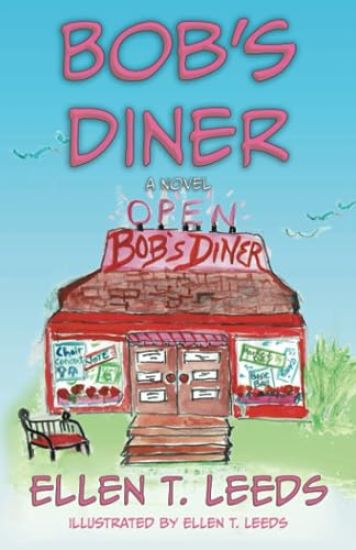
Bob's Diner is a book about lonely people searching for love and acceptance. There's Bob, the diner's owner, who escapes the world using his diner as his refuge and safe place; Lillian, his wife, childless, and looking for someone to mother; Mr. Twitters, a customer, who enters the diner and finds it life changing; Rosaline, who works as a waitress, wanting desperately to be needed; and Toby, an optimistic middle schooler, trying to fit in and searching for answers. Many other characters, upon entering Bob's diner, wanted to connect, to be seen, and to be heard. A large cast of people were trying to make their way in the world. All were longing for these connections during seemingly simpler times of the 1960s. And yet, as one reads on, one will notice, "Everything changes, and everything stays the same." Places and events within Bob's Diner might be different from today but the core and heart of these people remain timeless and universal. Within Bob's Diner and this small New Jersey town of Woodlake are stories of resilience, joy and optimism.
In 1994, Bob Garner began doing short features about barbecue for UNC-TV’s statewide public-television magazine program, North Carolina Now. In 1996, he published North Carolina Barbecue: Flavored by Time, taking readers on a delectable journey across the state in search of the best examples of this distinctive North Carolina delicacy. After Garner produced a one-hour television special based on his book, he quickly became known throughout North Carolina as “the barbecue man.” In 2002, he published Bob Garner’s Guide to North Carolina Barbecue, which describes the 100 best barbecue restaurants from the mountains to the sea. Bob Garner’s Book of Barbecue: North Carolina’s Favorite Food preserves the heritage and tradition of a disappearing rural lifestyle while showing how barbecue continues to evolve. Packed full of recipes for barbecue and popular side dishes (above and beyond the traditional hush puppies, slaw, and ’nana pudding); sidebars with useful tips, barbecue-related news, and features; and profiles of past and present influential pit masters and barbecue aficionados, this tome is the definitive guide to anything and everything pertaining to North Carolina’s favorite food. Television personality, restaurant reviewer, speaker, author, pit master, and connoisseur of North Carolina barbecue, Bob Garner is the author of two previous books about barbecue. He has written extensively for Our State magazine, including “Bob Garner Eats,” a 10-part series on traditional Southern foods. He has appeared on the Food Network’s Paula’s Home Cookin’ featuring Paula Deen, and Food Nation with Bobby Flay; the Travel Channel’s Road Trip; and ABC’s Good Morning America. Garner was executive producer and host of the UNC-TV series Carolina Countryside and has been a featured speaker at the annual Big Apple Barbecue Block Party in New York and the Southern Foodway Alliance’s annual symposium in Oxford, Mississippi. He speaks frequently to a wide variety of audiences across North Carolina. In 2011, Garner joined with Empire Properties in Raleigh, North Carolina, to work with Ed Mitchell at The Pit to promote barbecue heritage; plans include traveling across the state to host heritage dinners and pig pickings, accompanied by live bluegrass music. Garner divides his time between Burlington and Raleigh, North Carolina.
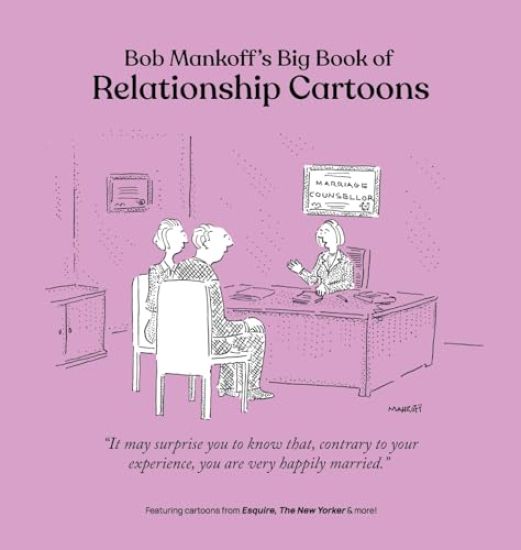
Let Bob Mankoff be your guide to laughing at your relationship (or the relationship of your favorite friend or couple). Monograph contains 146 of Bob's favorite relationship cartoons covering every possible relationship topic imaginable: First Dates, Proposals, Marriage, Anniversaries, Infidelity, Couples Therapy, Divorce, and much more After all, if you can't laugh at the existential rom-com that is human intimacy, then the joke's on you.
Bob McBob is the most amazing knight in the year 1212, and when his friend Donald McRonald is captured, he must go save him. This book is a fantasy/comedy of sorts, also it's a bit amazing.
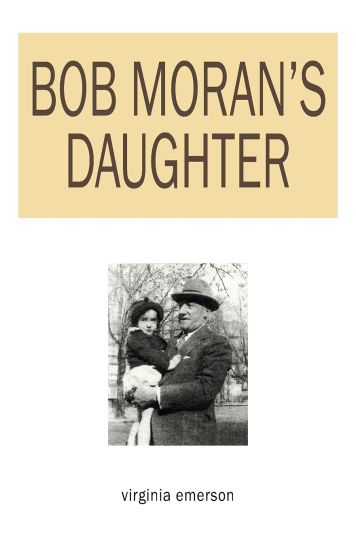
This is the story of a girl growing up in the Bronx, New York. It begins just before World War II and follows her through her upbringing in a family of ten people. The story wends through the influence of her father, a former Mayor of New York City, her mother, a socialite from the Bronx. It also describes her relationship with her Mammy(grandmother), who was a member of the household as well as her six siblings and the intermingling of their lives. It proceeds through her college and adult years and the raising of her own children. It concludes with the adult relationships which have rounded out her lifetime. She feels that many girls from similar situations and backgrounds can appreciate this story being put to page to give them a reflection on their own lives.
Sept. 23-Robert Swan Mueller III-the special prosecutor tasked to take down the President of the United States-is, as his name suggests, a product of elite private schools and universities. He is uniformly and soberly praised in the national news media as incorruptible, fair-minded "honest Bob," "strait-laced Bobby three sticks." This image, we shall show, is a brazenly false, Washington, D.C. public relations pitch, created for the credulous. In reality, Robert Swan Mueller III is about as corrupt as they come, if necessary bending and twisting the law every which way to serve the goals of those who provide him assignments. The might of the prosecutorial function and the institutions he serves dictate what is right for him, rather than the unbiased pursuit of justice the law envisions for his vocation. In what he says was a defining moment, Mueller broke ranks, after college, to serve in the Vietnam War as a Marine. After that he never wanted to do anything but prosecute. His appointment as special prosecutor caps a long career in which he has envisioned himself to be a stern and willing warrior, a dutiful Marine, acting on behalf of whatever evil scheme his superiors present to him, and using whatever means seems necessary to execute it. In recent weeks, organizers for the LaRouche movement have been repeatedly told by citizens they meet: "It looks like President Trump is getting the 'LaRouche treatment.' " The two men could not be more different in station, or cultural and intellectual achievement. LaRouche is a world-historical genius in the mold of Gottfried Leibniz. But, both men touched what has amounted to the third rail of American politics since Franklin Roosevelt's death. They threatened the post-War Anglo-American British imperial system. LaRouche did so directly, continuously, and explicitly by name. Trump has done so implicitly, by rejecting perpetual war, seeking better relations with Russia, calling for imposition of Glass-Steagall banking separation, endorsing what he refers to as the American System of political economy, and promising massive infrastructure development and a modern manufacturing platform for productive jobs. In both cases, as we shall see, the British explicitly demanded scalps, based on a perceived threat to them, most specifically located in the desire for a collaborative relationship with Russia and an end to the "unipolar" framework of relationships between nations. In both cases, a controlled media unleashed an incessant barrage of ugly, salacious, and defamatory coverage, day-in day-out, to create the popular conditions for a criminal prosecution. While there were and are many other players in these Kabuki dances-compromised and terrorized politicians and judges, and an intelligence community which functions as the gendarme of our Orwellian police state-the blunt instrument chosen for the hit was Robert Mueller. Along the way, between the two assignments, Robert Mueller played a hugely significant role in covering up the Saudi/British role in the murders of almost 3,000 Americans on September 11, 2001, and the wholesale destruction of the United States Constitution which followed in its wake-a role which, if thoroughly examined, constitutes obstruction of justice, among other crimes. This dossier will walk you through Mueller's career based on what is readily and publicly available. It is a trail of prosecutorial misconduct, including what former Senator Bob Graham calls "aggressive deception" of the U.S. Congress and the public concerning the events of September 11, 2001, and includes a major role in the creation of the post-9/11 surveillance state which has eviscerated and destroyed the Fourth Amendment and the rest of our Constitution's Bill of Rights. Those who work inside our modern Leviathan can surely point to other malfeasance, and we invite you to pile on-please, expose it. You owe no less to your oath to the Constitution of the United States.
*Includes pictures *Includes Marley's own quotes *Includes footnotes and a bibliography for further reading "We don't have education, we have inspiration; if I was educated I would be a damn fool." - Bob Marley "If there remains any magic, it is music." - Bob Marley In terms of raw popularity, Bob Marley sold over 20 million albums in a brief career that took him around the globe as "the first international superstar from the so-called Third World," but the journey from anonymity within his own culture to reigning as "the defining figure of Jamaican music" was a circuitous and dangerous one. After leaving home at the age of 14, Marley's streets skills helped him "gain a foothold in Jamaica's chaotic music industry while skillfully navigating politically partisan violence that abounded in Kingston through the 70s," and his exaltation of the reggae form, couched in the Rastafari, became an instrument of order as a haven for otherwise directionless youth in Kingston and other communities of Jamaica. Beginning with the more lighthearted ska style, Marley drew fellow Jamaicans as kindred spirits by adding social commentary to the lyrics, and as these popular dance hits were infused with songs of faith, the weightier genre of reggae emerged. Marley would become "one of the genre's most beloved artists," and to the outer world, he is by far the most iconic individual associated with the form and the era. As the merely distractive element of ska fell away "into the slower, bass-heavy reggae sound," the accompanying depth of message lifted him above the category of mere entertainer, and his fellow Jamaican youth turned to him for social truths. As a Rolling Stone writer noted, "Marley wasn't singing about how peace could come easily to the World but rather how hell on Earth comes too easily to too many. His songs were his memories; he had lived with the wretched, he had seen the downpressers and those whom they pressed down." The true power of the reggae and Rastafari movements, with Marley as the messenger, was generated in Jamaica itself through epic concerts that reached the status of "mystical events" before growing into a global attraction that could no longer be ignored. What was for a foreign audiences a fresh sound was for the Caribbean (and for Jamaicans in particular) "a vital folk art," and along with the musical and religious waves that swept from Jamaica through the world came the cult of Marley himself, calling on the black man and woman to overthrow the influences of "Babylon" (Western institutions of oppression) while living with people of all races in harmony. Decades after Marley's death, his status as a figurehead of the reggae movement and Rastafari faith remains secure, and in many ways, his public legend loosely parallels those of Michael Jackson, John Lennon, and Elvis Presley. Bob Marley: The Life and Legacy of Reggae's Global Icon chronicles the life, career, and legacy of one of the world's most famous musicians. Along with pictures of important people, places, and events, you will learn about Bob Marley like never before, in no time at all.
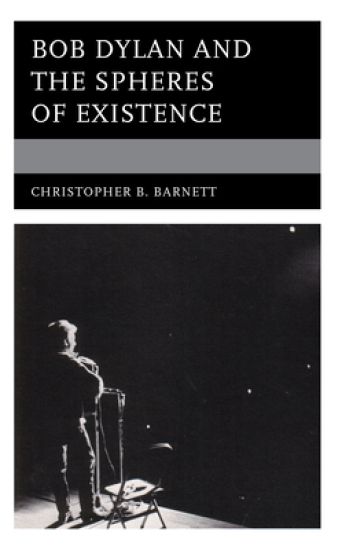
Bob Dylan and the Spheres of Existence shows that existential questions lie at the heart of Bob Dylan’s songwriting—a point that will developed with the help of renowned Danish philosopher Søren Kierkegaard. One of the focal points of Kierkegaard’s authorship is the journey towards authentic selfhood. Famously, he thematizes this journey in terms of existential “spheres”—the aesthetic, the ethical, and the religious. Whereas the aesthetic involves a preference for immediacy, the ethical has to do with achieving a sense of personal identity by way of living for enduring commitments and values. Yet, higher than both of these stages is the religious, which initially concerns the immanent human quest for eternal life but, for Kierkegaard, ultimately comes to rest in God’s transcendent self-revelation in Jesus Christ. This book argues that Kierkegaard's theory can help us deepen our understanding of and relation to Dylan’s art. Just as Kierkegaard presupposes existential “movement” and transformation, so is Dylan celebrated for his shifting personae and philosophical variance. But this is not mere aesthetic dabbling on Dylan’s part. On the contrary, his diverse “masks” and voices encourage his audience to engage the worldview being presented, albeit in such a way that religious faith is identified as humanity’s source of ultimate meaning.
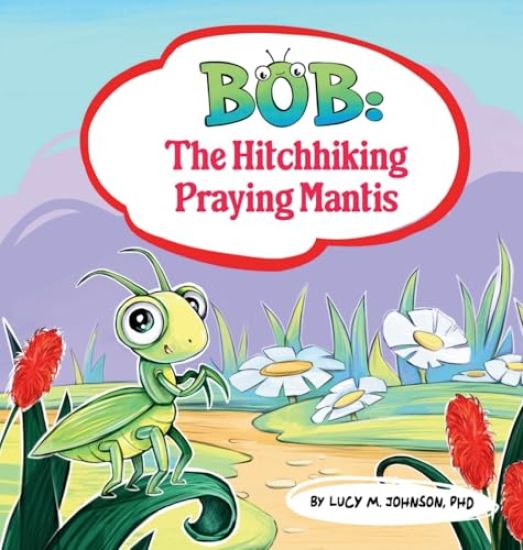
You may or may not know that our bodies need oxygen. But have you ever wondered how it gets the oxygen? Well you can find out with Bob and his friends as they explore the "Air Squad", or the respiratory system
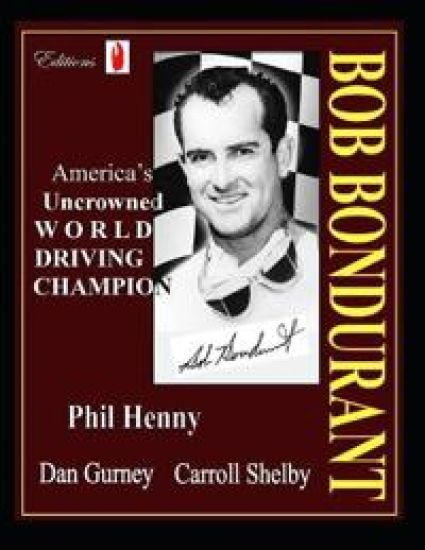
BOOK INTRODUCTION FOR: BOB BONDURANT America's uncrowned World Driving ChampionThe book the world has been waiting for; Bob Bondurant - America's Uncrowned World Driving Champion. Bob's racing history in pictures and written by renowned racing author; Phil Henny. This is a must have not only for every Bondurant fan, but every race fan. An introduction by Dan Gurney and a foreword by Carroll Shelby. Quotes by Phil Hill, Paul Newman, Jackie Stewart and James Garner make this book one to collect. Get yours, and keep it safe, because everyone is going to want it. A lavish volume with superb photography. Strongly recommended.----------------------------------------------------------------------BOOK INTRODUCTION OF THE AUTHOR The author Phil HennyPhil was born in 1943, in the village of Montagny pr s d'Yverdon in the French speaking region of Switzerland. In 1966, he joined the Shelby American racing team as a mechanic, in time to work on the 1967 Le Mans winning Ford MK IV driven by Dan Gurney and A.J. Foyt. His stories of the American racing scene and particularly the Shelby era are fascinating. There are scant few memoirs out there written by the men who turned the wrenches, and a number of these frankly have little of substance to say- not so with Phil Henny's book. With unparalleled access to the world of the great Carroll Shelby, Phil presents an engaging look at an incredible era in racing. To his credit, he doesn't gloss over any aspect of what he saw, either within or outside of Shelby's organization. His comments about drivers are particularly insightful. Fascinating and strongly recommended. Phil lives in Portland Oregon U.S.A.
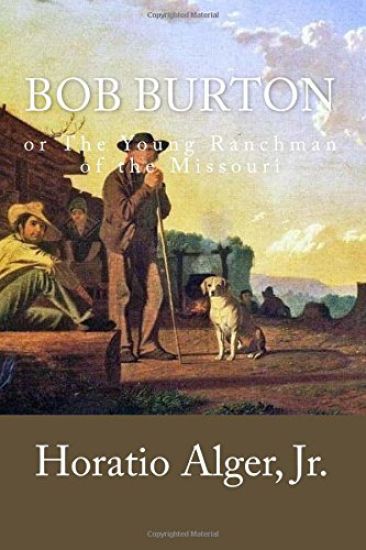
Richard Burton, a ranch owner in Iowa on the Missouri River, is in debt to miser Aaron Wolverton, and makes the semi-annual interest payment on his mortgage. Aaron hates Richard because his wife, Mary Burton, took Richard's proposal above his own. He hates the hero Bob, Richard's son, because Bob has actively and physically defended Aaron's ward and nephew, Sam, from his unjust guardianship. On the way home from this trip, Richard stops and drinks whiskey with friends. Unaccustomed to drinking, he becomes drunk and is unable to control his ill-tempered horse.
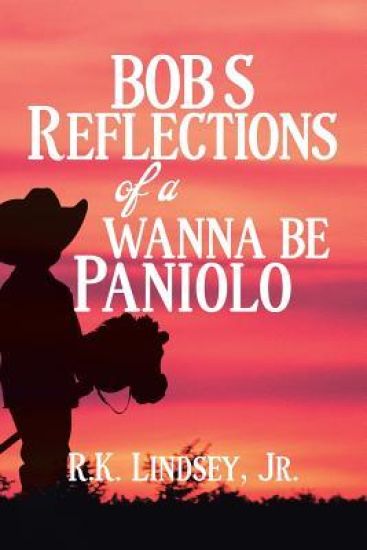
Reflections of a Wanna B Cowboy is the author's fifth book. Reflections is essentially Lindsey's autobiography written in "talk story" format. Talking story is a way of communicating among locals in the islands. Lindsey and his grandson Samuel Kamaile are its main characters. Its basic message is, we are global citizens. Author's Statement Reflections of a Wanna B Cowboy is my personal life story. Reflections is a story about an unfulfilled dream. I wanted so much as a kid to be a cowboy on the Parker Ranch when I became a man-a dream I dreamed countless times. But as oft happens to so many of us, this life force called destiny intervened and altered my plan. With my oldest grandson Samuel's help as facilitator, in this autobiography of sixty snippets, I tell my story for our grandsons to remember their Tutu (grandma) and me by. Reflections has a larger message: we are citizens of the world.