
Kirjahaku
Etsi kirjoja tekijän nimen, kirjan nimen tai ISBN:n perusteella.
1000 tulosta hakusanalla Brett Mitchell
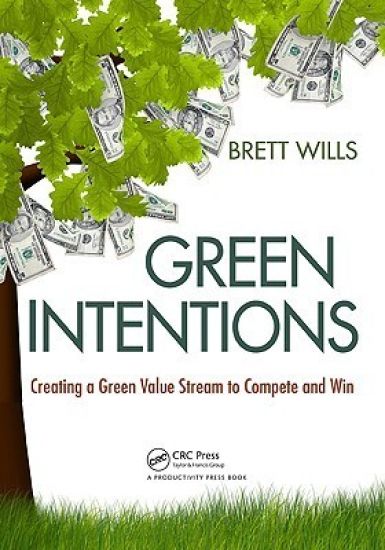
Developed by a plant manager who experienced first-hand the challenges to going green in a business environment, Green Intentions provides organizations with a simple, straightforward, and practical approach to green—the Green Value Stream (GVS) process—that is as mindful as it is profitable. Based on the highly successful, Lean philosophy, the GVS process shows you how to quickly identify, measure, and minimize the seven green wastes to realize immediate cost savings. With the initial savings from harvesting the low-hanging fruit, organizations will have the support and momentum needed to eliminate each of the green wastes, leading to environmental sustainability and the substantial business benefits that follow, including increased revenues, new customers, employee retention, innovation, and increased shareholder value.Part I, Going Green shows how the green value stream provides a dynamic, proven, and successful approach to going green. It also defines each of the seven green wastes, explains the overall green value stream process, provides guidance on implementing it in your organization, and shows how to map your green value stream.Part II, The Seven Green Wastes provides a step-by-step process for minimizing and eliminating each of the seven wastes. It includes real-life examples illustrating the environmental and economic benefits associated with moving toward the elimination of each.The book also includes: A Green Dictionary that defines current terms associated with the green movement Web links and other resources to help you in your journey toward environmental sustainability An environmental primer that clears through the rhetoric to give you a clear picture of what is going on with the environment and what the end goal of environmental and overall sustainability needs to look like


TELL YOUR FRIENDS! PARENT-FREE PARTYING IN MASSAPEQUA! It is August of 1989, and Mike Aufiero has just graduated high school. The annual summer escape to the Adirondacks is not the thrill he had hoped it would be, and he soon arranges to return to Long Island. There, he and his sister have run of the family's house, and the freedom to live it up in his last summer before college! Unfortunately, a seemingly-harmless errand has brought a dark presence back to Massapequa, and Mike is not the only one with plans for the summer. It is not long before Mike and his friends find themselves embroiled in a vampire's plot to found a new coven on Long Island, and it will suffer no interference. Finding little or no support from parents or the police, the teenagers are now forced to confront the vampire and his rapidly-growing group of followers, which now even include several of their own friends. Can they prevail? Will anyone survive? Will Freshman College Orientation have been in vain?

Our world is getting hotter, and it's our fault. Our addiction to fossil fuels is destroying not only our ancient planet, but our modern civilization. How can we protect our fragile ecosystems while preserving our way of life? How can we respond to climate change deniers who mock the fact that environmental activists use fossil fuels? In short, how can your average concerned citizen live a normal life in a carbon-based economy without being justifiably called a hypocrite? In The Carbon Code, conservation biologist Brett Favaro answers these thorny questions, offering simple strategies to help you reduce your carbon footprint-without abandoning common sense. Favaro's Carbon Code of Conduct is based on the four Rs: Reduce, Replace, Refine, and Rehabilitate. After outlining the scientific basics of climate change and explaining the logic of the code he prescribes, the author describes carbon-friendly technologies and behaviors we can adopt in our daily lives. However, he acknowledges that individual action, while vital, is insufficient. To achieve global sustainability, he insists that we must make the fight against climate change "go viral" through conspicuous conservation. The Carbon Code is a tool of empowerment. People don't need to be climate change experts to be part of the solution! In this book, Brett Favaro shows you how to take ownership of your carbon footprint and adopt a lifestyle of conspicuous conservation that will spur governments and corporations to do the same. Climate-friendly action is the best decision on every dimension-economics, health and well-being, and social justice. Saving the planet is, after all, about saving ourselves. The Carbon Code provides a framework to do this, and helps you to become a hero in the fight against climate change.
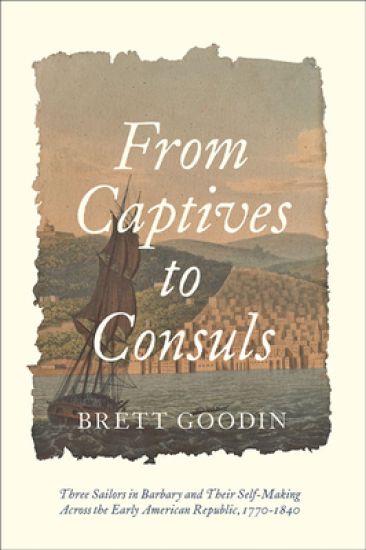
How three white, non-elite American sailors turned their experiences of captivity into diverse career opportunities—and influenced America's physical, commercial, ideological, and diplomatic development.Winner of the John Lyman Book Award by the North American Society for Oceanic HistoryFrom 1784 to 1815, hundreds of American sailors were held as "white slaves" in the North African Barbary States. In From Captives to Consuls, Brett Goodin vividly traces the lives of three of these men—Richard O'Brien, James Cathcart, and James Riley—from the Atlantic coast during the American Revolution to North Africa, from Philadelphia to the Louisiana Territories, and finally to the western frontier. This first scholarly biography of American captives in Barbary sifts through their highly curated writings to reveal how ordinary individuals in extraordinary circumstances could maneuver through and contribute to nation building in early America, all the while advancing their own interests. The three subjects of this collective biography both reflected and helped refine evolving American concepts of liberty, identity, race, masculinity, and nationhood. Time and again, Goodin reveals, O'Brien, Cathcart, and Riley uncovered opportunities in their adversity. They variously found advantage first in the Revolution as privateers, then in captivity by writing bestselling captivity narratives and successfully framing their ordeal as a qualification for coveted government employment. They even used their modest fame as ex-captives to become diplomats, get elected to state legislatures, and survey the nation's territorial expansions in the South and West. Their successful self-interested pursuit of opportunities offered by the expanding American empire, Goodin argues, constitutes what he calls "the invisible hand of American nation building."Goodin shows how these ordinary men, lacking the genius of a Benjamin Franklin or Alexander Hamilton, depended on sheer luck and adaptability in their quest for financial independence and public recognition. Drawing on archival collections, newspapers, private correspondence, and government documents, From Captives to Consuls sheds new light on the significance of ordinary individuals in guiding early American ideas of science, international relations, and what it meant to be a self-made man.

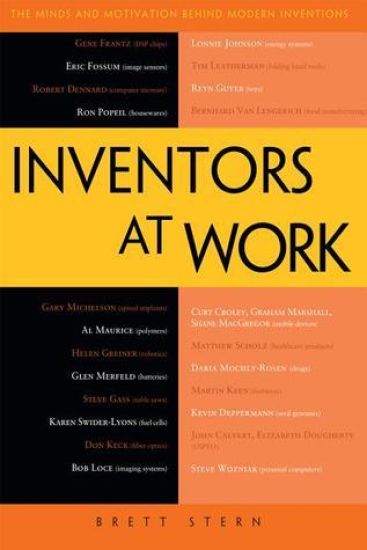
Inventors at Work: The Minds and Motivation Behind Modern Inventions is a collection of interviews with inventors of famous products, innovations, and technologies that have made life easier or even changed the way we live. All of these scientists, engineers, wild-eyed geniuses, and amateur technologists have dedicated their lives to the pursuit of that singular Eureka! moment in their laboratories or garages. Each has altered the modern world as we know it in some significant way. The conversations will show budding tinkerers, professional inventors, educators, and onlookers how the top minds in the field come up with ideas and manage the first steps of inspiration, how they experiment productively, how they “sell” ideas to others and secure funding, how they execute the final product, and how they commercialize and protect their work. All inventors will learn from these conversations, whether they are exploring new chemical compounds in million-dollar labs or perfecting a household gadget or toy in a basement workshop. Author Brett Stern, an inventor himself, explores with each inventor the nature of creativity and intuition, the skill set needed, and the force, motivation, or desire that must be summoned to spend endless hours searching for an answer to a question that no one else has asked or solving a problem most think has no solution. The book is required reading for all technical and creative individuals to better understand the innovation process and the logistics of following through on an idea that has the potential to change society. This book offers: Interviews with inventors of world-changing products and technologies An outline of the steps required in the creative/inventing process whether the goal is a civilization-changing process or a device meant to impress friends and family and perhaps earn license fees. An instructive overview of how to solve problems in innovation—and how to use failures as stepping stones to successful inventions


A Road Less Traveled: Critical Literacy and Language Learning in the Classroom, 1964–1996 takes us through what Robert W. Blake calls the "jaunty journey" of the English/English Language Arts classroom from its linguistic and literature foundations, to emphases on close reading techniques and structures to composing and responding to literature. A Road Less Traveled heads bumpily into the path of learning how to work with "non-native speakers" and other "basic" students toward a (re)-burst of a renewed interest in poetry and drama, reader response, a process approach to writing, and the diverse student, showing through the often winding and blurry road along the journey of our literacy travels over 30 years, that what we understood best about reading and writing has stood the test of time.
A Road Less Traveled: Critical Literacy and Language Learning in the Classroom, 1964–1996 takes us through what Robert W. Blake calls the "jaunty journey" of the English/English Language Arts classroom from its linguistic and literature foundations, to emphases on close reading techniques and structures to composing and responding to literature. A Road Less Traveled heads bumpily into the path of learning how to work with "non-native speakers" and other "basic" students toward a (re)-burst of a renewed interest in poetry and drama, reader response, a process approach to writing, and the diverse student, showing through the often winding and blurry road along the journey of our literacy travels over 30 years, that what we understood best about reading and writing has stood the test of time.

Edgar Allan Poe: Amateur Psychologist is the "first and foremost" major source of information dedicated to the theme of Poe and psychopathology. Its introduction, conclusion, chapters, and appendices highlight and employ the best insights from earlier and current scholars, but this text goes beyond them in its analysis of Poe’s relation to mainstream psychology and its rival system, phrenology. His knowledge of this subject matter is far broader and deeper than Poe specialists have hitherto supposed; his method—contrary to the "Poe myth" according to which an alcoholic, drug-addicted, tormented artist wrote to exorcise his own pathologies—was to research mental illnesses for the sake of scientific precision and verisimilitude. We also come to appreciate the interrelatedness of the psychopathologies he illustrates and other "knowledge frames," characteristic themes, featured in his tales, such as the occult, symbology, chromatography, the "cult of sensibility," Neoplatonism, and Transcendentalist epistemology. While locating Poe firmly within the science and pseudoscience of his time, Edgar Allan Poe: Amateur Psychologist simultaneously looks back from the 1830s and 40s (when Poe’s literary career was at its height) to theories and possible sources of information from the late eighteenth century, as well as forward to the twentieth and twenty-first centuries to demonstrate how Poe’s theories of mind, and his depiction of psychological illnesses, occasionally anticipate modern insights and therapies. The book will be of interest not only to Poe scholars but also to students, teachers, and any intelligent reader interested in psychology, psychotherapy, and the history of ideas.
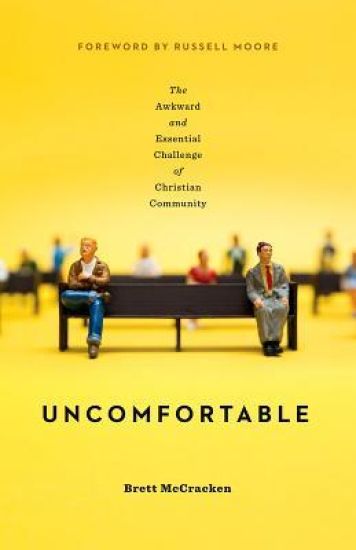
Winner of the 2018 ECPA Book of the Year for Christian Living Does your church make you uncomfortable? It’s easy to dream about the “perfect” church—a church that sings just the right songs set to just the right music before the pastor preaches just the right sermon to a room filled with just the right mix of people who happen to agree with you on just about everything. Chances are your church doesn’t quite look like that. But what if instead of searching for a church that makes us comfortable, we learned to love our church, even when it’s challenging? What if some of the discomfort that we often experience is actually good for us? This book is a call to embrace the uncomfortable aspects of Christian community, whether that means believing difficult truths, pursuing difficult holiness, or loving difficult people—all for the sake of the gospel, God’s glory, and our joy.