The Monte Carlo methods are widely used in many fields of modern science and technology. As an effective tool for multivariate statistical analysis, the statistical depth function has been used to extend the order statistics in multivariate statistical analysis. It has high robustness and has attracted more and more people's attention. This book mainly studies the approximate computation of statistical depth function based on Monte Carlo methods and its extension in regression analysis.
Nio noveller som handlar om olika människors upplevelser och öden i hasardens huvudstad Monte Carlo. Samtliga noveller bygger på människor som Heller mött under sin tid i Monte Carlo; den festlige ungerska greven Borgacz, den svenske före detta godsägaren Eneberg som spelat bort allt på roulette och den före detta italienske marinofficeren Origoni, som förtrollat Heller med berättelser från hela världen. Men en dag grips han av polisen och sista gången Heller ser honom är han fastkedjad med järnlänkar i Monacos stadspark. De nio novellerna är Monte Carlo i korthet; Bondtur; För oss finns ingen väg från hemmets dörr; Spökruletten; Greve Borgacz berättelser; Kaka söker maka; Och ulvar skola ligga bland fåren; Herr Rosenerz (från hamburg?) och Hur försynen luggade Adamsson. I hasardens huvudstad är Frank Hellers debutroman. -
Carlo I d'Angi , re di Sicilia di qua e di l del faro, d'Albania e di Gerusalemme, principe di Acaia, con-te di Provenza, del Maine, di Forcalquier e d'Anjou un personaggio dimenticato, la cui figura in Italia oscurata da quella di Federico II, che pure non fu all'altezza dell'Angioino e in Francia del troppo esaltato fratello Luigi IX: ma Carlo I fu un grande sovrano, considerato il re europeo pi potente del suo tempo; personaggio contraddittorio, come si vedr , pragmatico e spietato, amato ed odiato, sconta forse il fatto di esser considerato troppo francese per gli italiani- che preferirono esaltare i Vespri Siciliani co-me movimento di liberazione dai francesi invasori, anzich ricordare che portarono alla conquista ara-gonese- e troppo italiano per i francesi.In questo libro non abbiamo la pretesa di trattare esaustivamente le realizzazioni di Carlo I nei suoi mol-teplici campi di attivit come sovrano di Sicilia, dall'amministrazione del regno, all'erezione dei castelli e al mecenatismo ed alla protezioni delle arti, ma solo di tracciare un quadro delle guerre da lui combat-tute a partire dalla conquista del regno di Sicilia, con la vittoria nella battaglia di Benevento del febbraio del 1266 in cui mor Manfredi di Hohenstaufen; tratteremo poi la spedizione di Corradino di Svevia, la sconfitta sveva a Tagliacozzo nell'agosto del 1268 e la decapitazione dello Svevo a Napoli, sino a giun-gere alle imprese angioine in Albania e nei Balcani, culminate nell'assedio vittorioso di Belgrado e le lotte contro il risorgente impero bizantino di Michele VIII Paleologo, sino all'interminabile guerra del Vespro contro gli Aragonesi.E' la storia del sovrano francese che che spost la capitale da Palermo a Napoli e che fece del regno di Sicilia la prima potenza europea e mediterranea, il cui potere si estendeva sino alla Provenza, al Pelo-ponneso ed alle isole ioniche, ai Balcani, all'Albania ed a Tunisi.
The undercover agent story "Mademoiselle of Monte Carlo," which turned into written by way of William Le Queux, may be very exciting. In a story, there is a beautiful and mysterious woman referred to as Mademoiselle Deluc who is recognised for dwelling a completely steeply-priced existence in Monte Carlo. On the alternative hand, behind her lovely exterior is a complex net of spying and foreign plots. There is a prime individual within the tale named Dick Gordon. He is English and falls in love with Mademoiselle Deluc. He unearths out that she's inquisitive about thriller games as their relationship grows. This pulls him right into an international of spying, mystery alliances, and global actions. Beyond the glitzy setting of Monte Carlo, there are spies, competing traders, and political plans going on that make Dick's activity hard and threatening. Le Queux skillfully creates a story this is complete of drama and mystery, placing readers within the center of a world of excessive-stakes schemes, betrayals, and secret operations. The book looks at spying and own family contributors from around the arena, displaying how complex the characters are and how tough it's miles for them to work together and misinform every different. "Mademoiselle of Monte Carlo" is a thrilling tale that sounds just like the name of a secret agent game. In this game, glamour hides dangerous secrets and techniques, and private relationships and political maneuvering mix, leading to shockingly famous and dramatic outcomes.
This volume is an eclectic mix of applications of Monte Carlo methods in many fields of research should not be surprising, because of the ubiquitous use of these methods in many fields of human endeavor. In an attempt to focus attention on a manageable set of applications, the main thrust of this book is to emphasize applications of Monte Carlo simulation methods in biology and medicine.
This book reviews recent developments of quantum Monte Carlo methods and some remarkable applications to interacting quantum spin systems and strongly correlated electron systems. It contains twenty-two papers by thirty authors. Some of the features are as follows. The first paper gives the foundations of the standard quantum Monte Carlo method, including some recent results on higher-order decompositions of exponential operators and ordered exponentials. The second paper presents a general review of quantum Monte Carlo methods used in the present book. One of the most challenging problems in the field of quantum Monte Carlo techniques, the negative-sign problem, is also discussed and new methods proposed to partially overcome it. In addition, low-dimensional quantum spin systems are studied. Some interesting applications of quantum Monte Carlo methods to fermion systems are also presented to investigate the role of strong correlations and fluctuations of electrons and to clarify the mechanism of high-Tc superconductivity. Not only thermal properties but also quantum-mechanical ground-state properties have been studied by the projection technique using auxiliary fields. Further, the Haldane gap is confirmed by numerical calculations. Active researchers in the forefront of condensed matter physics as well as young graduate students who want to start learning the quantum Monte Carlo methods will find this book useful.
This book reviews recent developments of quantum Monte Carlo methods and some remarkable applications to interacting quantum spin systems and strongly correlated electron systems. It contains twenty-two papers by thirty authors. Some of the features are as follows. The first paper gives the foundations of the standard quantum Monte Carlo method, including some recent results on higher-order decompositions of exponential operators and ordered exponentials. The second paper presents a general review of quantum Monte Carlo methods used in the present book. One of the most challenging problems in the field of quantum Monte Carlo techniques, the negative-sign problem, is also discussed and new methods proposed to partially overcome it. In addition, low-dimensional quantum spin systems are studied. Some interesting applications of quantum Monte Carlo methods to fermion systems are also presented to investigate the role of strong correlations and fluctuations of electrons and to clarify the mechanism of high-Tc superconductivity. Not only thermal properties but also quantum-mechanical ground-state properties have been studied by the projection technique using auxiliary fields. Further, the Haldane gap is confirmed by numerical calculations. Active researchers in the forefront of condensed matter physics as well as young graduate students who want to start learning the quantum Monte Carlo methods will find this book useful.
This book teaches modern Markov chain Monte Carlo (MC) simulation techniques step by step. The material should be accessible to advanced undergraduate students and is suitable for a course. It ranges from elementary statistics concepts (the theory behind MC simulations), through conventional Metropolis and heat bath algorithms, autocorrelations and the analysis of the performance of MC algorithms, to advanced topics including the multicanonical approach, cluster algorithms and parallel computing. Therefore, it is also of interest to researchers in the field. The book relates the theory directly to Web-based computer code. This allows readers to get quickly started with their own simulations and to verify many numerical examples easily. The present code is in Fortran 77, for which compilers are freely available. The principles taught are important for users of other programming languages, like C or C++.
Markov Chain Monte Carlo (MCMC) originated in statistical physics, but has spilled over into various application areas, leading to a corresponding variety of techniques and methods. That variety stimulates new ideas and developments from many different places, and there is much to be gained from cross-fertilization. This book presents five expository essays by leaders in the field, drawing from perspectives in physics, statistics and genetics, and showing how different aspects of MCMC come to the fore in different contexts. The essays derive from tutorial lectures at an interdisciplinary program at the Institute for Mathematical Sciences, Singapore, which exploited the exciting ways in which MCMC spreads across different disciplines.
The Boy Who Knew Carlo Acutis is the powerful and inspiring journey of a fictional teenage boy, Daniel, who has just been diagnosed with leukemia. At first reluctant to turn toward Blessed Carlo Acutis for help, Daniel finds in him a role model and a spiritual companion, who helps him to trust in God and to discover the meaning of life. Masterfully intertwining fiction and nonfiction, Corinna Turner gives us a unique introduction to the extraordinary life of Blessed Carlo Acutis while showing us how simple it can be to be friends with a saint.
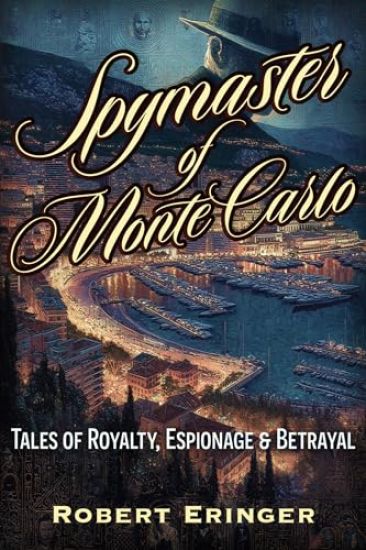
" The Spymaster of Monte Carlo" is a riveting firsthand account of how one American intelligence operative was invited to create and run a secret service for Prince Albert II of Monaco. Blending memoir, political expos , and real-life spy thriller, Robert Eringer unveils the true, behind-the-scenes story of corruption, espionage, and court intrigue inside one of the world's richest and most glamorous microstates. Over five years, Eringer built a global network of operatives and intelligence partnerships to root out money laundering, organized crime, and deceit festering in the shadows of Monaco's high society and government. But what began as a noble mission quickly spiraled into a battle of ethics versus entitlement, as palace insiders and Freemasons conspired to preserve their privilege and power-- at any cost. Told with sharp wit, brutal honesty, and the practiced eye of a veteran spymaster, this book pulls back the curtain on royalty, revealing not a fairy tale-- but a cautionary tale.