Kirjojen hintavertailu. Mukana 11 392 113 kirjaa ja 12 kauppaa.

Kirjahaku

Etsi kirjoja tekijän nimen, kirjan nimen tai ISBN:n perusteella.

1000 tulosta hakusanalla Cary Carson

Augustine's Invention of the Inner Self

Augustine's Invention of the Inner Self

Phillip Cary

Oxford University Press Inc
2000
sidottu
Phillip Cary argues that Augustine invented or created the concept of self as an inner space--as space into which one can enter and in which one can find God. This concept of inwardness, says Cary, has worked its way deeply into the intellectual heritage of the West and many Western individuals have experienced themselves as inner selves. After surveying the idea of inwardness in Augustine's predecessors, Cary offers a re-examination of Augustine's own writings, making the controversial point that in his early writings Augustine appears to hold that the human soul is quite literally divine. Cary goes on to contend that the crucial Book 7 of the Confessions is not a historical report of Augustine's "conversion" experience, but rather an explanation of his intellectual development over time.
Augustine's Invention of the Inner Self

Augustine's Invention of the Inner Self

Phillip Cary

Oxford University Press Inc
2003
nidottu
In this book, Phillip Cary argues that Augustine invented the concept of the self as a private inner space-a space into which one can enter and in which one can find God. Although it has often been suggested that Augustine in some way inaugurated the Western tradition of inwardness, this is the first study to pinpoint what was new about Augustine's philosophy of inwardness and situate it within a narrative of his intellectual development and his relationship to the Platonist tradition. Augustine invents the inner self, Cary argues, in order to solve a particular conceptual problem. Augustine is attracted to the Neoplatonist inward turn, which located God within the soul, yet remains loyal to the orthodox Catholic teaching that the soul is not divine. He combines the two emphases by urging us to turn "in then up"--to enter the inner world of the self before gazing at the divine Light above the human mind. Cary situates Augustine's idea of the self historically in both the Platonist and the Christian traditions. The concept of private inner self, he shows, is a development within the history of the Platonist concept of intelligibility or intellectual vision, which establishes a kind of kinship between the human intellect and the divine things it sees. Though not the only Platonist in the Christian tradition, Augustine stands out for his devotion to this concept of intelligibility and his willingness to apply it even to God. This leads him to downplay the doctrine that God is incomprehensible, as he is convinced that it is natural for the mind's eye, when cleansed of sin, to see and understand God. In describing Augustine's invention of the inner self, Cary's fascinating book sheds new light on Augustine's life and thought, and shows how Augustine's position developed into the more orthodox Augustine we know from his later writings.
Inner Grace

Inner Grace

Phillip Cary

Oxford University Press Inc
2008
sidottu
Augustine's epochal doctrine of grace is often portrayed as a break from his earlier Platonism, but in Inner Grace, Phillip Cary argues it should be seen instead as the way Augustines Platonism developed as he read the apostle Paul. Augustines concept of grace as an inner gift that moves, turns and strengthens the will from within requires a Platonist conception of the soul's inner relation to the Good. What he adds to this conception is that grace is needed not only for the mind to see God but also for the will to turn away from lower goods and love God as its eternal Good, and even for it to choose faith in Christ, the temporal road by which the soul journeys to God. Thus over the course of Augustine's career the scope of the soul's need for grace expands outward from intellect to love and then to faith. At every stage, Augustine insists that divine grace does not compromise or coerce the human will but frees, helps and strengthens it, precisely because grace is not an external force but an inner gift of delight. But as his polemic against the Pelagians develops, increasingly more is attributed to grace and less to the power of free will. At the end of his career this results in an explicit doctrine of predestination, according to which it is ultimately God who chooses who shall be saved. Behind predestination therefore is divine election, which Augustine understands as God choosing some rather than others for salvation. This contrasts with the Biblical doctrine of election, Cary argues, in which some are chosen for the blessing of others: e.g., Israel for the nations and Christ for the world. In this Biblical doctrine, grace and blessing are external rather than inner gifts, because they always come to us from others outside us.
Outward Signs

Outward Signs

Phillip Cary

Oxford University Press Inc
2008
sidottu
We are used to thinking of words as signs of inner thoughts. In Outward Signs, Philip Cary argues that Augustine invented this expressionist semiotics, where words are outward signs expressing an inward will to communicate, in an epochal departure from ancient philosopical semiotics, where signs are means of inference, as smoke is a sign of fire. Augustine uses his new theory of signs to give an account of Biblical authority, explaining why an authoritative external teaching is needed in addition to the inward teaching of Christ as divine Wisdom, which is conceived in terms drawn from Platonist epistemology. In fact for Augustine we literally learn nothing from words or any other outward sign, because the truest form of knowledge is a kind of Platonist vision, seeing what is inwardly present to the mind. Nevertheless, because our mind's eye is diseased by sin we need the help of external signs as admonitions or reminders pointing us in the right direction, so that we may look and see for ourselves. Even our knowledge of other persons is ultimately a matter not of trusting their words but of seeing their minds with our minds. Thus Cary argues here that, for Augustine, outward signs are useful but ultimately powerless because no bodily thing has power to convey something inward to the soul. This means that there can be no such thing as an efficacious external means of grace. The sacraments, which Augustine was the first to describe as outward signs of inner grace, signify what is necessary for salvation but do not confer it. Baptism, for example, is necessary for salvation, but its power is found not in water or word but in the inner unity, charity and peace of the church. Even the flesh of Christ is necessary but not efficacious, an external sign to use without clinging to it.
Machine Learning in Microbial Forensics

Machine Learning in Microbial Forensics

Hayes Cary

Vintage Publishing
2023
pokkari
Microbial ecosystems are complex, with hundreds of members interacting with each other and the environment. The intricate and hidden behaviors underlying these interactions make research questions challenging - but can be better understood through machine learning. However, most machine learning that is used in microbiome work is a black box form of investigation, where accurate predictions can be made, but the inner logic behind what is driving prediction is hidden behind nontransparent layers of complexity
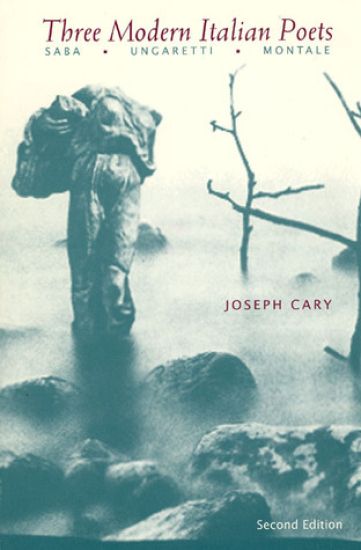
Three Modern Italian Poets

Three Modern Italian Poets

Joseph Cary

University of Chicago Press
1993
nidottu
Focusing on the most recent triad of Italian poetic genius--Umberto Saba, Giuseppe Ungaretti, and Eugenio Montale--Joseph Cary not only presents striking biographical portraits as he facilitates our understanding of their poetry; he also guides us through the first few decades of twentieth-century Italy, a most difficult period in its literary and cultural development.
The Sacred Art of Joking

The Sacred Art of Joking

James Cary

SPCK Publishing
2019
pokkari
'An elegant treatise on how [the church] could lighten up its image.' The Times 'Having worked for many years at the coalface of comedy, sorting the dross from the combustible, James Cary is uniquely qualified to write this book.' Milton Jones, comedian and panellist on BBC2's Mock the Week Every few weeks a politician, pundit or soap star causes a media storm by making a gaffe or tweeting a joke that some people do not find funny. Comedy is very hard to get right and yet we think it's important to have a sense of humour and not take yourself too seriously. On the other hand, a sense of humour failure can lead to losing your friends, your twitter account, your job, your career and, in some cases, your life. James Cary knows about this. He is a sitcom writer who’s written jokes about bomb disposal in Afghanistan (Bluestone 42), defended comments about Islam by Ben Elton on Newsnight, been on a panel with radical Muslim cleric Anjem Choudary, sits on the General Synod of the Church of England and somehow managed to co-write episodes of Miranda. An odd mix, but one that makes him very readable. This entertaining, breezy book, explains how comedy works (with jokes and quotes) and gives much-needed insights into the controversy surrounding humour.
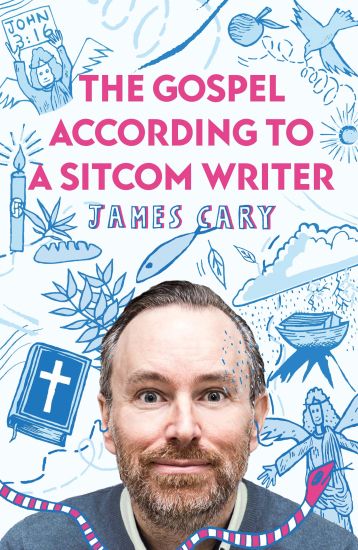
The Gospel According to a Sitcom Writer
Maybe Jesus was joking, the disciples didn't know what they were doing and the New Testament is a lot funnier than you might think. You would think it weird if someone suddenly ascended into heaven, right? Reading between the lines, do we detect a touch of rivalry between Peter and John? And surely the lack of parables in the latter's mystical tome is simply crying out to be redressed... In this sparklingly witty book, BBC sitcom writer James Cary gives us a new and liberating way of looking at the gospel as he entertainingly relates it to a modern context, with references ranging from Charles Dickens to The Vicar of Dibley. Cheerfully playing around with the text, he takes the Bible seriously but allows us to laugh at our own petty vanities and foibles - and be enlightened in the process. The Gospel According to a Sitcom Writer is ideal for anyone wanting to liven up their Bible reading and looking for new ways to be thrilled by this sacred text. It's also perfect for priests, pastors, youth leaders and all those involved in ministry and giving sermons, as James Cary shows using comedy and humour is a brilliant way to communicate the gospel. Warm, funny and full of brilliant insight and Christian humour, The Gospel According to a Sitcom Writer will make you laugh out loud and shake your head in awe. You'll never read the Bible the same way again.
Dictionary of Musical Technology

Dictionary of Musical Technology

Tristam Cary

Greenwood Press
1992
sidottu
Tristram Cary's remarkable encyclopedia is the first comprehensive book on the technology of music. Its 600 copiously illustrated main entries and 200 subsidiary ones cover an immense musical field. Included are entries on traditional and electronic instruments, and on such topics as computer music composition, microphone placement, and psychoacoustics. They are carefully cross-referenced so that readers can approach a topic from different angles and then be drawn into its complexities, both technical and musical, as far as they wish. This volume will be an essential reference work for music and audio professionals, students, and all music lovers wanting to know more about the techniques behind the music.
Paranormal Planet

Paranormal Planet

Jack Cary

Lulu.com
2019
nidottu
Paranormal Planet is an expose on real paranormal events happening around the world. With many never before seen color photos from the files of the Paranormal Intelligence Agency. Jack Cary paints a shocking picture of the very real and terrifying side of modern paranormalinvestigations. Jack Cary has been investigating paranormal happenings for over 25 years. Included is how and why paranormal events happen on the Earth. Paranormal Planet covers the shocking D.N.A. of Bigfoot to real cases of werewolves and cryptid creatures of all kinds. Jack has amassed an amazing amount of evidence that shows the reality that paranormal events do happen and some of them may pose a direct threat to planet Earth.
Paranormal Planet

Paranormal Planet

Jack Cary

Lulu.com
2019
nidottu
Jack Cary has been a paranormal investigator/cryptozoologist for 25 yrs. He is the founder of www.paranormal-intelligence-agency.com and current director of Crypto 4 Corners. Jack Cary is a regular guest on Ancient Civilizations, Deep Space, and Open Minds documentary series produced by Gaia. In Paranormal Planet, Jack presents his unified field theory of paranormal activity and chronicles terrifying and true case files of the paranormal intelligence agency and Crypto 4 Corners. Included is the shocking D.N.A. of Bigfoot, very real cases of werewolves and the most disturbing cases in all of paranormal research. Jack Cary has amassed an amazing amount of evidence that paranormal events can and do happen, and some of them pose a direct threat to planet Earth. His combined knowledge and 25 years in the field and tireless hours of research are carefully chronicled in his new book. The files of the Paranormal Intelligence Agency are not for the faint of heart. The images and case file photographs are authentic.
Meet Abraham Lincoln

Meet Abraham Lincoln

Barbara Cary

Random House Inc
2001
pokkari
This warmly told biography of our sixteenth president is enriched by many authentic but seldom told anecdotes and complemented by bold color illustrations that capture the spirit of Lincoln and his era.
Ladysitting: My Year with Nana at the End of Her Century
From cherished memories of childhood weekends with Nana to the reality of the year she spent "ladysitting," Lorene Cary journeys through stories of their time together and five generations of their African American family. Weaving a narrative of her complicated relationship with Nana--a fiercely independent and often stubborn woman whose family fled the Jim Crow South and who managed her own business until 100--Cary captures the ruptures, love, and forgiveness that can occur in family as she bears witness to her grandmother's vibrant life.
Ladysitting

Ladysitting

Lorene Cary

WW Norton Co
2019
sidottu
From cherished memories of weekends she spent as a child with her indulgent Nana to the reality of the year she spent "ladysitting" her now frail grandmother, Lorene Cary journeys through stories of their time together and five generations of their African American family. Brilliantly weaving a narrative of her complicated yet transformative relationship with Nana--a fierce, stubborn, and independent woman, who managed a business until she was 100--Cary looks at Nana's impulse to control people and fate, from the early death of her mother and oppression in the Jim Crow South to living on her own in her New Jersey home.Cary knew there might be some reckonings to come. Nana was a force: Her obstinacy could come out in unanticipated ways--secretly getting a driver's license to show up her husband, carrying on a longtime feud with Cary's father. But Nana could also be devoted: to Nana's father, to black causes, and--Cary had thought--to her grandchildren and great-grandchildren. Facing the inevitable end raises tensions, with Cary drawing on her spirituality and Nana consoling herself with late-night sweets and the loyalty of caregivers. When Nana doubts Cary's dedication, Cary must go deeper into understanding this complicated woman.In Ladysitting, Cary captures the ruptures, love, and, perhaps, forgiveness that can occur in a family as she bears witness to her grandmother's 101 vibrant years of life.
The Tragedy of Mariam, the Fair Queen of Jewry

The Tragedy of Mariam, the Fair Queen of Jewry

Elizabeth Cary

University of California Press
1994
pokkari
The Tragedy of Mariam (1613) is the first original play by a woman to be published in England, and its author is the first English woman writer to be memorialized in a biography, which is included with this edition of the play. Mariam is a distinctive example of Renaissance drama that serves the desire of today's readers and scholars to know not merely how women were represented in the early modern period but also how they themselves perceived their own condition. With this textually emended and fully annotated edition, the play will now be accessible to all readers. The accompanying biography of Cary further enriches our knowledge of both domestic and religious conflicts in the seventeenth century.
The Medieval Alexander

The Medieval Alexander

George Cary

Cambridge University Press
2009
pokkari
Many books were written in the Middle Ages about Alexander the Great and still more books have been written about those books in the last hundred years. In this classic study of the medieval Alexander, first published in 1956, George Cary approached the problem from an altogether different angle, using material which none of his predecessors had exploited. He asked himself the simple question: What did people really think about Alexander in the Middle Ages? The resultant answers proved various and unexpected, changing from age to age and from group to group. Published posthumously, Cary's study was edited by D. J. A. Ross, who corrected certain details, added some footnotes and included an additional section on the Histoire ancienne jusqu'a Cesar. To this were also added a number of illustrative plates and an appendix on the origins of the Greek Alexander Romance.