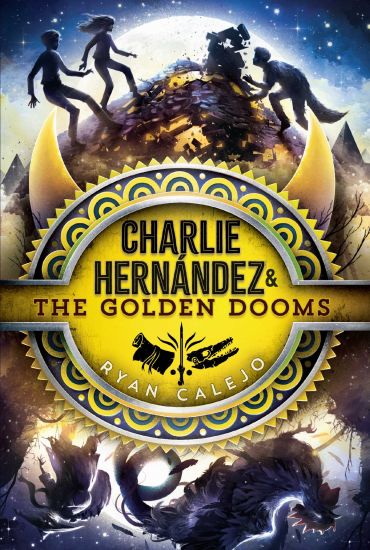
Inspired by Latinx folklore, legends, and myths from the Iberian Peninsula and Central and South America, this "clever, funny, and entertaining" (Kirkus Reviews) third book in the Charlie Hern ndez series follows Charlie as he faces off against an army of the dead. After hitchhiking across Central and South America to rescue the Witch Queen and face off against La Mano Peluda, Charlie Hern ndez is pretty much grounded for life. But after all he's been through, some quiet time at home with his parents might be nice. Though it would be better if he didn't have to share his room with his obnoxiously perfect cousin Ra l, who's staying with them. But quiet is hard to come by when you're the fifth and final morphling, and it's not long before death walks back into Charlie's life. Or at least, the dead do, starting with a mysterious young calaca who corners him at school, dropping cryptic hints about trouble brewing in the 305. With the League of Shadows focused on repairing fractured alliances and tracking gathering armies, this one's up to Charlie to solve. Following the clues only leads to more questions, and not even teenage investigative journalist extraordinaire Violet Rey can figure out how a sudden rooster infestation, earthquakes, missing persons, and a pet-napping gang of lizard-men--whom Charlie doesn't recognize from any legend--are all connected. Most concerning of all is when they learn a map has been stolen that reveals the locations of the Golden Dooms, the twelve ancient calaca watchmen who form the magical barrier between the realms. To stop the impending invasion, Charlie and Violet must outwit an ancient evil and unravel the most sinister of schemes. That is, unless they'd rather watch the Land of the Living get overrun by the dead.
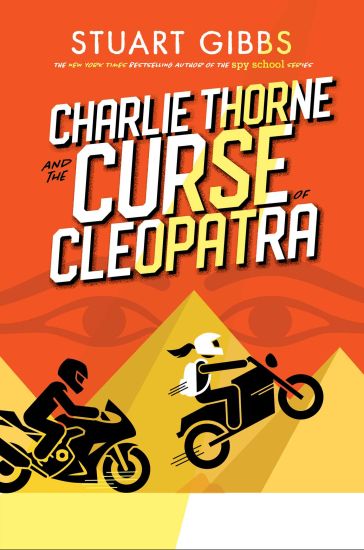
In this third book in the Charlie Thorne series from bestselling author Stuart Gibbs, Charlie tracks down Cleopatra's greatest treasure in Egypt. Charlie Thorne is a genius. Charlie Thorne is a renegade. Charlie Thorne isn't going down without a fight. After tracking down incredible discoveries by Einstein and Darwin, Charlie is back. This time, the great ruler Cleopatra has left behind an extremely valuable and powerful treasure, its location encoded on an ancient stone tablet. In 30 BCE, Cleopatra and her husband, Marc Antony, lost their war against Octavian for control of the Egyptian Empire. However, Cleopatra knew Octavian was really after the mysterious item that was the source of all her wealth and influence, so she hid it before dying by suicide. She left a series of devious clues behind for her children to find it, but they were lost to history...until now. In a breathless adventure that takes her across the globe, Charlie must fight for her life against ruthless enemies, match wits with Cleopatra, and solve the two-thousand-year-old mystery to prevent the most powerful treasure of the ancient world from falling into the wrong hands.
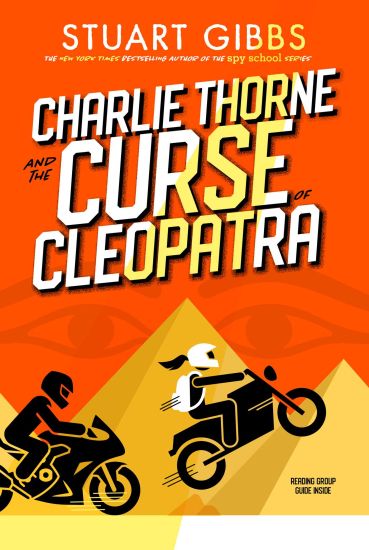
In this third installment of the New York Times bestselling Charlie Thorne series--which #1 New York Times bestselling author Chris Grabenstein called "a real page-burner"--Charlie tracks down Cleopatra's greatest treasure in Egypt. Charlie Thorne is a genius. Charlie Thorne is a renegade. Charlie Thorne isn't going down without a fight. After tracking down incredible discoveries by Einstein and Darwin, Charlie is back. This time, the great ruler Cleopatra has left behind an extremely valuable and powerful treasure, its location encoded on an ancient stone tablet. In 30 BCE, Cleopatra and her husband, Marc Antony, lost their war against Octavian for control of the Egyptian Empire. However, Cleopatra knew Octavian was really after the mysterious item that was the source of all her wealth and influence, so she hid it before dying by suicide. She left a series of devious clues behind for her children to find it, but they were lost to history...until now. In a breathless adventure that takes her across the globe, Charlie must fight for her life against ruthless enemies, match wits with Cleopatra, and solve the two-thousand-year-old mystery to prevent the most powerful treasure of the ancient world from falling into the wrong hands.
*Includes pictures *Includes the actors' quotes about their lives and careers *Includes a bibliography for further reading Only a select few actors become international stars in their time, but none had as unique a career as Charlie Chaplin. Chaplin was the first true film star, and he managed to do so even when films were still silent. He has been honored with too many awards to count, and the fact that his name remains instantly recognizable nearly a century after his first film is a testament to his influence. Even today, Chaplin's films are arguably more recognizable than those of perhaps any other actor or director; everyone is familiar with the famous "Tramp" costume and persona, and even the casual film enthusiast has likely seen films such as City Lights (1931) and Modern Times (1936). Chaplin is known for the singular blend of pathos and humor evinced by his films, and it is not uncommon for audiences to laugh and cry at alternate points of a Chaplin film, a trait that continues to endear audiences even to this day. For this reason, in his review of Stephen Weissman's biography of Chaplin, Martin Sieff noted, "It is doubtful any individual has every given more entertainment, pleasure, and relief to so many human beings when they needed it most." As Sieff's comment suggests, Chaplin's career coincided with the two World Wars and the Great Depression, but while Chaplin the actor was popular, Chaplin the person became controversial in the final decades of his life. In fact, there is a wide discrepancy between the almost uniformly enthusiastic praise of Chaplin today and the subversive identity he cultivated toward the latter part of his career. Although accusations of being a communist sympathizer and Chaplin's confrontation with the House Committee on Un-American Activities have mostly become a footnote in the storied career of a man best remembered as an acting pioneer, it forced Chaplin to spend the last 15 years of his career working as an artist in exile, and the shifting viewpoints of Chaplin were instrumental in forcing people to evaluate the way in which they viewed celebrities, as well as what it means to be entertained. In the 1920s, the burgeoning movie industry was starting to come into its own, and alongside actor and director Charlie Chaplin, Buster Keaton was at the peak of Hollywood. It's no surprise that Keaton was so effective in silent films, because he had been practicing comedy in his family's vaudeville acts as "The Little Boy Who Can't Be Damaged", becoming a popular performer by the age of 5. Indeed, his physical form of comedy, which initially involved having his father throwing him around the stage, translated well onto the screen, and some of his slapstick and other comic gags remain legendary even today, in part because Keaton practiced his own stunts. In fact, Keaton wrote his own material and was a crucial comic influence on acts like The Marx Brothers and The Three Stooges. In addition to being one of the foremost comedians of his time and writing his own stuff, Keaton also directed many of his own films, and he mastered the use of cameras at a time when film was still relatively new. As Time magazine writer Richard Corliss noted, "Watch his beautiful, compact body as it pirouettes or pretzels in tortured permutations or, even more elegantly, stands in repose as everything goes crazy around it. Watch his mind as it contemplates a hostile universe whose violent whims Buster understands, withstands and, miraculously, tames. Watch his camera taking his picture (Keaton directed or supervised all his best films); it is as cool as the star it captured in its glass... The medium was still in its infancy; comics were pioneering the craft of making people laugh at moving images. Keaton, it turns out, knew it all - intuitively."
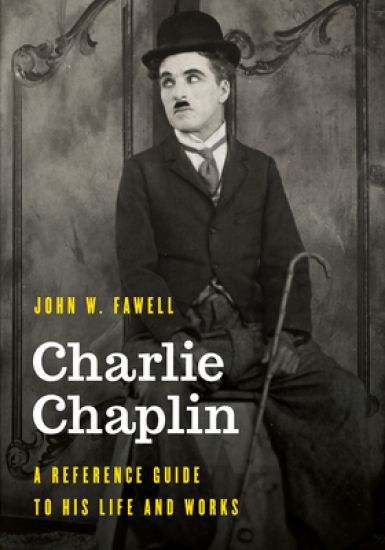
Charlie Chaplin was a skilled comedian, filmmaker and composer, and the mission of this book is to educate readers on the wide variety of Chaplin’s artistry: the subtlety of his mimetic satire, the sophistication of his film direction, his prodigious musical skill that resulted in some of film’s greatest orchestral arrangements. The encyclopedia also emphasizes the singular nature of Chaplin’s biography: his unprecedented renown, the wide list of notables in art and culture with whom he fraternized, the controversies that seemed to dog each stage of his life, perhaps most notably his run-ins with the FBI and the House Unamerican Activities committee, both of whom suspected him of communist leanings.Charlie Chaplin: A Reference Guide to His Life and Works captures his life, and legacy. It features a chronology, an introduction offers a brief account of his life, a dictionary section lists entries on Chaplin’s childhood, career, family, and associates. The bibliography is one of the largest available bibliographies of works concerning Chaplin.
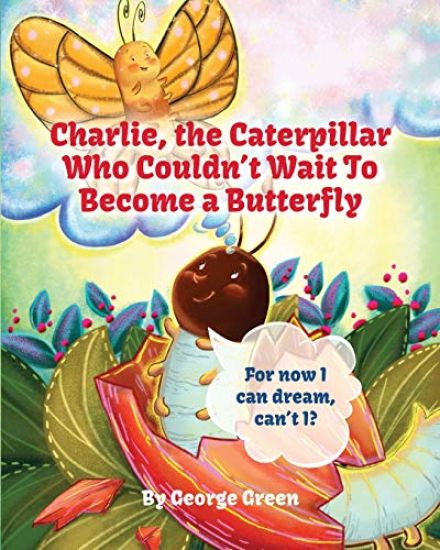
George Green has written a number of children's books, all of which have character-building messages for young children. Patience is certainly a virtue most young children need to learn. Come Christmas, Easter, Birthdays and other special days, it can be difficult for parents to keep surprises from them George wrote this book with the hope that it would show young kids how important being patient really is, and that the benefits can sure outweigh the often tedious wait. The best example - of course - is Charlie, the caterpillar who could not wait to become a butterfly When Charlie first crawls out of his egg, all he wants to do is be a butterfly. While most butterflies know how long it takes to change from a caterpillar into a butterfly, Charlie was not born with this patience But, as he eats and grows and eats and grows, his mother reminds him that he does have this important skill, the bottom-line of which is that all good things come to those who wait
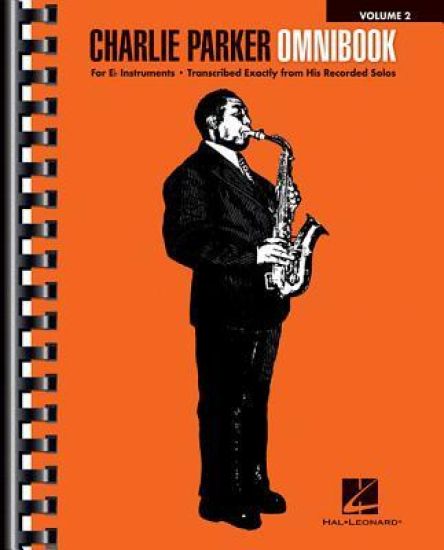
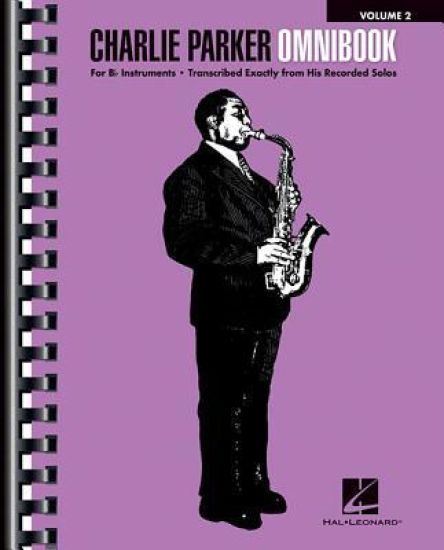
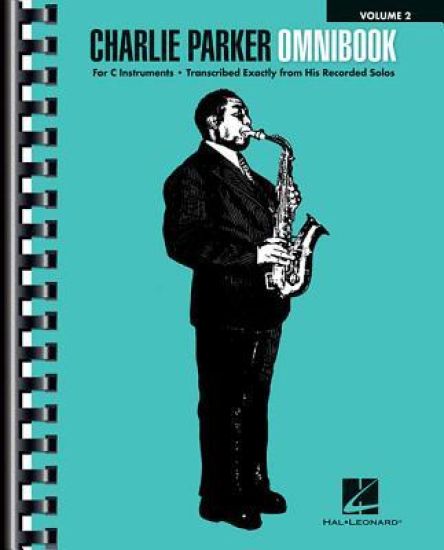
(Jazz Transcriptions). This second volume follows up on the success of the original volume of solos transcribed exactly from recordings by the Bird with 60 more of Parker's best. Songs include: Bird Feathers * Bird of Paradise * Body and Soul * Cherokee (Indian Love Song) * Cool Blues * Crazeology * Drifting on a Reed * Embraceable You * Groovin' High * I'll Remember April * Love for Sale * My Old Flame * A Night in Tunisia * On a Slow Boat to China * Quasimodo * 'Round Midnight * Salt Peanuts * Sweet Georgia Brown * Tiny's Tempo * What Is This Thing Called Love? * and more. Includes preface by book transcriber Charles "Doc" Stewart.
(Jazz Transcriptions). This second volume follows up on the success of the original volume of solos transcribed exactly from recordings by the Bird with 60 more of Parker's best. Songs include: Bird Feathers * Bird of Paradise * Body and Soul * Cherokee (Indian Love Song) * Cool Blues * Crazeology * Drifting on a Reed * Embraceable You * Groovin' High * I'll Remember April * Love for Sale * My Old Flame * A Night in Tunisia * On a Slow Boat to China * Quasimodo * 'Round Midnight * Salt Peanuts * Sweet Georgia Brown * Tiny's Tempo * What Is This Thing Called Love? * and more. Includes preface by book transcriber Charles "Doc" Stewart.
(Jazz Transcriptions). This second volume follows up on the success of the original volume of solos transcribed exactly from recordings by the Bird with 60 more of Parker's best. Songs include: Bird Feathers * Bird of Paradise * Body and Soul * Cherokee (Indian Love Song) * Cool Blues * Crazeology * Drifting on a Reed * Embraceable You * Groovin' High * I'll Remember April * Love for Sale * My Old Flame * A Night in Tunisia * On a Slow Boat to China * Quasimodo * 'Round Midnight * Salt Peanuts * Sweet Georgia Brown * Tiny's Tempo * What Is This Thing Called Love? * and more. Includes preface by book transcriber Charles "Doc" Stewart.
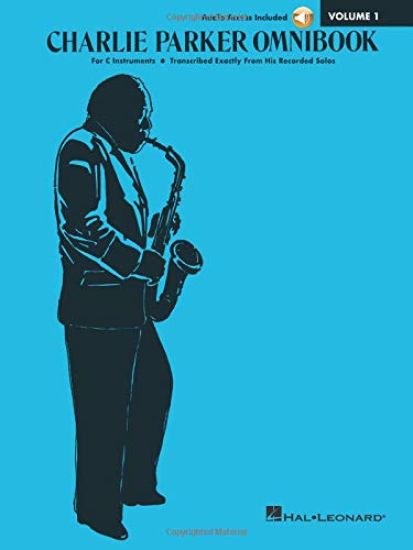
(Jazz Transcriptions). The classic Omnibook, now with sound-alike audio backing tracks The Omnibook has become the book to turn to when you want to master the Bird. It includes 60 solos such as: Anthropology * Au Privave (Nos. 1 and 2) * Billie's Bounce * Blues for Alice * Chi Chi * Confirmation * Constellation * Dewey Square * Donna Lee * Ko Ko * Moose the Mooch * Ornithology * Scrapple from the Apple * Shawnuff * Yardbird Suite * and more. This updated edition includes transcriptions from the original book which match Parker's recorded solos, but also features access to audio tracks online for download or streaming. Also includes an introduction on Charlie Parker, a scale syllabus, and chord symbol guide. Audio is accessed online using the unique code inside the book and can be streamed or downloaded. The audio files include PLAYBACK+, a multi-functional audio player that allows you to slow down audio without changing pitch, set loop points, change keys, and pan left or right.