Kirjojen hintavertailu. Mukana 11 605 723 kirjaa ja 12 kauppaa.

Kirjahaku

Etsi kirjoja tekijän nimen, kirjan nimen tai ISBN:n perusteella.

1000 tulosta hakusanalla Conrad Mbewe

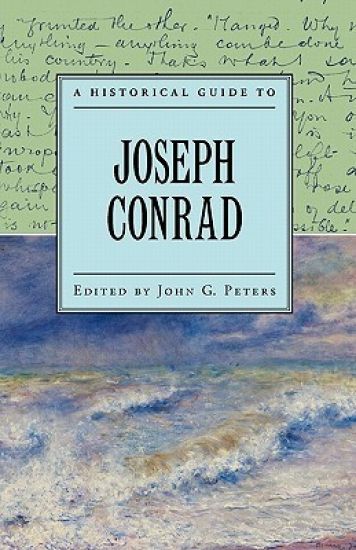
A Historical Guide to Joseph Conrad

A Historical Guide to Joseph Conrad

Oxford University Press Inc
2009
nidottu
Born to Polish parents in what is now known as the Ukraine, Joseph Conrad would become one of the greatest writers in the English language. With works like Lord Jim, The Nigger of the ¨Narcissus,¨ and Heart of Darkness, he not only solidified his place in the panethon of great novelists, but also established himself as a keen-eyed chronicler of the social and political themes that animated the contemporary world around him. The original essays assembled here by John G. Peters showcase the abundance of historical material Conrad drew upon to create his varied literary corpus. Essays show how the author mined his early life as a sailor to pen gripping, realistic tales of nautical life while issuing scathing indictments of colonialism and capitalist cupidity in works like Almayer's Folly and Heart of Darkness. His unique sense of himself as an outsider is explored in relation to his pointed political novels that critiqued corruption and terrorism, most notably in Nostromo and The Secret Agent. In addition to his major works, essays consider Conrad's contributions as an innovative modernist and his unique role in the nineteenth-century literary marketplace. Complete with an up-to-date bibliography and illustrated chronology, A Historical Guide to Joseph Conrad provides an invaluable resource to the life and work of the major novelist.
The Strange Short Fiction of Joseph Conrad

The Strange Short Fiction of Joseph Conrad

Daphna Erdinast-Vulcan

Oxford University Press
1999
sidottu
This study engages with the troubled question of authorial subjectivity and ethics in Modernism in general and in Conrad's short fiction in particular, and offers an original theoretical perspective, inspired by the work of Derrida and the early philosophical writings of M. M. Bakhtin. Part One of the book focuses on the relational dynamics in 'Under Western Eyes' and 'The Secret Sharer', and develops a 'heterobiographical' reading matrix, which serves as a psycho-textual and philosophical approach to modes of authorial presence in the text. Part Two offers close readings of ten short stories spanning the whole of Conrad's career and clustered into five chapters--'Writing and Fratricide', 'The Pathos of Authenticity', 'The Poetics of Cultural Despair', 'The Romantic paradox', and 'Addressing the Woman'. This part of the book engages with the interpretative problems posed by these stories through a cultural-historical perspective, linking Conrad's essentially Romantic sensibility and his unique position on the threshold of Modernism with some of the issues that have emerged from the 'Postmodern turn': the relationship between metaphysics and subjectivity, the conception of inter-subjectivity as prior to and constitutive of subjectivity; the permeability of textual and psychological boundary-lines; and the desire for subjective aesthetization. These issues, which can all be traced back to the cultural crisis of the turn of the century, are still with us at the close of the millennium.
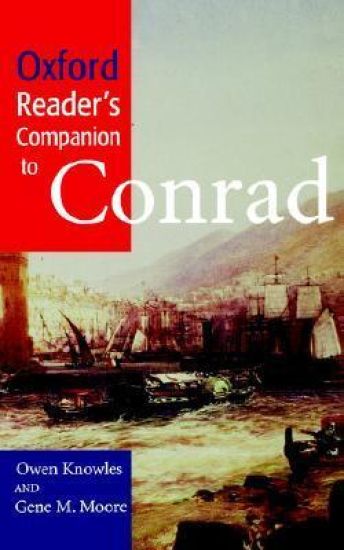
Oxford Reader's Companion to Conrad

Oxford Reader's Companion to Conrad

Owen Knowles; Gene M. Moore

Oxford University Press
2001
nidottu
'Scholarly, ambitious and scrupulous'. This is how the TLS recently described the Oxford Reader's Companion Series. In September 2000, the book which pioneered the series, The Oxford Reader's Companion to Dickens came out in paperback. Now the Oxford Reader's Companions to Hardy, Trollope, Conrad, and George Eliot will follow on from that success. In this format these books are designed specifically to appeal to students of literature. Each contains a more comprehensive and accessible range of information than any other reference work on these writers. Jozef Teodor Konrad Korzeniowski had an astonishing life. 'Pole, Catholic, and nobleman' is how he described himself as at the age of 5. He was born in the Ukraine of Polish parents and spent his childhood in exile. It was only after fifteen years at sea that he began writing in English, his third language and the one whose genius had, as he put it, 'adopted' him. Owen Knowles and Gene M. Moore, together with their team of distinguished Advisers and Contributors, have created a unique and authoritative reference work on all things Conradian. Over 400 entries cover Conrad's novels, stories, essays, and reviews; his friends, family, and associates; films and adaptations; ships and voyages; places associated with his life and works; his influences and sources; his reputation and critical approaches to his work; historical contexts to his life. Entries include: Conrad's life: health, Polish inheritance, the sea, ships and voyages People: Borys Conrad, Apollo and Ewa Korzeniowski, J. M. Barrie, Stephen Crane, Stefan Zeromski Places: America, Bangkok, Berdyczow, Congo, Cracow, Marseilles Novels: Almayer's Folly, Lord Jim, Nostromo Stories, essays, and reviews: 'An Anarchist', 'Typhoon', 'Autocracy and War', 'Legends', 'Tales of the Sea' Influences and Sources: James Brooke, Alighieri Dante, Charles Dickens, Napoleon Bonaparte, Emile Zola Characters: Almayer family, Mr Jones, Jim, Captain Mitchell, Nostromo, the Professor, Edith Travers Reputation: biographies, films, influences on other writers, portraits and other images, translations Historical context: First World War, Polish question, women's suffrage movement In addition to the A-Z entries the Companion offers extra material: a classified contents list with headwords grouped in thematic batches, Conrad's family tree, a useful chronology spanning Conrad's life, maps showing Conrad's travels, an index of references to Conrad's works, and an alphabetical list of frequently cited texts.
Tracing the Aesthetic Principle in Conrad's Novels
Tracing the Aesthetic Principle in Conrad s Novels sets out to revolutionize our reading of Joseph Conrad s works and challenge the critical heritage that accompanies them. Levin identifies the emergence of an aesthetic principle in Conrad s novels and theorizes that principle through the concept of the otherwise present, which Levin defines as that which provokes desire and perpetuates it by barring its appeasement. This book offers a detailed analysis of Lord Jim, Nostromo, Under Western Eyes, The Arrow of Gold and Suspense, alongside a poststructuralist-inspired explication of Conrad s literary vision and its defining principle. This study is an important source for both the newcomers and the initiated to Conrad s oeuvre.
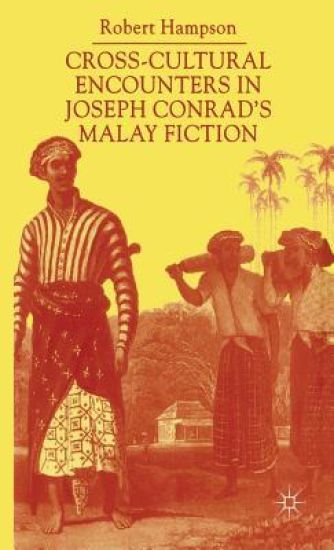
Cross-Cultural Encounters in Joseph Conrad’s Malay Fiction
This is the first major study to bring together for examination all of Conrad's Malay fiction: the early novels, Almayer's Folly , An Outcast of the Islands , and Lord Jim ; the two later novels, Victory and The Rescue ; and various short stories, such as The Lagoon and Karain . The volume focuses on cross-cultural encounters, cultural identity and cultural dislocation, paying particular attention to issues of race and gender. He also situates Conrad's fiction in relation to earlier English accounts of South-East Asia.
The Imperial Quest and Modern Memory from Conrad to Greene
The Imperial Quest and Modern Memory explores relationships between narrative and imperium in the context of Western Modernism by examining the Quest as a vexed trope in Heart of Darkness, Passage to India, TheSheltering Sky, and The Quiet American. The book takes stock of twentieth century theory regarding the Quest--as archetype, trope, and construct, considers the dominant expression and the imperial organization of this trope in Western culture and iconography from the Dark Ages to the Age of Empire, explores the ways in which this trope both lingers and changes in the context of Western Modernism, and finally gauges its permutations in Modern discourse. The Imperial Quest and Modern Memory's central claim is that the Modern novel simultaneously reinscribes and subverts Western and imperial manifestations of the Quest. Heart of Darkness, Passage to India, TheSheltering Sky, and The Quiet American are remarkably Modern and subversive narratives. They participate in the revolutionary projects of early and high Modernism and are often in marked opposition to imperial praxis. Yet they are also profoundly influenced by the deep ideological and metaphoric structures of Western culture. Thus, the Quest trope--specifically in its Western and imperial manifestations--lingers in Modern Memory and certainly in the Modern novel. This expansive study emphasizes intriguing intersections between past and present, culture and archetype, norm and narrative, memory and contemporaneity.
The Imperial Quest and Modern Memory from Conrad to Greene
The Imperial Quest and Modern Memory explores relationships between narrative and imperium in the context of Western Modernism by examining the Quest as a vexed trope in Heart of Darkness, Passage to India, TheSheltering Sky, and The Quiet American. The book takes stock of twentieth century theory regarding the Quest--as archetype, trope, and construct, considers the dominant expression and the imperial organization of this trope in Western culture and iconography from the Dark Ages to the Age of Empire, explores the ways in which this trope both lingers and changes in the context of Western Modernism, and finally gauges its permutations in Modern discourse. The Imperial Quest and Modern Memory's central claim is that the Modern novel simultaneously reinscribes and subverts Western and imperial manifestations of the Quest. Heart of Darkness, Passage to India, TheSheltering Sky, and The Quiet American are remarkably Modern and subversive narratives. They participate in the revolutionary projects of early and high Modernism and are often in marked opposition to imperial praxis. Yet they are also profoundly influenced by the deep ideological and metaphoric structures of Western culture. Thus, the Quest trope--specifically in its Western and imperial manifestations--lingers in Modern Memory and certainly in the Modern novel. This expansive study emphasizes intriguing intersections between past and present, culture and archetype, norm and narrative, memory and contemporaneity.
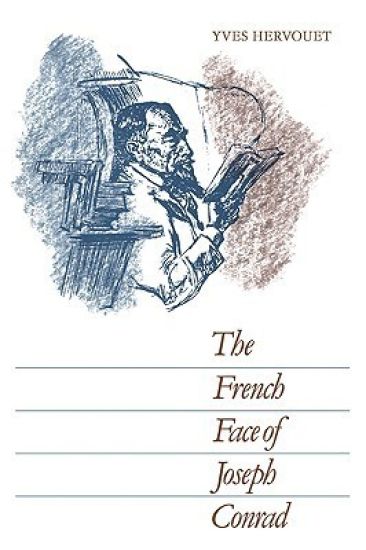
The French Face of Joseph Conrad

The French Face of Joseph Conrad

Yves Hervouet; Lindsay Newman

Cambridge University Press
2008
pokkari
Joseph Conrad has up to now been regarded as a novelist with 'dual' Polish and English national affinities. This study argues for a triple identity by presenting the French face of Conrad's work, and demonstrates that his knowledge of the French language and its literature (which preceded his acquisition of the English language) has profound implications for the study of the novels. A survey of Conrad's literary and cultural background leads into an analysis of the effect on his writing of numerous French authors, chief among them Flaubert, Maupassant and Anatole France. Documenting these influences chronologically, Yves Hervouet builds up a picture of Conrad at work. In addition he discusses in more theoretical terms their aesthetic, philosophical and technical aspects and examines possible implications for Conrad's creative originality. A large-scale account of Conrad's extensive involvement with the French literary tradition, Yves Hervouet's book is a milestone in our understanding of his work. It will have a major impact on Conrad scholarship and as a study of cross-cultural influence, it will be of interest to all students of comparative literature in the period.
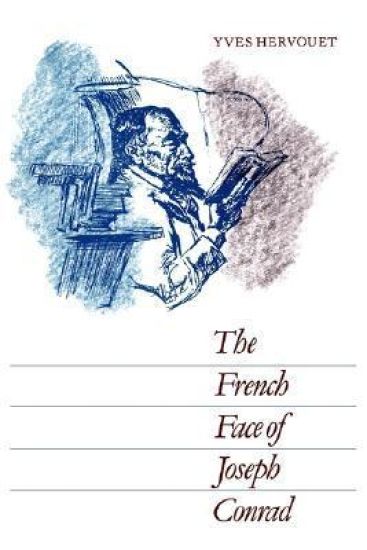
The French Face of Joseph Conrad

The French Face of Joseph Conrad

Yves Hervouet; Lindsay Newman

Cambridge University Press
1990
sidottu
Joseph Conrad has up to now been regarded as a novelist with ‘dual’ Polish and English national affinities. This study argues for a triple identity by presenting the French face of Conrad’s work, and demonstrates that his knowledge of the French language and its literature (which preceded his acquisition of the English language) has profound implications for the study of the novels. A survey of Conrad’s literary and cultural background leads into an analysis of the effect on his writing of numerous French authors, chief among them Flaubert, Maupassant and Anatole France. Documenting these influences chronologically, Yves Hervouet builds up a picture of Conrad at work. In addition he discusses in more theoretical terms their aesthetic, philosophical and technical aspects and examines possible implications for Conrad’s creative originality. The first large-scale account of Conrad’s extensive involvement with the French literary tradition, Yves Hervouet’s book is a milestone in our understanding of his work. It will have a major impact on Conrad scholarship and as a study of cross-cultural influence, it will be of interest to all students of comparative literature in the period.
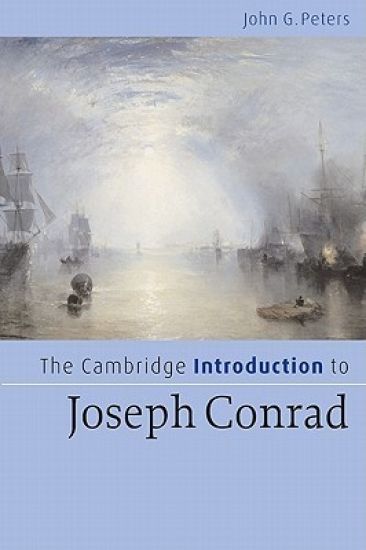
The Cambridge Introduction to Joseph Conrad

The Cambridge Introduction to Joseph Conrad

John G. Peters

Cambridge University Press
2006
pokkari
Joseph Conrad is one of the most intriguing and important modernist novelists. His writing continues to preoccupy twenty-first-century readers. This introduction by a leading scholar is aimed at students coming to Conrad's work for the first time. The rise of postcolonial studies has inspired interest in Conrad's themes of travel, exploration, and racial and ethnic conflict. John Peters explains how these themes are explored in his major works, Nostromo, Lord Jim and Heart of Darkness, as well as his short stories. He provides an essential overview of Conrad's fascinating life and career and his approach to writing and literature. A guide to further reading is included which points to some of the most useful secondary criticism on Conrad. This is a most comprehensive and concise introduction to studying Conrad, and will be essential reading for students of the twentieth-century novel and of modernism.
The Cambridge Introduction to Joseph Conrad

The Cambridge Introduction to Joseph Conrad

John G. Peters

Cambridge University Press
2006
sidottu
Joseph Conrad is one of the most intriguing and important modernist novelists. His writing continues to preoccupy twenty-first-century readers. This introduction by a leading scholar is aimed at students coming to Conrad's work for the first time. The rise of postcolonial studies has inspired interest in Conrad's themes of travel, exploration, and racial and ethnic conflict. John Peters explains how these themes are explored in his major works, Nostromo, Lord Jim and Heart of Darkness, as well as his short stories. He provides an essential overview of Conrad's fascinating life and career and his approach to writing and literature. A guide to further reading is included which points to some of the most useful secondary criticism on Conrad. This is a most comprehensive and concise introduction to studying Conrad, and will be essential reading for students of the twentieth-century novel and of modernism.
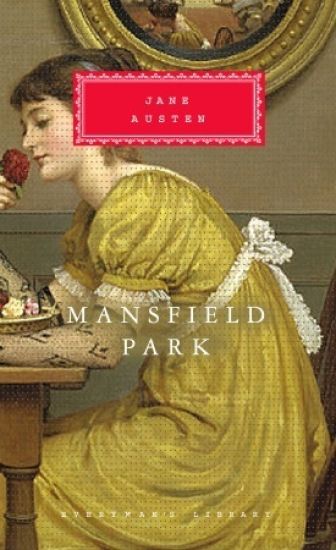
Mansfield Park: Introduction by Peter Conrad

Mansfield Park: Introduction by Peter Conrad

Jane Austen

Everyman's Library
1992
sidottu
At the center of Jane Austen's Mansfield Park is Fanny Price, the classic "poor cousin" who has been brought to live with the rich Sir Thomas Bertram and his wife as an act of charity. Over time, Fanny comes to demonstrate forcibly those virtues Austen most admired: modesty, firm principles, and a loving heart. As Fanny watches her cousins Maria and Julia cast aside their scruples in dangerous flirtations (and worse), and as she herself resolutely resists the advantages of marriage to the fascinating but morally unsteady Henry Crawford, her seeming austerity grows in appeal and makes clear why she was Austen's own favorite among her heroines. Mansfield Park encompasses not only Austen's great comedic gifts and her genius as a historian of the human animal, but her personal credo as well--her faith in a social order that combats chaos through civil grace, decency, and wit. With an introduction by Peter Conrad.
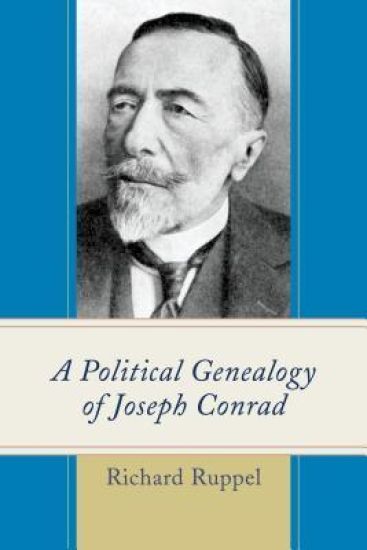
A Political Genealogy of Joseph Conrad

A Political Genealogy of Joseph Conrad

Richard Ruppel

Lexington Books
2014
sidottu
Józef Teodor Konrad Korzeniowski, who gradually transformed himself into the English writer, Joseph Conrad, was a mercurial personality. He left Poland for the sea, though he had no experience with salt water. He left the Polish language for French, and then for English. He attempted suicide at the age of twenty. He invested in various schemes and lost his inheritance. He married an English typist nearly sixteen years younger than himself with whom he had nothing in common. He worked as a writer though he made no money through all the years of his most important work and though he experienced terrible psychological breakdowns after completing each novel. He was warm with his friends, ingratiating with influential strangers, but also intensely irritable and easily offended. His work is as varied and changeable as his personality, from his first two, emotionally intense Malay novels, to the stolid and confident Nigger of the “Narcissus” and “Typhoon”; from the coldly ironic “Outpost of Progress” to the nightmarishly subjective Heart of Darkness; from the leisurely, panoramic visions of Nostromo to the tautly nervous, claustrophobic ironies in The Secret Agent. Despite the extraordinary thematic and tonal range of his work, critics have imposed a stable political perspective on his fiction—most often an organic conservatism, influenced by his Polish background. This is understandable; until recently, a critic’s role has been to impose order on an artist’s creations. The approach in this book is different. Drawing on the work of Michel Foucault and Jean-Francois Lyotard, especially on the latter’s critique of what he called “the grand narrative,” A Political Genealogy of Joseph Conrad shows how Conrad’s politics were always radically contingent on audience, contemporary events, and, especially, genre. While the political perspective in each of his stories and novels may be more-or-less coherent and consistent, there is no consistency throughout his work. A Political Genealogy of Joseph Conrad is the first book devoted exclusively to Conrad’s politics since the 1960s.
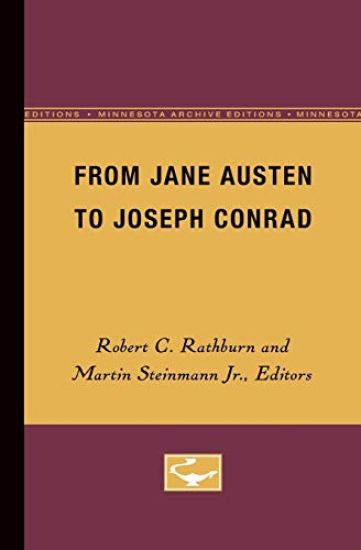
From Jane Austen to Joseph Conrad

From Jane Austen to Joseph Conrad

UNIVERSITY OF MINNESOTA PRESS
1967
nidottu
From Jane Austen to Joseph Conrad was first published in 1967. Minnesota Archive Editions uses digital technology to make long-unavailable books once again accessible, and are published unaltered from the original University of Minnesota Press editions. David Daisches, Douglas Bush, Robert B. Heilman, Arthur Mizener, and William Van O'Connor are among the contributors to this volume of essays on the nineteenth-century British novel. Each of the selections has been written expressly for this book and is published here for the first time. There are a total of 20 essays, each by a different contributor. In addition, Rathburn, in an introductory essay, relates the nineteenth-century novel to that of the eighteenth century and Steinmann, in the concluding essay, discusses the nineteenth-century novel in relation to that of the present century. The contributors, in addition to the two editors of the volume, and the novelists they discuss are the following: Charles Murrah, Jane Austen; Alan D Mckillop, Jane Austen; David Dasches, Walter Scott; Curtis Dahl, Edward Bulwer-Lytton; J. Y T. Greig, William Makepeace Thackeray; Douglas Bush, Charles Dickens; George H. Ford, Dickens; Melvin; R. Watson, the Brontes; Robert B. Heilman, Charlotte Bronte; Yvonne French, Elizabeth Gaskell; Bradford A. Booth, Anthony Trollope; Arthur Mizener, Anthony Trollope; Gordon S. Haight, George Eliot; Sumner J. Ferris, George Eliot; Wayne Burns, Charles Reade; Fabian Gudas, George Meredith; John Holloway, Thomas Hardy; Jacob Korg, George Gissing; William Van O'Connor, Samuel Burlter; W. Y. Tindall, Joseph Conrad. Although each essay is focused on a single novel or on one aspect of the novelist, all of them are written to give the reader sense of the novelist's whole achievement.
A Return to the Roots – Conrad, Poland, and Central Europe
This study illuminates various aspects of the relationship between Joseph Conrad's literary work and his roots in Polish and East-Central European culture. In particular, it examines various aspects of Conrad's relationship to Poland-the evolution of his attitude toward his homeland, the influence of Polish literature on his work, his reception by Polish audiences-and to Russian literature, particularly Dostoevsky and Turgenev. This volume collects fourteen essays by scholars from the United States, Europe and beyond. It is critically diverse, containing elements of biography, psychoanalysis, film criticism, comparative literature, and sociological and philosophical interpretation. The scope of critical materials is equally wide-ranging: from considerations of Conrad's life and political attitudes to overviews of his entire oeuvre and focused studies of single literary works.
Beyond the Roots – The Evolution of Conrad's Ideology and Art
This text includes a collection of nineteen papers that cover almost the whole of Conrad's writing career beginning with Almayer's Folly of 1889 and concluding with The Rescue of 1920. Written by scholars from eight different countries and three continents, they discuss a broad range of issues in the Conrad canon, essential for both the literary texts studied and some major trends in Conrad criticism. A majority of the papers concern "Heart of Darkness" which confirms its status as the writer's supreme masterpiece. However, the collection also consists of several comparative studies linking Conrad with other English authors like Milton, Blake and Lawrence.
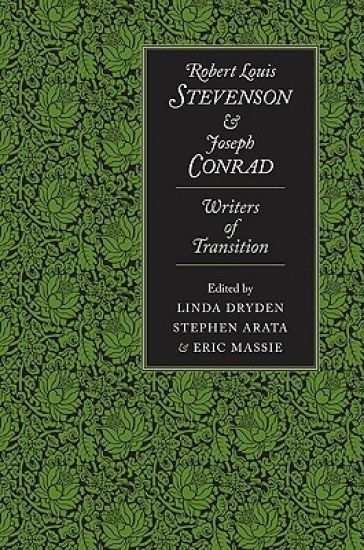
Robert Louis Stevenson and Joseph Conrad
The first book-length study to specifically examine the many intersections in the works of Robert Louis Stevenson and Joseph Conrad, this volume extends the focus of current debate beyond the writers' South Seas literature. Considering Stevenson and Conrad's shared literary history and experience of Victorian London, it examines their convergence of styles in the emergent modernism of the fin de siecle, their romance and adventure modes, their fictions of duality, and their exploration of the human psyche. Moreover, the book recuperates Stevenson's reputation as a serious writer, not only as Conrad's antecedent and influence but as a writer equally worthy of study in these shared modes.
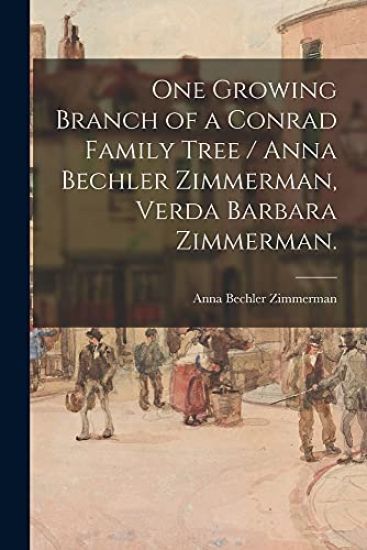
One Growing Branch of a Conrad Family Tree / Anna Bechler Zimmerman, Verda Barbara Zimmerman.
This work has been selected by scholars as being culturally important and is part of the knowledge base of civilization as we know it.This work is in the public domain in the United States of America, and possibly other nations. Within the United States, you may freely copy and distribute this work, as no entity (individual or corporate) has a copyright on the body of the work.Scholars believe, and we concur, that this work is important enough to be preserved, reproduced, and made generally available to the public. To ensure a quality reading experience, this work has been proofread and republished using a format that seamlessly blends the original graphical elements with text in an easy-to-read typeface.We appreciate your support of the preservation process, and thank you for being an important part of keeping this knowledge alive and relevant.