Kirjojen hintavertailu. Mukana 12 016 292 kirjaa ja 12 kauppaa.

Kirjahaku

Etsi kirjoja tekijän nimen, kirjan nimen tai ISBN:n perusteella.

1000 tulosta hakusanalla Craig Allen

The Roots of Radicalism

The Roots of Radicalism

Craig Calhoun

University of Chicago Press
2012
sidottu
The story of the rise of radicalism in the early nineteenth century has often been simplified into a fable about progressive social change. The diverse social movements of the era - religious, political, regional, national, antislavery, and protemperance - are presented as mere strands in a unified tapestry of labor and democratic mobilization. Taking aim at this flawed view of radicalism as simply the extreme end of a single dimension of progress, Craig Calhoun emphasizes the coexistence of different kinds of radicalism, their tensions, and their implications. "The Roots of Radicalism" reveals the importance of radicalism's links to pre-industrial culture and attachments to place and local communities, as well as the ways in which journalists who had been pushed out of "respectable" politics connected to artisans and other workers. Calhoun shows how much public recognition mattered to radical movements and how religious, cultural, and directly political - as well as economic - concerns motivated people to join up. Reflecting two decades of research into social movement theory and the history of protest, "The Roots of Radicalism" offers compelling insights into the past that can tell us much about the present, from American right-wing populism to democratic upheavals in North Africa.
The Roots of Radicalism

The Roots of Radicalism

Craig Calhoun

University of Chicago Press
2012
nidottu
The story of the rise of radicalism in the early nineteenth century has often been simplified into a fable about progressive social change. The diverse social movements of the era - religious, political, regional, national, antislavery, and protemperance - are presented as mere strands in a unified tapestry of labor and democratic mobilization. Taking aim at this flawed view of radicalism as simply the extreme end of a single dimension of progress, Craig Calhoun emphasizes the coexistence of different kinds of radicalism, their tensions, and their implications. "The Roots of Radicalism" reveals the importance of radicalism's links to pre-industrial culture and attachments to place and local communities, as well as the ways in which journalists who had been pushed out of "respectable" politics connected to artisans and other workers. Calhoun shows how much public recognition mattered to radical movements and how religious, cultural, and directly political - as well as economic - concerns motivated people to join up. Reflecting two decades of research into social movement theory and the history of protest, "The Roots of Radicalism" offers compelling insights into the past that can tell us much about the present, from American right-wing populism to democratic upheavals in North Africa.

Dream Reaper: The Story of an Old-Fashioned Inventor in the High-Tech, High-Stakes World of Modern Agriculture
Dream Reaper follows Mark Underwood, farmer and inventor, and his salesman cousin as they strive to perfect and market Mark's breakthrough invention, the Bi-Rotor combine. "This intriguing tale weaves together the creativity and ingenuity of an inventor and the hurdles he and his partner face in selling and producing what appears to be an amazingly efficient Bi-Rotor combine."--Science News "Canine writes with style and flourish. . . Dream Reaper is a riveting journey into America's heartland, where necessity is the mother of invention--and hard work, conviction, and sacrifice are its lifeblood."--People Magazine "Canine deftly interweaves the story of the two men's struggles with a history of the mechanization of agriculture. This lively account of men working under pressure, improvising repairs and demonstrating the new machine, is also a story of courage that illustrates the barriers facing an independent inventor."--Publishers Weekly "Craig Canine's Dream Reaper is a delight. It's an important book, rich with history and stories. It brings our most essential industry--farming--into new perspective. Reading it made me want to get out a crop."--Bobbie Ann Mason A volume in the Sloan Technology Series. The series presents to a general audience highly readable accounts of the development of 20th century technologies and the ways these have shaped and are shaped by society.
Lions in the Balance

Lions in the Balance

Craig Packer

University of Chicago Press
2015
sidottu
From flat-topped acacia trees to great migrations of wildebeest across an edgeless expanse of grass, the Serengeti is one of the world's most renowned ecosystems. And at the apex of this incredible landscape prowls its seemingly indomitable ruler: the Serengeti lion. These majestic mammals are skillful hunters, iconic, and integral to Serengeti health. But they also commit infanticide, eat local people and destroy local livelihoods, are a source of profit for those who make money shooting or conserving them (and sometimes both), and are in constant danger from the encroachments of another species: humans. With Lions in the Balance, celebrated lion researcher and conservationist Craig Packer takes us back into the complex, tooth-and-claw worlds of lion conservation and behavior. A sequel to Packer's Into Africa-which gave many readers their first experience of field work in Africa, of Tanzanian roads, of long hours spent identifying lions by their ear marks and scars, and of the joys of bootlegged Grateful Dead tapes beneath savannah moons-this diary-based chronicle of adventure, real-life danger, and corruption will both alarm and entertain. Packer's story offers a look into the future of the lion, one in which the politics of conservation will require survival strategies far more creative and powerful than any now possessed by the citizens of the savannah-humans included. Packer is sure to infuriate poachers, politicians, and conservationists alike as he minces no words about the problems he sees. But with a narrative stretching from Arusha to Washington, DC, and marked by Packer's signature humor and incredible candor, Lions in the Balance is a tale of courage against impossible odds, a masterly blend of science and storytelling, and an urgent call to action that will captivate a pride of readers.
The English Virtuoso

The English Virtuoso

Craig Ashley Hanson

University of Chicago Press
2009
sidottu
Contrary to twentieth-century criticism that cast them as misguided dabblers, English virtuosi in the seventeenth and early eighteenth centuries were erudite individuals with solid grounding in the classics, deep appreciation for the arts, and sincere curiosity about the natural world. Reestablishing their broad historical significance, "The English Virtuoso" situates this polymathic group at the rich intersection of the period's art, medicine, and antiquarianism.At the heart of this profoundly interdisciplinary study lies the Royal Society of London for the Improvement of Natural Knowledge, which from its founding in 1660 served as the major professional organization for London's leading physicians, many of them prominent virtuosi. Craig Ashley Hanson reveals that a vital art audience emerged from the Royal Society - whose members assembled many of the period's most important nonaristocratic collections - a century before most accounts date the establishment of an institutional base for the arts in England. Unearthing the fascinating stories of an impressive cast of characters, Hanson establishes a new foundation for understanding both the relationship between British art and science and the artistic accomplishments of the late eighteenth and nineteenth centuries.
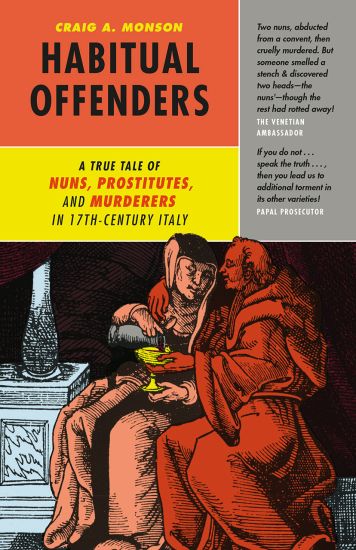
Habitual Offenders

Habitual Offenders

Craig A. Monson

University of Chicago Press
2016
sidottu
In April 1644, two nuns fled Bologna’s convent for reformed prostitutes. A perfunctory archiepiscopal investigation went nowhere, and the nuns were quickly forgotten. By June of the next year, however, an overwhelming stench drew a woman to the wine cellar of her Bolognese townhouse, reopened after a two-year absence—where to her horror she discovered the eerily intact, garroted corpses of the two missing women. Drawing on over four thousand pages of primary sources, the intrepid Craig A. Monson reconstructs this fascinating history of crime and punishment in seventeenth-century Italy. Along the way, he explores Italy’s back streets and back stairs, giving us access to voices we rarely encounter in conventional histories: prostitutes and maidservants, mercenaries and bandits, along with other “dubious” figures negotiating the boundaries of polite society. Painstakingly researched and breathlessly told, Habitual Offenders will delight historians and true-crime fans alike.
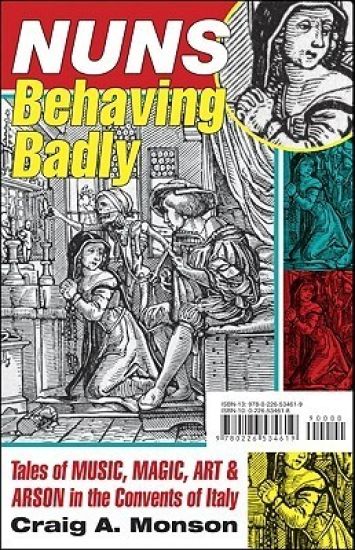
Nuns Behaving Badly

Nuns Behaving Badly

Craig A. Monson

University of Chicago Press
2010
sidottu
Witchcraft. Arson. Going AWOL. Some nuns in sixteenth- and seventeenth-century Italy strayed far from the paradigms of monastic life. Cloistered in convents, subjected to stifling hierarchy, repressed, and occasionally persecuted by their male superiors, these women circumvented authority in sometimes extraordinary ways. But tales of their transgressions have long been buried in the Vatican Secret Archive. That is, until now. In "Nuns Behaving Badly", Craig A. Monson resurrects forgotten tales and restores to life the long-silent voices of these cloistered heroines. Here we meet nuns who dared to speak out about physical assault and sexual impropriety (some real, some imagined). Others were guilty only of misjudgment or of defacing valuable artwork that offended their sensibilities. But what unites the women and their stories is the challenge they faced: these were women trying to find their way within the Catholicism of their day and through the strict limits it imposed on them. In resurrecting these long-forgotten tales and trials, Monson also draws attention to the predicament of modern religious women, whose "misbehavior" - seeking ordination as priests or refusing to give up their endowments to pay for priestly wrongdoing in their own archdioceses - continues even today. The nuns of early modern Italy, Monson shows, set the standard for religious transgression in their own age - and beyond.
Nuns Behaving Badly

Nuns Behaving Badly

Craig A. Monson

University of Chicago Press
2011
nidottu
Witchcraft. Arson. Going AWOL. Some nuns in sixteenth- and seventeenth-century Italy strayed far from the paradigms of monastic life. Cloistered in convents, subjected to stifling hierarchy, repressed, and occasionally persecuted by their male superiors, these women circumvented authority in sometimes extraordinary ways. But tales of their transgressions have long been buried in the Vatican Secret Archive. That is, until now. In "Nuns Behaving Badly", Craig A. Monson resurrects forgotten tales and restores to life the long-silent voices of these cloistered heroines. Here we meet nuns who dared to speak out about physical assault and sexual impropriety (some real, some imagined). Others were guilty only of misjudgment or of defacing valuable artwork that offended their sensibilities. But what unites the women and their stories is the challenge they faced: these were women trying to find their way within the Catholicism of their day and through the strict limits it imposed on them. In resurrecting these long-forgotten tales and trials, Monson also draws attention to the predicament of modern religious women, whose "misbehavior" - seeking ordination as priests or refusing to give up their endowments to pay for priestly wrongdoing in their own archdioceses - continues even today. The nuns of early modern Italy, Monson shows, set the standard for religious transgression in their own age - and beyond.
Divas in the Convent

Divas in the Convent

Craig A. Monson

University of Chicago Press
2012
nidottu
When eight-year-old Lucrezia Orsina Vizzana (1590-1662) entered one of the preeminent convents in Bologna in 1598, she had no idea what cloistered life had in store for her. Thanks to clandestine instruction from a local maestro di cappella - and despite the church hierarchy's vehement opposition to all convent music - Vizzana became the star of the convent, composing works so thoroughly modern and expressive that a recent critic described them as "historical treasures." But at the very moment when Vizzana's works appeared in 1623 - she would be the only Bolognese nun ever to publish her music - extraordinary troubles beset her and her fellow nuns, as episcopal authorities arrived to investigate anonymous allegations of sisterly improprieties with male members of their order. Craig A. Monson retells the story of Vizzana and the nuns of Santa Cristina to elucidate the role that music played in the lives of these cloistered women. Monson explains how the sisters - refusing to accept what the church hierarchy called God's will and what the nuns perceived as a besmirching of their honor - fought back with words and music, and when these proved futile, with bricks, roof tiles, and stones. These women defied one Bolognese archbishop after another, cardinals in Rome, and even the pope himself, until threats of excommunication and abandonment by their families brought them to their knees twenty-five years later. By then, Santa Cristina's imaginative but frail composer literally had been driven mad by the conflict. Monson's fascinating narrative relies heavily on the words of its various protagonists, on both sides of the cloister wall, who emerge vividly as imaginative, independent-minded, and not always sympathetic figures. In restoring the musically gifted Lucrezia Orsina Vizzana to history, Monson introduces readers to the full range of captivating characters who played their parts in seventeenth-century convent life.
Into Africa

Into Africa

Craig Packer

University of Chicago Press
1996
nidottu
A field biologist since 1972, Packer began his work studying primates at Gombe and then the lions of the Serengeti and the Ngorongoro Crater with his wife and colleague Anne Pusey. In this work he introduces the reader to the real world of fieldwork - initiating assistants to lion research in the Serengeti, helping a doctoral student collect data, collaborating with Jane Goodall on primate research. The study also explores the social lives of the animals and the threats to their survival. Packer grapples with questions he has tried to answer for more than two decades. Why do female lions raise their young in creches? Why do male baboons move from troop to troop while male chimps band together? How can humans and animals continue to coexist in a world of diminishing resources? Immediate demands - logistical nightmares, political upheavals, physical exhaustion - yield to the larger inescapable issues of the interdependence of the land, the animals, and the people who inhabit it.
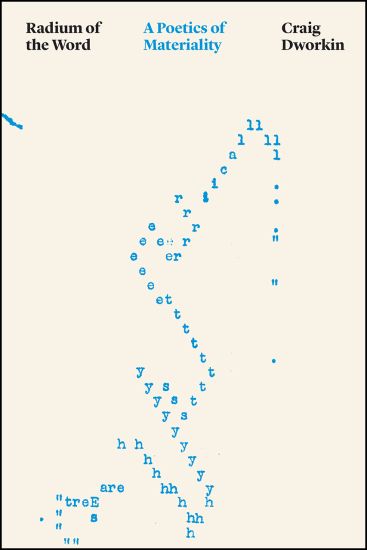
Radium of the Word

Radium of the Word

Craig Dworkin

University of Chicago Press
2020
sidottu
With fresh insight and contemporary relevance, Radium of the Word argues that a study of the form of language yields meanings otherwise inaccessible through ordinary reading strategies. Attending to the forms of words rather than to their denotations, Craig Dworkin traces hidden networks across the surface of texts, examining how typography, and even individual letters and marks of punctuation, can reveal patterns that are significant without being symbolic—fully meaningful without communicating any preordained message.Radium of the Word takes its title from Mina Loy’s poem for Gertrude Stein, which hails her as the Madame “Curie / of the laboratory / of vocabulary.” In this spirit, Dworkin considers prose as a dynamic literary form, characterized by experimentation. Dworkin draws on examples from writers as diverse as Lyn Hejinian, William Faulkner, and Joseph Roth. He takes up the status of the proper name in Modernism, with examples from Stein, Loy, and Guillaume Apollinaire, and he offers in-depth analyses of individual authors from the counter-canon of the avant-garde, including P. Inman, Russell Atkins, N. H. Pritchard, and Andy Warhol. The result is an inspiring intervention in contemporary poetics.
Radium of the Word

Radium of the Word

Craig Dworkin

University of Chicago Press
2020
nidottu
With fresh insight and contemporary relevance, Radium of the Word argues that a study of the form of language yields meanings otherwise inaccessible through ordinary reading strategies. Attending to the forms of words rather than to their denotations, Craig Dworkin traces hidden networks across the surface of texts, examining how typography, and even individual letters and marks of punctuation, can reveal patterns that are significant without being symbolic—fully meaningful without communicating any preordained message.Radium of the Word takes its title from Mina Loy’s poem for Gertrude Stein, which hails her as the Madame “Curie / of the laboratory / of vocabulary.” In this spirit, Dworkin considers prose as a dynamic literary form, characterized by experimentation. Dworkin draws on examples from writers as diverse as Lyn Hejinian, William Faulkner, and Joseph Roth. He takes up the status of the proper name in Modernism, with examples from Stein, Loy, and Guillaume Apollinaire, and he offers in-depth analyses of individual authors from the counter-canon of the avant-garde, including P. Inman, Russell Atkins, N. H. Pritchard, and Andy Warhol. The result is an inspiring intervention in contemporary poetics.
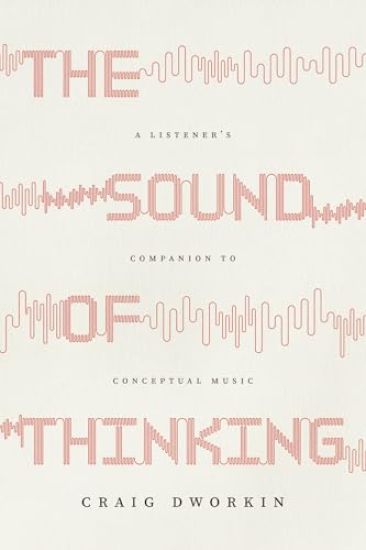
The Sound of Thinking

The Sound of Thinking

Craig Dworkin

THE UNIVERSITY OF CHICAGO PRESS
2026
sidottu
A lively compendium of musical practices and compositions that upend notions of creativity and expressivity while diversifying our sense of the musical canon. An artist draws two octaves of pitches randomly from a hat, just enough to set each syllable of the dictionary definition of imprimer (to score, to print). Trawling the internet for cute videos of cats “playing” piano, an artist splices together a complete, note-perfect performance of Arnold Schoenberg’s Opus 11. Half a century after the release of Miles Davis’s album Kind of Blue, a jazz quintet spends months of focused practice to reproduce the original exactly. These performances share a common denominator: absolute fidelity to the outcome of a system. From Marcel Duchamp to Yoko Ono, Steve Reich to Sun Ra, The Sound of Thinking brings together a diverse array of musical or sonic works that are algorithmic, automatic, permutational, procedural, or otherwise structured in contrast to the creative expressivity typically associated with artistic production. In twenty-six short essays, each keyed to a term that begins with a different letter of the alphabet, Dworkin discusses work composed or performed according to a predetermined rule, transforming artistic creation into a system running its course. The pieces detailed here, drawn from more than a century of musical experimentation, offer a fresh perspective on the history of innovative music by decoupling music from expression and by shunting creativity from the level of organizing sounds to the level of devising a system that can do the organizing. Not only does this book spotlight the critical role of music in twentieth-century conceptual art, but it also identifies previously overlooked links among diverse artists and movements.
The Sound of Thinking

The Sound of Thinking

Craig Dworkin

THE UNIVERSITY OF CHICAGO PRESS
2026
nidottu
A lively compendium of musical practices and compositions that upend notions of creativity and expressivity while diversifying our sense of the musical canon. An artist draws two octaves of pitches randomly from a hat, just enough to set each syllable of the dictionary definition of imprimer (to score, to print). Trawling the internet for cute videos of cats “playing” piano, an artist splices together a complete, note-perfect performance of Arnold Schoenberg’s Opus 11. Half a century after the release of Miles Davis’s album Kind of Blue, a jazz quintet spends months of focused practice to reproduce the original exactly. These performances share a common denominator: absolute fidelity to the outcome of a system. From Marcel Duchamp to Yoko Ono, Steve Reich to Sun Ra, The Sound of Thinking brings together a diverse array of musical or sonic works that are algorithmic, automatic, permutational, procedural, or otherwise structured in contrast to the creative expressivity typically associated with artistic production. In twenty-six short essays, each keyed to a term that begins with a different letter of the alphabet, Dworkin discusses work composed or performed according to a predetermined rule, transforming artistic creation into a system running its course. The pieces detailed here, drawn from more than a century of musical experimentation, offer a fresh perspective on the history of innovative music by decoupling music from expression and by shunting creativity from the level of organizing sounds to the level of devising a system that can do the organizing. Not only does this book spotlight the critical role of music in twentieth-century conceptual art, but it also identifies previously overlooked links among diverse artists and movements.
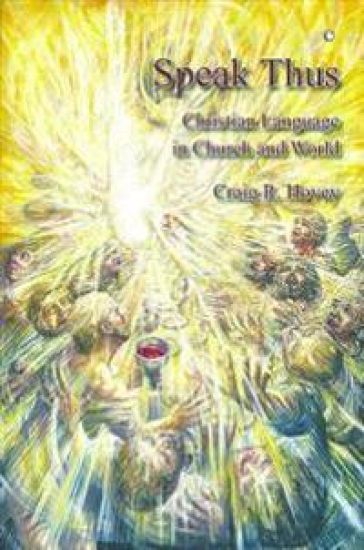
Speak Thus

Speak Thus

Craig R. Hovey

James Clarke Co Ltd
2008
nidottu
In its various forms, speech is absolutely integral to the Christian mission. The gospel is a message, news that must be passed on if it is to be known by others. Nevertheless, the reality of God cannot be exhausted by Christian knowledge and Christian knowledge cannot be exhausted by our words. All the while, the philosophy of modernity has left Christianity an impoverished inheritance within which to think these things. In Speak Thus, Craig Hovey explores the possibilities and limits of Christian speaking. At times ethical, epistemological, and metaphysical, these essays go to the heart of what it means to be the church today. In practice, the Christian life often has a linguistic shape that surprisingly implicates and reveals the commitments of people like those who care for the sick or those who respond as peacemakers in the face of violence. Because learning to speak one way as opposed to another is a skill that must be learned, Christian speakers are also guides who bear witness to the importance of churches for passing on a felicity with Christian ways of speaking. Through constructive engagements with interlocutors like Ludwig Wittgenstein, George Lindbeck, Jeffrey Stout, Stanley Hauerwas, John Howard Yoder, Thomas Aquinas, and the theology of Radical Orthodoxy, Hovey offers a challenging vision of the church able to speak with a confidence that only comes from a deep attentiveness to its own limitations while able to speak prophetically in a world weary of words.
Up and to the Right

Up and to the Right

Craig Toomey

McGill-Queen's University Press
2020
sidottu
In 1960, Montreal stock broker John Dobson launched an informal investment club with a close group of friends and associates, including future prime minister John Turner. His Formula Growth Fund would go on to become one of North America's most successful investment funds, consistently outperforming the Dow Jones Industrial Average and attracting the likes of legendary investor Sir John Templeton. Up and to the Right tells the story behind John Dobson's investment success as well as his many contributions to entrepreneurial education. Craig Toomey provides valuable insight into Dobson's unconventional but disciplined investment approach, his uncanny ability to predict winning stocks, and his unwavering faith in the market despite its many ups and downs. Coinciding with the sixtieth anniversary of the Formula Growth Fund, this revised edition brings the company's story up to 2019, presenting new material and case studies and describing recent developments, including how Formula Growth tripled its assets under management to $1.5 billion through the launch of a successful hedge fund platform and expansion into Asia. Based on interviews with Dobson as well as with dozens of members of his extensive network of friends, colleagues, and investment professionals, Up and to the Right is a fascinating story about a great Canadian who believed deeply in self-reliance and free enterprise as well as the value of friendship, pursuing one's passions, and working for the greater good.
Mystical Force

Mystical Force

Craig Weidhuner

Tellwell Talent
2020
pokkari
All beings radiate a life force, but some have an additional Mystical Force - a force that grants them special gifts, be it magical essence, demonic aura or spiritual power. While some consider these people to be gifted, there are others who feel these powers are unnatural...When Shi-ria graduated from apprentice to Taman Knight her master foresaw she was destined for something no other Taman Knight had done. She had no idea what he meant until a sorceress named Zolida brought her to a strange, remote, backwards planet called Earth. There, Shi-ria meets a witch named Mystic, her husband, Noonien, a demon named Tokijin and a nun called Sister Rose (who happens to be secretly dating Tokijin). Together they get drawn into a tangled web of criminal smugglers, vengeful spirits and Sister Rose's fellow members of the Order of the Cross, who wish to exterminate these 'devils' for their 'ungodly' powers. As if this wasn't enough, a rival sorceress named Scarlet Knightwalker is adamant that this unlikely team not meet, just as much as Zolida insists they must. Now they must find the answer as to why Zolida insists their meeting was predestined, and more importantly, why Knightwalker is determined to fight fate. Answers that could change the course of the future, but for better or worse?