Kirjojen hintavertailu. Mukana 12 228 697 kirjaa ja 12 kauppaa.

Kirjahaku

Etsi kirjoja tekijän nimen, kirjan nimen tai ISBN:n perusteella.

1000 tulosta hakusanalla Craig Cheetham

No Medium

No Medium

Craig Dworkin

MIT Press
2015
pokkari
Close readings of ostensibly "blank" works-from unprinted pages to silent music-that point to a new understanding of media.In No Medium, Craig Dworkin looks at works that are blank, erased, clear, or silent, writing critically and substantively about works for which there would seem to be not only nothing to see but nothing to say. Examined closely, these ostensibly contentless works of art, literature, and music point to a new understanding of media and the limits of the artistic object.Dworkin considers works predicated on blank sheets of paper, from a fictional collection of poems in Jean Cocteau's Orphee to the actual publication of a ream of typing paper as a book of poetry; he compares Robert Rauschenberg's Erased De Kooning Drawing to the artist Nick Thurston's erased copy of Maurice Blanchot's The Space of Literature (in which only Thurston's marginalia were visible); and he scrutinizes the sexual politics of photographic representation and the implications of obscured or obliterated subjects of photographs. Reexamining the famous case of John Cage's 4'33", Dworkin links Cage's composition to Rauschenberg's White Paintings, Ken Friedman's Zen for Record (and Nam June Paik's Zen for Film), and other works, offering also a "guide to further listening" that surveys more than 100 scores and recordings of "silent" music.Dworkin argues that we should understand media not as blank, base things but as social events, and that there is no medium, understood in isolation, but only and always a plurality of media: interpretive activities taking place in socially inscribed space.
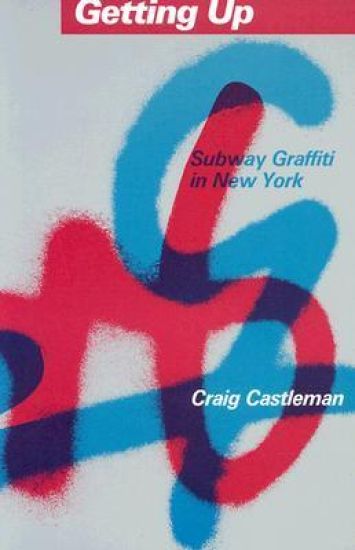
Getting Up

Getting Up

Craig Castleman

MIT Press
1984
pokkari
"Getting Up" is the term used by graffiti "artists" to describe their success in making their mark on the New York subway system. Through candid interviews, New Yorker Craig Castleman documents the inside story of the lives and activities of these young graffitists.
Uncommon Sense

Uncommon Sense

Craig Leonard; Nathifa Greene

MIT PRESS LTD
2022
nidottu
An examination of Herbert Marcuse's political claim for the aesthetic dimension, focusing on defamiliarization as a means of developing radical sensibility. In Uncommon Sense, Craig Leonard argues for the contemporary relevance of the aesthetic theory of Herbert Marcuse--an original member of the Frankfurt School and icon of the New Left--while also acknowledging his philosophical limits. His account reinvigorates Marcuse for contemporary readers, putting his aesthetic theory into dialogue with antiracist and anti-capitalist activism. Leonard emphasizes several key terms not previously analyzed within Marcuse's aesthetics, including defamiliarization, anti-art, and habit. In particular, he focuses on the centrality of defamiliarization--a subversion of common sense that can be a means to the development of what Marcuse refers to as "radical sensibility." Leonard brings forward Marcuse's claim that the aesthetic dimension is political because of its refusal to operate according to the repressive common sense that establishes and maintains relationships dictated by advanced capitalism. For Marcuse, defamiliarization is at the center of the aesthetic dimension, offering the direct means of stimulating its political potential. Leonard expands upon Marcuse's aesthetics by drawing on the work of Sylvia Wynter, going beyond Marcuse's predominantly European and patrilineal intellectual framework--while still retaining his aesthetic theory's fundamental characteristics--toward a human dimension requiring decolonial, feminist, antiracist, and counterpoetic perspectives.
Camus on Justice

Camus on Justice

Craig DeLancey

UNIVERSITY OF NOTRE DAME PRESS
2026
sidottu
Just Revolt investigates Albert Camus's rich and overlooked theory about the relationship between the absurd, politics, and revolution. What is the purpose of our lives? Just Revolt grapples with this complex question through a unique look at the work of Albert Camus. Craig DeLancey argues that Camus sees the question of purpose as essentially related to questions of justice: our need for purpose is a revolt against a purposeless universe, and our need to foster a just society where all can pursue purpose is a revolt against human injustice. DeLancey deepens the conversation by juxtaposing Camus's arguments with Sartre's and de Beauvoir's, two contemporaries who profoundly disagreed with Camus. Ultimately, DeLancey offers a new reading of Camus's understanding of the absurd which in turn develops a more full understanding of his political and social theories. This book applies rigorous analytic philosophy to Camus's work and includes a unique interpretation of The Fall, showing how Camus predicted much of the turmoil of our current day and age. Just Revolt reveals how Albert Camus's philosophy offers wisdom not only for his time but also our own.
Camus on Justice

Camus on Justice

Craig DeLancey

UNIVERSITY OF NOTRE DAME PRESS
2026
nidottu
Just Revolt investigates Albert Camus's rich and overlooked theory about the relationship between the absurd, politics, and revolution. What is the purpose of our lives? Just Revolt grapples with this complex question through a unique look at the work of Albert Camus. Craig DeLancey argues that Camus sees the question of purpose as essentially related to questions of justice: our need for purpose is a revolt against a purposeless universe, and our need to foster a just society where all can pursue purpose is a revolt against human injustice. DeLancey deepens the conversation by juxtaposing Camus's arguments with Sartre's and de Beauvoir's, two contemporaries who profoundly disagreed with Camus. Ultimately, DeLancey offers a new reading of Camus's understanding of the absurd which in turn develops a more full understanding of his political and social theories. This book applies rigorous analytic philosophy to Camus's work and includes a unique interpretation of The Fall, showing how Camus predicted much of the turmoil of our current day and age. Just Revolt reveals how Albert Camus's philosophy offers wisdom not only for his time but also our own.
Bounded Missions

Bounded Missions

Craig L. Arceneaux

Pennsylvania State University Press
2002
pokkari
Scholars of Latin American politics have been challenged to account for the varied outcomes of the transitions from authoritarian to democratic government that have occurred in many countries south of the border during the past two decades. What explains why some transitions were relatively smooth, with the military firmly in control of the process, while others witnessed substantial concessions by the military to civilian leaders, or even total military collapse? Rather than focus on causes external to the military, such as the previous legacy of democratic rule, severe economic crisis, or social protest, as other scholars have done, Craig Arceneaux draws attention to the important variables internal to the military, such as its unity or ability to coordinate strategy. Using this "historical-institutionalist" approach, he compares five different transitions in Brazil and three countries of the Southern Cone—Argentina, Chile, and Uruguay—to show what similarities and differences existed and how the differences may be attributed to variations in the internal institutional structure and operation of the military.
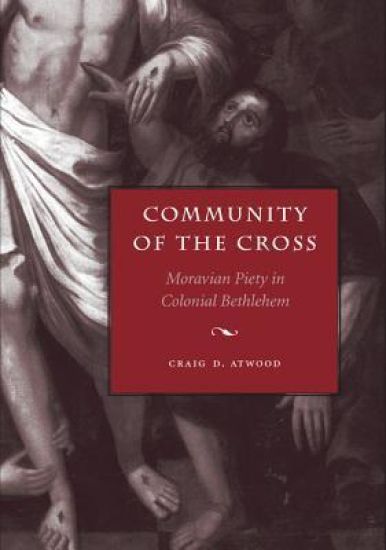
Community of the Cross

Community of the Cross

Craig D. Atwood

Pennsylvania State University Press
2004
sidottu
Bethlehem, Pennsylvania, was a unique colonial town. It was the first permanent outpost of the Moravians in North America and served as the headquarters for their extensive missionary efforts. It was also one of the most successful communal societies in American history. Bethlehem was founded as a "congregation of the cross" where all aspects of personal and social life were subordinated to the religious ideal of the community. In Community of the Cross, Craig D. Atwood offers a convincing portrait of Bethlehem and its religion. Visitors to Bethlehem, such as Benjamin Franklin, remarked on the orderly and peaceful nature of life in the community, its impressive architecture, and its "high" culture. However, many non-Moravians were embarrassed or even offended by the social and devotional life of the Moravians. The adoration of the crucified Jesus, especially his wounds, was the focus of intense devotion for adults and children alike. Moravians worshiped the Holy Spirit as "Mother," and they made the mystical marriage to Christ central to their marital intimacy. Everything, even family life, was to be a form of worship. Atwood reveals the deep connection between life in Bethlehem and the religious symbolism of controversial German theologian Nicholas von Zinzendorf, whose provocative and erotic adoration of the wounds of Jesus was an essential part of private and communal life. Using the theories of René Girard, Mary Douglas, and Victor Turner, Atwood shows that it was the Moravians’ liturgy and devotion that united the community and inspired both its unique social structure and its missionary efforts.
Debating God's Economy

Debating God's Economy

Craig Prentiss

Pennsylvania State University Press
2008
sidottu
What would a divinely ordained social order look like? Pre–Vatican II Catholics, from archbishops and theologians to Catholic union workers and laborers on U.S. farms, argued repeatedly about this in the late nineteenth and early twentieth centuries. Debating God’s Economy is a history of American Catholic economic debates taking place during the generation preceding Vatican II. At that time, American society was rife with sociopolitical debates over the relative merits and dangers of Marxism, capitalism, and socialism; labor unions, class consciousness, and economic power were the watchwords of the day. This was a time of immense social change, and, especially in the light of the monumental social and economic upheavals in Russia and Europe in the early twentieth century, Catholics found themselves taking sides. Catholic subcultures across America sought to legitimize—or, in theological parlance, “sanctify”—diverse economic systems that were, at times, mutually exclusive. While until now the faithful—both scholars and nonscholars—have typically spoken of “the Catholic Social Tradition” as if it were an established prescription for curing social ills, Prentiss maintains that the tradition is better understood as a debate grounded in a common mythology that provides Catholics with a distinctive vocabulary and touchstone of authority.
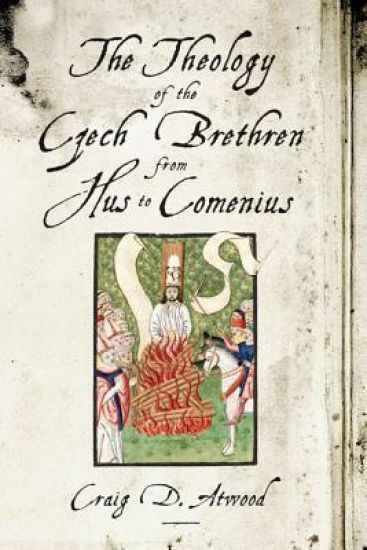
The Theology of the Czech Brethren from Hus to Comenius

The Theology of the Czech Brethren from Hus to Comenius

Craig D. Atwood

Pennsylvania State University Press
2009
sidottu
Craig Atwood addresses the serious lack of comprehensive treatments in English of the Moravians. The Moravian Church, or Unity of the Brethren, was the first Western church to make separation of church and state a matter of doctrine and policy. The Unity’s vision for social and educational reform also sets it apart. Its theology centers on the key concepts of faith, love, and hope. The Unity—the heartbeat of the so-called Czech Reformation—was engaged with society and with other churches and did not retreat to isolationism, as did several movements in the Radical Reformation. Rather, the Unity continued to evolve as political and theological climates changed.
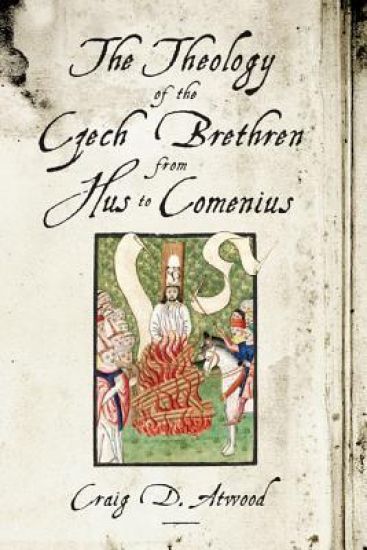
The Theology of the Czech Brethren from Hus to Comenius

The Theology of the Czech Brethren from Hus to Comenius

Craig D. Atwood

Pennsylvania State University Press
2013
pokkari
Craig Atwood addresses the serious lack of comprehensive treatments in English of the Moravians. The Moravian Church, or Unity of the Brethren, was the first Western church to make separation of church and state a matter of doctrine and policy. The Unity’s vision for social and educational reform also sets it apart. Its theology centers on the key concepts of faith, love, and hope. The Unity—the heartbeat of the so-called Czech Reformation—was engaged with society and with other churches and did not retreat to isolationism, as did several movements in the Radical Reformation. Rather, the Unity continued to evolve as political and theological climates changed.
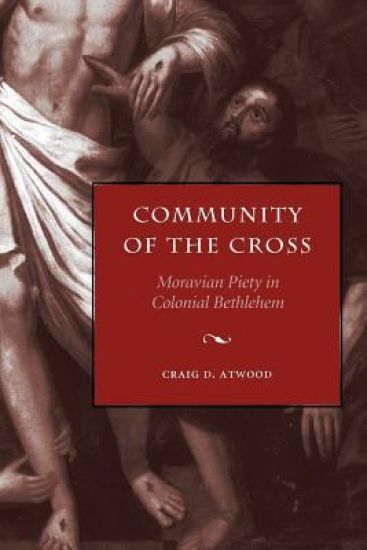
Community of the Cross

Community of the Cross

Craig D. Atwood

Pennsylvania State University Press
2012
pokkari
Bethlehem, Pennsylvania, was a unique colonial town. It was the first permanent outpost of the Moravians in North America and served as the headquarters for their extensive missionary efforts. It was also one of the most successful communal societies in American history. Bethlehem was founded as a "congregation of the cross" where all aspects of personal and social life were subordinated to the religious ideal of the community. In Community of the Cross, Craig D. Atwood offers a convincing portrait of Bethlehem and its religion. Visitors to Bethlehem, such as Benjamin Franklin, remarked on the orderly and peaceful nature of life in the community, its impressive architecture, and its "high" culture. However, many non-Moravians were embarrassed or even offended by the social and devotional life of the Moravians. The adoration of the crucified Jesus, especially his wounds, was the focus of intense devotion for adults and children alike. Moravians worshiped the Holy Spirit as "Mother," and they made the mystical marriage to Christ central to their marital intimacy. Everything, even family life, was to be a form of worship. Atwood reveals the deep connection between life in Bethlehem and the religious symbolism of controversial German theologian Nicholas von Zinzendorf, whose provocative and erotic adoration of the wounds of Jesus was an essential part of private and communal life. Using the theories of René Girard, Mary Douglas, and Victor Turner, Atwood shows that it was the Moravians’ liturgy and devotion that united the community and inspired both its unique social structure and its missionary efforts.
Debating God's Economy

Debating God's Economy

Craig Prentiss

Pennsylvania State University Press
2013
pokkari
What would a divinely ordained social order look like? Pre–Vatican II Catholics, from archbishops and theologians to Catholic union workers and laborers on U.S. farms, argued repeatedly about this in the late nineteenth and early twentieth centuries. Debating God’s Economy is a history of American Catholic economic debates taking place during the generation preceding Vatican II. At that time, American society was rife with sociopolitical debates over the relative merits and dangers of Marxism, capitalism, and socialism; labor unions, class consciousness, and economic power were the watchwords of the day. This was a time of immense social change, and, especially in the light of the monumental social and economic upheavals in Russia and Europe in the early twentieth century, Catholics found themselves taking sides. Catholic subcultures across America sought to legitimize—or, in theological parlance, “sanctify”—diverse economic systems that were, at times, mutually exclusive. While until now the faithful—both scholars and nonscholars—have typically spoken of “the Catholic Social Tradition” as if it were an established prescription for curing social ills, Prentiss maintains that the tradition is better understood as a debate grounded in a common mythology that provides Catholics with a distinctive vocabulary and touchstone of authority.
After Gun Violence

After Gun Violence

Craig Rood

Pennsylvania State University Press
2019
sidottu
Mass shootings have become the “new normal” in American life. The same can be said for the public debate that follows a shooting: blame is cast, political postures are assumed, but no meaningful policy changes are enacted. In After Gun Violence, Craig Rood argues that this cycle is the result of a communication problem. Without advocating for specific policies, Rood examines how Americans talk about gun violence and suggests how we might discuss the issues more productively and move beyond our current, tragic impasse.Exploring the ways advocacy groups, community leaders, politicians, and everyday citizens talk about gun violence, Rood reveals how the gun debate is about far more than just guns. He details the role of public memory in shaping the discourse, showing how memories of the victims of gun violence, the Second Amendment, and race relations influence how gun policy is discussed. In doing so, Rood argues that forgetting and misremembering this history leads interest groups and public officials to entrenched positions and political failure and drives the public further apart.Timely and innovative, After Gun Violence advances our understanding of public discourse in an age of gridlock by illustrating how public deliberation and public memory shape and misshape one another. It is a search to understand why public discourse fails and how we can do better.
After Gun Violence

After Gun Violence

Craig Rood

Pennsylvania State University Press
2019
pokkari
Mass shootings have become the “new normal” in American life. The same can be said for the public debate that follows a shooting: blame is cast, political postures are assumed, but no meaningful policy changes are enacted. In After Gun Violence, Craig Rood argues that this cycle is the result of a communication problem. Without advocating for specific policies, Rood examines how Americans talk about gun violence and suggests how we might discuss the issues more productively and move beyond our current, tragic impasse.Exploring the ways advocacy groups, community leaders, politicians, and everyday citizens talk about gun violence, Rood reveals how the gun debate is about far more than just guns. He details the role of public memory in shaping the discourse, showing how memories of the victims of gun violence, the Second Amendment, and race relations influence how gun policy is discussed. In doing so, Rood argues that forgetting and misremembering this history leads interest groups and public officials to entrenched positions and political failure and drives the public further apart.Timely and innovative, After Gun Violence advances our understanding of public discourse in an age of gridlock by illustrating how public deliberation and public memory shape and misshape one another. It is a search to understand why public discourse fails and how we can do better.
Effective College Management

Effective College Management

Craig Johnson; Bruce W. Tuckman

Praeger Publishers Inc
1987
sidottu
Based on a model that was tested over several years at a large university, this book offers the reader expert, realistic, step-by-step guidance. The first two chapters present the model itself and tell why and under what conditions it was developed; its strengths and weaknesses; what principles it is based on, and how it is applied. The next chapters tell the reader exactly how to do it: the demonstrator will learn how to identify and set goals, plan strategies for goal attainment, carry out their plans and measure them. They will also see how to allocate resources, distribute dollars to faculty members, and much more. The final chapter presents the successes and failures of outcome management as a strategy for organizational management within a university setting.
The White House Speaks

The White House Speaks

Craig A. Smith; Kathy B. Smith

Praeger Publishers Inc
1994
sidottu
This work treats presidential leadership as persuasive communication. The major theories of presidential leadership found in the literature establish the central role of persuasion, and introduce the interpretive systems approach to political communication as a theoretical framework for the study of presidential leadership as persuasion. Case studies examine recent presidents' use of public persuasion to perform their leadership functions. Particular attention is devoted to coalitional constraints on presidential pardoning rhetoric, presidential leadership through the politics of division, the political significance of conflicting political narratives, the sermonic nature of much 20th-century presidential discourse, the difficulties inherent in persuading the public to make sacrifices, and the dangers of relying too heavily on public rhetoric. The concluding chapter considers the rhetoric that contributed to the demise of the Bush presidency, the election of Bill Clinton, and the challenges facing the Clinton presidency.
The Quest for Charisma

The Quest for Charisma

Craig R. Smith

Praeger Publishers Inc
2000
sidottu
Smith examines the major canons of classical rhetorical theory by demonstrating their influence on Christian speakers. He begins by explaining why charisma has become a misused term. He then explores why writing about charisma has been so difficult in terms of the academic prejudice in favor of objectivity and reason. He then constructs a three- level definition of charisma to replace the current one. After analyzing the charisma of Jesus in terms of the three personae he developed as teacher, human, and messiah, Smith argues that his power arose from this rich development of character. The textual charisma of the Gospel narrators is explored in terms of their narrative techniques, and Smith then examines the concept of ethos, the use of emotion in persuasion, and explicates the theories of leading existential thinkers to develop advanced notions of human responsibility and transcendent spirituality. These two notions are used to refine and improve previous definitions of charisma. Smith then establishes a matrix that crosses levels of charisma with different types of identification. This work will be of particular interest to scholars, students, and researchers involved with Christianity, philosophy, and persuasion.
The Phantom Defense

The Phantom Defense

Craig Eisendrath; Melvin A. Goodman; Gerald E. Marsh

Praeger Publishers Inc
2001
sidottu
Drawn from the authors' insider information and expertise, a thought-provoking book discusses the effectiveness of the United States missile defense system and shows how thoughtful diplomacy is the key to meeting security goals.
After the Killing Fields

After the Killing Fields

Craig Carlyle Etcheson

Praeger Publishers Inc
2005
sidottu
For 25 years, Cambodia's Khmer Rouge have avoided responsibility for their crimes against humanity. For 30 long years, from the late 1960s to the late 1990s, the Cambodian people suffered from a war that has no name. Arguing that this series of hostilities, which included both civil and external war, amounted to one long conflict—The Thirty Years War—Craig Etcheson demonstrates that there was one constant, churning presence that drove that conflict: the Khmer Rouge. New findings demonstrate that the death toll was approximately 2.2 million people—about half a million more than commonly believed. Detailing the struggle of coming to terms with what happened in Cambodia, Etcheson concludes that real justice is not merely elusive but may, in fact, be impossible for crimes on the scale of genocide.This book details the work of a unique partnership, Yale University's Cambodian Genocide Program, which laid the evidentiary basis for the forthcoming Khmer Rouge tribunal and also played a key role in the international advocacy necessary for the tribunal's creation. It presents the information collected through the Mass Grave Mapping Project of the Documentation Center of Cambodia and reveals that the pattern of killing was relatively uniform throughout the country. Despite regular denial of knowledge of the mass killing among the surviving leadership of the Khmer Rouge, Etcheson demonstrates that they were not only aware of it, but that they personally managed and directed the killing.