Handbooks of Washington Cathedral, A.D. 1898-A.D. 1908 offers a fascinating glimpse into the early years of the planning and construction of the iconic Washington National Cathedral. Compiled during the initial decade of the project, these handbooks provide invaluable insights into the architectural vision, the religious significance, and the community engagement that shaped this landmark. Authored by the Cathedral of St. Peter and St. Paul, this collection showcases the ambitions and challenges faced in bringing the grand design to life. Readers will discover detailed descriptions of the evolving plans, the artistic influences, and the spiritual motivations driving the construction. This historical record captures a pivotal moment in the Cathedral's history, making it an essential resource for historians, architectural enthusiasts, and anyone interested in the cultural heritage of Washington, D.C. This work has been selected by scholars as being culturally important, and is part of the knowledge base of civilization as we know it. This work was reproduced from the original artifact, and remains as true to the original work as possible. Therefore, you will see the original copyright references, library stamps (as most of these works have been housed in our most important libraries around the world), and other notations in the work. This work is in the public domain in the United States of America, and possibly other nations. Within the United States, you may freely copy and distribute this work, as no entity (individual or corporate) has a copyright on the body of the work. As a reproduction of a historical artifact, this work may contain missing or blurred pages, poor pictures, errant marks, etc. Scholars believe, and we concur, that this work is important enough to be preserved, reproduced, and made generally available to the public. We appreciate your support of the preservation process, and thank you for being an important part of keeping this knowledge alive and relevant.
This collection presents a critical discussion and exploration of the late D.Z. Phillips' contemplative approach in the philosophy of religion. What are the main characteristics of this ground-breaking approach, which is inspired by thinkers like Kierkegaard and Wittgenstein and meant as a serious, critical alternative to the mainstream way of doing philosophy of religion? What is its aim, if it is deliberately avoiding apology and defence of faith? How does Phillips' approach relate to systematic, historical and empirical theology and is it really as 'neutral' as he claims it to be? Or is he, perhaps, a certain kind of theologian? What are the implications of his contemplative philosophy for central issues of religious life today, such as petitionary prayer, the hope of 'eternal life' and radical religious diversity? The essays of six distinguished scholars from five different nations critically and sympathetically address these questions and are responded to by Phillips in essays of his own, written briefly before his sudden death in July 2006.
This book opens out a wholly new field of enquiry within a familiar subject: it offers a detailed – yet eminently readable – historical investigation, of a kind never yet undertaken, of the impact of psychoanalysis (at a crucial moment of its history) on the thinking and writing of D.H. Lawrence. It considers the impact on his writing, through his relationship with Frieda Weekley, of the maverick Austrian analyst Otto Gross; it situates the great works of 1911-20 in relation to the controversial issues at stake in the Freud-Jung quarrel, about which his good friend, the English psychoanalyst David Eder, kept him informed; and it explores his sympathy with the maverick American analyst Trigant Burrow. It is a study to interest a literary audience by its close reading of Lawrence’s texts, and a psychoanalytic audience by its detailed consideration of the contribution made to contemporary debate by three comparatively neglected analytic thinkers.
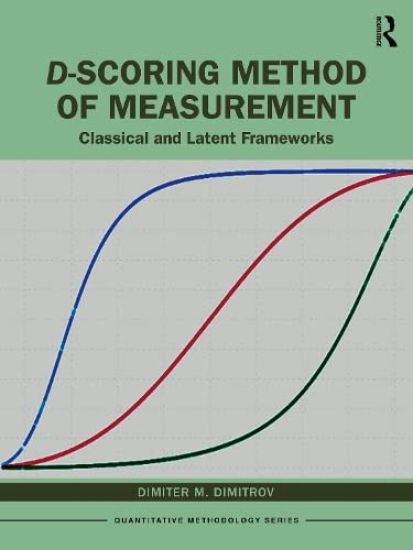
D-scoring Method of Measurement presents a unified framework of classical and latent measurement referred to as D-scoring method of measurement (DSM). Provided are detailed descriptions of DSM procedures and illustrative examples of how to apply the DSM in various scenarios of measurement. The DSM is designed to combine merits of the traditional CTT and IRT for the purpose of transparency, ease of interpretations, computational simplicity of test scoring and scaling, and practical efficiency, particularly in large-scale assessments. Through detailed descriptions of DSM procedures, this book shows how practical applications of such procedures are facilitated by the inclusion of operationalized guidance for their execution using the computer program DELTA for DSM-based scoring, equating, and item analysis of test data. In doing so, the book shows how DSM procedures can be readily translated into computer source codes for other popular software packages such as R. D-scoring Method of Measurement equips researchers and practitioners in the field of educational and psychological measurement with a comprehensive understanding of the DSM as a unified framework of classical and latent scoring, equating, and psychometric analysis.
D-scoring Method of Measurement presents a unified framework of classical and latent measurement referred to as D-scoring method of measurement (DSM). Provided are detailed descriptions of DSM procedures and illustrative examples of how to apply the DSM in various scenarios of measurement. The DSM is designed to combine merits of the traditional CTT and IRT for the purpose of transparency, ease of interpretations, computational simplicity of test scoring and scaling, and practical efficiency, particularly in large-scale assessments. Through detailed descriptions of DSM procedures, this book shows how practical applications of such procedures are facilitated by the inclusion of operationalized guidance for their execution using the computer program DELTA for DSM-based scoring, equating, and item analysis of test data. In doing so, the book shows how DSM procedures can be readily translated into computer source codes for other popular software packages such as R. D-scoring Method of Measurement equips researchers and practitioners in the field of educational and psychological measurement with a comprehensive understanding of the DSM as a unified framework of classical and latent scoring, equating, and psychometric analysis.
D. H. Lawrence is renowned for his scathing criticism of the ruling class, industrialisation of the country and wartime patriotism. However, his texts bear the imprint of contemporary dominant ideologies and discourses of the period. Comparing Lawrence’s texts to various major and minor contemporary novels, journal articles, political pamphlets and history books, this book aims to demonstrate that Lawrence’s texts are ambivalent: his texts harbour the dynamism of conflicting power struggles between the subversive and the reactionary. For example, in some apparently apolitical texts such as The White Peacock and Movements in European History, reactionary ideologies and wartime propaganda are embedded. Some texts like Lady Chatterley’s Lover are intended to be a radical critique of the period wherein it was composed, but they also bear discernible traces of the contemporary frame of reference that they intend to subvert. Focusing on Lawrence’s stories and novels set in the mining countryside and the works composed under the impact of the First World War, this book establishes that Lawrence’s texts in fact consist of multiple layers that are often in conflict with each other, serving as a testimony to the age of modernity.
D. H. Lawrence is renowned for his scathing criticism of the ruling class, industrialisation of the country and wartime patriotism. However, his texts bear the imprint of contemporary dominant ideologies and discourses of the period. Comparing Lawrence’s texts to various major and minor contemporary novels, journal articles, political pamphlets and history books, this book aims to demonstrate that Lawrence’s texts are ambivalent: his texts harbour the dynamism of conflicting power struggles between the subversive and the reactionary. For example, in some apparently apolitical texts such as The White Peacock and Movements in European History, reactionary ideologies and wartime propaganda are embedded. Some texts like Lady Chatterley’s Lover are intended to be a radical critique of the period wherein it was composed, but they also bear discernible traces of the contemporary frame of reference that they intend to subvert. Focusing on Lawrence’s stories and novels set in the mining countryside and the works composed under the impact of the First World War, this book establishes that Lawrence’s texts in fact consist of multiple layers that are often in conflict with each other, serving as a testimony to the age of modernity.
First published in 1982, D. H. Lawrence and Feminism discusses Lawrence’s work by examining it in relation to aspects of women’s history and the development of feminism. Two different modes of pre-war feminism which provide important themes in Lawrence’s early writings are examined in the opening chapters. The central chapters deal with the war, both as a catalyst for major changes in the position of women and as a point of no return in the development of Lawrence’s work. A final chapter looks at the way in which Lawrence used women as collaborator, and their writing as source material. This book will be of interest to students of literature, women’s studies and history.
First published in 1982, D. H. Lawrence and Feminism discusses Lawrence’s work by examining it in relation to aspects of women’s history and the development of feminism. Two different modes of pre-war feminism which provide important themes in Lawrence’s early writings are examined in the opening chapters. The central chapters deal with the war, both as a catalyst for major changes in the position of women and as a point of no return in the development of Lawrence’s work. A final chapter looks at the way in which Lawrence used women as collaborator, and their writing as source material. This book will be of interest to students of literature, women’s studies and history.
Chỉ c một thế lực duy nhất c thể chế ngự c ấy; nhưng c sức mạnh đ , v Diane biết rằng c đ phục t ng sự thống trị của n . Từ h ng tuần tự kiểm tra quanh co, c đ hiểu ra kiến thức n y, khi một người bước ra từ một hang động m cung v đ n nh nắng mặt trời. Tuy nhi n, ngay cả khi ở đ y vẫn c n l một vấn đề cần giải quyết. Liệu c c thể kết h n với người đ n ng chưa bao giờ n i với c rằng anh y u c , mặc d ch nh c cũng y u anh? Liệu c ấy c quyền tự cho m nh m kh ng cần phải trả gi , trong khi chỉ y u cầu anh ấy những g anh ấy chọn để cung cấp cho c ấy? Liệu c ấy, người đ bắt đ n ng phục vụ m nh, chỉ bằng một nụ cười cho phần thưởng của họ, c h i l ng phục vụ theo c ch của m nh, kh ng nhận được g ngo i nửa ổ b nh cho tr i tim của c ấy? C tự hỏi bản th n những c u hỏi n y, nhưng kh ng trả lời - chờ anh buộc phải quyết định với c .
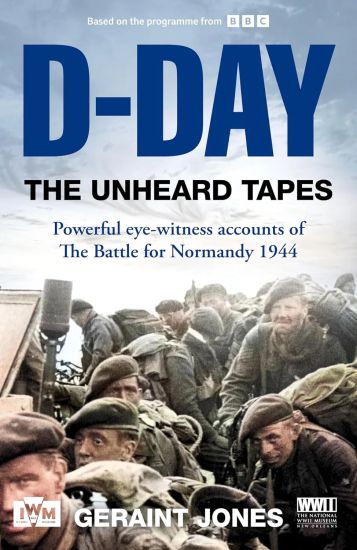
The No. 1 Sunday Times Bestseller'Vital testimony for those who wish to understand the stark reality of running up a beach with the Wehrmacht trying to kill you' – The TelegraphBased on over 150 audio interviews with those who fought, this is a moving and powerful oral history that marks the 80th anniversary of the D-Day landings and battle for Normandy. Published alongside a groundbreaking BBC2 documentary series D-Day: The Unheard Tapes.D-Day was a critical turning point in the Second World War, but for the tens of thousands of young men who took part it was bloody, chaotic and terrifying. For those who survived the beaches, months of bitter fighting lay ahead, often against some of Germany's most elite divisions.Drawing primarily on the extraordinary archives of the Imperial War Museums and National World War II Museum, this immersive book describes what it was actually like to take part in the landings on 6 June 1944 and the weeks of ferocious fighting in Normandy that followed. British, American, Canadian and German veterans, as well as French civilians, speak of experiences they could never forget.Here is the forward observer hiding alone on Omaha beach, thinking of his wife as he waits for the invasion to begin. The commando racing to the besieged airborne forces at Pegasus Bridge. The Typhoon pilot about to be executed by the SS when he is saved by a Luftwaffe officer. The teenage GI surrounded and under fire for six days. The German soldier haunted by the memory of abandoning his dying friend. Their words reach across the decades as they share their experiences with us.In D-Day The Unheard Tapes Geraint Jones, author of Brothers in Arms and a former infantry soldier, has skilfully brought the battle for Normandy to life in a vivid narrative that allows the voices of those who fought to shine through, authentic and unforgettable.Number 1 in the Sunday Times Bestseller chart, UK, as of 18/06/24.