Richard T.T. Forman; Daniel Sperling; John A. Bissonette; Anthony P. Clevenger; Carol D. Cutshall; Virginia H. Dale; Lenore Fahrig; Robert L. France; Charles R. Goldman; Kevin Heanue; Julia Jones; Frederick Swanson; Thomas Turrentine; Thomas C. Winter
A central goal of transportation is the delivery of safe and efficient services with minimal environmental impact. In practice, though, human mobility has flourished while nature has suffered. Awarness of the environmental impacts of roads is increasing, yet information remains scarce for those interested in studying, understanding, or minimizing the ecological effects of roads and vehicles. Road Ecology addresses that shortcoming by elevating previously localized and fragmented knowledge into a broad and inclusive framework for understanding and developing solutions. The book brings together fourteen leading ecologists and transportation experts to articulate state-of-the-science road ecology principles and presents specific examples that demonstrate the application of those principles.
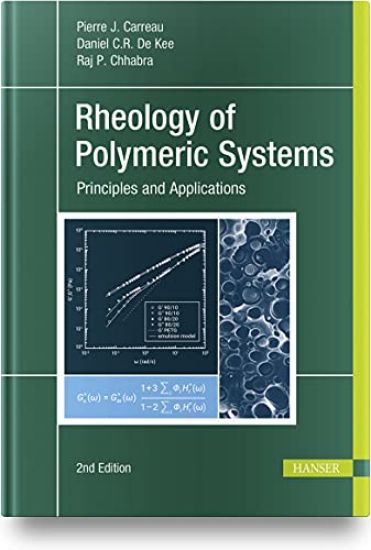
Rheology is applied extensively in polymer, chemical, food processing, and related industries. This book combines the basic concepts and applications by presenting a balanced overview of the principles. With simplified analysis of complex problems, the textbook format provides easy understanding for both students and practicing professionals. There is no competing book with such a wide scope, including unique topics such as diffusion, flows about particles, and liquid mixing. This second edition is abundantly updated throughout. Highlights include elongational flow measurements, POM-POM modeling, diffusion and rheology of polymer nanocomposites, new results based on CFD simulations, and much more.
The safety assessment of a deep repository for nuclear waste poses challenging scientific and technical questions. The risks from leakage of radionuclides from the repository, including transfers to the biosphere and the food chain must be assessed. This involves complex and poorly understood interactions between groundwater, soils, plants and the atmosphere. A unique, multidisciplinary experimental and modeling program at Imperial College London has been funded by UK NIREX to develop the science and to produce modeling tools to interpret and generalize the experimental data for safety assessment. This monograph brings together for the first time the accumulated results and experience from almost two decades of research. The results have important implications for the safety assessment of nuclear waste worldwide and provide new insights into the geochemical and biological controls on the upwards migration of radiochemicals in the near-surface environment.
Några av de bästa odlingstipsen från mer eller mindre trädgårdsintresserade serietecknare! Lär dig ta sticklingar, odla tomater, ekar, mango, krasse, gurkor, sockerärtor, potatis och kryddor samt överleva apokalypsen, mördarsniglar och kattsällskap. Din trädgård eller balkong blir aldrig desamma efter att du läst den här boken.
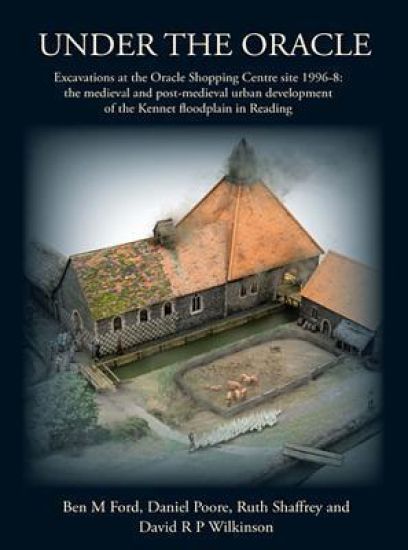
Excavations carried out by Oxford Archaeology in advance of the building of the Oracle shopping centre revealed a long sequence of development of the Kennet floodplain at Reading. This volume reports on the substantial evidence recovered for medieval and post-medieval water management, milling at the Minster Mill and St Giles Mill, the tanning, leather working and dyeing industries, and an unusual building interpreted as the 12th- to 13th-century cookhouse of Reading Abbey. The stories of two well-known Reading sites, the Oracle Workhouse and the Yield Hall, are followed from the medieval period up to the 19th century. Substantial specialist reports include pottery, glass, leatherworking, dendrochronology and clay pipes.
Michael J. Wilkins; Daniel Garland; Darrell L. Bock; Gary M. Burge; Ajith Fernando; Douglas J. Moo; Craig L. Blomberg; Scott J. Hafemann; Scot McKnight; Klyne Snodgrass; Frank S. Thielman; Michael W. Holmes; Walter L. Liefeld; George H. Guthrie; David P. Nystrom; Craig S. Keener
The NIV Application Commentary helps you communicate and apply biblical text effectively in today's context.To bring the ancient messages of the Bible into today's world, each passage is treated in three sections:Original Meaning. Concise exegesis to help readers understand the original meaning of the biblical text in its historical, literary, and cultural context.Bridging Contexts. A bridge between the world of the Bible and the world of today, built by discerning what is timeless in the timely pages of the Bible.Contemporary Significance. This section identifies comparable situations to those faced in the Bible and explores relevant application of the biblical messages. The author alerts the readers of problems they may encounter when seeking to apply the passage and helps them think through the issues involved.This unique, award-winning commentary is the ideal resource for today's preachers, teachers, and serious students of the Bible, giving them the tools, ideas, and insights they need to communicate God's Word with the same powerful impact it had when it was first written.Volumes and authors in The NIV Application Commentary, New Testament Set: Matthew - Revelation, 20-Volume Collection include:Matthew by Michael J. WilkinsMark by David E. GarlandLuke by Darrell L. BockJohn by Gary M. BurgeActs by Ajith FernandoRomans by Douglas J. Moo1 Corinthians by Craig L. Blomberg2 Corinthians by Scott J. HafemannGalatians by Scot McKnightEphesians by Klyne SnodgrassPhilippians by Frank ThielmanColossians, Philemon by David E. Garland1 and 2 Thessalonians by Michael W. Holmes1 and 2 Timothy, Titus by Walter L. LiefeldHebrews by George H. GuthrieJames by David P. Nystrom1 Peter by Scot McKnight2 Peter, Jude by Douglas J. MooLetters of John by Gary M. BurgeRevelation by Craig S. Keener
Michael J. Wilkins; Daniel Garland; Darrell L. Bock; Gary M. Burge; Ajith Fernando; Douglas J. Moo; Craig L. Blomberg; Scott J. Hafemann; Scot McKnight; Klyne Snodgrass; Frank S. Thielman; Michael W. Holmes; Walter L. Liefeld; George H. Guthrie; David P. Nystrom; Craig S. Keener
The NIV Application Commentary helps you communicate and apply biblical text effectively in today's context.To bring the ancient messages of the Bible into today's world, each passage is treated in three sections:Original Meaning. Concise exegesis to help readers understand the original meaning of the biblical text in its historical, literary, and cultural context.Bridging Contexts. A bridge between the world of the Bible and the world of today, built by discerning what is timeless in the timely pages of the Bible.Contemporary Significance. This section identifies comparable situations to those faced in the Bible and explores relevant application of the biblical messages. The author alerts the readers of problems they may encounter when seeking to apply the passage and helps them think through the issues involved.This unique, award-winning commentary is the ideal resource for today's preachers, teachers, and serious students of the Bible, giving them the tools, ideas, and insights they need to communicate God's Word with the same powerful impact it had when it was first written.Volumes and authors in The NIV Application Commentary, New Testament Set: Matthew - Revelation, 20-Volume Collection include:Matthew by Michael J. WilkinsMark by David E. GarlandLuke by Darrell L. BockJohn by Gary M. BurgeActs by Ajith FernandoRomans by Douglas J. Moo1 Corinthians by Craig L. Blomberg2 Corinthians by Scott J. HafemannGalatians by Scot McKnightEphesians by Klyne SnodgrassPhilippians by Frank ThielmanColossians, Philemon by David E. Garland1 and 2 Thessalonians by Michael W. Holmes1 and 2 Timothy, Titus by Walter L. LiefeldHebrews by George H. GuthrieJames by David P. Nystrom1 Peter by Scot McKnight2 Peter, Jude by Douglas J. MooLetters of John by Gary M. BurgeRevelation by Craig S. KeenerThis set features newly designed covers for the volumes, updated from their original editions.
Deborah Hughes-Hallett; Patti Frazer Lock; Andrew M. Gleason; Daniel E. Flath; Sheldon P. Gordon; David O. Lomen; David Lovelock; William G. McCallum; Brad G. Osgood; Andrew Pasquale; Jeff Tecosky-Feldman; Joseph Thrash; Karen R. Rhea; Thomas W. Tucker
Aiding Decisions With Multiple Criteria: Essays in Honor of Bernard Roy is organized around two broad themes: * Graph Theory with path-breaking contributions on the theory of flows in networks and project scheduling, * Multiple Criteria Decision Aiding with the invention of the family of ELECTRE methods and methodological contribution to decision-aiding which lead to the creation of Multi-Criteria Decision Analysis (MCDA). Professor Bernard Roy has had considerable influence on the development of these two broad areas. GBP/LISTGBP Part one contains papers by Jacques Lesourne, and Dominique de Werra & Pierre Hansen related to the early career of Bernard Roy when he developed many new techniques and concepts in Graph Theory in order to cope with complex real-world problems. Part two of the book is devoted to Philosophy and Epistemology of Decision-Aiding with contributions from Valerie Belton & Jacques Pictet and Jean-Luis Genard & Marc Pirlot. Part three includes contributions based on Theory and Methodology of Multi-Criteria Decision-Aiding based on a general framework for conjoint measurement that allows intrasitive preferences. Denis Bouyssou & Marc Pirlot; Alexis Tsoukias, Patrice Perny & Philippe Vincke; Luis Dias & Joao Climaco; Daniel Vanderpooten; Michael Doumpos & Constantin Zopounidis; and Marc Roubens offer a considerable range of examinations of this aspect of MCDA. Part four is devoted to Perference Modeling with contributions from Peter Fishburn; Salvatore Greco, Benedetto Matarazzo & Roman Slowinski; Salem Benferhat, Didier Dubois & Henri Prade; Oscar Franzese & Mark McCord; Bertrand Munier; and Raymond Bisdorff. Part five groups Applications of Multi-Criteria Decision-Aiding, and Carlos Henggeler Antunes, Carla Oliveira & Joao Climaco; Carlos Bana e Costa, Manuel da Costa-Lobo, Isabel Ramos & Jean-Claude Vansnick; Yannis Siskos & Evangelos Grigoroudis; Jean-Pierre Brans, Pierre Kunsch & Bertrand Mareschal offer a wide variety of application problems. Finally, Part six includes contributions on Multi-Objective Mathematical Programming from Jacques Teghem, Walter Habenicht and Pekka Korhonen.
Kimberly A. Hepner; Carol P. Roth; Coreen Farris; Elizabeth M. Sloss; Grant R. Martsolf; Harold Alan Pincus; Katherine E. Watkins; Caroline Epley; Daniel Mandel; Susan D. Hosek; Carrie M. Farmer
To inform improvements to the quality of care delivered by the military health system for posttraumatic stress disorder and major depressive disorder, researchers developed a framework and identified, developed, and described a candidate set of measures for monitoring, assessing, and improving the quality of care. This document describes their research approach and the measure sets that they identified.
Hughes-Hallett Deborah; William G. McCallum; Gleason Andrew M.; Flath Daniel E.; Patti Frazer Lock; Gordon Sheldon P.; David O. Lomen; Lovelock David; Osgood Brad G.; Pasquale Andrew; Douglas Quinney; Tecosky-Feldman Jeff; Thrash Joseph; Karen R Rhea; Tucker Thomas W.
The Student Solutions Manual to CalculusCalculus teachers recognize this book as the leading resource among the reform projects that employ the rule of four and streamline the curriculum in order to deepen conceptual understanding. This edition uses all strands of the "Rule of Four" -- graphical, numeric, symbolic/algebraic, and verbal/applied presentations -- to make concepts easier to understand. The book focuses on exploring fundamental ideas rather than comprehensive coverage of multiple similar cases that are not fundamentally unique.
Deborah Hughes-Hallett; Patti Frazer Lock; Andrew M. Gleason; Daniel E. Flath; Sheldon P. Gordon; David O. Lomen; David Lovelock; William G. McCallum; Brad G. Osgood; Andrew Pasquale; Jeff Tecosky-Feldman; Joseph Thrash; Karen R. Rhea; Thomas W. Tucker
Aiding Decisions With Multiple Criteria: Essays in Honor of Bernard Roy is organized around two broad themes: * Graph Theory with path-breaking contributions on the theory of flows in networks and project scheduling, * Multiple Criteria Decision Aiding with the invention of the family of ELECTRE methods and methodological contribution to decision-aiding which lead to the creation of Multi-Criteria Decision Analysis (MCDA). Professor Bernard Roy has had considerable influence on the development of these two broad areas. GBP/LISTGBP Part one contains papers by Jacques Lesourne, and Dominique de Werra & Pierre Hansen related to the early career of Bernard Roy when he developed many new techniques and concepts in Graph Theory in order to cope with complex real-world problems. Part two of the book is devoted to Philosophy and Epistemology of Decision-Aiding with contributions from Valerie Belton & Jacques Pictet and Jean-Luis Genard & Marc Pirlot. Part three includes contributions based on Theory and Methodology of Multi-Criteria Decision-Aiding based on a general framework for conjoint measurement that allows intrasitive preferences. Denis Bouyssou & Marc Pirlot; Alexis Tsoukias, Patrice Perny & Philippe Vincke; Luis Dias & Joao Climaco; Daniel Vanderpooten; Michael Doumpos & Constantin Zopounidis; and Marc Roubens offer a considerable range of examinations of this aspect of MCDA. Part four is devoted to Perference Modeling with contributions from Peter Fishburn; Salvatore Greco, Benedetto Matarazzo & Roman Slowinski; Salem Benferhat, Didier Dubois & Henri Prade; Oscar Franzese & Mark McCord; Bertrand Munier; and Raymond Bisdorff. Part five groups Applications of Multi-Criteria Decision-Aiding, and Carlos Henggeler Antunes, Carla Oliveira & Joao Climaco; Carlos Bana e Costa, Manuel da Costa-Lobo, Isabel Ramos & Jean-Claude Vansnick; Yannis Siskos & Evangelos Grigoroudis; Jean-Pierre Brans, Pierre Kunsch & Bertrand Mareschal offer a wide variety of application problems. Finally, Part six includes contributions on Multi-Objective Mathematical Programming from Jacques Teghem, Walter Habenicht and Pekka Korhonen.
Help your team excel.Go from being a good practitioner to being an extraordinary leader of healthcare professionals.If you read nothing else on leadership, read these articles. We've combed through hundreds of Harvard Business Review articles and selected the most important ones for healthcare leaders to help you and your team excel, maximize performance, and live into your mission.Leading experts, such as Thomas H. Lee, Daniel Goleman, Peter F. Drucker, John P. Kotter, and Amy C. Edmondson, provide the insights and advice you need to:Understand the difference between managers and leadersMotivate others to excelCreate successful cross-functional teams on the flyMaintain your identity and values as a clinician as you move into an organizational leadership roleHave an impact not only on your organization but on the surrounding systemWork in complex environments where authority is diffuseLead effectively in times of rapid changeThis collection of articles includes "What Makes a Leader?," by Daniel Goleman; "What Makes an Effective Executive," by Peter F. Drucker; "What Leaders Really Do," by John P. Kotter; "Level 5 Leadership: The Triumph of Humility and Fierce Resolve," by Jim Collins; "The Work of Leadership," by Ronald A. Heifetz and Donald L. Laurie; "Teamwork on the Fly," by Amy C. Edmondson; "Who Has the D? How Clear Decision Roles Enhance Organizational Performance," by Paul Rogers and Marcia Blenko; "In Praise of the Incomplete Leader," by Deborah Ancona, Thomas W. Malone, Wanda J. Orlikowski, and Peter M. Senge; "Using the Balanced Scorecard as a Strategic Management System," by Robert S. Kaplan and David P. Norton; "Health Care's Service Fanatics," by James I. Merlino and Ananth Raman; and "Engaging Doctors in the Health Care Revolution," by Thomas H. Lee and Toby Cosgrove.
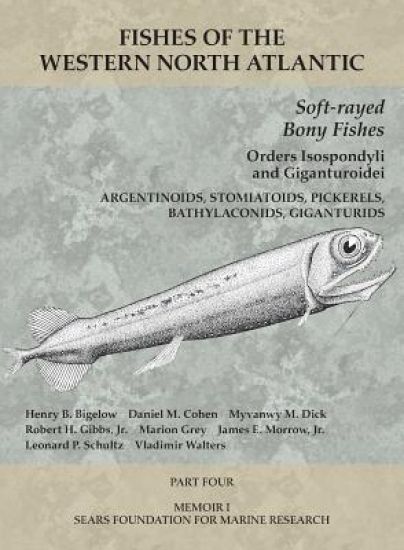
The Fishes of the Western North Atlantic series, which began publication in the 1940s by Yale University’s Sears Foundation for Marine Research, was from its beginnings conceived to synthesize and make accessible the wealth of information in widely scattered published accounts of the fish fauna of the region for both the layman and the specialist, presenting critical reviews rather than compilations. These reference works are still considered valuable and of interest today to both general audiences and the academic community. As described in the Preface to the first volume, the series was “written on the premise that it should be useful to those in many walks of life—to those casually … interested …, to the sportsman …, to the fisherman …, as well as to the amateur ichthyologist and the professional scientist.” These books remain authoritative studies of the anadromous, estuarine, and marine fishes of the waters of the western North Atlantic from Hudson Bay southward to the Amazon, ranking as primary references for both amateurs and professionals interested in fishes, and as significant working tools for students of the sea.
Robert T. Means; Daniel A. Arber; Bertil E. Glader; Frederick R. Appelbaum; George M. Rodgers; Angela Dispenzieri; Todd A. Fehniger; Laura C. Michaelis; John P. Leonard
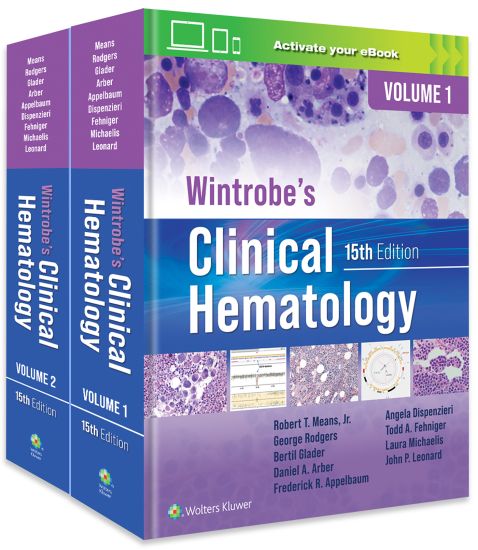
Selected as a Doody’s Core Title for 2023! Comprehensive in scope and thoroughly up to date, Wintrobe’s Clinical Hematology, 15th Edition, combines the biology and pathophysiology of hematology as well as the diagnosis and treatment of commonly encountered hematological disorders. Editor-in-chief Dr. Robert T. Means, Jr., along with a team of expert section editors and contributing authors, provide authoritative, in-depth information on the biology and pathophysiology of lymphomas, leukemias, platelet destruction, and other hematological disorders as well as the procedures for diagnosing and treating them. Packed with more than 1,500 tables and figures throughout, this trusted text is an indispensable reference for hematologists, oncologists, residents, nurse practitioners, and pathologists. Provides expert coverage of new topics, including COVID-19, palliative care and survivorship, transitioning from pediatric to adult care, and ethical issues in hematology such as management of individuals with religious/cultural objections to transfusion Integrates WHO classifications of hematologic neoplasms and the latest knowledge in genetics and genomics, and includes focused chapters on hematopoietic cell transplantation, gene therapy, and immunotherapy Emphasizes four components of diagnosis: the morphology of the peripheral smear, bone marrow, lymph nodes, and other tissues; flow cytometry; cytogenetics; and molecular markers and mutations Offers fresh perspectives from new section editors Drs. John Leonard (Lymphoma) and Laura Michaelis (Leukemia/MPN), as well as numerous new contributing authors, many of whom provide international viewpoints on hematology The VST Ebook includes weblinks directly to some of the other major resource centers int he field and also includes review questions in an interactive question bank weblinks to pages at sites such as NIH, ASCO, NCCN, and CancerResearch.org Enrich Your eBook Reading Experience Read directly on your preferred device(s), such as computer, tablet, or smartphone. Easily convert to audiobook, powering your content with natural language text-to-speech.
Hughes-Hallett Deborah; Gleason Andrew M.; William G. McCallum; Flath Daniel E.; Patti Frazer Lock; David O. Lomen; Lovelock David; Osgood Brad G.; Douglas Quinney; Karen R Rhea; Tecosky-Feldman Jeff; Tucker Thomas W.; Bretscher Otto K.; Gordon Sheldon P.; Pasquale Andrew; Thrash Joseph
Calculus teachers recognize Calculus as the leading resource among the "reform" projects that employ the rule of four and streamline the curriculum in order to deepen conceptual understanding. The Sixth Edition uses all strands of the 'Rule of Four' - graphical, numeric, symbolic/algebraic, and verbal/applied presentations - to make concepts easier to understand. The book focuses on exploring fundamental ideas rather than comprehensive coverage of multiple similar cases that are not fundamentally unique.