Kirjahaku
Etsi kirjoja tekijän nimen, kirjan nimen tai ISBN:n perusteella.
1000 tulosta hakusanalla Darryl Raymaker
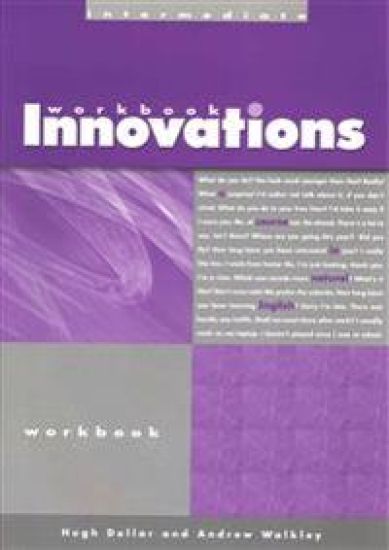
Workbook for Innovations Intermediate: A Course in Natural English
Hocking Darryl; Dellar Hugh; Walkley Andrew
Cengage ELT
2004
nidottu
Innovations is a new five-level general English course for classes looking for new material with a fresh approach. Based on a language-rich, lexical/grammatical syllabus, it starts from the kinds of natural conversations that learners want to have.

Does the Leadership Style and Command Method of General Sir John Monash Remain Relevant to the Contemporary Commander?
Colin Darryl Bassett
Hutson Street Press
2025
sidottu

Does the Leadership Style and Command Method of General Sir John Monash Remain Relevant to the Contemporary Commander?
Colin Darryl Bassett
Hutson Street Press
2025
pokkari
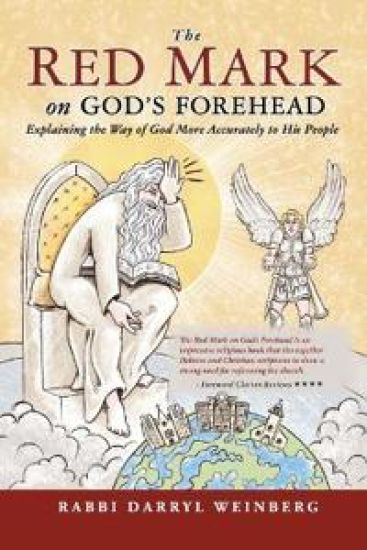
A book that will shake the modern-day church to its core, The Red Mark on God's Forehead trumpets the call to Christians to return to the true roots of their faith-the worship of God as He commands in the Torah. In an engaging and thought-provoking manner, Darryl Weinberg outlines the path Christianity has taken, lured by pagan practices, away from God's plan for His people and toward the crisis facing us in these end times. The ultimate end of this journey is the denial of Messiah Himself.From moving the Sabbath from Saturday to Sunday, to its troubling involvement in festivals such as Easter, Christmas, Valentine's Day, and Halloween, the Church has grieved the heart of God, splintered its own unity, and engaged in a lifestyle abhorrent to the Lord. Most shocking, however, is the thorough exploration of the outright anti-Semitic sentiment, particularly as expressed in the Church Fathers, that led us to this point.Through this troubling message, however, shines a light of great hope. Our ever-merciful, loving God desires to draw us back to the true worship and lifestyle that brings us into fellowship with Him. He is anxious to forgive and redeem, and His Word contains all that is needed to serve and worship Him in spirit and in truth.

A book that will shake the modern-day church to its core, The Red Mark on God's Forehead trumpets the call to Christians to return to the true roots of their faith-the worship of God as He commands in the Torah. In an engaging and thought-provoking manner, Darryl Weinberg outlines the path Christianity has taken, lured by pagan practices, away from God's plan for His people and toward the crisis facing us in these end times. The ultimate end of this journey is the denial of Messiah Himself.From moving the Sabbath from Saturday to Sunday, to its troubling involvement in festivals such as Easter, Christmas, Valentine's Day, and Halloween, the Church has grieved the heart of God, splintered its own unity, and engaged in a lifestyle abhorrent to the Lord. Most shocking, however, is the thorough exploration of the outright anti-Semitic sentiment, particularly as expressed in the Church Fathers, that led us to this point.Through this troubling message, however, shines a light of great hope. Our ever-merciful, loving God desires to draw us back to the true worship and lifestyle that brings us into fellowship with Him. He is anxious to forgive and redeem, and His Word contains all that is needed to serve and worship Him in spirit and in truth.
Does the Leadership Style and Command Method of General Sir John Monash Remain Relevant to the Contemporary Commander?
Colin Darryl Bassett
Biblioscholar
2012
pokkari



The Daniel Fast: Breaking Everything That Separates You from Greatness
Bishop Darryl Husband Sr.
Lulu.com
2015
nidottu
This book is a breakdown about "Why" you fast as well as "How" to do so effectively so you get the long term benefits from it. The Daniel Fast is probably one of the most popular of all fasts but definitely not the most understood.
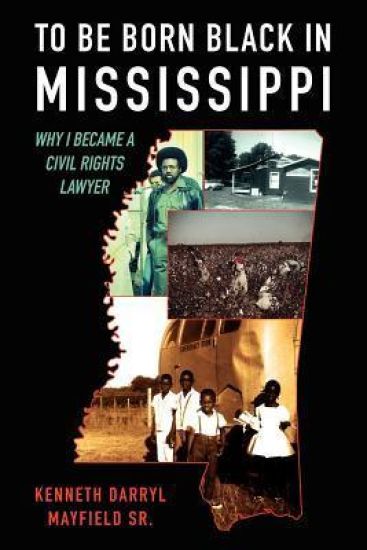
To Be Born Black in Mississippi: Why I became a Civil Rights Lawyer
Kenneth Darryl Mayfield Sr
Createspace Independent Publishing Platform
2011
nidottu
You are about to read the story of a young black man from Okolona, Mississippi who was kicked out of Mississippi's flagship university for protesting against racial discrimination. This journey shows Ole Miss as it was during the 1960s after it was forcibly integrated in a violent struggle that resulted in two people being killed, and it also shows how years after Ole Miss was desegregated, blacks were still not allowed to be on the faculty, barred from participation in sports and subjected to harassment and discrimination by the faculty and students. This narrative also chronicles the typical life for blacks in Mississippi during the Civil Rights Era from the 1950s to the 1970s. I was one of eight black students who was kicked out of Ole Miss in 1970 for "disorderly conduct" because we stood up and fought against racism. All eight of our lives were affected in different ways, but for most of us we were able to pick up the pieces and make something positive out of a bad situation. For me, I was an honor student at Ole Miss and had already decided to pursue law as a profession even before I enrolled at Ole Miss. My experiences at Ole Miss prompted me to become a Civil Rights Attorney in order to fight against racial discrimination and injustices in Mississippi. Ole Miss is located about an hour's drive from Okolona, but this was not the reason I wanted to attend. Nor did I attend because I was a radical or wanted to break down barriers of discrimination. I chose to attend Ole Miss in order to get a good education from Mississippi's finest university in hopes of becoming an affluent lawyer who would spend his good life in California, but my journey ended quite differently. I got caught up in the struggle during my second year of college, and before I knew it, I was a black militant whose mission was to end racial discrimination at Ole Miss "by any means necessary". As a black militant, I burned every confederate flag I could get my hands on and even conspired to burn buildings. I was a bona fide black militant, was proud of my militancy and to make sure that everyone knew I always wore an African dashiki, combat boots, dark shades and black beret. As a black militant at Ole Miss, I now confess that I was full of rage and anger and committed acts that were serious, dangerous and even unlawful. I was angry with Ole Miss, the State of Mississippi, the United States of America and even God. In the fall of 1970, after we were thrown out of Ole Miss, I enrolled at Tougaloo College near Jackson, Mississippi where I graduated as an honor student in 1971. After college I enrolled in the expedited law school program at the University of Michigan Law School and graduated from there in 2 years at the age of 22. Immediately after graduation from law school, I returned to Mississippi to re-engage in the Civil Rights struggle with plans of engaging in Civil Rights for two years. When I returned to Mississippi to practice Civil Rights, the rage and anger that I experienced at Ole Miss was re-ignited; however, I decided that I was going to do everything according to the law. This was after the passage of the Civil Rights Act of 1964 barring employment discrimination, the Civil Voting Rights Act of 1965 which prohibited discrimination in voting and the Housing Acting of 1968 which prohibited discrimination in housing, yet Mississippi was still trying to hold onto its past racist ways. I was prepared to sue anybody or any institution that discriminated against or mistreated blacks. The first lawsuit that I filed was against the owner of an office building in Tupelo where I eventually located my office on Main Street in Tupelo, Mississippi. Fear was not a factor with me. I was like a patriotic soldier who was willing to put his life on the line for the greater good.