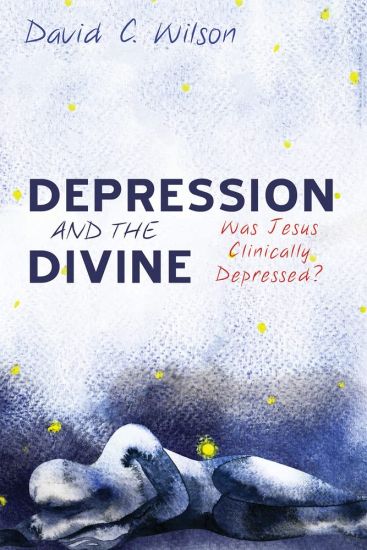
David Wilson's initial research into the phenomenon of prophecy in the Hebrew Bible suggested that many of the passages featuring prophets, and hitherto considered to be bizarre myths (or much-edited collections of traditions) were, in fact, sequences of dreams. Moreover, it was possible to compare the structure of these sequences with the structure of a night's sleep (hypnogram)--as revealed by modern sleep research--to demonstrate that the "sleeper" was depressed. This characteristic, depressive sleep architecture was then used to show that three characters in particular, Elijah, Jonah, and Adam--compared in the New Testament with Jesus--were all, in fact, depressed. Quite naturally, this raised further questions concerning the nature of Jesus himself: Was he merely a prophet? If he wasn't, how did he differ? If he was depressed, how was he able to function (and succeed in his mission) when Elijah and Jonah clearly had such great difficulties? These and other questions are raised throughout this book, and many of them are not new, but they are, however, changed forever when asked against a contextual background of altered states of consciousness (ASCs), and dreamform in particular.
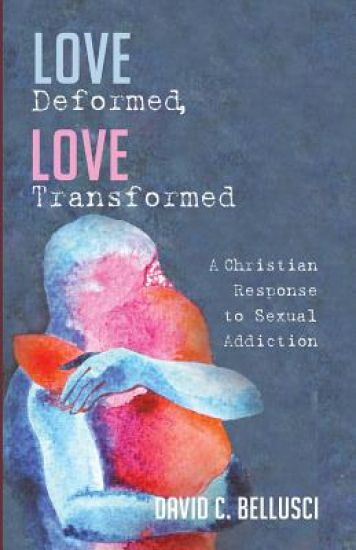
How is human love deformed in sexual addiction? How can human love be transformed? David Bellusci considers three signs of addiction and then, by looking at neurotic tendencies within a psychoanalytical framework, as well as the neurobiological nature of sexual pleasure, explores the causes of sexual addiction. Behavioral expression of addiction is examined in pornography, masturbation, cybersex, and multiple sexual partners. Working within a Christian anthropology drawn from Thomas Aquinas, Bellusci considers the morality of pleasure; how pleasure suggests an antinomy of satisfaction-dissatisfaction. He explores how the fallen human condition effects the will, and the consent to sin. He concludes with a focus on how the addict may be supported, at the psychological, relational, and spiritual levels. ""With great sensitivity, Bellusci makes clear the mental processes taking place in lust-obsessed individuals. His study fills a very desperate need in the field of sex addiction by supplementing Freudian psychology with the completeness and reality of Aquinas. Bill Wilson once wrote that 'When the spiritual malady is overcome, we straighten out mentally and physically' and Bellusci provides the scientific and philosophical groundwork to sustain this claim. Recommended especially for spiritual directors."" --Andrzej Skulski, Military Chaplain for the Royal Canadian Navy ""With Love Deformed, Love Transformed Father Bellusci offers clinicians a theological approach to the widespread therapeutic and pastoral problem of sexual compulsivity. By providing a detailed but accessible academic analysis of the topic, he advances a needed rapprochement between what secular science can offer, through explanation of Freudian psychoanalysis, and theological wisdom as represented by Thomas Aquinas. Undertaking this important task will hopefully contribute to practical improvement in the lives of many who suffer."" --Wayne Ottenbreit, president, Catholic Psychotherapy Association of Canada David C. Bellusci holds a Licentiate in Theology, a PhD in Philosophy, and a PsyD in Clinical Pastoral Psychotherapy. He belongs to the Dominican Order and teaches Philosophy and Religious Studies at Catholic Pacific College, in Langley, British Columbia.
How is human love deformed in sexual addiction? How can human love be transformed? David Bellusci considers three signs of addiction and then, by looking at neurotic tendencies within a psychoanalytical framework, as well as the neurobiological nature of sexual pleasure, explores the causes of sexual addiction. Behavioral expression of addiction is examined in pornography, masturbation, cybersex, and multiple sexual partners. Working within a Christian anthropology drawn from Thomas Aquinas, Bellusci considers the morality of pleasure; how pleasure suggests an antinomy of satisfaction-dissatisfaction. He explores how the fallen human condition effects the will, and the consent to sin. He concludes with a focus on how the addict may be supported, at the psychological, relational, and spiritual levels. ""With great sensitivity, Bellusci makes clear the mental processes taking place in lust-obsessed individuals. His study fills a very desperate need in the field of sex addiction by supplementing Freudian psychology with the completeness and reality of Aquinas. Bill Wilson once wrote that 'When the spiritual malady is overcome, we straighten out mentally and physically' and Bellusci provides the scientific and philosophical groundwork to sustain this claim. Recommended especially for spiritual directors."" --Andrzej Skulski, Military Chaplain for the Royal Canadian Navy ""With Love Deformed, Love Transformed Father Bellusci offers clinicians a theological approach to the widespread therapeutic and pastoral problem of sexual compulsivity. By providing a detailed but accessible academic analysis of the topic, he advances a needed rapprochement between what secular science can offer, through explanation of Freudian psychoanalysis, and theological wisdom as represented by Thomas Aquinas. Undertaking this important task will hopefully contribute to practical improvement in the lives of many who suffer."" --Wayne Ottenbreit, president, Catholic Psychotherapy Association of Canada David C. Bellusci holds a Licentiate in Theology, a PhD in Philosophy, and a PsyD in Clinical Pastoral Psychotherapy. He belongs to the Dominican Order and teaches Philosophy and Religious Studies at Catholic Pacific College, in Langley, British Columbia.
Arrested with a Stolen Jet. David is a critically acclaimed author, speaker, and lead-pastor. His autobiography "Jet Ride to Hell, Journey to Freedom" tells of his incredible transformation story - one that exemplifies God's beautiful plan of redemption and grace. David was a convicted felon, where he spent 20 years in federal prison for stealing multi-million dollar jet aircraft for the Colombian drug cartel. However, a life's path that seemed to have stamped a one-way ticket to hell was dramatically changed by a mother's prayer and a faithful God. A riveting storyline that includes a sting operation carried out by 20-armed federal agents on the tarmac of a South Florida runway, and the tales of a prisoner living inside America's maximum security prison, Leavenworth Penitentiary - this autobiography will captivate you from start to finish.11.5 font for easier reading. For more information visit https: //davidhairabedian.org/ and https: //virtualchurchmedia.com/
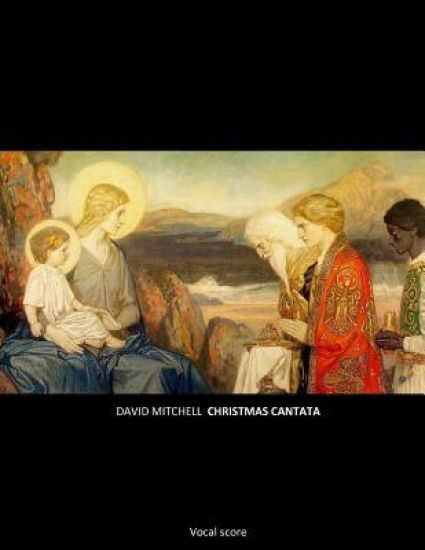
David Mitchell's Christmas Cantata is a 100-minute-long contemporary oratorio for Advent, Christmas or Epiphany. Its musical language is a fusion of choral pop, township jazz, and lounge music, with shades of plainsong, Renaissance opera, and Bollywood. Though popular in style, it stands consciously in the great tradition of western sacred oratorio.It's all about voices: choruses, solos, duets, trios, quartets, octets, recitatives. You'll need a good, keen chorus who can sing the notes. And you'll need soprano and baritone soloists. They can be a bit freer in their delivery.The singers are supported by a continuo trio of piano, bass, and drums. You can put on a great performance with just these three instruments, and a flute or trumpet too.No musicians? No problem. You can download backing tracks to accompany your choir.But, if you really want to go to town, there are parts for orchestra too...
When the thirteen British colonies in North America decided that they had enough of a central government that was deaf to their needs and rights, they set about to fix the problem. More than a year before these colonies decided to declare their independence from the British Empire, they had a shooting war on their hands. Eight months after that, they had a navy. These short stories are about the ships and men that comprised that navy. From Benedict Arnold's ships and marines at The Battle of Valcour Island, to John Barry's first capture of a British man o' war, the stories put you front and center in the action.You will almost taste the salt spray and powder smoke. You'll probably want to duck when the splinters scythe over your head. Feel the sharkskin grip of the cutlass in your hand when you cross swords with the enemy. Grab a cup of coffee (not tea, that is too British) and sit back to enjoy these well researched accounts of actual events from the American Revolution at sea
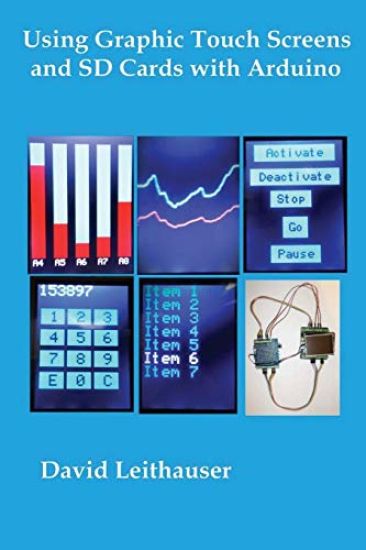
Arduinos are mini computers on a circuit board designed primarily for controlling electronic circuits. They have analog and digital inputs and outputs that allow them to input data and turn things on and off. For some applications (like building a robot), no direct interface with humans, such as a keyboard or display screen, is necessary. For some applications, however, you will want to display information and also input commands. For example, you may be designing a sensor device to monitor sensor readings (tricorder, anyone?). In this case, you will want to have a display. You may also want to input instructions or information into the Arduino. In that case, you will need some kind of buttons, menus, or analog control devices like volume controls.You can have an LCD display to read information and some switches and knobs, but why not combine everything into one handy input/output device? Touch screens are perfect for this. They can display information as text or graphic. You can also cause them to display buttons or other graphic symbols that you can touch to make selections. One device can handle the entire human/Arduino interaction.For this book, I will be working with the Seeed (that is not a misspelling, there are three e's.) Studio 2.4" 240 x 320 pixel touch screen Version 2 (http: //www.seeedstudio.com). This is the best documented and most consistent touch screen on the market. However, if you are familiar with other brands of touch screens, you can still apply the basic code in this book. The libraries for each brand of touch screen might use slightly different commands for such things as initializing the screen, printing text to the screen, drawing rectangles or circles on the screen, and so on. However, if you simply substitute the appropriate command used by your screen for the one used in the sketches in this book, such as myGLCD.InitLCD() or Tft.init() for Tft.TFTinit(), the basic program concepts used in this book should work. I have written the code with most of the values, such as screen size, defined at the beginning of the sketch to allow for easy modification, and the purposes and functioning of most lines of code are explained step by step so you can understand what everything does and how to modify it to your needs.I will start out by addressing some of the problems with connecting touch screens to Arduinos due to a bit of a design flaw in the shields. I will then go on to give sketches (Arduino talk for software programs, commonly referred to as apps these days) for creating text menus, buttons, sliders, and other controls that you are probably familiar with in normal windows programs. I will also discuss outputs like text (both static and scrolling), graphs and histograms for output. There is also a chapter on creating a system for swapping screens, so you can have more than one screen of controls or information within a sketch. Finally, I will show how to use the SD (or microSD) card that some touch screens have built in. The techniques used in that chapter should work on SD card readers that come separate from touch screens too. In the Appendix, I will provide information on how to download the sketches in this book to save you typing and how to contact me for questions.
Let me introduce you to the world of 'Roddy, ' the principal character of this book series. He is a typical boy of his generation born shortly after World War II, in a time when the outdoor play and community living makes life appear simpler. The story takes place in Australia in the 1950's in the capital city of West Australia. Perth came to world notice in 1962 as a result of Astronaut John Glen's orbit over the Southern Hemisphere.As any eleven-year-old will know, life can be exciting as you take on more responsibility and find out how the world works. There is a good and not so good way to everything you do and say and Roddy is aware of this as he observes the people in his world.The Australian climate makes for an outdoors life with mates on bikes or just hanging out with little parental anxiety. Don't get me wrong, even in this uncomplicated world there were people who stole and behaved badly but the majority looked out for each other and you will understand better once you have read this adventure. Look for the special BONUS offer and be sure to read the page that explains the unusual words the Aussie kids used and discover what they meant. Enjoy your time with Roddy