Kirjojen hintavertailu. Mukana 11 342 296 kirjaa ja 12 kauppaa.

Kirjahaku

Etsi kirjoja tekijän nimen, kirjan nimen tai ISBN:n perusteella.

1000 tulosta hakusanalla David L. Goetsch

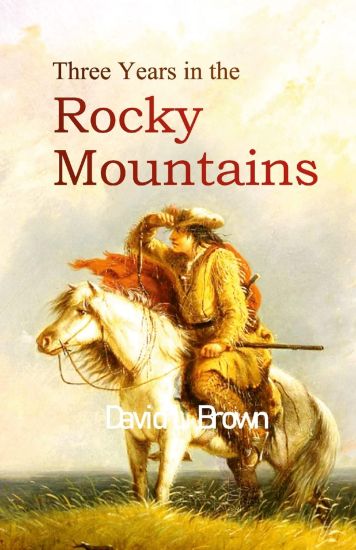
Three Years in the Rocky Mountains
"David L. Brown met Bridger at the 1837 trapper's rendezvous." - Empire of Shadows: The Epic Story of Yellowstone (2012) "David Brown...noted that Bridger had a thorough understanding of Indian character...put his faith in Indian superstitions." -Jim Bridger: Trapper, Trader, and Guide (2007) "David Brown in his 'Three Years in the Rockies' speaks of Kit." -Kit Carson & His Three Wives (2003) "At the 1837 Green River rendezvous, freshman trapper David L. Brown encountered...veteran mountain man James Bridger." -Making of the American West (2007) How would veteran mountain man Jim Bridger and other trappers react when the leader of a hostile tribe tried to re-steal a horse from Bridger at the 1836 trappers rendezvous? David L. Brown was a greenhorn mountain man who would join Jim Bridger's fur trapping brigade. Brown's short 20-page 1845 vivid narrative titled "Three Years in the Rocky Mountains," describes events during a sojourn with the William Drummond Stewart trapping party in 1836-39, and it was first published in the September 8-13, 1845 editions of the Cincinnati Daily Morning Atlas. Seeking adventure, Brown joined Sir William Drummond Stewart, 7th Baronet, a Scottish adventurer and British military officer near Leavenworth Kansas in 1836, where they arranged to accompany a pack train to the rendezvous of mountain men at the Horse Creek Rendezvous in the Green River Valley of Wyoming. Here Brown met the famous mountain men Jim Bridger, Bill Williams, and Kit Carson. Also on this trip was, as noted by Brown, was American artist, Alfred Jacob Miller, whom Stewart had hired in New Orleans. On this trip Miller would paint a notable series of works on the mountain men, the rendezvous, American Indians, and Rocky Mountain scenes. Brown spends much of his book describing the mountain men which he met at Green River, including veteran mountain man Jim Bridger, Bill Williams, and Joe Meek. Brown notes that "individuals, who having once tasted the sweets of this roving and adventurous life, on returning to the haunts of civilization...have languished and pined after those irresponsible solitude where man...revels in the untrammeled liberty, of a fierce and all but animal existence."
Sustainable Energy Consumption and Society

Sustainable Energy Consumption and Society

David L. Goldblatt

Springer-Verlag New York Inc.
2005
sidottu
Origin of this book In 1998 the Swiss Federal Institute of Technology (ETH) initiated the 2000 Watt Society, a University-wide research program meant to help Switzerland realize a dramatic reduction in its future energy use. A project within the initiative “Sustainability in the ETH domain,” the 2000 Watt per capita Society sought to promote “the gradual introduction of a way of living and working that requires only one-third of current energy consumption but 1 2 still delivers an improved quality of life. ” Two thousand watts is roughly the current world average per capita energy consumption; it was the average level in Switzerland in the 1950s; it is some three times less than current 3 Swiss usage; and reducing to that level again (in concert with other industrialized nations) would greatly facilitate stabilization of atmospheric carbon dioxide (CO )levels in the long-term, given projections about world 2 population growth and exploitable energy resources [Imboden 1999]. 1 http://www. novatlantis. ch/frames_e. html. 2 A watt is a power term equivalent to 1 joule/second. Non-engineers generally prefer to think of 2000 watts per capita in terms of energy use per unit time such as joules/second or kilowatt-hours/hour. For Switzerland, 2000 watts per capita is equivalent to a primary annual energy consumption of about 65 gigajoules (65 billion joules) per capita. Although less generally communicative, the 2000 watt name is clean and trim, and since it has stuck we will use it throughout the book.
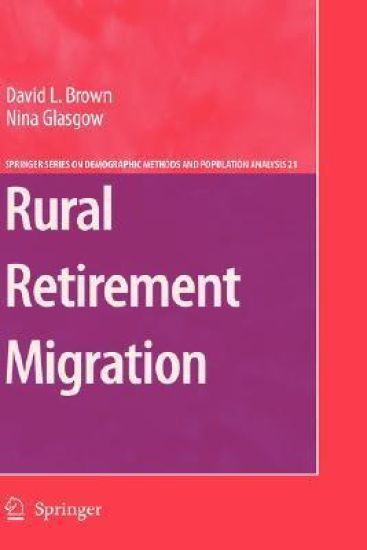
Rural Retirement Migration

Rural Retirement Migration

David L. Brown; Nina Glasgow

Springer-Verlag New York Inc.
2008
sidottu
This book examines the migration of older persons to rural retirement destinations in the United States. While the majority of older persons are residentially stable, those who migrate are disproportionately likely to move to a rural community. Moreover, with the aging of the baby boom generation, particular rural communities can expect to continue attracting older in-migrants in the future.The book examines rural retirement migration from the older in-migrants’ perspective and from the vantage point of the destination communities to which they move. This integrated micro-macro approach permits the authors to view older in-migrants as embedded in particular types of environments that facilitate and/or constrain their opportunities for productive living during older age. It also permits the examination of positive and negative effects of older in-migration for destination communities. The authors use a multiple methods approach featuring a panel survey of older in-migrants and longer-term older residents, in-depth community case studies and county-level census data analysis to produce a grounded study of population aging in the context of rural society.The analysis examines the challenges and opportunities presented by migration at older ages both for successful aging and for community development. The book pays particular attention to the process through which older in-migrants become socially integrated in their new communities, and it contains rich detail on the social relationships they form, the nature of their civic engagement, and the positive and negative reactions they elicit from longer-term residents.The volume concludes with a thoughtful discussion of policy lessons learned from the research, and with an examination of high priority research needs on retirement migration. From the reviews:"This is not just another book; it is a necessary book, the result of plentiful research and of a balancedwork project." (Environment and Planning A, 2009. Volume 41)
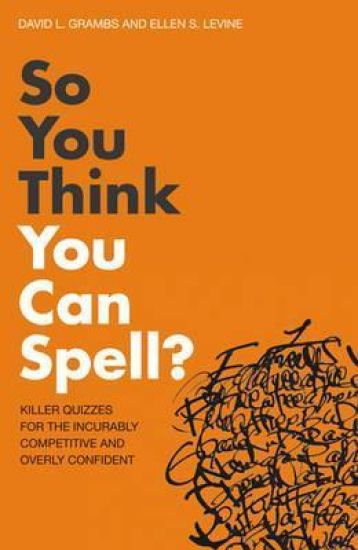
So You Think You Can Spell?

So You Think You Can Spell?

David L. Grambs; Ellen S. Levine

A C Black Publishers Ltd
2011
nidottu
When was the last time you took a spelling test or competed in a spelling bee? For those who need to brush up their spelling skills or expand their vocabulary, this book is the chance to confront over 1,500 commonly confused words in more than 200 quizzes to test spelling and vocabulary skills. For those with a competitive nature and those who want to increase their vocabulary while improving their spelling, this is a self-contained spelling adventure for any individual of any age! A series of tests ranging from 3 to 50 questions are not just related to spelling but also pronunciation and phrasal verbs. The tests are multiple choice and all the reader has to do is circle the correct spelling and tot up their score at the end. This book is the ultimate spelling test!
Are Christians Mormon?

Are Christians Mormon?

David L. Paulsen; Hal R. Boyd

Ashgate Publishing Limited
2017
sidottu
In the past, scholars and others have asked whether Mormons are Christian. This work reverses the question by asking, "are Christians Mormon?" By identifying Mormon doctrines formerly considered heretical and documenting how these doctrines have gained increasing acceptance within mainstream Christian theologies, the work presents some surprising insights. In chapters focusing on subjects such as deification, the divine feminine, and the reopening of the scriptural canon, among others, the book sets out Joseph Smith's teachings on these ideas, summarizes the criticisms of those positions, and examines trends in contemporary Christian theology that significantly converge in Joseph's direction. Exploring the convergence of contemporary Christian theology with Mormon doctrines, this book will appeal to a broad range of students and readers exploring Christian theology and the Latter-day Saint tradition.
Are Christians Mormon?

Are Christians Mormon?

David L. Paulsen; Hal R. Boyd

Ashgate Publishing Limited
2018
nidottu
In the past, scholars and others have asked whether Mormons are Christian. This work reverses this question by asking, ‘are Christians Mormon?’. By identifying Mormon doctrines formerly considered heretical and documenting how these doctrines have recently gained increasing acceptance within mainstream Christian theologies, the work presents some surprising insights. In chapters focusing on subjects such as deification, the divine feminine, and the reopening of the scriptural canon, among others, the book sets out Joseph Smith's teachings on these ideas, summarizes traditional Christian views and criticisms of Joseph's positions, and examines trends in contemporary Christian theology that significantly converge in Joseph's direction. Exploring the convergence of contemporary Christian theology with Mormon doctrines, this book will appeal to a broad range of students and other readers exploring Christian theology and Mormonism.
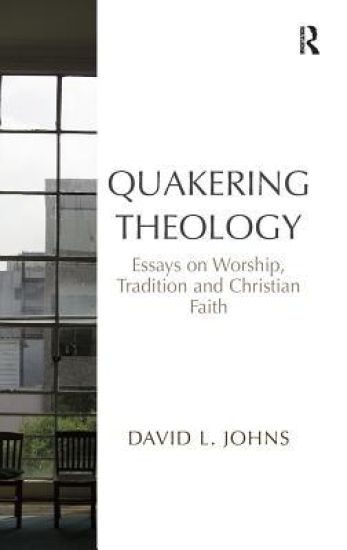
Quakering Theology

Quakering Theology

David L. Johns

Ashgate Publishing Limited
2013
sidottu
Quakers exist neither for themselves nor by themselves alone. Therefore, they ought not to construct Quaker theologies but rather quaker (verb) theology-to add their fingerprints to the larger conversation. David Johns contributes to a Quaker way of thinking theologically but also invites others to think through their denominational identities into a more expansive and ecumenical space. Placing contemporary Quaker thought in conversation with the wider theological tradition, Johns shows that Quakers have something important to contribute to the wider Christian family and he demonstrates how other groups may enter this conversation as well. Some themes explored may not spring immediately to mind as ’Quaker themes’-the saints, C.S. Lewis, sacraments, ritual, and Shakespeare-but Johns argues these are precisely the kind of issues that require Quaker fingerprints-that require quakering.
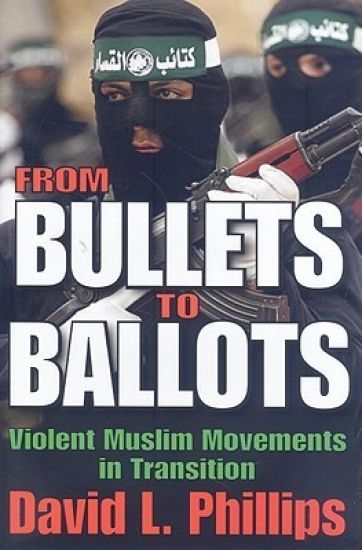
From Bullets to Ballots

From Bullets to Ballots

David L. Phillips

AldineTransaction
2009
sidottu
From Bullets to Ballots considers non-state Muslim organizations at different stages of abandoning violence and pursuing their goals through a political process. Some have successfully made the transition. Others are in mid-stream. Some have tried but backtracked, splintered, or simply abandoned such efforts, reverting to pathological violence. Many groups could be case studies, but Phillips has selected the Muslim Brotherhood of Egypt, Hamas, Hezbollah, the Kurdistan Workers Party, the Jammu and Kashmir Liberation Front, and the Free Aceh Movement, because they cover the spectrum.This book deals with political strategies for moderating violent Muslim movements by engaging them in the political process. In strong criticism of the Bush administration, Phillips notes that the push for democracy may have increased conflict by giving violent groups "the ballot" which they use to gain power. Focusing on non-state Muslim organizations, From Bullets to Ballots considers the relationship between ideology and policy. Phillips discusses their origin, ideology, structure, and leadership and examines financing, activities, and communications. He assesses the groups' commitment to elections and its acceptance of the responsibility that comes with governance.From Bullets to Ballots draws on twenty years of Phillips' experience working democratization and conflict prevention in the Middle East, the Balkans, the Caucasus, and South Asia. His recommendations are primarily directed to the United States because he believes the United States should be a leader in promoting democracy around the world. At the same time, he is convinced that the United States must tread softly, or run the risk of fomenting further violence, undermining future democratic development, and setting back its own national interests. This is a provocative, informed, and balanced analysis of the theories behind current policies.
The Kurdish Spring

The Kurdish Spring

David L. Phillips

AldineTransaction
2015
sidottu
Kurds are the largest stateless people in the world. An estimated thirty-two million Kurds live in "Kurdistan," which includes parts of Turkey, Iraq, Syria, and Iran—today's "hot spots" in the Middle East. The Kurdish Spring explores the subjugation of Kurds by Arab, Ottoman, and Persian powers for almost a century, and explains why Kurds are now evolving from a victimized people to a coherent political community.David L. Phillips describes Kurdish rebellions and arbitrary divisions in the last century, chronicling the nadir of Kurdish experience in the 1980s. He discusses draconian measures implemented by Iraq, including use of chemical weapons, Turkey's restrictions on political and cultural rights, denial of citizenship and punishment for expressing Kurdish identity in Syria, and repressive rule in Iran.Phillips forecasts the collapse and fragmentation of Iraq. He argues that US strategic and security interests are advanced through cooperation with Kurds, as a bulwark against ISIS and Islamic extremism. This work will encourage the public to look critically at the post-colonial period, recognizing the injustice and impracticality of states that were created by Great Powers, and offering a new perspective on sovereignty and statehood.
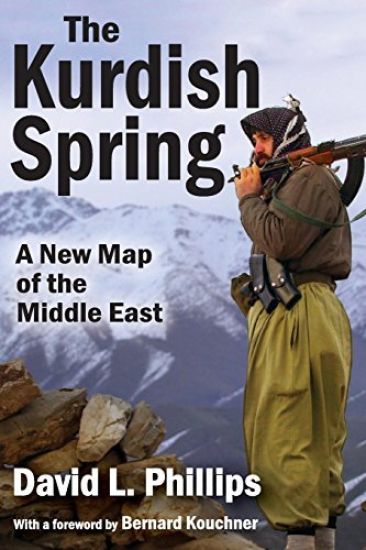
The Kurdish Spring

The Kurdish Spring

David L. Phillips

AldineTransaction
2015
nidottu
Kurds are the largest stateless people in the world. An estimated thirty-two million Kurds live in "Kurdistan," which includes parts of Turkey, Iraq, Syria, and Iran—today's "hot spots" in the Middle East. The Kurdish Spring explores the subjugation of Kurds by Arab, Ottoman, and Persian powers for almost a century, and explains why Kurds are now evolving from a victimized people to a coherent political community.David L. Phillips describes Kurdish rebellions and arbitrary divisions in the last century, chronicling the nadir of Kurdish experience in the 1980s. He discusses draconian measures implemented by Iraq, including use of chemical weapons, Turkey's restrictions on political and cultural rights, denial of citizenship and punishment for expressing Kurdish identity in Syria, and repressive rule in Iran.Phillips forecasts the collapse and fragmentation of Iraq. He argues that US strategic and security interests are advanced through cooperation with Kurds, as a bulwark against ISIS and Islamic extremism. This work will encourage the public to look critically at the post-colonial period, recognizing the injustice and impracticality of states that were created by Great Powers, and offering a new perspective on sovereignty and statehood.
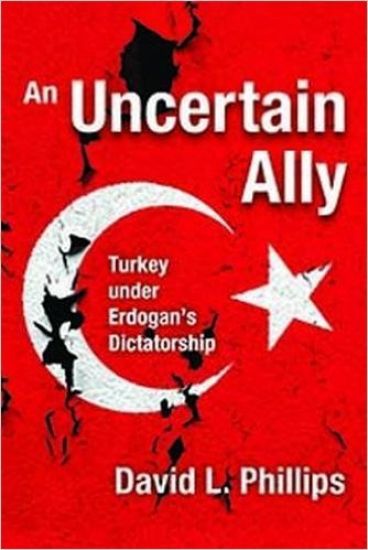
An Uncertain Ally

An Uncertain Ally

David L. Phillips

AldineTransaction
2017
sidottu
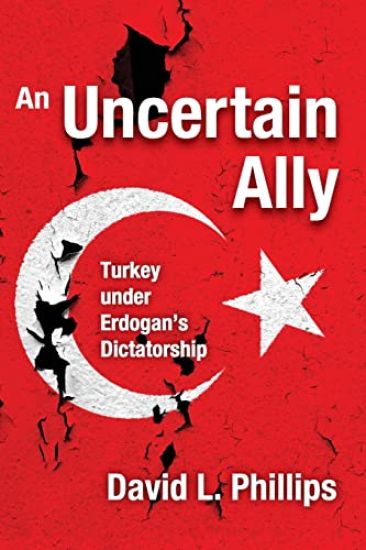
Under the rule of Recep Tayyip Erdogan Turkey has descended into a dictatorship, promotes the Islamist agenda, abuses human rights, limits freedom of expression in the press, and wages war against the Kurds. While Turkey has historically been important geopolitically, it has become an outlier in Europe and an uncertain ally of the United States.An Uncertain Ally is a straightforward indictment of Erdogan. Drawing on inside sources in his Justice and Development Party (AKP) and the police, the book reveals corruption and money laundering schemes that benefitted Erdogan, his cronies, and family members. Erdogan has polarized Turkish society and created conditions that led to the coup attempt of July 2016. He has also deepened divisions by accusing Fethullah Gulen, an Islamic teacher in Pennsylvania, of establishing a parallel state and masterminding the coup attempt. Erdogan has seized on the failed coup to justify a witch hunt, arresting thousands and ordering the wholesale dismissal of alleged coup sympathizers. Rather than foster reconciliation, he pursued vendettas and turned Turkey into a gulag.An Uncertain Ally exposes Turkey’s ties to jihadists in Syria and the Islamic State, questioning its suitability as a NATO member. Under Erdogan, Turkey faces a dark future that poses a danger to the region and internationally.
An Uncertain Ally

An Uncertain Ally

David L. Phillips

AldineTransaction
2017
nidottu
Under the rule of Recep Tayyip Erdogan Turkey has descended into a dictatorship, promotes the Islamist agenda, abuses human rights, limits freedom of expression in the press, and wages war against the Kurds. While Turkey has historically been important geopolitically, it has become an outlier in Europe and an uncertain ally of the United States.An Uncertain Ally is a straightforward indictment of Erdogan. Drawing on inside sources in his Justice and Development Party (AKP) and the police, the book reveals corruption and money laundering schemes that benefitted Erdogan, his cronies, and family members. Erdogan has polarized Turkish society and created conditions that led to the coup attempt of July 2016. He has also deepened divisions by accusing Fethullah Gulen, an Islamic teacher in Pennsylvania, of establishing a parallel state and masterminding the coup attempt. Erdogan has seized on the failed coup to justify a witch hunt, arresting thousands and ordering the wholesale dismissal of alleged coup sympathizers. Rather than foster reconciliation, he pursued vendettas and turned Turkey into a gulag.An Uncertain Ally exposes Turkey’s ties to jihadists in Syria and the Islamic State, questioning its suitability as a NATO member. Under Erdogan, Turkey faces a dark future that poses a danger to the region and internationally.
Case Studies in 21st Century School Administration

Case Studies in 21st Century School Administration

David L. Gray; Agnes Smith

SAGE Publications Inc
2007
sidottu
The cases are good for in-class use. The length of these cases makes it easy to assign them to be read during class.—Roger Shouse, The Pennsylvania State University DIVERSITY SCHOOL IMPROVEMENT LIMITED RESOURCES Understanding issues faced by today's school leaders… Authors David L. Gray and Agnes E. Smith have written a book of cases to give prospective school leaders opportunities to resolve complex issues in K–12 school settings through reflective questions, activities, and authentic assessment tools for skill development.
Case Studies in 21st Century School Administration

Case Studies in 21st Century School Administration

David L. Gray; Agnes Smith

SAGE Publications Inc
2007
nidottu
The cases are good for in-class use. The length of these cases makes it easy to assign them to be read during class.—Roger Shouse, The Pennsylvania State University DIVERSITY SCHOOL IMPROVEMENT LIMITED RESOURCES Understanding issues faced by today's school leaders… Authors David L. Gray and Agnes E. Smith have written a book of cases to give prospective school leaders opportunities to resolve complex issues in K–12 school settings through reflective questions, activities, and authentic assessment tools for skill development.
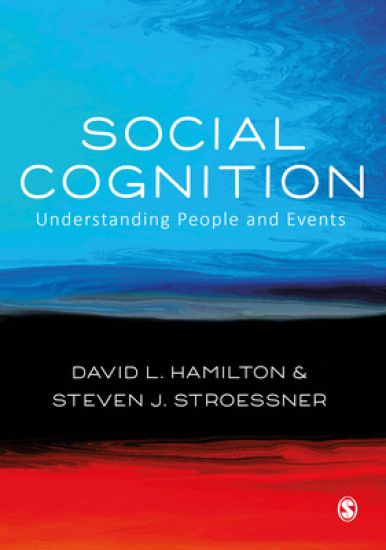
Social Cognition

Social Cognition

David L. Hamilton; Steven N. Stroessner

SAGE Publications Inc
2020
sidottu
Social cognition is an approach to understanding how people think about people and events. We are constantly processing information to navigate the world we live in. The authors will guide your students, using examples and up-to-date studies, through this approach; from explaining the processes themselves right through to demonstrating the role cognitive processes play in our social lives. With chapters on the following processes: · Memory · Judgement · Attention · Attribution · Evaluation · Automatic processing. This book will provide your students with a framework for understanding the most common areas of interest for Social Cognition, such as perception, attitudes and stereotyping.
Social Cognition

Social Cognition

David L. Hamilton; Steven N. Stroessner

SAGE Publications Inc
2020
nidottu
Social cognition is an approach to understanding how people think about people and events. We are constantly processing information to navigate the world we live in. The authors will guide your students, using examples and up-to-date studies, through this approach; from explaining the processes themselves right through to demonstrating the role cognitive processes play in our social lives. With chapters on the following processes: · Memory · Judgement · Attention · Attribution · Evaluation · Automatic processing. This book will provide your students with a framework for understanding the most common areas of interest for Social Cognition, such as perception, attitudes and stereotyping.