Kirjojen hintavertailu. Mukana 11 699 587 kirjaa ja 12 kauppaa.

Kirjahaku

Etsi kirjoja tekijän nimen, kirjan nimen tai ISBN:n perusteella.

1000 tulosta hakusanalla Deborah C. Pollack

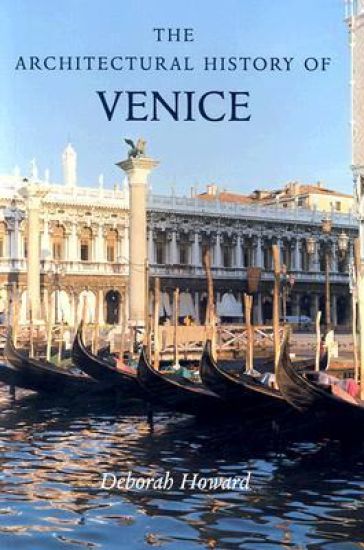
The Architectural History of Venice

The Architectural History of Venice

Deborah Howard

Yale University Press
2004
pokkari
This book is the indispensable guide to the history of architecture in Venice, encompassing the city’s fascinating variety of buildings from ancient times to the present day. Completely updated and filled with splendid new illustrations, this edition invites all visitors to Venice, armchair travelers, and students of Renaissance art and architecture to a fuller appreciation of the buildings of this uniquely beautiful city.“The best concise introduction to Venetian architecture in English.”—Times Literary Supplement“Compact and manageable . . . an excellent introduction to the novice preparing for a first Venetian experience.”—Society of Architectural Historians“A hugely rewarding and accessible book.”—Richard Cork, Modern PaintersPublished with the assistance of the Getty Grant Program
When Dieting Becomes Dangerous

When Dieting Becomes Dangerous

Deborah M. Michel; Susan G. Willard

Yale University Press
2003
pokkari
This primer on anorexia and bulimia is aimed directly at patients and the people who care about them. Written in simple, straightforward language by two experts in the field, it describes the symptoms and warning signs of eating disorders, explains their presumed causes and complexities, and suggests effective treatments. The book includes:• guidance about what to expect and look for in the assessment and treatment process; • emphasis on the critical role of psychotherapy and family therapy in recovery;• explanation of how anorexia and bulimia differ in their origins and manifestations; • information on males with eating disorders and how they are similar to and different from female patients;• a separate chapter for health care professionals who are not specialists in the diagnosis and treatment of individuals with eating disorders;• up-to-date readings, Internet sites, and professional organizations in the United States and in Europe.
Every Farm a Factory

Every Farm a Factory

Deborah Fitzgerald

Yale University Press
2010
pokkari
During the early decades of the twentieth century, agricultural practice in America was transformed from a pre-industrial to an industrial activity. In this book Deborah Fitzgerald argues that farms became modernized in the 1920s because they adopted not only new machinery but also the financial, cultural, and ideological apparatus of industrialism.Fitzgerald examines how bankers and emerging professionals in engineering and economics pushed for systematic, businesslike farming. She discusses how factory practices served as a template for the creation across the country of industrial or corporate farms. She looks at how farming was affected by this revolution and concludes by following several agricultural enthusiasts to the Soviet Union, where the lessons of industrial farming were studied.
A Girl's Childhood

A Girl's Childhood

Deborah Weinstein

Yale University Press
2015
sidottu
A uniquely detailed study of child development theory and practice in the post–World War II era Sixty years ago, a group of prominent psychoanalysts, developmentalists, pediatricians, and educators at the Yale Child Study Center joined together with the purpose of formulating a general psychoanalytic theory of children’s early development. The group’s members composed detailed narratives about their work with the study’s children, interviewed families regularly and visited them in their homes, and over the course of a decade met monthly for discussion. The contributors to this volume consider the significance of the Child Study Center’s landmark study from various perspectives, focusing particularly on one child’s unfolding sense of herself, her gender, and her relationships.
Household Gods

Household Gods

Deborah Cohen

Yale University Press
2009
pokkari
A fascinating account of the British preoccupation with homes, interior decoration, and personal possessions since 1830 At what point did the British develop their mania for interiors, wallpaper, furniture, and decoration? Why have the middle classes developed so passionate an attachment to the contents of their homes? This absorbing book offers surprising answers to these questions, uncovering the roots of today’s consumer society and investigating the forces that shape consumer desires. Richly illustrated, Household Gods chronicles a hundred years of British interiors, focusing on class, choice, shopping, and possessions. Exploring a wealth of unusual records and archives, Deborah Cohen locates the source of modern consumerism and materialism in early nineteenth-century religious fervor. Over the course of the Victorian era, consumerism shed the taint of sin to become the preeminent means of expressing individuality. The book ranges from musty antique shops to luxurious emporia, from suburban semi-detached houses to elegant city villas, from husbands fretting about mantelpieces to women appropriating home decoration as a feminist cause. It uncovers a society of consumers whose identities have become entwined with the things they put in their houses.
The Jewel House

The Jewel House

Deborah E. Harkness

Yale University Press
2008
pokkari
Not just a few elite scientists, but Londoners from all walks of life--lawyers, prisoners, midwives, merchants--participated in the scientific community of Elizabethan times Bestselling author Deborah Harkness (A Discovery of Witches, Shadow of Night) explores the streets, shops, back alleys, and gardens of Elizabethan London, where a boisterous and diverse group of men and women shared a keen interest in the study of nature. These assorted merchants, gardeners, barber-surgeons, midwives, instrument makers, mathematics teachers, engineers, alchemists, and other experimenters, she contends, formed a patchwork scientific community whose practices set the stage for the Scientific Revolution. While Francis Bacon has been widely regarded as the father of modern science, scores of his London contemporaries also deserve a share in this distinction. It was their collaborative, yet often contentious, ethos that helped to develop the ideals of modern scientific research.The book examines six particularly fascinating episodes of scientific inquiry and dispute in sixteenth-century London, bringing to life the individuals involved and the challenges they faced. These men and women experimented and invented, argued and competed, waged wars in the press, and struggled to understand the complexities of the natural world. Together their stories illuminate the blind alleys and surprising twists and turns taken as medieval philosophy gave way to the empirical, experimental culture that became a hallmark of the Scientific Revolution.
How Jews Became Germans

How Jews Became Germans

Deborah Hertz

Yale University Press
2009
pokkari
When the Nazis came to power and created a racial state in the 1930s, an urgent priority was to identify Jews who had converted to Christianity over the preceding centuries. With the help of church officials, a vast system of conversion and intermarriage records was created in Berlin, the country’s premier Jewish city. Deborah Hertz’s discovery of these records, the Judenkartei, was the first step on a long research journey that has led to this compelling book. Hertz begins the book in 1645, when the records begin, and traces generations of German Jewish families for the next two centuries. The book analyzes the statistics and explores letters, diaries, and other materials to understand in a far more nuanced way than ever before why Jews did or did not convert to Protestantism. Focusing on the stories of individual Jews in Berlin, particularly the charismatic salon woman Rahel Levin Varnhagen and her husband, Karl, a writer and diplomat, Hertz humanizes the stories, sets them in the context of Berlin’s evolving society, and connects them to the broad sweep of European history.
Dutch New York, between East and West

Dutch New York, between East and West

Deborah L. Krohn; Marybeth De Filippis; Peter N. Miller

Yale University Press
2009
sidottu
Commemorating the 400th anniversary of Henry Hudson’s voyage and the lasting legacy of Dutch culture in New York, this book explores the life and times of a fascinating woman, her family, and her things. Margrieta was born in the Netherlands but lived at the extremes of the Dutch colonial world, in Malacca on the Malay Peninsula and in Flatbush, Brooklyn. When she came to New York in 1686 with her husband and set up a shop, she brought an astonishing array of Eastern goods, many of which were documented in an inventory made after her death in 1695. Extensive archival research has enabled a collaborative team to reconstruct her story and establish the depth of her connection to Dutch trading establishments in Asia. This is a groundbreaking contribution to the histories of New York City, the Dutch overseas empire, women, and material culture. Exhibition Schedule:Bard Graduate Center, New York, 9/17/09 – 1/3/10)
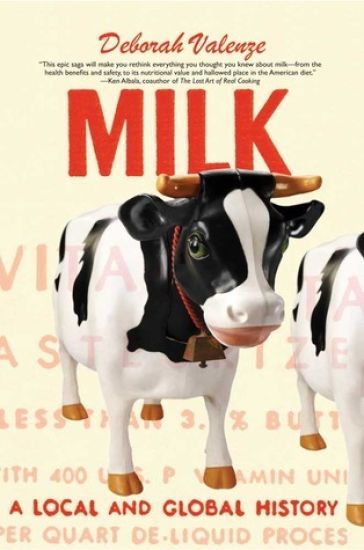
Milk

Milk

Deborah Valenze

Yale University Press
2012
pokkari
A historian reveals the illuminating history of milk, from ancient myth to modern grocery store How did an animal product that spoils easily, carries disease, and causes digestive trouble for many of its consumers become a near-universal symbol of modern nutrition? In the first cultural history of milk, historian Deborah Valenze traces the rituals and beliefs that have governed milk production and consumption since its use in the earliest societies.Covering the long span of human history, Milk reveals how developments in technology, public health, and nutritional science made this once-rare elixir a modern-day staple. The book looks at the religious meanings of milk, along with its association with pastoral life, which made it an object of mystery and suspicion during medieval times and the Renaissance. As early modern societies refined agricultural techniques, cow's milk became crucial to improving diets and economies, launching milk production and consumption into a more modern phase. Yet as business and science transformed the product in the nineteenth and twentieth centuries, commercial milk became not only a common and widely available commodity but also a source of uncertainty when used in place of human breast milk for infant feeding. Valenze also examines the dairy culture of the developing world, looking at the example of India, currently the world's largest milk producer.Ultimately, milk's surprising history teaches us how to think about our relationship to food in the present, as well as in the past. It reveals that although milk is a product of nature, it has always been an artifact of culture.
Engineering Ethics

Engineering Ethics

Deborah G. Johnson

Yale University Press
2020
pokkari
An engaging, accessible survey of the ethical issues faced by engineers, designed for students The first engineering ethics textbook to use debates as the framework for presenting engineering ethics topics, this engaging, accessible survey explores the most difficult and controversial issues that engineers face in daily practice. Written by a leading scholar in the field of engineering and computer ethics, Deborah Johnson approaches engineering ethics with three premises: that engineering is both a technical and a social endeavor; that engineers don’t just build things, they build society; and that engineering is an inherently ethical enterprise.
The Narrow Edge

The Narrow Edge

Deborah Cramer

Yale University Press
2016
pokkari
In a volume as urgent and eloquent as Rachel Carson’s Silent Spring, this book—winner of the Southern Environmental Law Center's 2016 Reed Environmental Writing Award in the book category—reveals how the health and well-being of a tiny bird and an ancient crab mirrors our own Winner of the 2016 Rachel Carson Environment Book Award given by the Society of Environmental Journalists "[Cramer] writes . . . 'By the end of this journey I am more in awe than when I began.' Follow her graceful writing for the full 9,500 miles and you will share in that awe."—Laurence A. Marschall, Natural History "Her writing is vivid, novelistic . . . The resulting book is everything a natural history should be."—Living Bird Each year, red knots, sandpipers weighing no more than a coffee cup, fly a near-miraculous 19,000 miles from the tip of South America to their nesting grounds in the Arctic and back. Along the way, they double their weight by gorging on millions of tiny horseshoe crab eggs. Horseshoe crabs, ancient animals that come ashore but once a year, are vital to humans, too: their blue blood safeguards our health. Now, the rufa red knot, newly listed as threatened under the Endangered Species Act, will likely face extinction in the foreseeable future across its entire range, 40 states and 27 countries. The first United States bird listed because global warming imperils its existence, it will not be the last: the red knot is the twenty-first century’s “canary in the coal mine.” Logging thousands of miles following the knots, shivering with the birds out on the snowy tundra, tracking them down in bug-infested marshes, Cramer vividly portrays what’s at stake for millions of shorebirds and hundreds of millions of people living at the sea edge. The Narrow Edge offers an uplifting portrait of the tenacity of tiny birds and of the many people who, on the sea edge we all share, keep knots flying and offer them safe harbor. Winner of the 2016 National Academies Communications Award for best book that honors the best in science communications. Sponsored by the Keck Futures Initiative—a program of the National Academies of Sciences, Engineering, and Medicine, with the support of the W.M. Keck Foundation
The Invention of Scarcity

The Invention of Scarcity

Deborah Valenze

YALE UNIVERSITY PRESS
2023
sidottu
A radical new reading of eighteenth-century British theorist Thomas Robert Malthus, which recovers diverse ideas about subsistence production and environments later eclipsed by classical economics With the publication of Essay on the Principle of Population and its projection of food shortages in the face of ballooning populations, British theorist Thomas Robert Malthus secured a leading role in modern political and economic thought. In this startling new interpretation, Deborah Valenze reveals how canonical readings of Malthus fail to acknowledge his narrow understanding of what constitutes food production. Valenze returns to the eighteenth-century contexts that generated his arguments, showing how Malthus mobilized a redemptive narrative of British historical development and dismissed the varied ways that people adapted to the challenges of subsistence needs. She uses history, anthropology, food studies, and animal studies to redirect our attention to the margins of Malthus’s essay, where activities such as hunting, gathering, herding, and gardening were rendered extraneous. She demonstrates how Malthus’s omissions and his subsequent canonization provided a rationale for colonial imposition of British agricultural models, regardless of environmental diversity. By broadening our conception of human livelihoods, Valenze suggests pathways to resistance against the hegemony of Malthusian political economy. The Invention of Scarcity invites us to imagine a world where monoculture is in retreat and the margins are recentered as spaces of experimentation, nimbleness, and human flourishing.
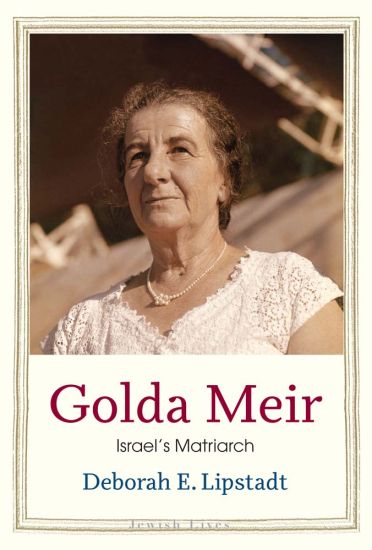
Golda Meir

Golda Meir

Deborah E. Lipstadt

YALE UNIVERSITY PRESS
2023
sidottu
A balanced biography of Golda Meir, who was both adored and abhorred, from award-winning author Deborah E. Lipstadt “Comprehensive. . . . Always thoughtful. . . . A nuanced account of a leader whose influence endures in the Middle East.”—Kirkus Review Golda Meir (1898–1978) was the first and only woman to serve as prime minister of Israel. She was born in Kiev into a childhood of poverty, hunger, and antisemitism. When she was five, her father left to find work in America, and a year later the family settled in Milwaukee, Wisconsin. As a teenager she became devoted to Labor Zionism, giving street-corner speeches, and her family’s home became a destination for Zionist emissaries. Her love for Labor Zionism was so fervent that her boyfriend, Morris Meyerson (her future husband), was often in competition with her dedication to the cause. Zionism prevailed. In 1921, Golda left America for Palestine with Morris and her sister Sheyna. Though the reality of living in Palestine was far from the dream of Zionism, Meir settled on the kibbutz Merhavia and was swiftly appointed to the Histadrut (the General Organization of Hebrew Workers in Palestine). As an ally of the Zionist David Ben-Gurion, Meir played an important role in the Yishuv, the pre-state Jewish community in Palestine; proved an almost singular ability to connect and fundraise with diaspora Jewry, particularly Americans; and served in three pivotal positions following Israel’s independence: labor secretary of the newly formed state, foreign minister, and Israel’s fourth prime minister. In tracing the life of Golda Meir, acclaimed author Deborah E. Lipstadt explores the history of the Yishuv and Jewish state from the 1920s through the 1973 Yom Kippur War, all while highlighting the contradictions and complexities of a person who was only the third woman to serve as a head of state in the twentieth century.
Stanley Tigerman

Stanley Tigerman

Deborah Berke

YALE UNIVERSITY PRESS
2025
sidottu
A vibrant presentation of Stanley Tigerman’s imaginative architectural drawings and working methods This retrospective paints a new portrait of the legendary architect Stanley Tigerman (1930–2019) through his drawings, collages, and sketches. The book showcases a variety of creative documents and drawing styles, representative of the wide array of Tigerman’s projects and interests: master plans, urban designs, civic infrastructures such as museums and low-income housing, private residences, exhibition designs, furniture, and tableware, as well as architectural cartoons—his so-called Architoons. From the pragmatic and technical to the symbolic and narrative-driven, the drawings bring us into Tigerman’s creative process and capture his unique blend of intellect, wit, and humanistic sensibility. Featuring previously unpublished drawings from projects including the Illinois Holocaust Museum, the Commonwealth Edison Energy Museum, the Anti-Cruelty Society in Chicago, the Kalamazoo City Plan, and homeware for Swid Powell, this generously illustrated volume highlights the skillful and explorative process behind each project’s final outputs. In addition to providing a stunning example of postmodern hand-drawn architectural representations, this visual journey offers readers a deeper understanding of the working process and significance of drawing in Tigerman’s office, as well as his enduring contribution to the field of architecture. Distributed for the Yale School of Architecture
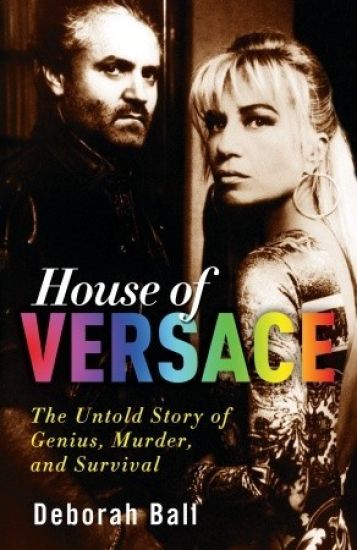
House of Versace

House of Versace

Deborah Ball

Random House Inc
2011
pokkari
Versace. The very name conjures up images of outrageous glamour and bold sexuality, opulence and daring. All of course true, but only half the story. Versace is also the legacy of a great creative genius from a poor, backward part of southern Italy who transformed the fashion world through his intuitive understanding of both women and how a changing culture influenced the way they wanted to dress. The first book in English about the legendary designer, House of Versace shows how Gianni Versace, with his flamboyant sister Donatella at his side, combined his virtuosic talent and extraordinary ambition to almost single-handedly create the celebrity culture we take for granted today. Gianni Versace was at the height of his creative powers when he was murdered in Miami Beach. The story was front page news around the world and the manhunt for his killer a media obsession. His beloved sister Donatella demanded no less than a funeral befitting an assassinated head-of-state to be held in Milan's magnificent cathedral. In what was the ultimate fashion show, the world's rich and beautiful - Princess Dianna, Elton John, Carla Bruni, Naomi Campbell, Carolyn Bessette-Kennedy, Anna Wintour and others - gathered to mourn a man already considered one of fashion's great pioneers. Deborah Ball, a long-time Milan correspondent for The Wall Street Journal, conducted hundreds of interviews with Versace family members, Gianni Versace's lovers and business rivals, models such as Naomi Campbell whom he helped shoot to international stardom and fashion industry icons, including Anna Wintour, the legendary editor of Vogue. Ball vividly recounts the behind-the scenes struggles - both creative and business - of Donatella as she stepped out of her brother's long shadow and took control of the House of Versace. The book offers the first inside look at the enormous challenges Donatella faced in living up to Gianni's genius, her struggle with a drug habit, her battles with her brother Santo and the mystery of why Gianni left control of his house to Donatella's young daughter, Allegra. House of Versace is a compelling, highly readable tale of rise from obscurity, a painful fall and ultimate redemption as the Versace empire returned to health - for now. Bringing together fashion, celebrity, business drama, jet-set lifestyles, and a notorious crime, House of Versace is an old-fashioned page-turner about a subject of enduring fascination.
Snow Melts in Spring

Snow Melts in Spring

Deborah Vogts

Zondervan
2009
nidottu
She loves the land. Mattie Evans grew up in the Flint Hills of Kansas. Although her family has lost their ranch, she still calls this land home. A skilled young veterinarian, she struggles to gain the confidence of the local ranchers. Fortunately, her best friend and staunchest supporter is John McCray, owner of the Lightning M Ranch. They both love the ranch, and can’t imagine living anywhere but in the Flint Hills. He’s haunted by it. Gil McCray, John’s estranged son, is a pro football player living in California. The ranch is where his mother died and where every aspect of the tallgrass prairie stirs unwanted memories of his older brother’s fatal accident. Gil decides leaving the ranch is the best solution for his ailing father and his own ailing heart. But he doesn’t count on falling in love. Falling in love isn’t an option. Or is it? When Mattie is called in to save a horse injured in a terrible accident, she finds herself unwillingly tossed into the middle of a family conflict. Secret pain, secret passions, and secret agendas play out against the beautiful landscapes as love leads to some unexpected conclusions about forgiveness and renewal.
Seeds of Summer

Seeds of Summer

Deborah Vogts

Zondervan
2010
nidottu
When opposites attract, sparks fly--like an electrical malfunction. That's what happens when former rodeo queen, Natalie Adams meets the new pastor in Diamond Falls. Upon the death of her father, Natalie returns to the Flint Hills to raise her two half-siblings and run the family ranch, giving up her dreams for the future. She soon realizes her time in college and as Miss Rodeo Kansas is not enough to break the bonds that held her as a girl. Jared Logan, a new pastor in Diamond Falls, is set on making a good impression to his first congregation, but finds that change doesn't come easy for some people. In fact, most in his congregation are set against it. Natalie and her troubled family provide an outlet for his energy and soon become his personal mission project. Having raised her stepbrother and sister from an early youth, Natalie's self-sufficient nature isn’t inclined to accept help, especially from a city-boy do-gooder like Jared Logen. Though attracted to him, there's no way she'd ever consider being a pastor's wife. Bible studies and bake sales just aren't her thing. Jared repeatedly comes to Natalie’s rescue, forcing her to see him with new eyes. At the same time, Jared’s plan to plant Christ’s word in Natalie’s heart backfires when he loses his own heart to this wayward family. When problems arise in his congregation, he must face his greatest fears—of letting down God, his congregation, or those he loves. His time with Natalie has shown him the importance of standing by those you love, a lesson he chose to ignore in order to please his father years ago. This is put to the test when Natalie faces a battle of custody of her half-siblings against the mother who abandoned them twelve years ago. Natalie’s fight for the children turns into a fight for custody of her heart as she learns the true meaning of unconditional love. In turn, Jared must decide which dreams are his own—and whether Natalie is part of those dreams.
Take Back Your Power

Take Back Your Power

Deborah Liu; Sheryl Sandberg

ZONDERVAN
2025
nidottu
You can't make the world fair, but you can take back your power. As a woman in Silicon Valley who worked her way to the top of the corporate ladder--she's a former VP at Facebook and the current president and CEO of Ancestry--Deborah Liu knows firsthand the challenges and obstacles in the workplace that keep the deck stacked against women in the workplace . . . and the ways to overcome them.For every woman who grew up competing on the uneven playing field, who is told she is too aggressive, assertive, dramatic, or emotional, this book is the battle cry you need to learn to thrive within the system that exists today, even if it's not the one we wish it were.Take Back Your Power presents both hard data and Liu's personal experiences from twenty years as a woman leader in the male-dominated tech industry to help you:Find your voice, learn how to ask, and achieve what you want in a system that isn't fair and wasn't created for youDebunk the negative connotations of "power" and harness it for your own successDiscover how to be heard, seen, and taken more seriously at work by getting out of your own wayOvercome the lie that success is only achieved alone by finding the four types of allies you need to reach your goalsBecome a great leader without losing yourself in the processYou have the power to change the future of work for yourself--and for women everywhere.
Take Back Your Power

Take Back Your Power

Deborah Liu; Sheryl Sandberg

ZONDERVAN
2022
nidottu
You can't make the world fair, but you can take back your power. As a woman in Silicon Valley who worked her way to the top of the corporate ladder--she's a former VP at Facebook and the current president and CEO of Ancestry--Deborah Liu knows firsthand the challenges and obstacles in the workplace that keep the deck stacked against women in the workplace . . . and the ways to overcome them.For every woman who grew up competing on the uneven playing field, who is told she is too aggressive, assertive, dramatic, or emotional, this book is the battle cry you need to learn to thrive within the system that exists today, even if it's not the one we wish it were.Take Back Your Power presents both hard data and Liu's personal experiences from twenty years as a woman leader in the male-dominated tech industry to help you:Find your voice, learn how to ask, and achieve what you want in a system that isn't fair and wasn't created for youDebunk the negative connotations of "power" and harness it for your own successDiscover how to be heard, seen, and taken more seriously at work by getting out of your own wayOvercome the lie that success is only achieved alone by finding the four types of allies you need to reach your goalsBecome a great leader without losing yourself in the processYou have the power to change the future of work for yourself--and for women everywhere.