Kirjojen hintavertailu. Mukana 12 595 353 kirjaa ja 12 kauppaa.

Kirjahaku

Etsi kirjoja tekijän nimen, kirjan nimen tai ISBN:n perusteella.

1000 tulosta hakusanalla Denise B. Dailey

New Science, New World

New Science, New World

Denise Albanese

Duke University Press
1996
pokkari
In New Science, New World Denise Albanese examines the discursive interconnections between two practices that emerged in the seventeenth century-modern science and colonialism. Drawing on the discourse analysis of Foucault, the ideology-critique of Marxist cultural studies, and de Certeau’s assertion that the modern world produces itself through alterity, she argues that the beginnings of colonialism are intertwined in complex fashion with the ways in which the literary became the exotic “other” and undervalued opposite of the scientific.Albanese reads the inaugurators of the scientific revolution against the canonical authors of early modern literature, discussing Galileo’s Dialogue on the Two Chief World Systems and Bacon’s New Atlantis as well as Milton’s Paradise Lost and Shakespeare’s The Tempest. She examines how the newness or “novelty” of investigating nature is expressed through representations of the New World, including the native, the feminine, the body, and the heavens. “New” is therefore shown to be a double sign, referring both to the excitement associated with a knowledge oriented away from past practices, and to the oppression and domination typical of the colonialist enterprise. Exploring the connections between the New World and the New Science, and the simultaneously emerging patterns of thought and forms of writing characteristic of modernity, Albanese insists that science is at its inception a form of power-knowledge, and that the modern and postmodern division of “Two Cultures,” the literary and the scientific, has its antecedents in the early modern world. New Science, New World makes an important contribution to feminist, new historicist, and cultural materialist debates about the extent to which the culture of seventeenth-century England is proto-modern. It will offer scholars and students from a wide range of fields a new critical model for historical practice.
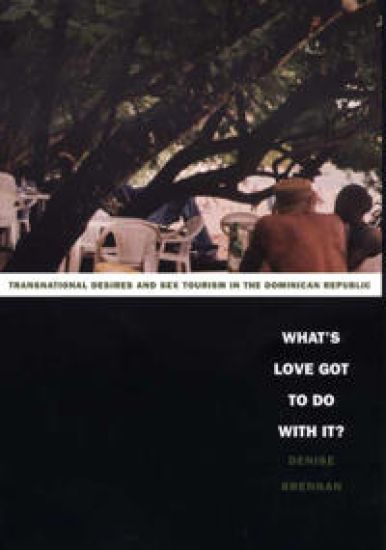
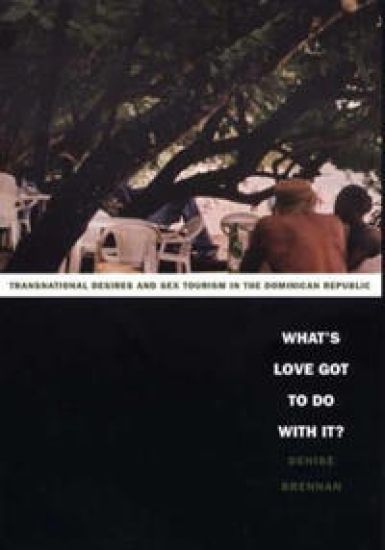
What's Love Got to Do with It?

What's Love Got to Do with It?

Denise Brennan

Duke University Press
2004
sidottu
In locations around the world, sex tourism is a booming business. What's Love Got to Do with It? is an in-depth examination of the motivations of workers, clients, and others connected to the sex tourism business in SosÚa, a town on the northern coast of the Dominican Republic. Denise Brennan considers why Dominican and Haitian women move to SosÚa to pursue sex work and describes how sex tourists, primarily Europeans, come to SosÚa to buy sex cheaply and live out racialized fantasies. For the sex workers, Brennan explains, the sex trade is more than a means of survival-it is an advancement strategy that hinges on their successful “performance” of love. Many of these women seek to turn a commercialized sexual transaction into a long-term relationship that could lead to marriage, migration, and a way out of poverty. Illuminating the complex world of SosÚa’s sex business in rich detail, Brennan draws on extensive interviews not only with sex workers and clients, but also with others who facilitate and benefit from the sex trade. She weaves these voices into an analysis of Dominican economic and migration histories to consider the opportunities-or lack thereof-available to poor Dominican women. She shows how these women, local actors caught in a web of global economic relations, try to take advantage of the foreign men who are in SosÚa to take advantage of them. Through her detailed study of the lives and working conditions of the women in SosÚa’s sex trade, Brennan raises important questions about women’s power, control, and opportunities in a globalized economy.
What's Love Got to Do with It?

What's Love Got to Do with It?

Denise Brennan

Duke University Press
2004
pokkari
In locations around the world, sex tourism is a booming business. What's Love Got to Do with It? is an in-depth examination of the motivations of workers, clients, and others connected to the sex tourism business in SosÚa, a town on the northern coast of the Dominican Republic. Denise Brennan considers why Dominican and Haitian women move to SosÚa to pursue sex work and describes how sex tourists, primarily Europeans, come to SosÚa to buy sex cheaply and live out racialized fantasies. For the sex workers, Brennan explains, the sex trade is more than a means of survival-it is an advancement strategy that hinges on their successful “performance” of love. Many of these women seek to turn a commercialized sexual transaction into a long-term relationship that could lead to marriage, migration, and a way out of poverty. Illuminating the complex world of SosÚa’s sex business in rich detail, Brennan draws on extensive interviews not only with sex workers and clients, but also with others who facilitate and benefit from the sex trade. She weaves these voices into an analysis of Dominican economic and migration histories to consider the opportunities-or lack thereof-available to poor Dominican women. She shows how these women, local actors caught in a web of global economic relations, try to take advantage of the foreign men who are in SosÚa to take advantage of them. Through her detailed study of the lives and working conditions of the women in SosÚa’s sex trade, Brennan raises important questions about women’s power, control, and opportunities in a globalized economy.
Impersonal Passion

Impersonal Passion

Denise Riley

Duke University Press
2005
sidottu
Denise Riley is renowned as a feminist theorist and a poet and for her remarkable refiguring of familiar but intransigent problems of identity, expression, language, and politics. In Impersonal Passion, she turns to everyday complex emotional and philosophical problems of speaking and listening. Her provocative meditations suggest that while the emotional power of language is impersonal, this impersonality paradoxically constitutes the personal. In nine linked essays, Riley deftly unravels the rhetoric of life’s absurdities and urgencies, its comforts and embarrassments, to insist on the forcible affect of language itself. She teases out the emotional complexities of such quotidian matters as what she ironically terms the right to be lonely in the face of the imperative to be social or the guilt associated with feeling as if you’re lying when you aren’t. Impersonal Passion reinvents questions from linguistics, the philosophy of language, and cultural theory in an illuminating new idiom: the compelling emotion of the language of the everyday.
Impersonal Passion

Impersonal Passion

Denise Riley

Duke University Press
2005
pokkari
Denise Riley is renowned as a feminist theorist and a poet and for her remarkable refiguring of familiar but intransigent problems of identity, expression, language, and politics. In Impersonal Passion, she turns to everyday complex emotional and philosophical problems of speaking and listening. Her provocative meditations suggest that while the emotional power of language is impersonal, this impersonality paradoxically constitutes the personal. In nine linked essays, Riley deftly unravels the rhetoric of life’s absurdities and urgencies, its comforts and embarrassments, to insist on the forcible affect of language itself. She teases out the emotional complexities of such quotidian matters as what she ironically terms the right to be lonely in the face of the imperative to be social or the guilt associated with feeling as if you’re lying when you aren’t. Impersonal Passion reinvents questions from linguistics, the philosophy of language, and cultural theory in an illuminating new idiom: the compelling emotion of the language of the everyday.
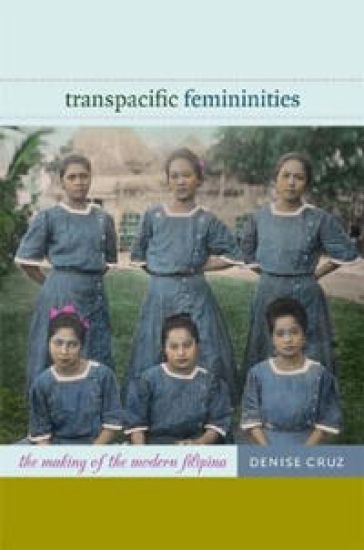
Transpacific Femininities

Transpacific Femininities

Denise Cruz

Duke University Press
2012
sidottu
In this groundbreaking study, Denise Cruz investigates the importance of the figure she terms the "transpacific Filipina" to Philippine nationalism, women's suffrage, and constructions of modernity. Her analysis illuminates connections between the rise in the number of Philippine works produced in English and the emergence of new social classes of transpacific women during the early to mid-twentieth century.Through a careful study of multiple texts produced by Filipina and Filipino writers in the Philippines and the United States-including novels and short stories, newspaper and magazine articles, conduct manuals, and editorial cartoons-Cruz provides a new archive and fresh perspectives for understanding Philippine literature and culture. She demonstrates that the modern Filipina did not emerge as a simple byproduct of American and Spanish colonial regimes, but rather was the result of political, economic, and cultural interactions among the Philippines, Spain, the United States, and Japan. Cruz shows how the complex interplay of feminism, nationalism, empire, and modernity helped to shape, and were shaped by, conceptions of the transpacific Filipina.
Transpacific Femininities

Transpacific Femininities

Denise Cruz

Duke University Press
2012
pokkari
In this groundbreaking study, Denise Cruz investigates the importance of the figure she terms the "transpacific Filipina" to Philippine nationalism, women's suffrage, and constructions of modernity. Her analysis illuminates connections between the rise in the number of Philippine works produced in English and the emergence of new social classes of transpacific women during the early to mid-twentieth century.Through a careful study of multiple texts produced by Filipina and Filipino writers in the Philippines and the United States-including novels and short stories, newspaper and magazine articles, conduct manuals, and editorial cartoons-Cruz provides a new archive and fresh perspectives for understanding Philippine literature and culture. She demonstrates that the modern Filipina did not emerge as a simple byproduct of American and Spanish colonial regimes, but rather was the result of political, economic, and cultural interactions among the Philippines, Spain, the United States, and Japan. Cruz shows how the complex interplay of feminism, nationalism, empire, and modernity helped to shape, and were shaped by, conceptions of the transpacific Filipina.
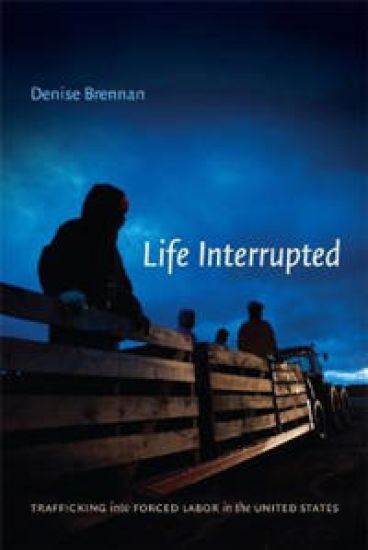
Life Interrupted

Life Interrupted

Denise Brennan

Duke University Press
2014
sidottu
Life Interrupted introduces us to survivors of human trafficking who are struggling to get by and make homes for themselves in the United States. Having spent nearly a decade following the lives of formerly trafficked men and women, Denise Brennan recounts in close detail their flight from their abusers and their courageous efforts to rebuild their lives. At once scholarly and accessible, her book links these firsthand accounts to global economic inequities and under-regulated and unprotected workplaces that routinely exploit migrant laborers in the United States. Brennan contends that today's punitive immigration policies undermine efforts to fight trafficking. While many believe trafficking happens only in the sex trade, Brennan shows that across low-wage labor sectors-in fields, in factories, and on construction sites-widespread exploitation can lead to and conceal forced labor. Life Interrupted is a riveting account of life in and after trafficking and a forceful call for meaningful immigration and labor reform.All royalties from this book will be donated to the nonprofit Survivor Leadership Training Fund administered through the Freedom Network.
Life Interrupted

Life Interrupted

Denise Brennan

Duke University Press
2014
pokkari
Life Interrupted introduces us to survivors of human trafficking who are struggling to get by and make homes for themselves in the United States. Having spent nearly a decade following the lives of formerly trafficked men and women, Denise Brennan recounts in close detail their flight from their abusers and their courageous efforts to rebuild their lives. At once scholarly and accessible, her book links these firsthand accounts to global economic inequities and under-regulated and unprotected workplaces that routinely exploit migrant laborers in the United States. Brennan contends that today's punitive immigration policies undermine efforts to fight trafficking. While many believe trafficking happens only in the sex trade, Brennan shows that across low-wage labor sectors-in fields, in factories, and on construction sites-widespread exploitation can lead to and conceal forced labor. Life Interrupted is a riveting account of life in and after trafficking and a forceful call for meaningful immigration and labor reform.All royalties from this book will be donated to the nonprofit Survivor Leadership Training Fund administered through the Freedom Network.
Queen for a Day

Queen for a Day

Denise Duhamel

University of Pittsburgh Press
2001
nidottu
There’s no predicting a Denise Duhamel poem, except that it might be about something you’ve never seen in a poem before: Mr. Donut, Rodney King, or nude beaches; Gertrude Stein, phone sex, or the Girl Scouts. Poems from The Woman with Two Vaginas, a book that was censored when it first appeared, are based on Inuit folklore. How the Sky Fell offers revisionist fairy tales, and the poems from Kinky are inspired by Barbie dolls. In her new work, Duhamel suffers postmodern angst when using the “therapeutic I.” Denise Duhamel has startled readers of American poetry with work that pirouettes on a tightrope above the personal and the political, the spoken word and the page, the irreverent and the sacred. Queen for a Day showcases poems from her five previous collections, along with new work.
Ka-Ching!

Ka-Ching!

Denise Duhamel

University of Pittsburgh Press
2009
nidottu
Ka-Ching! is a book of poems that explores America’s obsession with money. It also includes a crown of sonnets about e-bay, sestinas on the subjects of Sean Penn and the main characters of fairytales, a pantoum that riffs on a childhood riddle, and a villanelle inspired by bathroom grafitti.
Blowout

Blowout

Denise Duhamel

University of Pittsburgh Press
2013
nidottu
Finalist, National Book Critics Circle Award.In Blowout, Denise Duhamel asks the same question that Frankie Lyman & the Teenagers asked back in 1954—"Why Do Fools Fall in Love?" Duhamel's poems readily admit that she is a love-struck fool, but also embrace the "crazy wisdom" of the Fool of the Tarot deck and the fool as entertainer or jester. From a kindergarten crush to a failed marriage and beyond, Duhamel explores the nature of romantic love and her own limitations. She also examines love through music, film, and history—Michelle and Barak Obama's inauguration and Cleopatra's ancient sex toy. Duhamel chronicles the perilous cruelties of love gone awry, but also reminds us of the compassion and transcendence in the aftermath. In "Having a Diet Coke with You," she asserts that "love poems are the most difficult poems to write / because each poem contains its opposite its loss / and that no matter how fierce the love of a couple / one of them will leave the other / if not through betrayal / then through death." Yet, in Blowout, Duhamel fiercely and foolishly embraces the poetry of love.
Metamorphosis of Heads, The

Metamorphosis of Heads, The

Denise Arnold; Juan de Dios Yapita

University of Pittsburgh Press
2013
nidottu
Since the days of the Spanish Conquest, the indigenous populations of Andean Bolivia have struggled to preserve their textile-based writings. This struggle continues today, both in schools and within the larger culture. The Metamorphosis of Heads explores the history and cultural significance of Andean textile writings--weavings and kipus (knotted cords), and their extreme contrasts in form and production from European alphabet-based texts. Denise Arnold examines the subjugation of native texts in favor of European ones through the imposition of homogenized curricula by the Educational Reform Law. As Arnold reveals, this struggle over language and education directly correlates to long-standing conflicts for land ownership and power in the region, since the majority of the more affluent urban population is Spanish speaking, while indigenous languages are spoken primarily among the rural poor. The Metamorphosis of Heads acknowledges the vital importance of contemporary efforts to maintain Andean history and cultural heritage in schools, and shows how indigenous Andean populations have incorporated elements of Western textual practices into their own textual activities.Based on extensive fieldwork over two decades, and historical, anthropological, and ethnographic research, Denise Arnold assembles an original and richly diverse interdisciplinary study. The textual theory she proposes has wider ramifications for studies of Latin America in general, while recognizing the specifically regional practices of indigenous struggles in the face of nation building and economic globalization.
Scald

Scald

Denise Duhamel

University of Pittsburgh Press
2017
nidottu
When her "smart" phone keeps asking her to autocorrect her name to Denise Richards, Denise Duhamel begins a journey that takes on celebrity, sex, reproduction, and religion with her characteristic wit and insight. The poems in Scald engage feminism in two ways—committing to and battling with—various principles and beliefs. Duhamel wrestles with foremothers and visionaries Shulamith Firestone, Andrea Dworkin, and Mary Daly as well as with pop culture figures such as Helen Reddy, Cyndi Lauper, and Bikini Kill. In dialogue with artists and writers such as Catherine Opie, Susan Faludi, and Eve Ensler, Duhamel tries to understand our cultural moment. While Duhamel's Scald can burn, she has more importantly taken on the role of the ancient Scandinavian "Skald," one who pays tribute to heroic deeds. In Duhamel's case, her heroes are also heroines.
Second Story

Second Story

Denise Duhamel

University of Pittsburgh Press
2021
nidottu
When her Florida apartment is damaged by the ferocity of Hurricane Irma, Duhamel turns to Dante and terza rima, reconstructing the form into the long poem "Terza Irma." Throughout the book she investigates our near-catastrophic ecological and political moment, hyperaware of her own complicity, resistance, and agency. She writes odes to her favorite uncle - who was "green" before it was a hashtag - and Mother Nature via a retro margarine commercial. She writes letters to her failing memory as well as to America's amnesia. With fear of the water below and a burglar who enters through her second story window, she bravely faces the story under the story, the second story we often neglect to tell.
Pink Lady

Pink Lady

Denise Duhamel

UNIVERSITY OF PITTSBURGH PRESS
2025
nidottu
When her mother agrees to enter a Rhode Island nursing home in December of 2019, Denise Duhamel promises she’ll visit at least once a month. By March of 2020, everyone is in lockdown. The elegies in Pink Lady explore the resiliency of her elderly mother and nurses on the frontline, as well as the personal and universally experienced anxieties faced during pandemic policies. With focus, obsession, and even humor, Duhamel chronicles the separation of a mother and daughter, documenting the power of imagination, the aging body, and the limits of caregiving.
The Politics of Power

The Politics of Power

Denise Leith

University of Hawai'i Press
2002
nidottu
Even as Major General Suharto consolidated his power in the bloodletting of the mid-sixties, Freeport-McMoRan, the American transnational mining company, signed a contract with the new military regime, the first foreign company to do so. To day, in the isolated jungles of West Papua, a region that is increasingly restive under Indonesian rule, Freeport lays claim to the world's largest gold mine and one of its richest and most profitable copper mines. This volume is the first major analysis of the company's presence in Indonesia. It takes a close and detailed look at the changing nature of power relations between Freeport and Suharto, the Indonesian military, the traditional landowners (the Amungme and Kamoro), and environmental and human rights groups. It examines how and why an American company, despite such rigorous home-state laws, was able to operate in West Papua with impunity for nearly thirty years and adapt to, indeed thrive in, a business culture anchored in corruption, collusion, and nepotism.
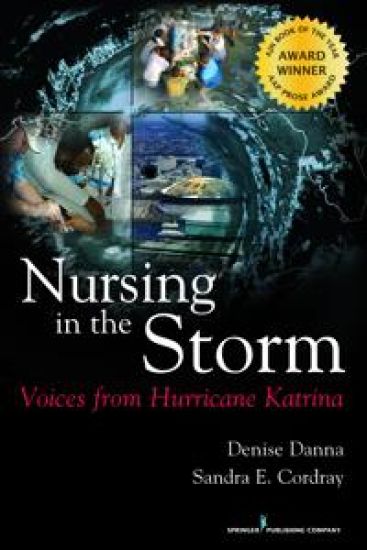
Nursing in the Storm

Nursing in the Storm

Denise Danna; Sandra Cordray

Springer Publishing Co Inc
2009
nidottu
2010 PROSE Award Winner for Nursing & Allied Health Sciences! 2010 AJN Book of the Year Award Winner in Public Interest and Creative Works! The accounts are vivid, colorful, descriptive, intense, and often horrific and give cross-sectional views of life in the trenches during this disastervñThis book is a rich primary source for both historians and disaster preparedness planners. It's not only a tribute to the courage of the nurses, but should also serve as a guide for policy planners hoping to avoid less than optimal responses to future crises.--AJN [T]he book...fascinates simply for its raw documentation of the dreadful events and conditions endured by nurses, doctors, and ancillary staff as they struggled to care for critically ill patients without electricity, running water, air conditioning systems, and other resources. Five years after the levees broke, the horror and chaos of Katrina is still fresh in these accounts. Through the stories, readers are transported into the hospitals as nurses heroically work together to evacuate babies from NICUs and vented patients from ICU, try to calm patients, family members, and coworkers, and make do with the equipment and supplies they've got.--National Nurse Don't ever think that this can't happen to you. You are going to read this and it's going to sound like we created this scenario, but this is a real scenario that happened. --Pam, Memorial Medical Center Everything that was battery operated eventually died. There were no monitors...we tried to take care of people in the most humane way possible. --Lois, Lindy Boggs Medical Center Nursing in the Storm: Voices from Hurricane Katrina takes you inside six New Orleans hospitals-cut off from help for days by flooding-where nurses cared for patients around the clock. In this book, nurses from Hurricane Katrina share what they did, how they coped, what they lost, and what they are doing now in a city and health care infrastructure still rebuilding, still in jeopardy. In their own words, the nurses tell what happened in each hospital just before, during, and after the storm. Danna and Cordray provide an intimate portrait of the experience of Katrina, which they and their colleagues endured. Just a few of the heroic nurses you'll find inside: Rae Ann and twenty others, including her husband and children, who wait on a hospital roof for help to come Lisa, in the midst of caring for patients, who has not heard from her husband in 5 days Roslyn, who has 800 people in her hospital when the power generators shut down Linda, who uses bed sheets to write out help messages on a hospital roof, hoping someone will see them The book also discusses how to plan and prepare for future disasters, with a closing chapter documenting the "lessons learned" from Katrina, including day-to-day health care delivery in a city of crisis. This groundbreaking work serves as a testament to nurses' professionalism, perseverance, and unwavering dedication.
Fast Facts for DNP Role Development

Fast Facts for DNP Role Development

Denise Menonna-Quinn; Toni Tortorella Genova

Springer Publishing Co Inc
2019
nidottu
Illustrates how the DNP degree fosters opportunities for nurses to shape the future of healthcare The first resource of its kind, this engaging handbook delivers practical guidance on the burgeoning roles and career opportunities afforded by the DNP degree, as well as the knowledge and skills required for career advancement. It provides students and professionals with a fundamental understanding of the value of the DNP degree and how it supports opportunities for nurses to shape the future of healthcare at academic, policy, organizational, site, and patient-care levels. Following an overview of the DNP degree, along with a discussion of key competencies required for success in any DNP arena, this guide examines the various roles a DNP graduate can hold. Chapters highlight potential career paths, education and certification requirements, opportunities and challenges, and the integration of relevant AACN DNP Essentials. Reflection questions and resources for further exploration conclude each chapter. Key Features:Delivers practical guidance on the DNP degree, potential roles, and career opportunities Describes how to integrate DNP Essentials into practice Discusses key competencies required for success in any DNP role Illustrates potential career paths with education and certification requirements Promotes self-reflection with thought-provoking questions Includes resources for further exploration