

Kirjahaku
Etsi kirjoja tekijän nimen, kirjan nimen tai ISBN:n perusteella.
1000 tulosta hakusanalla E. Edmonds


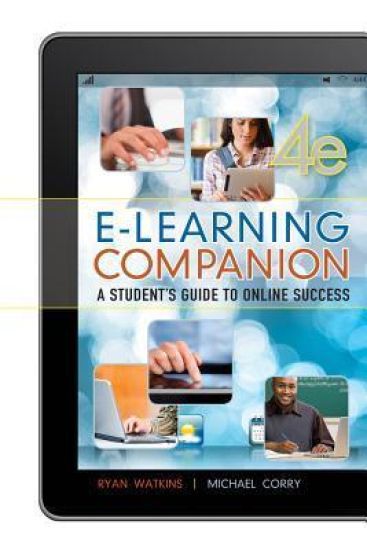
E-LEARNING COMPANION serves as a resource and quick-reference guide for any course that demands technology skills. In addition to helping students adapt previously mastered skills--such as time management, note-taking, and critical thinking--to the online environment, this text shows students how social networking, cloud file storage, wikis, and blogs can be utilized appropriately and effectively in a college course. Technical terminology and how-to tutorials help students become more capable and flexible online learners, and build skills that will support them throughout college and their future careers. The Fourth Edition is fully updated to be current and relevant for today's online learning environments, and also includes new Workplace Applications, and coverage of professional behavior and professional emails.
E-Commerce, E-Business and E-Service
CRC Press
2014
sidottu
The 2014 International Conference on E-Commerce, E-Business and E-Service (EEE 2014) was held on May 1-2, 2014, Hong Kong. This proceedings volume assembles papers from various professionals, leading researchers, engineers, scientists and students and presents innovative ideas and research results focused on the progress of E-Commerce, E-Business and E-Service. The papers in this book group around the following topics: E-Commerce, E-Business and E-Service, Internet Computing and Information Services, Computer science and Technology and ICT for Business and Management.

e-HRM
Routledge
2018
sidottu
As with other parts of business, technology is having a profound effect on the world of work and management of human resources. Technology is a key enabler for faster, cheaper and better delivery of HR services and in some cases can have a transformational as well as unintended negative effect.Designed for the digital era, e-HRM is one of the first textbooks on these developments. It incorporates the most current and important HR technology related topics in four distinct parts under one umbrella, written by leading scholars and practitioners drawn from across the world. All the chapters have a uniform structure and pay equal attention to theory and practice with an applied focus. Learning resources of the book include chapter-wide learning objectives, case studies, debates on related burning issues, and the companion website includes lecture slides and a question bank.
e-HRM
Routledge
2018
nidottu
As with other parts of business, technology is having a profound effect on the world of work and management of human resources. Technology is a key enabler for faster, cheaper and better delivery of HR services and in some cases can have a transformational as well as unintended negative effect.Designed for the digital era, e-HRM is one of the first textbooks on these developments. It incorporates the most current and important HR technology related topics in four distinct parts under one umbrella, written by leading scholars and practitioners drawn from across the world. All the chapters have a uniform structure and pay equal attention to theory and practice with an applied focus. Learning resources of the book include chapter-wide learning objectives, case studies, debates on related burning issues, and the companion website includes lecture slides and a question bank.

E-voting is the use of electronic means in the casting of the vote at political elections or referendums. This book provides an overview of e-voting related case-law worldwide and explains how judicial decisions impact e-voting development. With contributions by renowned experts on thirteen countries, the authors discuss e-voting both from controlled environments, such as voting machines in polling stations, and uncontrolled ones, including internet voting. Each chapter examines a group of country-specific leading judicial decisions on e-voting and their likely impact on its future development. Reference is made to emerging standards on e-voting such as the Recommendation Rec(2004)11 of the Council of Europe, the only international instrument on e-voting regulation, and to other countries' case-law. The work provides a broader, informative and easily accessible perspective on the historical, political and legal aspects of an otherwise very technical subject, and contributes to a better understanding of the significance of case law and its impact in shaping e-voting's future development. The book will be significantly useful to anyone with an interest in e-voting, in particular decision makers and officials, researchers and academia, as well as NGOs and providers of e-voting solutions.

Practical negotiating skills, including those needed for cross-cultural negotiations have long been taught in classrooms, along with some of the theory that underpins them. Most of this has been based on the notion that negotiation will be interpersonal and face-to-face. In recent years, though, globalization, the telecommunications boom and the ever increasing need for today's professionals to conduct cross-cultural business transactions has led to a new way of negotiating, bargaining, and resolving disputes. In e-Negotiations, Nicholas Harkiolakis and his co-authors highlight the challenge that awaits the young professionals who are today training in business schools. Future dispute resolutions and bargaining will take place between faceless disputants involved in a new kind of social process. Any adolescent with a mobile phone and Internet access knows that most of today's social transactions take place via a hand held or other electronic device. In a world of video conferences, chat rooms, Skype, Facebook, and MySpace, critical financial, business and political decisions are made through interaction between two-dimensional characters on screens. Here, the authors compare and contrast e-negotiation as it currently is with traditional face-to-face negotiation. Case studies illustrate how cross-cultural negotiations can be managed through modern channels of social influence and information-sharing and shed light on the critical social, cognitive and behavioral role of the negotiator in resolving on-line, cross-cultural, conflicts and disputes, and generally in bargaining and negotiation. This book, with its practical exercises, will be of immense help to students and professionals needing to 'practice' with the new negotiating media.

E-Participation in Southern Europe and the Balkans
Routledge
2017
nidottu
The rapid development and the growing penetration of information and communication technologies (ICT) provide tremendous opportunities for a wide and cost effective application of the ideas of participative democracy and public participation in government decision and policy making. ICT can drive dramatic transformations in the quantity and quality of communication and interaction of government organizations with citizens, revitalizing and strengthening the modern representative democracy which currently faces big problems of reduced citizens’ trust and involvement.This book deals with the application of these e-participation ideas in the special and ‘difficult’, and at the same time highly interesting, national context of Southern Europe and the Balkans. The first chapter provides an overview of e-participation concepts and practices whilst the following chapters analyse pilot applications of e-participation concepts in eight different Southern European and Balkan countries (Spain, France, Italy, Slovenia, Serbia, Albania, Greece, Yugoslav Republic of Macedonia (FYROM)). They cover both the ‘classical’ e-participation paradigm, based on official e-participation spaces created, operated and controlled by government organizations as well as emerging new e-participation paradigms including e-participation based on web 2.0 social media, and ‘scientific-level’ e-participation, based on opening government data to the scientific community.This book was originally published as a special issue of the Journal of Balkan and Near Eastern Studies.
This book includes detailed coverage of intellectual property, contract, encryption and liability issues, including allocation of domain names, use of metatags and other forms of search engine optimization, digital signatures and the position of ISPs and other intermediaries. There are case studies on electronic conveyancing and e-taxation.Though the book is written from a UK perspective, comparative material is included from other jurisdictions, including America and Singapore in particular.
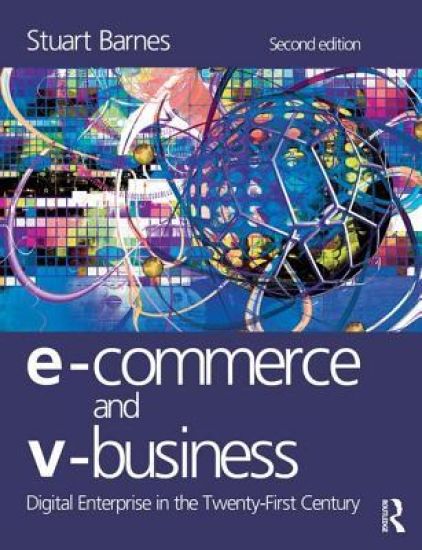
E-commerce and V-business examines the impact of the Internet and associated technologies on two related aspects of business: electronic commerce and virtual organization. Using a combination of recent theory and empirical evidence it demonstrates how forward thinking organizations are reaping considerable advantages from exciting new business models in these areas. Such models require radical rethinking of many aspects of traditional business. The book covers many of the critical and contemporary issues stemming from these important new developments. The collected papers in this book illustrate the wide variety of business opportunities afforded by e-commerce and virtual business. They describe and discuss the important issues that follow in the wake of an organization deciding to pursue consumers electronically and organize its operations virtually. It brings a good balance of theory and practical issues from different perspectives from different parts of the globe
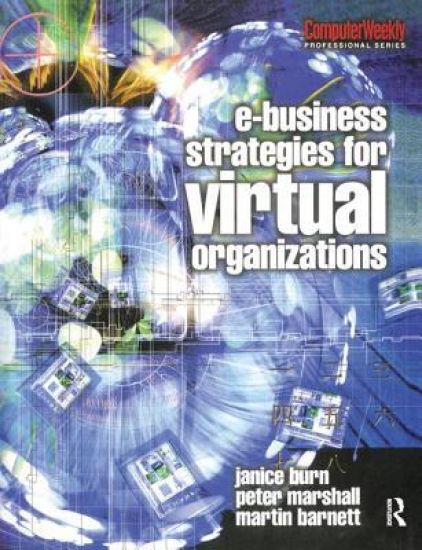
e-Business Strategies for Virtual Organizations
Janice Burn; Peter Marshall; Martin Barnett
Routledge
2016
sidottu
'e-Business Strategies for Virtual Organizations' enables IT managers and directors to develop and implement IT strategies and infrastructures for new models of doing business based on the Internet. The authors provide a brief introduction to the concepts and strategic issues surrounding information warfare, managing organizational knowledge, and the information economy. The virtual organization is now an important business model for contemporary business organizations and the flexibility and adaptability of the virtual organization make it ideal for survival in today's highly competitive and dynamically changing markets. Modern corporations may utilize some of the features of the virtual organization to develop the ideal organization to a greater or lesser extent depending on individual business circumstances. This book covers the issues involved in planning, realizing and managing such a virtual organization, and the role of information and communication technologies in supporting virtual organizations and virtual organizing is addressed throughout.
e-Learning Ecologies
Routledge
2017
sidottu
e-Learning Ecologies explores transformations in the patterns of pedagogy that accompany e-learning—the use of computing devices that mediate or supplement the relationships between learners and teachers—to present and assess learnable content, to provide spaces where students do their work, and to mediate peer-to-peer interactions. Written by the members of the "new learning" research group, this textbook suggests that e-learning ecologies may play a key part in shifting the systems of modern education, even as technology itself is pedagogically neutral. The chapters in this book aim to create an analytical framework with which to differentiate those aspects of educational technology that reproduce old pedagogical relations from those that are genuinely innovative and generative of new kinds of learning. Featuring case studies from elementary schools, colleges, and universities on the practicalities of new learning environments, e-Learning Ecologies elucidates the role of new technologies of knowledge representation and communication in bringing about change to educational institutions.

e-Learning Ecologies
Routledge
2017
nidottu
e-Learning Ecologies explores transformations in the patterns of pedagogy that accompany e-learning—the use of computing devices that mediate or supplement the relationships between learners and teachers—to present and assess learnable content, to provide spaces where students do their work, and to mediate peer-to-peer interactions. Written by the members of the "new learning" research group, this textbook suggests that e-learning ecologies may play a key part in shifting the systems of modern education, even as technology itself is pedagogically neutral. The chapters in this book aim to create an analytical framework with which to differentiate those aspects of educational technology that reproduce old pedagogical relations from those that are genuinely innovative and generative of new kinds of learning. Featuring case studies from elementary schools, colleges, and universities on the practicalities of new learning environments, e-Learning Ecologies elucidates the role of new technologies of knowledge representation and communication in bringing about change to educational institutions.
When it comes to analyzing the phenomenon of digital government, the overwhelming focus is on the most developed nations in the world, and Western countries in particular. However, Kazakhstan, a post-totalitarian country, has also proved to be successful in the development of e-government.This book analyzes e-government development in Kazakhstan from a multitude of dimensions, including, but not limited to, political, social, economic and technological platforms. It examines the adoption of a wide range of technology-driven public sector projects and identifies the key drivers, challenges, regulation policies and stakeholders of e-government reforms in this transitional society. Taking into account recent changes in governance, such as the development of mobile government, the rise of civic engagement and the open data-driven movement, and the overall formal progress of the e-government project, this book addresses the emergence of new challenges and concerns associated with the advancement of the e-government concept. Furthermore, it suggests that a universal framework can be applied when investigating e-government projects in the developing world.Offering a wide range of practical recommendations on how to overcome the problems associated with e-government development, this book will be a valuable resource for anyone wishing to improve their understanding of the multidimensional nature of e-government. It will also be of key interest to academics studying Political Science, Development Studies, Public Policy and Central Asian Studies.

E-Research in Educational Contexts
Routledge
2016
sidottu
This book explores the impact of e-research in education and the opportunities presented by a new generation of research approaches and tools. ‘E-research’ is an umbrella term that encompasses all digital research methods used for data collection and analysis including those involving handheld mobile devices. This is a current concern as the emergence of online tools that enable people to collaborate, create, and share information has led to the widespread use of these new digital research methods. Indeed, new tools and technologies are emerging almost daily and are being taken up by researchers for their ease of data collection and analysis. As a result the book investigates the implications of how we conceptualise educational research in the digital age. In addressing a range of key themes, from the ethics of e-research to the relationships between researchers and participants, the book presents original studies from a variety of educational contexts where digital tools are being used, and should be of value to postgraduate students, academic researchers, and policy makers. This book was originally published as a special issue of the International Journal of Research & Method in Education.

Whilst E.T.A. Hoffmann (1776-1822) is most widely known as the author of fantastic tales, he was also prolific as a music critic, productive as a composer, and active as a conductor. This book examines Hoffmann's aesthetic thought within the broader context of the history of ideas of the late-eighteenth and early-nineteenth centuries, and explores the relationship between his musical aesthetics and compositional practice. The first three chapters consider his ideas about creativity and aesthetic appreciation in relation to the thought of other German romantic theorists, discussing the central tenets of his musical aesthetic - the idea of a 'religion of art', of the composer as a 'genius', and the listener as a 'passive genius'. In particular the relationship between the multifaceted thought of Hoffmann and Friedrich Schleiermacher is explored, providing some insight into the way in which diverse intellectual traditions converged in early-nineteenth-century Germany. In the second half of the book, Hoffmann's dialectical view of music history and his conception of romantic opera are discussed in relation to his activities as a composer, with reference to his instrumental music and his two mature, large-scale operas, Aurora and Undine. The author also addresses broader issues pertaining to the ideological and historical significance of Hoffmann's musical and literary oeuvre.
The need for qualified specialists to work with and apply sophisticated technology in contemporary medicine is rapidly growing. Professional bodies predict that meeting the needs of healthcare globally will require almost tripling the number of Medical Physicists by 2035. Similar challenges exist in the constantly growing profession of Medical Engineering. They can be solved most efficiently and effectively with the tools of e-Learning, and a free and open-source Virtual Learning Environment (VLE) platform such as Moodle is a welcome solution.The Moodle VLE platform is a free, open source learning management system that is the most popular choice for higher educational institutions worldwide. However, the best practices of the Moodle system are still unknown to many. This practical guide provides educators, programme administrators, and programme directors with a condensed guide to Moodle and step-by-step instructions on how to create a single course or an entire educational programme. It also discusses cost-effective ways to apply e-Learning in an educational institution.This guide is accessible to all professionals, even those without specialist IT skills, and will be helpful to educators of all levels in Medical Physics and Engineering, as well as in other medical and medical-related specialties or disciplines with a strong imaging component.Features: Provides step-by-step instructions of how to build a course/module for Higher Education on Moodle Gives practical solutions to implementing e-Learning in Medical Physics and Engineering Explores useful tips and tricks for best practice

E-Governance in European and South African Cities
Leo van den Berg; Andre van der Meer; Willem van Winden; Paulus Woets
TAYLOR FRANCIS LTD
2022
nidottu
Since the late 1990s, city councils have become increasingly aware of the potential for information technologies (ICTs) to improve the management of cities and as an instrument for economic and social policy. This has resulted in a wave of urban ICT strategies and policies, such as the adoption of ICTs within the city administration itself, projects that facilitate access to ICTs by weaker social groups and policies to improve the urban electronic infrastructure. By comparing eight cities - Barcelona, Cape Town, Eindhoven, Johnnesburg, Manchester, Tampere, the Hague and Venice - this book examines a range of innovative urban e-governance strategies and develops a framework of analysis that permits a common approach. Throughout the book, a distinction is made between access policies (aimed at improving access to ICTs for all citizens), content policies (directed to improve the use of ICTs in the city administration and semi-public domains) and infrastructure policies (to improve the provision of broadband infrastructure). For each of the cities, e-strategies and policies are critically reviewed and compared. The book reveals that urban e-strategies have evolved from an internal and technology-centred orientation to a more outward-looking approach.