
Kirjahaku
Etsi kirjoja tekijän nimen, kirjan nimen tai ISBN:n perusteella.
1000 tulosta hakusanalla Edmundo LLAMAS ALBA
Edmund Spenser and the Impersonations of Francis Bacon
Edward George Harman
Literary Licensing, LLC
2014
nidottu
The Works of the Right Honourable Edmund Burke Volume the Second
Edmund Burke
Createspace Independent Publishing Platform
2014
nidottu
Edmund Dulac's Picture-Book for the French Red Cross
Edmund Dulac
Createspace Independent Publishing Platform
2014
nidottu
The Works of the Right Honourable Edmund Burke: Volume the Seventh
Edmund Burke
Createspace Independent Publishing Platform
2014
nidottu
Selections from the Speeches and Writings of Edmund Burke
Edmund Burke
Createspace Independent Publishing Platform
2014
nidottu
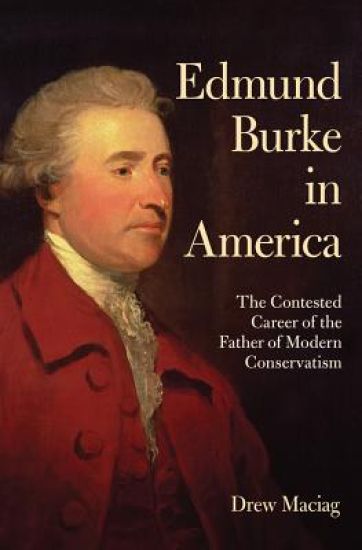
The statesman and political philosopher Edmund Burke (1729–1797) is a touchstone for modern conservatism in the United States, and his name and his writings have been invoked by figures ranging from the arch Federalist George Cabot to the twentieth-century political philosopher Leo Strauss. But Burke's legacy has neither been consistently associated with conservative thought nor has the richness and subtlety of his political vision been fully appreciated by either his American admirers or detractors. In Edmund Burke in America, Drew Maciag traces Burke's reception and reputation in the United States, from the contest of ideas between Burke and Thomas Paine in the Revolutionary period, to the Progressive Era (when Republicans and Democrats alike invoked Burke's wisdom), to his apotheosis within the modern conservative movement. Throughout, Maciag is sensitive to the relationship between American opinions about Burke and the changing circumstances of American life. The dynamic tension between conservative and liberal attitudes in American society surfaced in debates over the French Revolution, Jacksonian democracy, Gilded Age values, Progressive reform, Cold War anticommunism, and post-1960s liberalism. The post–World War II rediscovery of Burke by New Conservatives and their adoption of him as the "father of conservatism" provided an intellectual foundation for the conservative ascendancy of the late twentieth century. Highlighting the Burkean influence on such influential writers as George Bancroft, E. L. Godkin, and Russell Kirk, Maciag also explores the underappreciated impact of Burke's thought on four U.S. presidents: John Adams and John Quincy Adams, Theodore Roosevelt, and Woodrow Wilson. Through close and keen readings of political speeches, public lectures, and works of history and political theory and commentary, Maciag offers a sweeping account of the American political scene over two centuries.
This highly readable book offers a contemporary interpretation of the political thought of Edmund Burke, drawing on his experiences to illuminate and address fundamental questions of politics and society that are of particular interest today. In Edmund Burke for Our Time, Byrne asserts that Burke's politics is reflective of unique and sophisticated ideas about how people think and learn and about determinants of political behavior.
Edmund-Dulac's Fairy-Book: Fairy Tales of the Allied Nations
Edmund Dulac
Createspace Independent Publishing Platform
2014
nidottu
Few thinkers have provoked such violently opposing reactions as Edmund Burke. A giant of eighteenth-century political and intellectual life, Burke has been praised as a prophet who spied the terror latent in revolutionary or democratic ideologies, and condemned as defender of social hierarchy and outmoded political institutions. Ross Carroll tempers these judgments by situating Burke’s arguments in relation to the political controversies of his day. Burke’s writings must be understood as rhetorically brilliant exercises in political persuasion aimed less at defending abstract truths than at warning his contemporaries about the corrosive forces – ideological, social, and political – that threatened their society. Drawing on Burke’s enormous corpus, Carroll presents a nuanced portrait of Burke as, above all, a diagnostician of political misrule, whether domestic, foreign, or imperial. Burke’s lasting value, Carroll argues, derives less from the content of his specific positions than from the difficult questions he forces us to ask of ourselves. This engaging and illuminating account of Burke’s work is a vital reference for students and scholars of history, philosophy, and political thought.
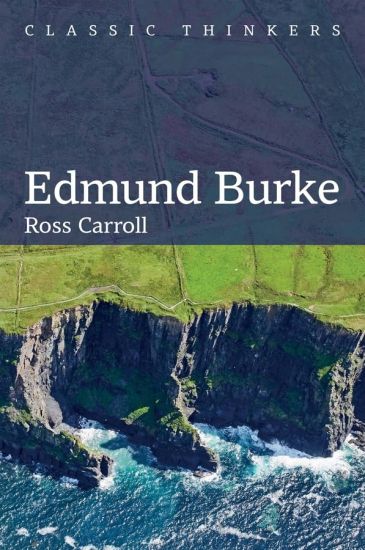
Few thinkers have provoked such violently opposing reactions as Edmund Burke. A giant of eighteenth-century political and intellectual life, Burke has been praised as a prophet who spied the terror latent in revolutionary or democratic ideologies, and condemned as defender of social hierarchy and outmoded political institutions. Ross Carroll tempers these judgments by situating Burke’s arguments in relation to the political controversies of his day. Burke’s writings must be understood as rhetorically brilliant exercises in political persuasion aimed less at defending abstract truths than at warning his contemporaries about the corrosive forces – ideological, social, and political – that threatened their society. Drawing on Burke’s enormous corpus, Carroll presents a nuanced portrait of Burke as, above all, a diagnostician of political misrule, whether domestic, foreign, or imperial. Burke’s lasting value, Carroll argues, derives less from the content of his specific positions than from the difficult questions he forces us to ask of ourselves. This engaging and illuminating account of Burke’s work is a vital reference for students and scholars of history, philosophy, and political thought.
The Works of the Right Honorable Edmund Burke Volume the Eleventh
Edmund Burke
Createspace Independent Publishing Platform
2015
nidottu
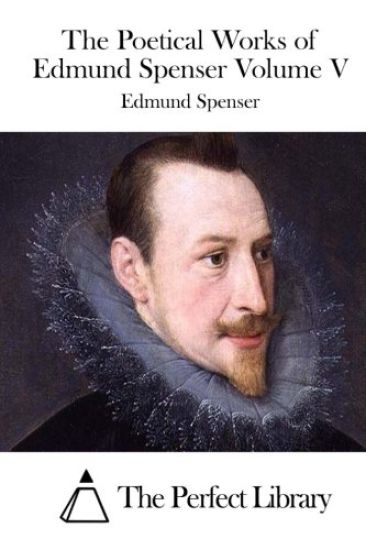
The Poetical Works of Edmund Spenser Volume V
Edmund Spenser
Createspace Independent Publishing Platform
2015
nidottu
The Works of the Right Honourable Edmund Burke Volume the Eighth
Edmund Burke
Createspace Independent Publishing Platform
2015
nidottu