Kirjojen hintavertailu. Mukana 11 224 866 kirjaa ja 12 kauppaa.

Kirjahaku

Etsi kirjoja tekijän nimen, kirjan nimen tai ISBN:n perusteella.

1000 tulosta hakusanalla Edwin Colbert

Sign Off

Sign Off

Edwin Diamond

MIT Press
1983
pokkari
"For now - the 1980s - television is still in its prime time, and hearing the first intimations of mortality." And what will follow TV? More TV, TV that is different and yet not all that different. In this evocative book, Edwin Diamond points out that what we see on television today closely reflects our culture and society and politics and will continue to do so. Because the country is not changing as fast as the technology, Diamond's study of television in its "prime time" is also a glimpse of much of the content of the TV of the future, whether it comes to us over the air, by cable, or by satellite. Among other topics, Sign Off covers sex on television, the TV preachers of the "electronic church," the way television handled the Iranian hostage crisis, "Full Disclosure" as seen (or not seen) in the media's handling of Nelson Rockefeller s death and Ted Kennedy's reputed "womanizing," "Disco News" and Ted Turner's continuous news, the Three Mile Island reportage, the reign of the young and the white and the male on commercial television, and the twin myths of television's omnipotence and its liberalism. Although today's network-dominated, "free" television with limited channels will be superseded by cable and satellite transmissions with two-way, viewer-responsive features and add-on computer capabilities that will offer, usually for a fee, 60 to 100 channels precisely aimed at special-interest audiences, the content of TV will not be altered so much as the kinds of in-home services available. Edwin Diamond relates television to what is happening in other media, as might be expected from a writer who has spent his professional life working on newspapers and magazines in addition to being a commentator on (and about) television.He is Senior Lecturer in Political Science at MIT and was recently Associate Editor for the New York Daily News Tonight edition. Diamond was Senior Editor at Newsweek, a contributing editor of New York and Esquire, and a regular commentator on the Washington Post-Newsweek television stations. He is author of The Tin Kazoo and Good News, Bad News, both published in paperback by The MIT Press.
Cognition in the Wild

Cognition in the Wild

Edwin Hutchins

Bradford Books
1996
pokkari
An account of how anthropological methods can be combined with cognitive theory in studies of cognition. Drawing comparisons with navigation, this study argues that cultural systems have cognitive properties of their own that differ from the cognitive properties of the individuals within them.
Physical Science, Its Structure and Development
This introduction to physical science combines a rigorous discussion of scientific principles with sufficient historical background and philosophic interpretation to add a new dimension of interest to the accounts given in more conventional textbooks. It brings out the twofold character of physical science as an expanding body of verifiable knowledge and as an organized human activity whose goals and values are major factors in the revolutionary changes sweeping over the world today. Professor Kemble insists that to understand science one must understand not only what the scientists have discovered, but how the discoveries were made, why the growth of scientific knowledge had to begin slowly, and what it has done to our habits of thought. He has written neither a history of science nor an introduction to the philosophy of science but an introduction to scientific concepts and principles that supplies as much of their historical and philosophical context as limits of space permit. The volume takes up in turn the story of the astronomy of ancient Greece, the Copernican revolution, the idea of the expanding sidereal universe, the rise of Newton's classical mechanics with its many astronomical applications, the concept of energy and its relation to heat, to steam engines, and to thermodynamics. The volume ends with an account of the successes and failures of classical kinetic-molecular theory of heat.
Proverbs of the Pennsylvania Germans

Proverbs of the Pennsylvania Germans

Edwin Miller Fogel

Metalmark Books
2009
pokkari
Proverbs of the Pennsylvania Germans is a follow-up and companion volume to Edwin Miller Fogel’s 1915 publication Beliefs and Superstitions of the Pennsylvania Germans. This volume focuses on the proverb in its broadest sense, including adages, aphorisms, and some appropriate idiomatic expressions. This “spontaneous expression of experience,” so widely used in the Germanic linguistic tradition, is in Fogel’s words “the very bone and sinew of the [Pennsylvania German] dialect.” This collection is the result of the author’s years of field research in Pennsylvania and comprises over two thousand proverbs dealing with all facets of folklife. Each entry is accompanied by an English translation and often, where applicable, a High German translation. Citations also note instances in which a parallel proverb had been documented in either a British or High German collection. The proverbs are arranged alphabetically by keyword, in the conventional style for a collection such as this one. Nearly one hundred proverbs deemed “vulgar,” which were originally published separately with only High German translations, have been reproduced as an appendix in this Metalmark edition.
Tulip Ware of the Pennsylvania-German Potters

Tulip Ware of the Pennsylvania-German Potters

Edwin Atlee Barber

Pennsylvania State University Press
2011
pokkari
Published in 1903 by the Pennsylvania Museum, Tulip Ware of the Pennsylvania-German Potters is an in-depth look into the Pennsylvania German folk art known as slipware or redware. This volume introduces readers to the subject by detailing the international history of slip decoration and providing an overview of the technique and products throughout the world. Curator Edwin Atlee Barber delves into the specifics of the Pennsylvania German folk art by exploring tools and processes of manufacture, techniques and variations, decoration, motives, coloring, types, and practical uses for pottery, illustrated by numerous black-and-white images from the Pennsylvania Museum’s extensive collection. The volume also contains a detailed discussion of famous eighteenth- and nineteenth-century potters, primarily from Montgomery and Bucks Counties, including biographical information and illustrative photographs of their work. Particular attention is paid to the Pennsylvania German dialect and the important role it played in folk art. Barber provides translations of numerous Pennsylvania German inscriptions, a defining element of much of this art. Modern readers can still find many of the pieces featured in this volume on display in the American collection at the Philadelphia Museum of Art.
The Allegheny Pilot

The Allegheny Pilot

Edwin L. Babbitt

Pennsylvania State University Press
2013
pokkari
The Allegheny Pilot, first published in 1855, is an early travel guide to western Pennsylvania’s rivers and navigable waterways, complete with detailed maps, notes, and charts. Originally written for lumber raftsmen and even considered to be the “Lumberman’s Bible,” it remains an important document on the original path of the Allegheny and its tributaries, which have since been changed by the construction of the Kinzua Dam and other man-made alterations to the landscape. The book benefits not only from Babbitt’s own knowledge, experience, and research on the Allegheny, but also from his having “spent much time in conversing with many of the oldest settlers along the river, collecting from them, orally, many historical facts besides those pertaining to the navigation of the river.” The Allegheny Pilot is a fascinating look at a transient historical landscape in a time when the beginnings of modern industrialization began to push westward across the state’s frontiers, irrevocably changing them.
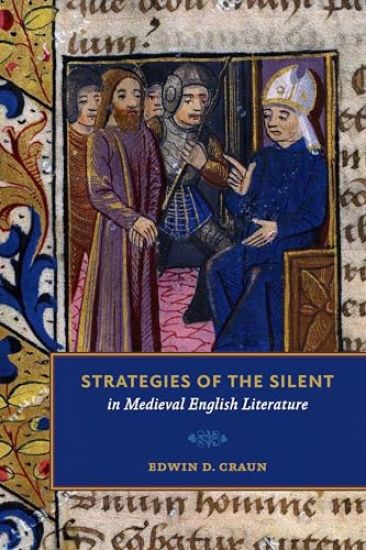
Strategies of the Silent in Medieval English Literature

Strategies of the Silent in Medieval English Literature

Edwin D. Craun

Pennsylvania State University Press
2025
sidottu
Silence, like speech, is a mode of communication that can be used strategically. In Strategies of the Silent in Medieval English Literature, Edwin D. Craun investigates the silences in public life that punctuate talk in late Middle English literature.Centering his study on readings of canonical texts, including the works of Thomas Hoccleve, the anonymous Mum and the Sothsegger, William Langland’s Piers Plowman, John Lydgate’s translation of Guillaume de Deguileville’s Pelerinage de vie humaine, The Testimony of William Thorpe, a selection of the York cycle of passion plays, and The Book of Margery Kempes, Craun recovers the widespread moral discourse on silence developed by late medieval secular and clerical writers, who compiled materials from Roman popular morality and Stoic texts as well as Jewish wisdom books and Christian texts. These texts model how silence could play a role in effective government, respond to violent and angry antagonists, or in some cases to entirely obviate a good outcome. Through this nuanced exploration of the ethics of communication in medieval moral, narrative, and dramatic literature, Craun shows us that public silences, then as now, have strategies and consequences, dimensions that medieval imaginative writers explore subtly yet analytically in order to provoke ethical reflection and pragmatic action. Strategies of the Silent in Medieval English Literature offers original thematical and rhetorical insights into the written history of silence. It will appeal to scholars, graduate students, and advanced undergraduates interested in Middle English literature, history, and political thought.
Strategies of the Silent in Medieval English Literature

Strategies of the Silent in Medieval English Literature

Edwin D. Craun

Pennsylvania State University Press
2025
pokkari
Silence, like speech, is a mode of communication that can be used strategically. In Strategies of the Silent in Medieval English Literature, Edwin D. Craun investigates the silences in public life that punctuate talk in late Middle English literature.Centering his study on readings of canonical texts, including the works of Thomas Hoccleve, the anonymous Mum and the Sothsegger, William Langland’s Piers Plowman, John Lydgate’s translation of Guillaume de Deguileville’s Pelerinage de vie humaine, The Testimony of William Thorpe, a selection of the York cycle of passion plays, and The Book of Margery Kempes, Craun recovers the widespread moral discourse on silence developed by late medieval secular and clerical writers, who compiled materials from Roman popular morality and Stoic texts as well as Jewish wisdom books and Christian texts. These texts model how silence could play a role in effective government, respond to violent and angry antagonists, or in some cases to entirely obviate a good outcome. Through this nuanced exploration of the ethics of communication in medieval moral, narrative, and dramatic literature, Craun shows us that public silences, then as now, have strategies and consequences, dimensions that medieval imaginative writers explore subtly yet analytically in order to provoke ethical reflection and pragmatic action. Strategies of the Silent in Medieval English Literature offers original thematical and rhetorical insights into the written history of silence. It will appeal to scholars, graduate students, and advanced undergraduates interested in Middle English literature, history, and political thought.
The Last Kamikaze

The Last Kamikaze

Edwin P. Hoyt

Praeger Publishers Inc
1993
sidottu
This is the story of a man and a Navy--Vice Admiral Matome Ugaki and the Imperial Japanese Navy. By 1945 the Imperial Navy was physically destroyed and Admiral Ugaki was given the task of defending the Japanese homeland against attack, and he sent hundreds of kamikazes against the American naval forces operating around Okinawa. After Emperor Hirohito announced Japan's surrender on August 15, Ugaki stripped off his insignia of rank, climbed into a torpedo bomber, and flew to Okinawa, where he intended to crash into an American ship. But like so many of the other kamikazes, his mission was fruitless, his plane was shot down by American nightfighters. But Admiral Ugaki died, as he has promised to do, in the fashion of the thousands of young men he had sent to their deaths. Vice Admiral Matome Ugaki was the only high official of the Imperial Japanese Navy to have left a significant record, in the form of a diary started during the preparations for the China Incident, and kept throughout the war--from the planning phase of 1940, through the Pearl Harbor attack, and up until Japan's surrender. Hoyt draws on the diary and numerous other accounts by admirals and historians to create a picture of a Japanese Navy that began in a position of strength but was eventually destroyed by powerful Allied forces, shattering Japan's drive for conquest.
Hirohito

Hirohito

Edwin P. Hoyt

Praeger Publishers Inc
1992
sidottu
Hoyt's biography, taking advantage of recent posthumous revelations of a Japanese foreign service diplomat, portrays Hirohito as a man of peace held captive by his role in Japanese society and government . . . Library Journal A successful new book from a topnotch writer . . . Booklist . . . provocative . . . Kirkus ReviewsWas Emperor Hirohito to blame for Japan's expansionist military policies--and its atrocities--in World War II? Was he out to make the world his empire? This most extensive biography of the emperor in English challenges portrayals of Hirohito as either an unworldly scientist or a swashbuckling conspirator who tried to conquer the globe with military might. Using sources uncovered as recently as 1991, Hoyt reveals that the emperor was fundamentally a peace-loving man caught in a turbulent period when the Japanese military gained extraordinary power. He became the virtual prisoner of an Imperial system that prevented him from leading his country into an era of peace and prosperity, his boyhood dream. Hoyt's account, backed by a decade of research, details the emperor's repeated attempts to thwart the Imperial Army's headlong drive toward war. Even when defeat was certain, Hoyt maintains, Hirohito had to outmaneuver the army in order to surrender to Allied forces. Only then, in postwar years, did the emperor see his wishes for his country come true.To help the reader assess the emperor's life, Hoyt begins by examining the years preceding Hirohito's reign. He then focuses on the Manchurian incidents, the struggle for power in Japan, the China war, the global conflict and Japan's role in it, and the country's final capitulation. Critical passages on events preceding and during World War II, supported by the recently released diaries of men close to the emperor, detail the process by which Hirohito increasingly lost power as the army gained control. Turning his attention to the post-war years, Hoyt chronicles Japan's economic growth and the changing role of the emperor in Japanese society. Photographs from Japanese sources enhance the narrative. Hirohito: The Emperor and the Man offers new insight into the motives of a widely misunderstood leader. Hoyt's Hirohito is a quiet man with scholarly leanings; a patriot who loved his country but also admired Western qualities; a monarch who wished to act responsibly at a critical juncture but lacked the authority to do so.
Weaving a New Tapestry

Weaving a New Tapestry

Edwin G. Clausen; William P. Head

Praeger Publishers Inc
1999
sidottu
The fall of communism in the Soviet Union and Eastern Europe has affected nations throughout the world. This broad-based study examines how this major historical event has influenced the governments, societies, economies, and foreign relations of Asia. The work of 15 scholars is divided into three sections: Economic Development and Environmental Impact; Politics and Foreign Relations; and Social and Women's Issues. Chapters span the far reaches of Asia, from Japan to Pakistan, from China to the Philippines.This first thorough interdisciplinary analysis concludes that nations such as Japan, India, and the Philippines have been less influenced than China, Korea, and Vietnam. In each case, while direct impact of the end of the Cold War has been minimal, there is strong evidence of more subtle effects. The breadth of the regional coverage and the diversity of the subject matter will interest scholars and researchers alike. The authors pose as many questions as they answer, and their conclusions are certain to stimulate debate.
Backwater War

Backwater War

Edwin P. Hoyt

Praeger Publishers Inc
2002
sidottu
A year before the much-heralded second front was opened at Normandy in 1944, the Allies waged a campaign in Sicily and Italy—an assault that was marked by argument and dissent from beginning to end, highlighting the fundamental differences in strategic thinking between the Americans and the British. Winston Churchill favored scrapping what would become the Normandy invasion entirely, focusing instead on the soft underbelly of Nazi Europe, but American planners summarily rejected any plan that relied solely on a southern option. This is the story of this backwater campaign, a series of battles skillfully staged by the Germans and so botched by the Allies that their victory was achieved only as a result of German exhaustion. During the hard-fought campaign, the Americans persisted in their suspicion that the British were trying to undermine the effort. For example, the imbroglio over the Benedictine monastery of Monte Cassino and the ineptness of the British assault, led by a commander already discredited by his role in the fall of Crete, would spur the Americans to overreact and destroy the monastery by bombing. This created a major propaganda victory for the Germans. Such incidents convinced both Washington and London that they were working at cross-purposes. Hoyt contends that, as the British argued at the time, Allied efforts would have been better-spent concentrating on the Balkans. The Normandy campaign was expensive, unnecessary, and ultimately lengthened the war.
Rhetorical Criticism

Rhetorical Criticism

Edwin Black

University of Wisconsin Press
1978
nidottu
Winner, Speech Communication Association Award for Distinguished ScholarshipThis is a book that, almost singlehandedly, freed scholars from the narrow constraints of a single critical paradigm and created a new era in the study of public discourse. Its original publication in 1965 created a spirited controversy. Here Edwin Black examines the assumptions and principles underlying neo-Aristotelian theory and suggests an alternative approach to criticism, centering around the concept of the "rhetorical transaction." This new edition, containing Black's new introduction, will enable students and scholars to secure a copy of one of the most influential books ever written in the field.
Joe McCarthy and the Press

Joe McCarthy and the Press

Edwin R. Bayley

University of Wisconsin Press
1981
nidottu
This is a book for historians, journalists - and for all of us who need to remember this turbulent time in our nation's past, and its lessons for today. ""No one who cares about liberty will read Mr. Bayley's masterful study without a shudder about the journalistic cop-outs that contributed to making the nightmare called McCarthyism. This book reminds us that it could happen here, but perhaps will make it harder to happen next time."" - Daniel Schorr
White Collar Crime

White Collar Crime

Edwin H. Sutherland

Yale University Press
1985
pokkari
Presents evidence to support a thesis that there is much crime in the upper socio-economic classes and only the administrative procedures, used to deal with it, separate it from other animal behavior
Woman in the Crested Kimono

Woman in the Crested Kimono

Edwin McClellan

Yale University Press
1989
pokkari
“The life of Shibue Io and her family, a kind of Japanese Buddenbrooks, may be unknown in the West, but her rich and engaging story marks the intersection of a remarkable woman with a fascinating time in history.”—Arthur Golden, author of Memoirs of a Geisha “It stands clichÈs about traditional Japan on their heads. . . .Together with the people she knew, Io lives on in this literary album of old family pictures. It is well worth looking at.”—Ian Buruma, New York Times Book Review “A most engaging book. Seeing Shibue Io through the various lenses of her husband, her son, Tamotsu (from whom much information is gleaned), the novelist Ogai, and the biographer McClellan is an interesting, moving, disarming experience.”—Donald Richie, Japan Times “McClellan. . . has created a lively world, populated by women of various classes, samurai, doctors, poets, merchants, juvenile delinquents, and old eccentrics. The various incidents in which these people become involved provide a vivid picture of late Tokugawa society. This is a remarkable accomplishment.”—Nakai Yoshiyuki, Monumenta Nipponica “An engrossing, informative, and extremely useful book. . . . Woman in the Crested Kimono is not simply the account of one unusual Tokugawa woman. It is an evocation of a family, and through a family the entire samurai class, going from the comparative affluence of the late Tokugawa period through the turmoils of the restoration and beyond.”—Susan Napier, Journal of Asian Studies Daughter of a merchant family in nineteenth-century Japan and wife of a distinguished scholar-doctor of the samurai class, Shibue Io was a woman remarkable in her own right for her exceptionally keen mind and fearless spirit. Edwin McClellan now draws on the biography of her husband, written by Mori Ogai, to tell the story of Shibue Io, her society, and her times.
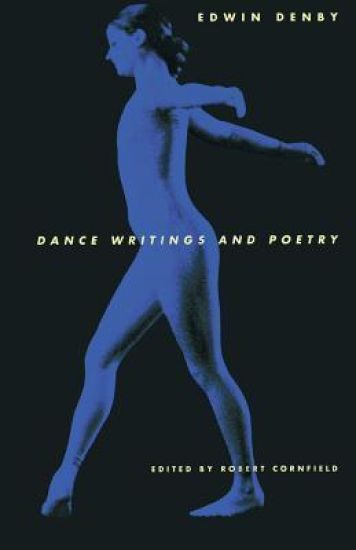
Dance Writings and Poetry

Dance Writings and Poetry

Edwin Denby

Yale University Press
1999
pokkari
Edwin Denby, who died in 1983, was the most important and influential American dance critic of this century. His reviews and essays, which he wrote for almost thirty years, were possessed of a voice, vision, and passion as compelling and inspiring as his subject. He was also a poet of distinction—a friend to Frank O'Hara, James Schuyler, and John Ashbery. This book presents a sampling of his reviews, essays, and poems, an exemplary collection that exhibits the elegance, lucidity, and timelessness of Denby's writings.The volume includes Denby's reactions to choreography ranging from Martha Graham to George Balanchine to the Rockettes, as well as his reflections on such general topics as dance in film, dance criticism, and meaning in dance.Denby`s writings are presented chronologically, and they not only provide a picture of how his dance theories and reviewing methods evolved but also give an informal history of dance in New York from the late 1930s to the early 1960s. The book—the only collection of Denby's writings currently in print—is an essential resource for students and lovers of dance.
George Berkeley in America

George Berkeley in America

Edwin Scott Gaustad

Yale University Press
2005
pokkari
In 1728 George Berkeley, the Irish philosopher and Anglican priest, came to America in the hope of founding a university in Bermuda and converting the Indians. He never reached Bermuda, where within a few years no Indians were left. Instead he settled in Newport, Rhode Island, one of the few places in New England that was hospitable to Anglicans. There his lively mind and sympathetic spirit involved him in a great variety of interests, though he stayed only thirty-three months. “Westward the Course of Empire takes its Way,” Berkeley wrote, and these words inspired Americans both as British colonists and later as citizens of a new nation. Berkeley, in spite of his disappointment over the much-vexed Bermuda project, never flagged in his concern for the spiritual and intellectual life of the New World. The presence of the distinguished churchman gave heart to embattled Anglicans in Puritan New England. Through his close friendship with New Haven’s Samuel Johnson, Berkeley did much to encourage both that faith and the town’s recently founded college. Harvard also benefited from his generosity. But Berkeley’s enduring influence on the cultural life of America is attested all the way from Yale’s Berkeley College to Berkeley, California, the site of another great university.This book is a graceful and authoritative account of an important episode in the life of a major philosopher and influential figure in the religious life of colonial New England.