Kirjojen hintavertailu. Mukana 11 699 587 kirjaa ja 12 kauppaa.

Kirjahaku

Etsi kirjoja tekijän nimen, kirjan nimen tai ISBN:n perusteella.

1000 tulosta hakusanalla Engin Colak

China's Engine of Environmental Collapse
As the world hurtles towards environmental oblivion, China is leading the charge. The nation's CO2 emissions are more than twice those of the US with a GDP just two-thirds as large. China leads the world in renewable energy yet it is building new coal-fired power plants faster than renewables. The country's lakes, rivers, and farmlands are severely polluted yet China's police state can't suppress pollution, even from its own industries. This is the first book to explain these contradictions. Richard Smith explains how the country's bureaucratic rulers are driven by nationalist-industrialist tendencies that are even more powerful than the drive for profit under 'normal' capitalism. In their race to overtake the US they must prioritise hyper-growth over the environment, even if this ends in climate collapse and eco-suicide. Smith contends that nothing short of drastic shutdowns and the scaling back of polluting industries, especially in China and the US, will suffice to slash greenhouse gas emissions enough to prevent climate catastrophe.
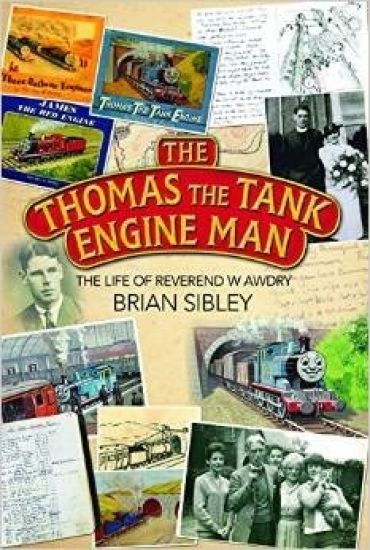
The Thomas the Tank Engine Man

The Thomas the Tank Engine Man

Brian Sibley

Lion Books
2015
sidottu
The stories of Thomas the Tank Engine and his friends have delighted generations of children and adults, but what do we know of the man who created them? A devoted pastor and family man, the Reverend W Awdry first started telling the stories in order to amuse his own children, with no idea that the characters would lead to a global phenomenon that now, seventy years after their first appearance, shows no signs of waning. In this fascinating and warm biography, prolific author Brian Sibley brings to life one of the most eminent children's writers of the twentieth century, tracing his story from his Edwardian childhood through his time at University and into World War 2. A convinced pacifist, Awdry was thrown out of one curacy and denied another, because of his beliefs. Never afraid to fight for what he thought was right, he argued with his publishers and his illustrators, demanding the best for his favourite creations - the trains and their friends.
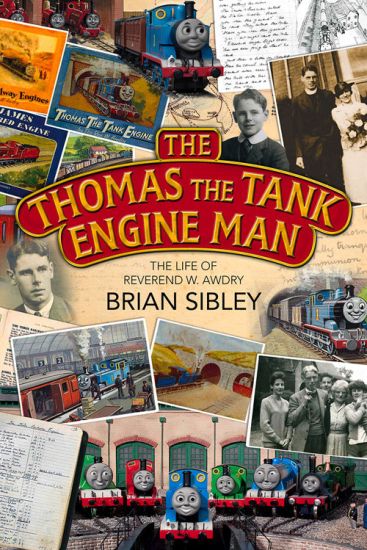
The Thomas the Tank Engine Man
The Reverend W. Awdry was a devoted pastor and family man, who adored trains. He started to tell stories about Thomas the Tank Engine and his friends, in order to entertain his son Christopher. Those stories have gone on to entertain generations of children around the world. Awdry was a man of courage, who believed that you should live by certain rules. He built his imaginary world on the island of Sodor on these rules, and showed how those who transgressed them would always be 'punished, but never scrapped', as he said. A convinced pacifist, he was thrown out of one curacy and denied another during the Second World War, because of his beliefs. Never afraid to fight for what he thought was right, he argued with his publishers and his illustrators, demanding the best for his favourite creations - the trains and their friends.
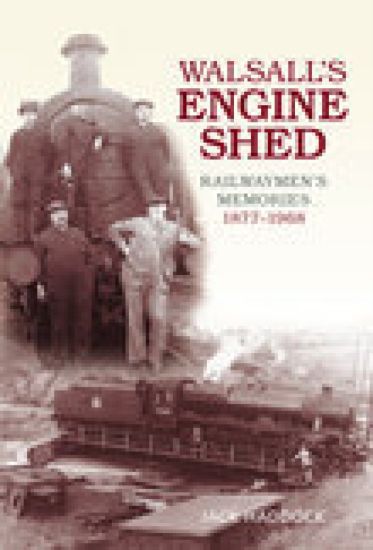
Walsall's Engine Shed

Walsall's Engine Shed

Jack Haddock

The History Press Ltd
2007
nidottu
This book puts together the collected memories of a varied group of men from the now closed Ryecroft shed, with lots of facts about the history of the shed, to present a record of railway life in Walsall. It recounts the vibrant, intense activity of Walsall Station and its Long Street and Midland goods yards, which during the period 1879 to 1957 were the focal point of travel and commerce in Walsall. The station was one of the key contributors to the development of Walsall becoming a Borough, then a Metropolitan Borough. The shed closed in 1957, when increased road transport brought about a decline of rail revenue. Walsall's Engine Shed will appeal to the families of the hundreds of men who worked at the Ryecroft shed, plus the many railway and industry enthusiasts in the area.
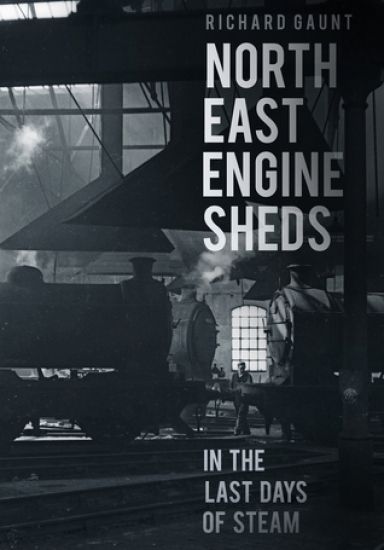
North East Engine Sheds in the Last Days of Steam

North East Engine Sheds in the Last Days of Steam

Richard Gaunt

The History Press Ltd
2012
nidottu
In the late 1950s and ‘60s, steam motive power depots attracted railway enthusiasts like pins to a magnet. There was no need to wait on a platform for something to turn up; particularly at weekends and evenings, sheds would be packed with machines waiting their turn, being disposed of, getting fixed, or stored for another day. Enthusiasts flocked to these grimy railway havens as places of enchantment. This beautifully illustrated book, produced in association with the National Railway Museum, travels back to those days, combining Richard Gaunt’s atmospheric photographs with quotes from people working on the railways at the time, and instructions and reports from ‘the management’ who – despite all appearances – were trying to give a good service at an acceptable cost. This evocative and nostalgic book brings the past to life and is sure to appeal to people who remember the north eastern railways and the drama of working steam sheds.
Mini Wheels: Mini Fire Engine

Mini Wheels: Mini Fire Engine

Peter Lippman

Workman Publishing
2001
pahvisivuinen
Calling all fire-truck obsessed youngsters: Join the crew on the Mini Fire Truck! Welcome aboard the Mini Fire Truck, where you can name all its fascinating paraphernalia, work with the equipment, and rush off to fight a fire, where the firehouse dog makes a heroic save. This story book is fun to read...and because it's die-cut in the shape of a truck, it's also fun to play with! Chunky, colorful, and lively, with doors that open and windows to explore, packed with adorable characters and rhyming action, Mini Wheels Books are a delightful ride through the reader's imagination.
Against That 'Powerful Engine of Despotism'

Against That 'Powerful Engine of Despotism'

Bruce A. Newman

University Press of America
2006
nidottu
This work argues that the original intent of the Fourth Amendment was subverted due to a significant shift in the concept of justice among many political and legal thinkers in the twentieth century. The original aim of the Fourth Amendment was to differentiate between private property searches, generally requiring warrants, and searches in public areas, which allow searches without a warrant if there is just cause. The focus is on recent factors that led the United States government to weaken protections against property searches, specifically commercial property, while expanding protections against searches in public areas. Professor Newman asserts that starting in the early twentieth century, legislators, jurists and academics envisioned a need for an administrative state to control and regulate a large industrial economy. This need to increase business regulation led to considerable changes in the approach to commercial searches conducted by government agencies. The public interest, as defined by these government agencies, began to take preference over businessmen's Fourth Amendment rights, enacting such bureaucratic policies as the administrative warrant, which does not require probable cause. The author examines how public area searches have undergone stricter judicial standards in the twentieth century than those of the Founding generation. While the earliest jurists required only probable cause to search public areas, the modern legal system, with some retreat beginning in the 1990s, requires warrants for public searches. This development in Fourth Amendment jurisprudence is attributed to a modern ideology in which liberty is equated with license and freedom is divorced from morality. Professor Newman insightfully demonstrates how our Fourth Amendment jurisprudence would be more effective in protecting today's society if we returned to the principles of justice and property-rights protection originally enacted by our Founders.
Maisy's Fire Engine: A Maisy Shaped Board Book (Fire Truck-Shaped Board Book about Maisy the Mouse's Firefighting Adventure for Toddlers, Preschoolers
Who can resist riding on a fire engine with Maisy? NEE-NAH, NEE-NAH Maisy and Cyril are driving a fire engine today. First they have to check the water in the hose. SWOOSH Uh-oh Look out, little cat Now the cat is scared and climbs up on the roof and won't come down. But firefighters Maisy and Cyril come to the rescue -- and then they're off for a ride in their shiny red truck
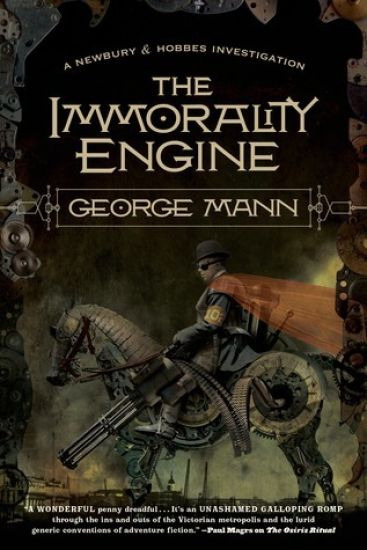
The Immorality Engine

The Immorality Engine

George Mann

St. Martin's Press
2012
pokkari
On the surface, life is going well for Victorian special agent Sir Maurice Newbury, who has brilliantly solved several nigh-impossible cases for Queen Victoria with his indomitable assistant, Miss Veronica Hobbes, by his side. But these facts haven't stopped Newbury from succumbing increasingly frequently to his dire flirtation with the lure of opium. His addiction is fueled in part by his ill-gotten knowledge of Veronica's secret relationship with the queen, which Newbury fears must be some kind of betrayal. Veronica, consumed by worry and care for her prophetic but physically fragile sister, Amelia, has no idea that she is a catalyst for Newbury's steadily worsening condition. Veronica and Newbury's dear friend Bainbridge, the chief investigator at Scotland Yard, tries to cover for him as much as possible, but when the body of a well-known criminal turns up, Bainbridge and Veronica track Newbury down in an opium den and drag him out to help them with the case. The body clearly, irrefutably, belongs to the man in question, but shortly after his body is brought to the morgue, a crime is discovered that bears all the dead man's hallmarks. Bainbridge and Veronica fear someone is committing copycat crimes, but Newbury is not sure. Somehow, the details are too perfect for it to be the work of a copycat. But how can a dead man commit a crime?
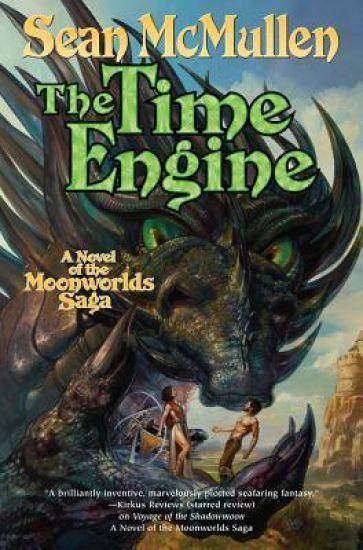
The Time Engine

The Time Engine

McMullen Sean

Tor Books
2012
pokkari
Wayfarer Inspector Danolarian saw his world's future and did not approve. After that incident, and having once met his future self, the inspector considered himself as knowledgeable as he ever wanted to be on the subject of time travel. What he did not know was that he would be abducted into the future and wind up on the run with a constable who had shape-shifted into a cat. He would also find himself marooned in the ancient past, where he would have to recover his time engine - the device that is his only way to get back home - from five thousand naked, psychopathic horsemen. And when the time engine is finally recovered, a faulty repair plunges him another three million years back in time, to a world of strange, beautiful people living idyllic lives in splendid castles. But things are not always as they seem. After being attacked, he learns from his unlikely rescuer that his travels might not have simply been a series of misadventures through time and space. A furious Danolarian returns to his own time, planning revenge against the time engine's true builders...
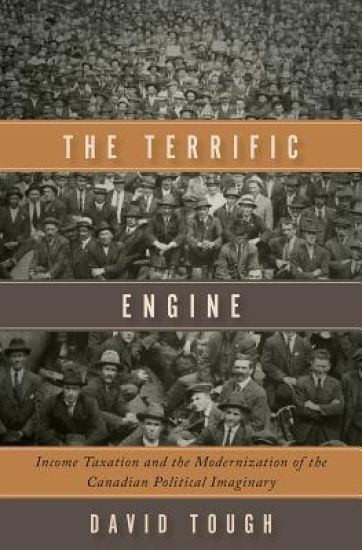
The Terrific Engine

The Terrific Engine

David Tough

University of British Columbia Press
2018
sidottu
What do we mean by left wing or right wing? People started using the language of a political spectrum when early twentieth-century political parties began to distinguish their platforms by offering different approaches to income distribution. The Terrific Engine examines how the powerful tool of income taxation transformed the way people talk and think about politics in Canada. Drawing on heated debates that demonstrated the imaginative power of income taxation, David Tough traces the modernization of political language from the 1911 election through the Second World War.Countering a strongly held myth that income taxation was imposed on a reluctant public, Tough argues that its introduction is in fact a story of democracy. People first demanded that this new form of taxation replace existing ones, and then that it be used to address income inequality. And, in establishing a clear basis for party differences, income taxation made elections significantly more democratic.
The Terrific Engine

The Terrific Engine

David Tough

University of British Columbia Press
2019
pokkari
What do we mean by left wing or right wing? People started using the language of a political spectrum when early twentieth-century political parties began to distinguish their platforms by offering different approaches to income distribution. The Terrific Engine examines how the powerful tool of income taxation transformed the way people talk and think about politics in Canada. Drawing on heated debates that demonstrated the imaginative power of income taxation, David Tough traces the modernization of political language from the 1911 election through the Second World War.Countering a strongly held myth that income taxation was imposed on a reluctant public, Tough argues that its introduction is in fact a story of democracy. People first demanded that this new form of taxation replace existing ones, and then that it be used to address income inequality. And, in establishing a clear basis for party differences, income taxation made elections significantly more democratic.
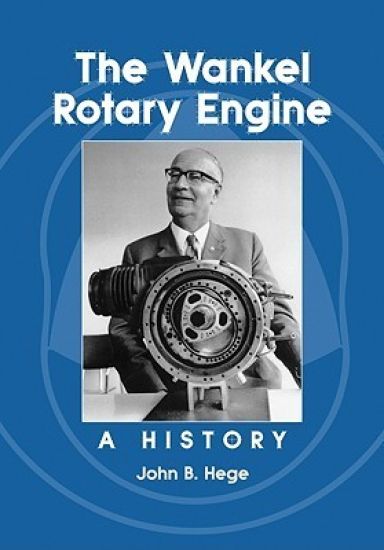
The Wankel Rotary Engine

The Wankel Rotary Engine

John B. Hege

McFarland Co Inc
2006
pokkari
Conceived in the 1930s, simplified and successfully tested in the 1950s, the darling of the automotive industry in the early 1970s, then all but abandoned before resurging for a brilliant run as a high-performance powerplant for Mazda, the Wankel rotary engine has long been an object of fascination and more than a little mystery. A remarkably simple design (yet understood by few), it boasts compact size, light weight and nearly vibration-free operation. In the 1960s, German engineer Felix Wankel's invention was beginning to look like a revolution in the making. Though still in need of refinement, it held much promise as a smooth and powerful engine that could fit in smaller spaces than piston engines of similar output. Auto makers lined up for licensing rights to build their own Wankels, and for a time analysts predicted that much of the industry would convert to rotary power. This complete and well-illustrated account traces the full history of the engine and its use in various cars, motorcycles, snowmobiles and other applications. It clearly explains the working of the engine and the technical challenges it presented--the difficulty of designing effective and durable seals, early emissions troubles, high fuel consumption, and others. The work done by several companies to overcome these problems is described in detail, as are the economic and political troubles that nearly killed the rotary in the 1970s, and the prospects for future rotary-powered vehicles.
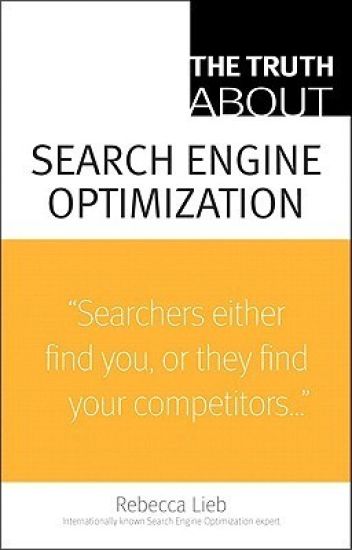
The Truth About Search Engine Optimization

The Truth About Search Engine Optimization

Rebecca Lieb

Que Corporation,U.S.
2009
nidottu
"Rebecca's book is chapter-by-chapter gold for anyone who needs to understand how we find information on the Web."Kevin M. Ryan, Motivity Marketing, Inc., and Chairman of Search Engine Strategies Advisory BoardIn this book, leading search optimization expert Rebecca Lieb brings together more than 50 absolutely crucial facts and insights decision-makers must know to drive more web traffic through better search engine placement. The Truth About Search Engine Optimization doesn't deliver abstract theory: it delivers quick, bite-size, just-the-facts information and plain-English explanations that executives, decision-makers, and even small business owners can actually use, no matter what kind of sites you're running, or what your goals are. You will learn how to set realistic goals for search optimization... attract qualified traffic, not just "any" site visitors... incorporate search engine optimization into both new sites and redesigns... write for users... implement search-friendly content management... avoid problems with rich content technologies such as Flash and AJAX... create metatags that actually work... use public relations, blogging, and other techniques to drive traffic... budget and manage search optimization projects... and much more. This book reveals 51 PROVEN SEARCH ENGINE OPTIMIZATION TECHNIQUES and bite-size, easy-to-use advice that gets results includingThe truth about page rankingsThe truth about best SEO practices and SEO no-no'sThe truth about link love, keywords, and tags Introduction viiForeword by Fredrick Marckini ixPart I: The Basics of SearchTruth 1: Getting noticed by spiders, robots, and crawlers 1Truth 2: Learn to do the Google dance 5Truth 3: It's not about traffic-it's about qualified traffic 9Truth 4: Your reputation is on the line 13Part II: The Truth About Being Site-SpecificTruth 5: SEO is an ongoing project, not set-it-and-forget-it 17Truth 6: SEO is not an afterthought 21Truth 7: SEO results aren't immediate or lasting 25Truth 8: You don't have a homepage anymore 29Truth 9: Think like a publisher, even if you're not 33Truth 10: Site and page design count 37Truth 11: Write for users and search engines will follow 41Truth 12: Keywords are key 45Truth 13: Use analytics and keyword research tools 49Truth 14: Site stats share the bad news, too 53Truth 15: Think twice about hot new technologies 57Truth 16: Content management systems matter-a lot 67Part III: Tag, You're It!Truth 17: What's in a title? Everything... 65Truth 18: The relative importance of meta tags 71Truth 19: Tag images, audio, video, and other media 75Part IV: The Truth About LinksTruth 20: Some links are more equal than others 79Truth 21: Building links through online directories 83Truth 22: Using SEO PR as a link strategy 87Truth 23: The jury is out on paid links 91Truth 24: Share and share alike: Reciprocal linking 95Truth 25: Ads are links, too 99Truth 26: Build your site in a good neighborhood 103Truth 27: Blogs are a terrific link strategy 107Truth 28: Putting the kibosh on link love with nofollow links 111Part V: You Call That a Search Engine?Truth 29: Search is going vertical 115Truth 30: Everyone is local somewhere 119Truth 31: Get listed to get vertical 125Truth 32: Optimize off-site searches 129Truth 33: Universal search and personalized search 133Part VI: Get a Social LifeTruth 34: Blogs are built for SEO 137Truth 35: RSS feeds "feed" SEO efforts 141Truth 36: Users will create content for you 145Truth 37: Tag images, video, links, and other media 149Part VII: Search RankingTruth 38: Being #1 ain't what it used to be 153Truth 39: Don't live and die by PageRank 157Truth 40: Wag the long tail 161Part VIII: The Truth About SEO ManagementTruth 41: In-house or outsource? 165Truth 42: Hiring a great search professional 169Truth 43: Great SEOs sweat the small stuff 173Part IX: Don't Be EvilTruth 44: Beware blackhat SEO 177Truth 45: Search engines frown on keyword stuffing and spam 181Truth 46: Don't cultivate link farms 185Truth 47: It's very difficult to get unbanned 189Truth 48: Moving to a new domain is stressful 193Part X: Going BeyondTruth 49: Global SEO 197Truth 50: Mobile SEO is more important than ever 201Truth 51: Sometimes you don't want to be found 205About the Author 208Note: Appendix A is available for free and located online at www.informit.com/title/9780789738318 within the Downloads tab.