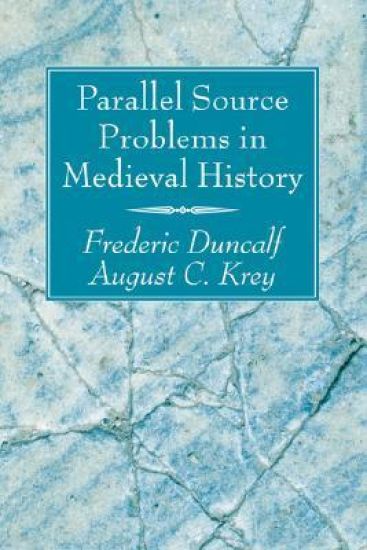
This classic in the study of medieval history provides parallel source translations, so arranged and equipped with descriptive information that effective training can be given in the use of source material. Duncalf and Krey provide five events with source problems to be considered: the coronation of Charles the Great, Canossa, the capture of Jerusalem in 1099, the departure of the University from Paris, and the coronation of Cola Di Rienzo. The intent is that students would be able to work inductively, obtaining elementary training in the fundamentals of historical method, while at the same time becoming familiar with basic medieval source material. Frederic Duncalf (1882-1963) taught at Bowdoin College in 1910-1911 and at The University of Texas at Austin from 1911 to 1913. After a brief tenure at the University of Illinois in 1913-14, he joined the permanent faculty of the University of Texas in 1914. Professor Duncalf was the coauthor of several books, including 'Old Europe and Our Nations' and 'Ancient and Medieval History: The Rise of Classical Culture and the Development of Medieval Civilization'. August C. Krey (1887-1961) was Professor of History at the University of Minnesota. His other publications include 'History and the Social Web'.
An Ethical Symposium - being a series of papers concerning medical ethics and etiquette from the liberal standpoint is an unchanged, high-quality reprint of the original edition of 1883. Hansebooks is editor of the literature on different topic areas such as research and science, travel and expeditions, cooking and nutrition, medicine, and other genres. As a publisher we focus on the preservation of historical literature. Many works of historical writers and scientists are available today as antiques only. Hansebooks newly publishes these books and contributes to the preservation of literature which has become rare and historical knowledge for the future.
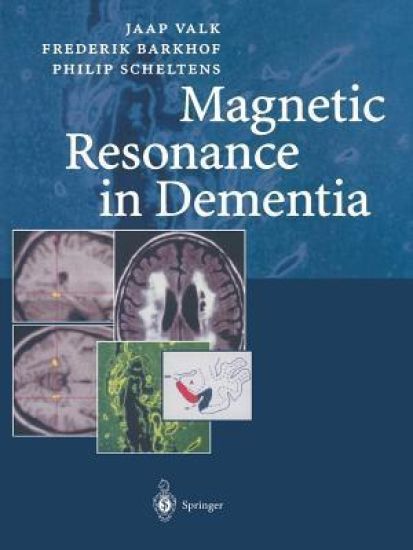
This up-to-date, superbly illustrated book is a practical guide to the effective use of neuroimaging in the patient with cognitive decline. It sets out the key clinical and imaging features of the various causes of dementia and directs the reader from clinical presentation to neuroimaging and on to an accurate diagnosis whenever possible. After an introductory chapter on the clinical background, the available "toolbox" of structural and functional neuroimaging techniques is reviewed in detail, including CT, MRI and advanced MR techniques, SPECT and PET, and image analysis methods. The imaging findings in normal ageing are then discussed, followed by a series of chapters that carefully present and analyze the key findings in patients with dementias. Throughout, a practical approach is adopted, geared specifically to the needs of clinicians (neurologists, radiologists, psychiatrists, geriatricians) working in the field of dementia, for whom this book will prove an invaluable resource.
This up-to-date, superbly illustrated book is a practical guide to the effective use of neuroimaging in the patient with cognitive decline. It sets out the key clinical and imaging features of the various causes of dementia and directs the reader from clinical presentation to neuroimaging and on to an accurate diagnosis whenever possible. After an introductory chapter on the clinical background, the available "toolbox" of structural and functional neuroimaging techniques is reviewed in detail, including CT, MRI and advanced MR techniques, SPECT and PET, and image analysis methods. The imaging findings in normal ageing are then discussed, followed by a series of chapters that carefully present and analyze the key findings in patients with dementias. Throughout, a practical approach is adopted, geared specifically to the needs of clinicians (neurologists, radiologists, psychiatrists, geriatricians) working in the field of dementia, for whom this book will prove an invaluable resource.
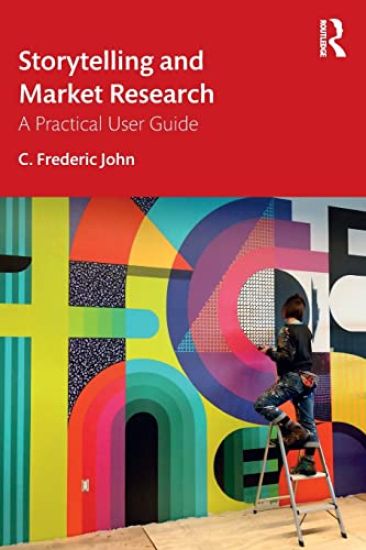
Showing how market researchers can get a seat at the decision-making table, this book is the essential guide to mastering storytelling techniques that can dramatically enhance the impact of research reports and presentations, commanding full audience engagement and buy-in.While demand for storytelling in marketing research reports and presentations has mushroomed in recent years, there can be confusion about what decision-makers mean by "stories." Leading market research expert C. Frederic John eliminates this confusion by defining four specific types of story in the business arena, and providing a series of "how-to" guides for generating effective solutions when communicating learning and other information. This book is the first to emphasize the needs of the report reader or presentation audience.Drawing on examples from ancient and modern literature, drama, opera, and other arts, this book will help today’s (and tomorrow’s) market research professionals to thrive in a world demanding insights, real-world recommendations, and more relevant deliverables.
Showing how market researchers can get a seat at the decision-making table, this book is the essential guide to mastering storytelling techniques that can dramatically enhance the impact of research reports and presentations, commanding full audience engagement and buy-in.While demand for storytelling in marketing research reports and presentations has mushroomed in recent years, there can be confusion about what decision-makers mean by "stories." Leading market research expert C. Frederic John eliminates this confusion by defining four specific types of story in the business arena, and providing a series of "how-to" guides for generating effective solutions when communicating learning and other information. This book is the first to emphasize the needs of the report reader or presentation audience.Drawing on examples from ancient and modern literature, drama, opera, and other arts, this book will help today’s (and tomorrow’s) market research professionals to thrive in a world demanding insights, real-world recommendations, and more relevant deliverables.
This book has been considered by academicians and scholars of great significance and value to literature. This forms a part of the knowledge base for future generations. We have represented this book in the same form as it was first published. Hence any marks seen are left intentionally to preserve its true nature.
The final work from the brightest star in science fiction's galaxy. Arthur C Clarke, who predicted the advent of communication satellites and author of 2001: A Space Odyssey completes a lifetime career in science fiction with a masterwork.
When Ranjit Subramanian, a Sri Lankan with a special gift for numbers, writes a three-page proof of the coveted "Last Theorem," which French mathematician Pierre de Fermat claimed to have discovered (but never recorded) in 1637, Ranjit's achievement is hailed as a work of genius, bringing him fame and fortune. But it also brings him to the attention of the National Security Agency and a shadowy United Nations outfit called Pax per Fidem-or Peace Through Transparency-whose secretive workings belie its name. Suddenly Ranjit-along with his family-finds himself swept up in world-shaking events, his genius for abstract mathematical thought put to uses that are both concrete and potentially deadly.
Many nonprofits are reluctant to develop a policies manual, believing that it takes far too much time, effort, and expertise. But the lack of responsible policies and governance can actually end up costing an organization much more in the long run -- both in reputation and in resources. Good Governance for Nonprofits is a succint but thorough guide that will help organizations develop a board that is legally and ethically responsible and effective in advancing their needs. The authors offer a clear process for creating a policies manual to help boards apply proven standards of governance or "attributes of excellence." Now even with limited resources, nonprofit leaders will learn how to: * eliminate redundant or outdated policies * add new policies more effectively * clearly guide the CEO and evaluate his or her performance * ensure compliance with relevant legislation and regulations * understand why certain policies should be included * adapt the authors' templates to their specific needs.
The numerous ways in which man and animals are affected by their physical environment, and the inborn and adaptive responses to change in the "milieu exterieur" have fascinated curious minds since the earliest days of recorded history. Development of the scientific method with its emphasis on evidence obtained through experimentation-perhaps best illustrated in this field by Paul Bert's encyclopedic work-allowed several generations of our predecessors to establish firmly some facts and reject erroneous beliefs, but it was only during the early 1940s that environmental physiology put on its seven-league boots. In 1941, a young physiologist named Hermann Rahn was recruited by Wallace O. Fenn, then Chairman of the Department of Physiology at the University of Rochester, who was engaged in a study of the effects of altitude on human performance. The years that followed witnessed some of Hermann Rahn's early achievements not only in the area of altitude, but in other aspects of environmental physiology as well. In particular, he participated in the definitive studies of human adaptive mechanisms in arid climates which formed the basis of Edward Adolph's classic "Physi ology of Man in the Desert" (Wiley/Interscience, NY 1947). During those golden years, environmental physiology flourished, and important dis coveries were reported in a seemingly endless stream from many labora tories.
A fun and engaging way for young children to figure out concepts and solving problems on his or her own.Rookie Readers (Ages 5-7) have provided entertaining, high-quality introductions to reading for more than a generation. Each title features full-color, often hilarious illustrations and engaging stories that always involve a young child figuring out concepts or solving problems on his or her own. After having fun at their family reunion, Messy Bessey's family cleans up and leaves the park as beautiful as when they arrived.
In the first section of this book, four chapters explore how evaluation can influence and interact with the change process in policy and institutional development. Wijayatilake recalls a convincing and riveting story about how evaluation was introduced in Sri-Lanka and what kind of striking results could be achieved in a few years through a progressive pragmatic approach and strong leadership. Wiesner reviews the role of evaluation in the formation of macroeconomic policy in Latin America and outlines the role of demand for improved results and performance and of the accountability from the politicians, the private sector and civil society and, in the end, the population. Dimitrov proposes a 7 step approach for tacking institutional Performance evaluation and applies it to the case of the Black Sea Trade and Development Bank. Jaljouli addresses the challenge of the integration of development strategy and the evaluation process and uses Dubai as a case study. In the second section of this book, five chapters present a variety of lessons learnt and good practices in Evaluation Capacity Building (ECB). Heider presents a structured approach to capacity development working at three levels: individual training, institutional development, and an enabling environment and suggests moving from capacities to capabilities. Agrawal and Rao identify various factions influencing the use of evaluation results and show in the case of India how capacity building was used to increase this use. Andriantseheno addresses how an M and E system for a major development program can be set up as part of a programmatic approach using the case study of the Environment/Rural Development and Food Security program in Madagascar. Porter outlines the potential of the helping approaches an evaluation capacity development strategy and uses the Bana Barona/Abantwanu Bethu project in South Africa to prove his point. Clotteau et al. review major challenges in ECB and present a variety of ECB strategies to design and implement Results-Based National M and E systems, building upon a number of experiences in Africa, Asia, and Latin America. The third section of the book discusses new perspectives on ECB. Picciotto outlines a path for the future of development evaluation on the basis of a review of emerging endogenous and exogenous trends. By surveying recent theoretical developments in ECB, Nielsen and Attström map the perspectives offered by the contributors in terms of scope, purpose, definitions, and methods and relate key findings and recommendations to the ECB framework offered by Heider’ chapter. Van den Berg illustrates how evaluation capacity has been developed and could be further developed in a critical area for the future, i.e. in environment and development. From a review of the first and second sections of the book, Dahlgren underlines that building up evaluation capacity requires not only competence and quality, but taking into account the political and institutional context, cost aspects, the relative importance between learning and accountability, and the differences and similarities between monitoring and evaluation. Finally, following a review of the same papers, McAllister explores the interface between the evaluation function and organizational leadership in setting results strategy and the limitation of results approaches as implemented by the international development community. Overall, the stimulating comparative analysis of the papers presented in sections 1 and 2, questions and own thoughts on perspectives for ECB in the future made by those senior evaluation specialists allow for a more thorough and nuanced book.