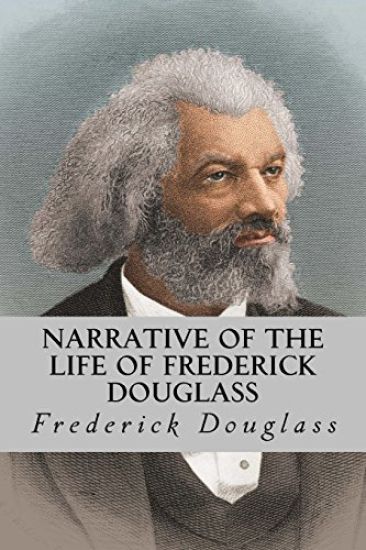
Narrative of the Life of Frederick Douglass is a memoir and treatise on abolition written by famous orator and ex-slave, Frederick Douglass. It is generally held to be the most famous of a number of narratives written by former slaves during the same period. In factual detail, the text describes the events of his life and is considered to be one of the most influential pieces of literature to fuel the abolitionist movement of the early 19th century in the United States.
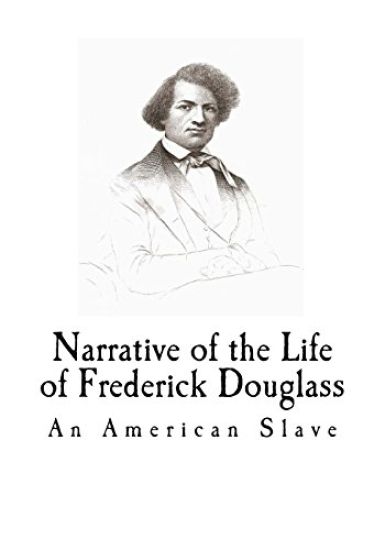
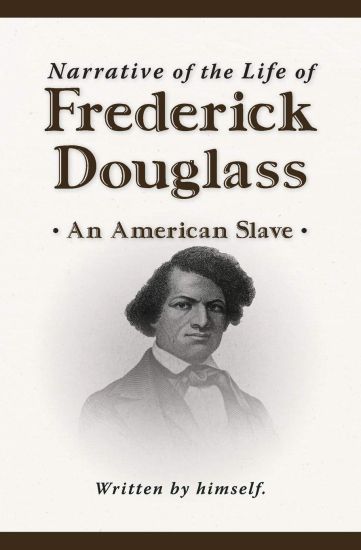
Narrative of the Life of Frederick Douglass is an 1845 memoir and treatise on abolition written by famous orator and former slave Frederick Douglass. It is generally held to be the most famous of a number of narratives written by former slaves during the same period. In factual detail, the text describes the events of his life and is considered to be one of the most influential pieces of literature to fuel the abolitionist movement of the early 19th century in the United States. Narrative of the Life of Frederick Douglass encompasses eleven chapters that recount Douglass's life as a slave and his ambition to become a free man.
Frederick Landseer Maur Griggs, RA, RE (30 October 1876 - 7 June 1938) was a distinguished English etcher, architectural draughtsman, illustrator, and early conservationist, associated with the late flowering of the Arts and Crafts movement in the Cotswolds. He was one of the first etchers to be elected to full membership of the Royal Academy. Born in Hitchin, Hertfordshire, he worked as an illustrator for the Highways and Byways series of regional guides for the publishers, Macmillans. In 1903 he settled at Dover's House, in the market town of Chipping Campden in the Cotswolds, and went on to create one of the last significant Arts and Crafts houses at 'New Dover's House'. There he set up the Dover's House Press, where he printed late proofs of the etchings of Samuel Palmer, amongst others. He collaborated with Ernest Gimson and the Sapperton group of craftsmen in architectural and design work in the area............... Edward Verrall Lucas, CH (11/12 June 1868 - 26 June 1938) was an English humorist, essayist, playwright, biographer, publisher, poet, novelist, short story writer and editor. Born to a Quaker family on the fringes of London, Lucas began work at the age of sixteen, apprenticed to a bookseller. After that he turned to journalism, and worked on a local paper in Brighton and then on a London evening paper. He was commissioned to write a biography of Bernard Barton, the Quaker poet. This led to further commissions, including the editing of the works of Charles Lamb. Lucas joined the staff of the humorous magazine Punch in 1904, and remained there for the rest of his life. He was a prolific writer, most celebrated for his short essays, but he also produced verses, novels and plays. From 1908 to 1924 Lucas combined his work as a writer with that of publisher's reader for Methuen and Co. In 1924 he was appointed chairman of the company. Writer: Lucas's Quaker background led to a commission from the Society of Friends for a biography of Bernard Barton, the Quaker poet and friend of Charles Lamb. The success of the book was followed by further commissions from leading publishers; the most important of these commissions was a new edition of Lamb's works, which eventually amounted to seven volumes, with an associated biography, all published between 1903 and 1905. His biographer Katharine Chubbuck writes, "These works established him as a critic, and his Life of Charles Lamb (1905) is considered seminal." 1] In 1904, while in the middle of his work on Lamb, he joined the staff of Punch, remaining there for more than thirty years. Lucas introduced his Punch colleague A A Milne to the illustrator E H Shepard with whom Milne collaborated on two collections of verse and the two Winnie-the-Pooh books. Lucas's output was prolific; by Max Beerbohm's estimation he spoke fewer words than he wrote.Lucas's Punch colleague E V Knox commented, "Lucas's publications include many anthologies and about thirty collections of light essays, on almost any subject that took his fancy, and some of the titles which he gave to them, Listener's Lure (1905), One Day and Another (1909), Old Lamps for New (1911), Loiterer's Harvest (1913), Cloud and Silver (1916), A Rover I Would Be (1928), indicate sufficiently the lightness, gaiety, and variety of their contents." He wrote travel books, parodies, and books about painters. Of the last he said, "I know very little about pictures, but I like to write about them for the benefit of those who know less." Frank Swinnerton wrote of him: Lucas had a great appetite for the curious, the human, and the ridiculous. If he were offered a story, an incident or an absurdity, his mind instantly shaped it with wit and form. He read a character with wisdom, and gravely turned it to fun..................
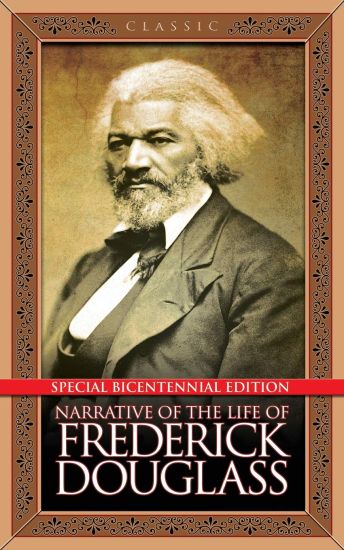
This classic of American literature, a dramatic autobiography of the early life of an American slave, was first published in 1845, when its author had just achieved his freedom. It is a story that shocked the world with its first-hand account of the horrors of slavery. The book was an incredible success. It sold over thirty thousand copies and was an international bestseller. His eloquence gives a clear indication of the powerful principles that led Douglas to become the first great African-American leader in the United States.
Narrative of The Life of Frederick Douglass: An American Slave. So profoundly ignorant of the nature of slavery are many persons, that they are stubbornly incredulous whenever they read or listen to any recital of the cruelties which are daily inflicted on its victims. They do not deny that the slaves are held as property; but that terrible fact seems to convey to their minds no idea of injustice, exposure to outrage, or savage barbarity. Tell them of cruel scourgings, of mutilations and brandings, of scenes of pollution and blood, of the banishment of all light and knowledge, and they affect to be greatly indignant at such enormous exaggerations, such wholesale misstatements, such abominable libels on the character of the southern planters As if whips, chains, thumb-screws, paddles, blood-hounds, overseers, drivers, patrols, were not all indispensable to keep the slaves down, and to give protection to their ruthless oppressors As if, when the marriage institution is abolished, concubinage, adultery, and incest, must not necessarily abound; when all the rights of humanity are annihilated, any barrier remains to protect the victim from the fury of the spoiler; when absolute power is assumed over life and liberty, it will not be wielded with destructive sway
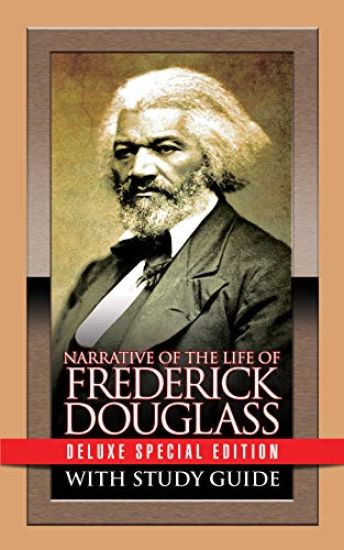
This classic of American literature, a dramatic autobiography of the early life of an American slave, was first published in 1845, when its author had just achieved his freedom. Its shocking first-hand account of the horrors of slavery became an international best seller. His eloquence led Frederick Douglass to become the first great African-American leader in the United States. - Douglass rose through determination, brilliance and eloquence to shape the American Nation. - He was an abolitionist, human rights and women's rights activist, orator, author, journalist, publisher and social reformer - His personal relationship with Abraham Lincoln helped persuade the President to make emancipation a cause of the Civil War. This deluxe edition of this classic work, includes a 21st century study guide that will provide you with a deeper sense of the trials and tribulations Douglass endured. The questions will take you into his world and will assist you in further exploring your own writing abilities, while appreciating and honoring the depth of his.
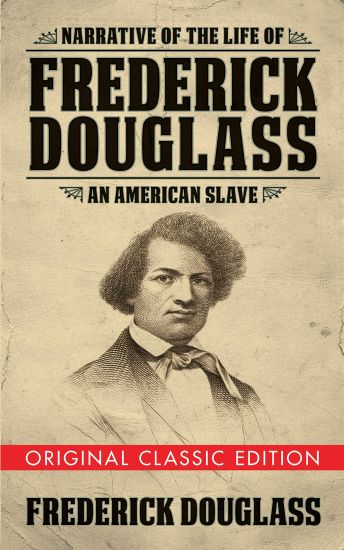
This classic of American literature, a dramatic autobiography of the early life of an American slave, was first published in 1845, when its author had just achieved his freedom. Its shocking first-hand account of the horrors of slavery became an international best seller. His eloquence led Frederick Douglass to become the first great African-American leader in the United States. - Douglass rose through determination, brilliance and eloquence to shape the American Nation. - He was an abolitionist, human rights and women's rights activist, orator, author, journalist, publisher and social reformer - His personal relationship with Abraham Lincoln helped persuade the President to make emancipation a cause of the Civil War. This edition of the original classic work, includes an index that will enable you to easily search for the names, places and topics as you discover the brilliance and determination of this incredible leader.
Frederick Douglass was an American social reformer, abolitionist, orator, writer, and statesman. After escaping from slavery he became a national leader of the abolitionist movement, gaining preeminence for his oratory and anti-slavery writing. NARRATIVE OF THE LIFE OF FREDERICK DOUGLASS is a dramatic autobiography of the early life of an American slave, first published in 1845 when its author had just achieved his freedom. Its shocking first-hand account of the horrors of slavery became an international bestseller. His eloquence led Frederick Douglass to become the first great African-American leader in the United States. MY BONDAGE AND MY FREEDOM is Frederick Douglass' second autobiography. First published in 1855--at the height of Douglass's involvement in the abolitionist movement--his narrative describes the steps that had led him to the forefront of the struggle for racial justice. Writing a decade of reflection following his legal emancipation in 1846, and after breaking with his mentor, William Lloyd Garrison, Douglass became catapulted into the international spotlight as the foremost spokesman for American blacks, both freed and slave. Read these two autobiographical classics of American literature and discover the brilliance and determination of the incredible leader, Frederick Douglass.
Former slave, impassioned abolitionist, brilliant writer, newspaper editor and eloquent orator whose speeches fired the abolitionist cause, Frederick Douglass (1818-1895) led an astounding life. Physical abuse, deprivation and tragedy plagued his early years, yet through sheer force of character he was able to overcome these obstacles to become a leading spokesman for his people. In this, the first and most frequently read of his three autobiographies, Douglass provides graphic descriptions of his childhood and horrifying experiences as a slave as well as a harrowing record of his dramatic escape to the North and eventual freedom.Published in 1845 to quell doubts about his origins - since few slaves of that period could write - the Narrative is admired today for its extraordinary passion, sensitive and vivid descriptions and storytelling power. It belongs in the library of anyone interested in African-American history and the life of one of the country's most courageous and influential champions of civil rights. A selection of the Common Core State Standards Initiative. Includes vintage photos, and illustrations
Douglass begins by explaining that he does not know the date of his birth (he later chose February 14, 1818), and that his mother died when he was 7 years old. He has very few memories of her (children were commonly separated from their mothers), only of the rare night time visit. He thinks his father is a white man, possibly his owner. At a very early age he sees his Aunt Hester being whipped. Douglass details the cruel interaction that occurs between slaves and slave holders, as well as how slaves are supposed to behave in the presence of their masters, and even when Douglass says that fear is what kept many slaves where they were, when they tell the truth they are punished by their owners. At the age of ten or eleven, Douglass's master dies and his property is left to be divided between his son and daughter. The slaves are valued along with the livestock, causing Douglass to develop a new hatred of slavery. He feels lucky when he is sent back to Baltimore to live with the family of Master Hugh.
In the month of August, 1841, I attended an anti-slavery convention in Nantucket, at which it was my happiness to become acquainted with FREDERICK DOUGLASS, the writer of the following Narrative. He was a stranger to nearly every member of that body; but, having recently made his escape from the southern prison-house of bondage, and feeling his curiosity excited to ascertain the principles and measures of the abolitionists, -of whom he had heard a somewhat vague description while he was a slave, -he was induced to give his attendance, on the occasion alluded to, though at that time a resident in New Bedfor
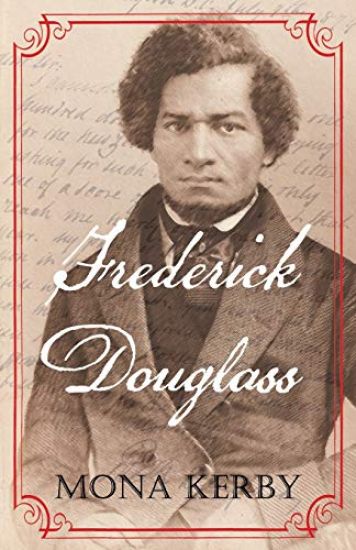
Born a slave in Talbot County, Maryland, Frederick Douglass never planned to be the most famous black man in the world. He just wanted to be free. "Once you learn to read," he wrote, "you will be forever free." By telling his story, Frederick helped change the history of the world. This narrative nonfiction biography is perfect for third through sixth graders and has been revised with historical photographs. "Written with dramatic immediacy . . . this biography] brings a strong sense of the great abolitionist and writer . . . As a slave, Douglass secretly learned to read and the power of literacy underlies this biography: Kerby shows how, in writing his story, Douglass affected the lives of untold numbers of Americans." Booklist
Self-freed slave. Activist. Abolitionist. Writer. Orator. Hero. The first of the great statesman's memoirs, Narrative of the Life of Frederick Douglass, was published in 1845, nearly seven years after he escaped from slavery in Maryland and settled in Massachusetts with his wife, Anna. The book's vivid portrayal of the brutality of slavery, coupled with Douglass's skill as a speaker, inflamed hearts and minds across the United States, and around the world.
As the War of Independence begins, the transatlantic colonies begin courting continental powers as allies to further their ambitions against the crown. An unlikely candidate for such an undertaking became Prussia under its shrewd monarch, Frederick the Great. Citing correspondences from the likes of Benjamin Franklin, Hugh Elliot, and Friedrich von der Schulenburg, among others, Mr. Kapp brings to life the relationship between the two nations and the influence Frederick had on the early days of the budding Republic. Originally written in 1871, this new translation also sheds light on the maritime law issues and their role in the relationships between the great powers of the time. With the great naval powers vying for supremacy on the high seas, maritime law was constantly changing to benefit them, and the smaller states and neutral powers were left behind. The evolution and humanization of maritime law is examined, as well as the roles of the United States and Prussia therein. Having travelled through America for decades, Mr. Kapp also gives us a firsthand account of the United States' socio-political circumstances of his time as the nation was approaching a new chapter of its history after the conclusion of the American Civil War.
Frederick Douglass was born in slavery as Frederick Augustus Washington Bailey near Easton in Talbot County, Maryland. He was not sure of the exact year of his birth, but he knew that it was 1817 or 1818. As a young boy he was sent to Baltimore, to be a house servant, where he learned to read and write, with the assistance of his master's wife. In 1838 he escaped from slavery and went to New York City, where he married Anna Murray, a free colored woman whom he had met in Baltimore. Soon thereafter he changed his name to Frederick Douglass. In 1841 he addressed a convention of the Massachusetts Anti-Slavery Society in Nantucket and so greatly impressed the group that they immediately employed him as an agent. He was such an impressive orator that numerous persons doubted if he had ever been a slave, so he wrote Narrative Of The Life Of Frederick Douglass. During the Civil War he assisted in the recruiting of colored men for the 54th and 55th Massachusetts Regiments and consistently argued for the emancipation of slaves. After the war he was active in securing and protecting the rights of the freemen. In his later years, at different times, he was secretary of the Santo Domingo Commission, marshal and recorder of deeds of the District of Columbia, and United States Minister to Haiti. His other autobiographical works are My Bondage And My Freedom and Life And Times Of Frederick Douglass, published in 1855 and 1881 respectively. He died in 1895.