Kirjojen hintavertailu. Mukana 11 424 359 kirjaa ja 12 kauppaa.

Kirjahaku

Etsi kirjoja tekijän nimen, kirjan nimen tai ISBN:n perusteella.

1000 tulosta hakusanalla Geoffrey H. Block

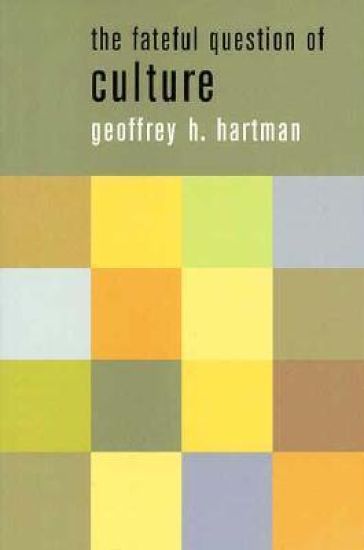
The Fateful Question of Culture

The Fateful Question of Culture

Geoffrey Hartman

Columbia University Press
1998
pokkari
One of our most incisive critics asks where the assault against the canons of Western culture has led us. Engaging a wide range of literature and criticism, Hartman considers the term "culture" and its many uses, and calls for the restoration of literature to its place as the focus of thinking about culture and for the renewal of aesthetic education to help ensure the balance between art, culture, and politics. Lost among the shouts and skirmishes of the "culture wars" is the very idea of culture itself. In this illuminating book, one of our most distinguished critics and scholars asks what the assault against the canons of Western culture has left in its place. If art and literature are largely the products of ideology and interest, how do they matter? And what does the idea of culture mean in today's sprawling, fragmented, critical world where everything -poetry or pornography- gets "read" in the same way? Engaging an extraordinary range of literature, philosophy, social criticism, and popular culture, Geoffrey Hartman probes the meanings and uses of culture in contemporary society. The triumph of cultural studies -and its critiques of bourgeois Eurocentric tradition- is largely complete, Hartman writes. Against the political appropriation of culture, he posits, instead, a definition of culture as public conversation, intellectual and social debate among diverse communities. And against reactionary pressures to impose -or reinstate- a singular culture, or to seek in art or literature an affirmation of group identity, Hartman sketches new roles for human imagination in a postmodern world. For Hartman, the fusion of culture and politics, of whatever ideology, is disastrous. At a time of abstraction, fragmentation, and alienation, art and literature offer wholeness and meaning. But the promise is frought with danger, Hartman argues, in a provocative discussion of the uses of culture as exemplified in the Romantic legacy. He pays special attention to literature's role in reconnecting us to the world. The choice is ours: Wordsworth or Heidegger, literature as shared experience or as reactionary ideology. Hartman ranges widely in these elegant pages. He confronts the shock to the universalistic sense of culture from the Holocaust, as well as the problematic responses of such critic as Adorno and Derrida; explores the poetry of Wordsworth both as a diagnostic and a counter-model to the desensitization of modern life; and addresses the impact of politics of inclusion and diversity on the claims of high culture. Perhaps Hartman's most publicly engaged book, The Fateful Question of Culture embraces both the masterworks of European literature and art and the signs and symbols of popular media and daily life. It is a powerful reaffirmation of the liberating discourses that have always been at the very center of the Western tradition.

The Great Divide

The Great Divide

Geoffrey Layman

Columbia University Press
2001
sidottu
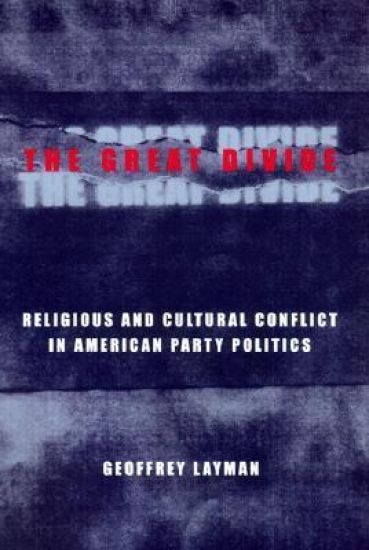
How did the Christian Right come to predominate in the Republican Party? Why, on the other hand, do secular and religiously liberal beliefs largely prevail in the Democratic Party? Our understanding of the rift between the Democratic and Republican parties-a rift in many ways fueled by religious beliefs-requires an analysis of the entire spectrum of religious and nonreligious players in the American political process and how their influence has evolved over a long period of time. Employing a sizeable collection of data on party members, activists, and elites, Geoffrey Layman examines the role of religion in the Democratic and Republican parties, and the ways in which religion has influenced the political process from the early 1960s through the late 1990s. Using a wide variety of sources, including the American National Election Studies-the major academic survey of the American electorate-Layman reveals a vast and subtly differentiated landscape of political life and a more vivid basis upon which to analyze the ever-widening chasm between the parties. Layman investigates a broad spectrum of religious variety, citing differences between African American Protestants, white evangelical Protestants, Roman Catholics, Jews, nonreligious or seculars, and smaller religious groups, as well as political cleavages within these faith traditions. With his broad-based and thorough analysis, he counters the often narrow focus and incendiary rhetoric of many of the "culture war" debates.
The Great Divide

The Great Divide

Geoffrey Layman

Columbia University Press
2001
pokkari
How did the Christian Right come to predominate in the Republican Party? Why, on the other hand, do secular and religiously liberal beliefs largely prevail in the Democratic Party? Our understanding of the rift between the Democratic and Republican parties-a rift in many ways fueled by religious beliefs-requires an analysis of the entire spectrum of religious and nonreligious players in the American political process and how their influence has evolved over a long period of time. Employing a sizeable collection of data on party members, activists, and elites, Geoffrey Layman examines the role of religion in the Democratic and Republican parties, and the ways in which religion has influenced the political process from the early 1960s through the late 1990s. Using a wide variety of sources, including the American National Election Studies-the major academic survey of the American electorate-Layman reveals a vast and subtly differentiated landscape of political life and a more vivid basis upon which to analyze the ever-widening chasm between the parties. Layman investigates a broad spectrum of religious variety, citing differences between African American Protestants, white evangelical Protestants, Roman Catholics, Jews, nonreligious or seculars, and smaller religious groups, as well as political cleavages within these faith traditions. With his broad-based and thorough analysis, he counters the often narrow focus and incendiary rhetoric of many of the "culture war" debates.
Agents of Bioterrorism

Agents of Bioterrorism

Geoffrey Zubay

Columbia University Press
2005
sidottu
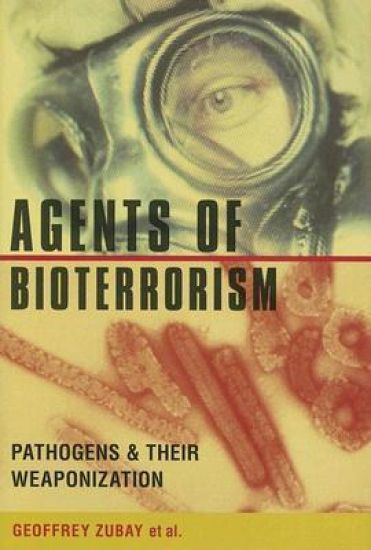
This new work offers a clear and thorough account of the threats posed by bioterrorism from the perspective of biologists. The authors examine thirteen disease-causing agents, including those responsible for anthrax, the plague, smallpox, influenza, and SARS. Each chapter considers a particular pathogen from the standpoint of its history, molecular biology, pathology, clinical presentation, diagnosis, weaponization, and defenses. The book also examines strategies for making vaccines and protecting the population in a bioterror attack.
Agents of Bioterrorism

Agents of Bioterrorism

Geoffrey Zubay

Columbia University Press
2008
pokkari
This new work offers a clear and thorough account of the threats posed by bioterrorism from the perspective of biologists. The authors examine thirteen disease-causing agents, including those responsible for anthrax, the plague, smallpox, influenza, and SARS. Each chapter considers a particular pathogen from the standpoint of its history, molecular biology, pathology, clinical presentation, diagnosis, weaponization, and defenses. The book also examines strategies for making vaccines and protecting the population in a bioterror attack.
Hyping Health Risks

Hyping Health Risks

Geoffrey C Kabat

Columbia University Press
2008
sidottu
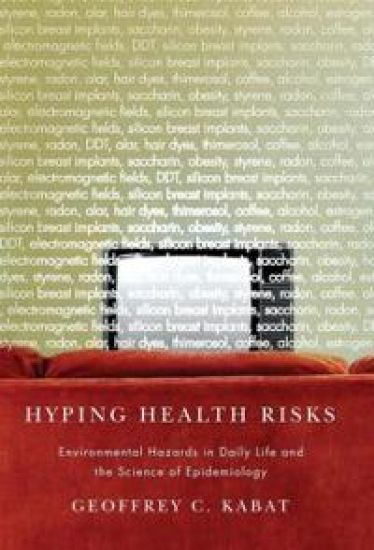
The media constantly bombard us with news of health hazards lurking in our everyday lives, but many of these hazards turn out to have been greatly overblown. According to author and epidemiologist Geoffrey C. Kabat, this hyping of low-level environmental hazards leads to needless anxiety and confusion on the part of the public concerning which exposures have important effects on health and which are likely to have minimal or no effect. Kabat approaches health scares as "social facts" and shows that a variety of factors can contribute to the inflating of a hazard. These include skewed reporting by the media, but also, surprisingly, the actions of researchers who may emphasize certain findings while ignoring others; regulatory and health agencies eager to show their responsiveness to the health concerns of the public; and politicians and advocates with a stake in a particular outcome. By means of four case studies, Kabat demonstrates how a powerful confluence of interests can lead to overstating or distorting the scientific evidence. He considers the health risks of pollutants such as DDT as a cause of breast cancer, electromagnetic fields from power lines, radon within residences, and secondhand tobacco smoke. Tracing the trajectory of each of these hazards from its initial emergence to the present, Kabat shows how publication of more rigorous studies and critical assessments ultimately help put hazards in perspective.
Hyping Health Risks

Hyping Health Risks

Geoffrey C Kabat

Columbia University Press
2011
pokkari
The media constantly bombard us with news of health hazards lurking in our everyday lives, but many of these hazards turn out to have been greatly overblown. According to author and epidemiologist Geoffrey C. Kabat, this hyping of low-level environmental hazards leads to needless anxiety and confusion on the part of the public concerning which exposures have important effects on health and which are likely to have minimal or no effect. Kabat approaches health scares as "social facts" and shows that a variety of factors can contribute to the inflating of a hazard. These include skewed reporting by the media, but also, surprisingly, the actions of researchers who may emphasize certain findings while ignoring others; regulatory and health agencies eager to show their responsiveness to the health concerns of the public; and politicians and advocates with a stake in a particular outcome. By means of four case studies, Kabat demonstrates how a powerful confluence of interests can lead to overstating or distorting the scientific evidence. He considers the health risks of pollutants such as DDT as a cause of breast cancer, electromagnetic fields from power lines, radon within residences, and secondhand tobacco smoke. Tracing the trajectory of each of these hazards from its initial emergence to the present, Kabat shows how publication of more rigorous studies and critical assessments ultimately help put hazards in perspective.
When Principles Pay

When Principles Pay

Geoffrey Heal

Columbia University Press
2008
sidottu
Stories of predatory lending practices and the reckless destruction of the environment by greedy corporations dominate the news, suggesting that, in business, ethics and profit are incompatible pursuits. Yet some of the worst lenders are now bankrupt, and Toyota has enjoyed phenomenal success by positioning itself as the green car company par excellence. These trends suggest that antisocial corporate behavior has its costs, especially in terms of the stock market, which penalizes companies that have poor environmental track records and rewards more socially conscious brands. The political context of our economy is rapidly changing, particularly in regard to incentives that operate outside the marketplace in a strict and narrow sense and involve interactions between corporations and nongovernmental organizations (NGOs), activist groups, regulatory bodies, consumers, and civil society. These interactions can significantly color a corporation's alternatives, making socially or environmentally harmful behavior much less attractive. British Petroleum, for example, has voluntarily reduced its greenhouse gas emissions over the past ten years, Starbucks, has changed the environmental impact of its coffee production, and Nike and other footwear and textile makers now monitor the labor conditions of their subcontractors. When Principles Pay jumps headfirst into this engaging and vital issue, asking whether profit maximization and the generation of value for shareholders is compatible with policies that support social and environmental goals. Geoffrey Heal presents a comprehensive examination of how social and environmental performance affects a corporation's profitability and how the stock market reacts to a firm's social and environmental behavior. He looks at socially responsible investment (SRI), reviewing the evolution of the SRI industry and the quality of its returns. He also draws on studies conducted in a wide range of industries, from financials and pharmaceuticals to Wal-Mart and Monsanto, and focuses on the actions of corporations in poor countries. In conclusion, Heal analyzes how social and environmental performance fits into accounting and corporate strategy, presenting an executive perspective on the best way to develop and implement these aspects of a corporation's behavior.
Adult Sibling Relationships

Adult Sibling Relationships

Geoffrey Greif; Michael Woolley

Columbia University Press
2015
sidottu
The bond siblings develop in childhood may be vastly different from the relationship that evolves in adulthood. Driven by affection but also characterized by ambivalence and ambiguity, adult sibling relationships can become hurtful, uncertain, competitive, or exhausting though the undercurrents of love and loyalty remain. An approach that recognizes the positive aspects of the changing sibling relationship, as well as those that need improvement, can restore healthy ties and rebuild family closeness. With in-depth case studies of more than 260 siblings over the age of forty and interviews with experts on mental health and family interaction, this book offers vital direction for traversing the emotional terrain of adult sibling relations. It pursues a richer understanding of ambivalence, a normal though little explored feeling among siblings, and how ambiguity about the past or present can lead to miscommunication and estrangement. For both professionals and general readers, this book clarifies the most confounding elements of sibling relationships and provides specific suggestions for realizing new, productive avenues of friendship in middle and later life-skills that are particularly important for siblings who must cooperate to care for aging parents or give immediate emotional or financial support to other siblings or family members.
Adult Sibling Relationships

Adult Sibling Relationships

Geoffrey Greif; Michael Woolley

Columbia University Press
2015
pokkari
The bond siblings develop in childhood may be vastly different from the relationship that evolves in adulthood. Driven by affection but also characterized by ambivalence and ambiguity, adult sibling relationships can become hurtful, uncertain, competitive, or exhausting though the undercurrents of love and loyalty remain. An approach that recognizes the positive aspects of the changing sibling relationship, as well as those that need improvement, can restore healthy ties and rebuild family closeness. With in-depth case studies of more than 260 siblings over the age of forty and interviews with experts on mental health and family interaction, this book offers vital direction for traversing the emotional terrain of adult sibling relations. It pursues a richer understanding of ambivalence, a normal though little explored feeling among siblings, and how ambiguity about the past or present can lead to miscommunication and estrangement. For both professionals and general readers, this book clarifies the most confounding elements of sibling relationships and provides specific suggestions for realizing new, productive avenues of friendship in middle and later life-skills that are particularly important for siblings who must cooperate to care for aging parents or give immediate emotional or financial support to other siblings or family members.
Getting Risk Right

Getting Risk Right

Geoffrey C Kabat

Columbia University Press
2016
sidottu
Do cell phones cause brain cancer? Does BPA threaten our health? How safe are certain dietary supplements, especially those containing exotic herbs or small amounts of toxic substances? Is the HPV vaccine safe? We depend on science and medicine as never before, yet there is widespread misinformation and confusion, amplified by the media, regarding what influences our health. In Getting Risk Right, Geoffrey C. Kabat shows how science works-and sometimes doesn't-and what separates these two very different outcomes. Kabat seeks to help us distinguish between claims that are supported by solid science and those that are the result of poorly designed or misinterpreted studies. By exploring different examples, he explains why certain risks are worth worrying about, while others are not. He emphasizes the variable quality of research in contested areas of health risks, as well as the professional, political, and methodological factors that can distort the research process. Drawing on recent systematic critiques of biomedical research and on insights from behavioral psychology, Getting Risk Right examines factors both internal and external to the science that can influence what results get attention and how questionable results can be used to support a particular narrative concerning an alleged public health threat. In this book, Kabat provides a much-needed antidote to what has been called "an epidemic of false claims."
Getting Risk Right

Getting Risk Right

Geoffrey C Kabat

Columbia University Press
2020
pokkari
Do cell phones cause brain cancer? Does BPA threaten our health? How safe are certain dietary supplements, especially those containing exotic herbs or small amounts of toxic substances? Is the HPV vaccine safe? We depend on science and medicine as never before, yet there is widespread misinformation and confusion, amplified by the media, regarding what influences our health. In Getting Risk Right, Geoffrey C. Kabat shows how science works—and sometimes doesn't—and what separates these two very different outcomes.Kabat seeks to help us distinguish between claims that are supported by solid science and those that are the result of poorly designed or misinterpreted studies. By exploring different examples, he explains why certain risks are worth worrying about, while others are not. He emphasizes the variable quality of research in contested areas of health risks, as well as the professional, political, and methodological factors that can distort the research process. Drawing on recent systematic critiques of biomedical research and on insights from behavioral psychology, Getting Risk Right examines factors both internal and external to the science that can influence what results get attention and how questionable results can be used to support a particular narrative concerning an alleged public health threat. In this book, Kabat provides a much-needed antidote to what has been called "an epidemic of false claims."
Plagiarama!

Plagiarama!

Geoffrey Sanborn

Columbia University Press
2016
sidottu
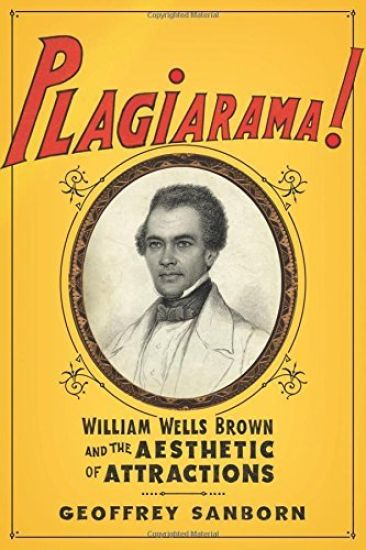
William Wells Brown (1814-1884) was a vocal abolitionist, a frequent antagonist of Frederick Douglass, and the author of Clotel, the first known novel by an African American. He was also an extensive plagiarist, copying at least 87,000 words from close to 300 texts. In this critical study of Brown's work and legacy, Geoffrey Sanborn offers a novel reading of the writer's plagiarism, arguing the act was a means of capitalizing on the energies of mass-cultural entertainments popularized by showmen such as P. T. Barnum. By creating the textual equivalent of a variety show, Brown animated antislavery discourse and evoked the prospect of a pleasurably integrated world. Brown's key dramatic protagonists were the "spirit of capitalization"-the unscrupulous double of Max Weber's spirit of capitalism-and the "beautiful slave girl," a light-skinned African American woman on the verge of sale and rape. Brown's unsettling portrayal of these figures unfolded within a riotous patchwork of second-hand texts, upset convention, and provoked the imagination. Could a slippery upstart lay the groundwork for a genuinely interracial society? Could the fetishized image of a not-yet-sold woman hold open the possibility of other destinies? Sanborn's analysis of pastiche and plagiarism adds new depth to the study of nineteenth-century culture and the history of African American literature, suggesting modes of African American writing that extend beyond narratives of necessity and purpose, characterized by the works of Frederick Douglass and others.
Plagiarama!

Plagiarama!

Geoffrey Sanborn

Columbia University Press
2019
pokkari
William Wells Brown (1814–1884) was a vocal abolitionist, a frequent antagonist of Frederick Douglass, and the author of Clotel, the first known novel by an African American. He was also an extensive plagiarist, copying at least 87,000 words from close to 300 texts. In this critical study of Brown's work and legacy, Geoffrey Sanborn offers a novel reading of the writer's plagiarism, arguing the act was a means of capitalizing on the energies of mass-cultural entertainments popularized by showmen such as P. T. Barnum. By creating the textual equivalent of a variety show, Brown animated antislavery discourse and evoked the prospect of a pleasurably integrated world.Brown's key dramatic protagonists were the "spirit of capitalization"—the unscrupulous double of Max Weber's spirit of capitalism—and the "beautiful slave girl," a light-skinned African American woman on the verge of sale and rape. Brown's unsettling portrayal of these figures unfolded within a riotous patchwork of second-hand texts, upset convention, and provoked the imagination. Could a slippery upstart lay the groundwork for a genuinely interracial society? Could the fetishized image of a not-yet-sold woman hold open the possibility of other destinies? Sanborn's analysis of pastiche and plagiarism adds new depth to the study of nineteenth-century culture and the history of African American literature, suggesting modes of African American writing that extend beyond narratives of necessity and purpose, characterized by the works of Frederick Douglass and others.
Food of Sinful Demons

Food of Sinful Demons

Geoffrey Barstow

Columbia University Press
2017
sidottu
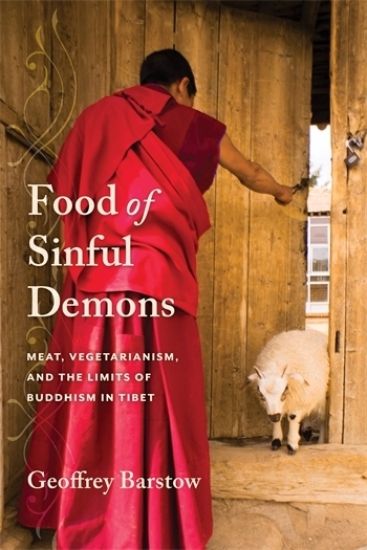
Tibetan Buddhism teaches compassion toward all beings, a category that explicitly includes animals. Slaughtering animals is morally problematic at best, and, at worst, completely incompatible with a religious lifestyle. Yet historically most Tibetans-both monastic and lay-have made meat a regular part of their diet. In this study of the place of vegetarianism within Tibetan religiosity, Geoffrey Barstow explores the tension between Buddhist ethics and Tibetan cultural norms to offer a novel perspective on the spiritual and social dimensions of meat eating. Food of Sinful Demons shows the centrality of vegetarianism to the cultural history of Tibet through specific ways in which nonreligious norms and ideals shaped religious beliefs and practices. Barstow offers a detailed analysis of the debates over meat eating and vegetarianism from the first references to such a diet in the tenth century through the Chinese invasion in the 1950s. He discusses elements of Tibetan Buddhist thought-including monastic vows, the Buddhist call to compassion, and tantric antinomianism-that see meat eating as morally problematic. He then looks beyond religious attitudes to the cultural, economic, and environmental factors that opposed the Buddhist critique of meat, including Tibetan concepts of medicine and health, food scarcity, the display of wealth, and idealized male gender roles. Barstow argues that the issue of meat eating was influenced by a complex interplay of factors, with religious perspectives largely supporting vegetarianism while practical concerns and secular ideals pulled in the other direction. He concludes by addressing the surge in vegetarianism in contemporary Tibet in light of evolving notions of Tibetan identity and resistance against the central Chinese state. The first book to discuss this complex issue, Food of Sinful Demons is essential reading for scholars interested in Tibetan religion, history, and culture.
Food of Sinful Demons

Food of Sinful Demons

Geoffrey Barstow

Columbia University Press
2019
pokkari
Tibetan Buddhism teaches compassion toward all beings, a category that explicitly includes animals. Slaughtering animals is morally problematic at best and, at worst, completely incompatible with a religious lifestyle. Yet historically most Tibetans—both monastic and lay—have made meat a regular part of their diet. In this study of the place of vegetarianism within Tibetan religiosity, Geoffrey Barstow explores the tension between Buddhist ethics and Tibetan cultural norms to offer a novel perspective on the spiritual and social dimensions of meat eating.Food of Sinful Demons shows the centrality of vegetarianism to the cultural history of Tibet through specific ways in which nonreligious norms and ideals shaped religious beliefs and practices. Barstow offers a detailed analysis of the debates over meat eating and vegetarianism, from the first references to such a diet in the tenth century through the Chinese invasion in the 1950s. He discusses elements of Tibetan Buddhist thought—including monastic vows, the Buddhist call to compassion, and tantric antinomianism—that see meat eating as morally problematic. He then looks beyond religious attitudes to examine the cultural, economic, and environmental factors that oppose the Buddhist critique of meat, including Tibetan concepts of medicine and health, food scarcity, the display of wealth, and idealized male gender roles. Barstow argues that the issue of meat eating was influenced by a complex interplay of factors, with religious perspectives largely supporting vegetarianism while practical concerns and secular ideals pulled in the other direction. He concludes by addressing the surge in vegetarianism in contemporary Tibet in light of evolving notions of Tibetan identity and resistance against the central Chinese state. The first book to discuss this complex issue, Food of Sinful Demons is essential reading for scholars interested in Tibetan religion, history, and culture as well as global food history.
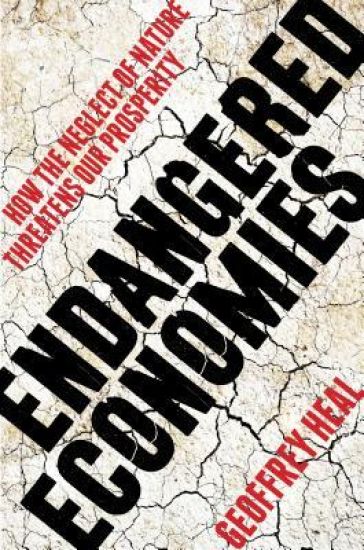
Endangered Economies

Endangered Economies

Geoffrey Heal

Columbia University Press
2016
sidottu
In the decades since Geoffrey Heal began his field-defining work in environmental economics, one central question has animated his research: "Can we save our environment and grow our economy?" This issue has become only more urgent in recent years with the threat of climate change, the accelerating loss of ecosystems, and the rapid industrialization of the developing world. Reflecting on a lifetime of experience not only as a leading voice in the field, but as a green entrepreneur, activist, and advisor to governments and global organizations, Heal clearly and passionately demonstrates that the only way to achieve long-term economic growth is to protect our environment. Writing both to those conversant in economics and to those encountering these ideas for the first time, Heal begins with familiar concepts, like the tragedy of the commons and unregulated pollution, to demonstrate the underlying tensions that have compromised our planet, damaging and in many cases devastating our natural world. Such destruction has dire consequences not only for us and the environment but also for businesses, which often vastly underestimate their reliance on unpriced natural benefits like pollination, the water cycle, marine and forest ecosystems, and more. After painting a stark and unsettling picture of our current quandary, Heal outlines simple solutions that have already proven effective in conserving nature and boosting economic growth. In order to ensure a prosperous future for humanity, we must understand how environment and economy interact and how they can work in harmony-lest we permanently harm both.
Chinese Esoteric Buddhism

Chinese Esoteric Buddhism

Geoffrey C. Goble

Columbia University Press
2019
sidottu
Chinese Esoteric Buddhism is generally held to have been established as a distinct and institutionalized Buddhist school in eighth-century China by “the Three Great Masters of Kaiyuan”: Subhakarasi?ha, Vajrabodhi, and Amoghavajra. Geoffrey C. Goble provides an innovative account of the tradition’s emergence that sheds new light on the structures and traditions that shaped its institutionalization.Goble focuses on Amoghavajra (704–774), contending that he was the central figure in Esoteric Buddhism’s rapid rise in Tang dynasty China, and the other two “patriarchs” are known primarily through Amoghavajra’s teachings and writings. He presents the scriptural, mythological, and practical aspects of Chinese Esoteric Buddhism in the eighth century and places them in the historical contexts within which Amoghavajra operated. By telling the story of Amoghavajra’s rise to prominence and of Esoteric Buddhism’s corresponding institutionalization in China, Goble makes the case that the evolution of this tradition was predicated on Indic scriptures and practical norms rather than being the product of conscious adaptation to a Chinese cultural environment. He demonstrates that Esoteric Buddhism was employed by Chinese rulers to defeat military and political rivals. Based on close readings of a broad range of textual sources previously untapped by English-language scholarship, this book overturns many assumptions about the origins of Chinese Esoteric Buddhism.
Interracial Marriage

Interracial Marriage

Geoffrey Greif; Michael Woolley; Victoria Stubbs

Columbia University Press
2026
pokkari
The rate of interracial marriage in the United States has steadily increased: One in six new marriages now crosses racial or ethnic lines. Yet these partnerships are not always embraced or even accepted by families, friends, and society. Within families, issues ranging from food and holiday traditions to parenting approaches and beliefs about gender roles sometimes must be negotiated between cultures. In a time of national division, questions of race and identity have become deeply fraught. The way these couples navigate differences is a model for how Americans, despite their differences, can come together. This book—based on interviews with and surveys of hundreds of people and informed by the authors’ many decades of experience as therapists and researchers—explores how intermarried couples build lives together. People of varied backgrounds describe how they navigate a world where others wonder about their relationship, question the parentage of their children, and treat them differently from their partner based on their appearance. Spouses relate their experiences forming fulfilling relationships in the face of potential disapproval, and they speak candidly about the joys and challenges of raising mixed-race children. Many of these couples have strengthened their relationships by learning to communicate across cultural barriers, and they share strategies for overcoming misunderstandings. At once large-scale and intimate, this book offers practical advice and timely insight into the triumphs and struggles of love across lines of difference.
Interracial Marriage

Interracial Marriage

Geoffrey Greif; Michael Woolley; Victoria Stubbs

Columbia University Press
2026
sidottu
The rate of interracial marriage in the United States has steadily increased: One in six new marriages now crosses racial or ethnic lines. Yet these partnerships are not always embraced or even accepted by families, friends, and society. Within families, issues ranging from food and holiday traditions to parenting approaches and beliefs about gender roles sometimes must be negotiated between cultures. In a time of national division, questions of race and identity have become deeply fraught. The way these couples navigate differences is a model for how Americans, despite their differences, can come together. This book—based on interviews with and surveys of hundreds of people and informed by the authors’ many decades of experience as therapists and researchers—explores how intermarried couples build lives together. People of varied backgrounds describe how they navigate a world where others wonder about their relationship, question the parentage of their children, and treat them differently from their partner based on their appearance. Spouses relate their experiences forming fulfilling relationships in the face of potential disapproval, and they speak candidly about the joys and challenges of raising mixed-race children. Many of these couples have strengthened their relationships by learning to communicate across cultural barriers, and they share strategies for overcoming misunderstandings. At once large-scale and intimate, this book offers practical advice and timely insight into the triumphs and struggles of love across lines of difference.