Kirjojen hintavertailu. Mukana 11 348 751 kirjaa ja 12 kauppaa.

Kirjahaku

Etsi kirjoja tekijän nimen, kirjan nimen tai ISBN:n perusteella.

1000 tulosta hakusanalla George Barrell Cheever

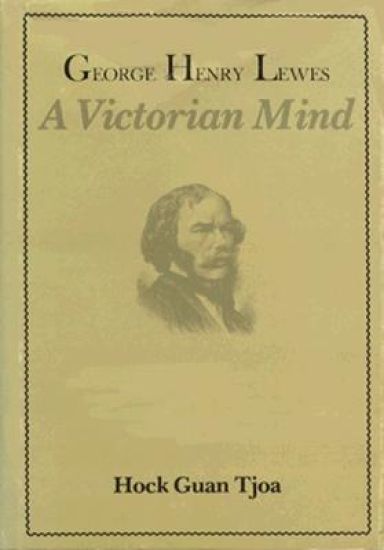
George Henry Lewes

George Henry Lewes

Hock Guan Tjoa

Harvard University Press
1978
sidottu
George Henry Lewes, consort of George Eliot biographer of Robespierre and Goethe, novelist, editor, and critic, was also a scientist and philosopher. An intellectual figure of great importance on the Victorian scene, he has never before received adequate modern scholarly appreciation. In this book Professor Tjoa not only reconstructs Lewes’ theory of criticism and his social and political opinions but also evaluates his contributions to Darwinian science both as original thinker and as popularizer. With skillful discrimination, moreover, Mr. Tjoa has extracted from Lewes’ massive five-volume Problems of Life and Mind a clear and succinct account of Lewes’ metaphysical views. Literature and art, politics and societs science and an in- formed Victorian philosophy of man and the universe: the effervescent Lewes made important contributions to all. Hitherto in danger of surviving in our minds only as the lover, friend, and counselor of one of the Victorian age’s greatest novelists, Lewes emerges in Mr. Ijoa’s brief and lucid study as a thinker to he remembered for his writings as well.
George Eliot and the Novel of Vocation

George Eliot and the Novel of Vocation

Alan Mintz

Harvard University Press
1978
sidottu
Mintz has discovered a new sub-genre of fiction: the novel of vocation. In the nineteenth century, he maintains, work ceased to be merely what one did for a living or out of a sense of duty and became a vehicle for self-definition and self-realization. The change was prepared for by the growth of professions and the increase in middle-class career opportunities, He shows how George Eliot, in particular, linked these new social possibilities to the older Puritan doctrine of calling or vocation, achieving in her late novels a fictional structure that could encompass the conflicting energies of the age. In the idea of vocation she found a way to explore how far it is possible to be ambitious both for oneself and for a large cause, and a way to probe the contradictions between ambitious, self-defining work and the older institutions; of family, community, and religion. The book is solidly grounded in cultural and historical reality. Although Mintz concentrate on George Eliot and especially "Middlemarch," he also examines the conceptions of self and work in Victorian biographies and autobiographies and the emergence in late-nineteenth-century fiction of the idea of the vocation of art.
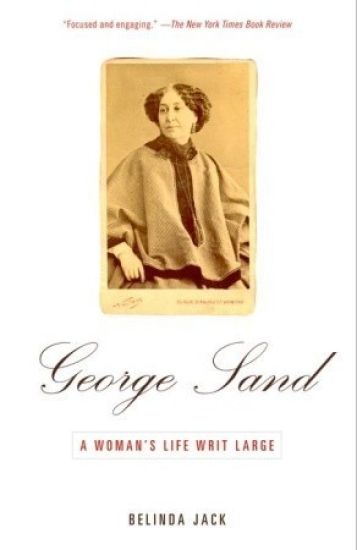
George Sand: A Woman's Life Writ Large
The author of classic novels including Indiana and L lia, George Sand is perhaps better known for her unconventional life. Belinda Jack unravels the many facets of this writer who counted among her friends and lovers everyone from Chopin and Liszt to Dostoyevsky and Elizabeth Barrett Browning. Sand defied convention by writing novels; but the fact that she was a cigar-smoking cross-dresser who took male and female lovers, declared marriage "barbarous," and championed socialism made her a legend. Allowing Sand's voice to be heard, but wise enough to question it, Jack presents a riveting study of a woman raised by her aristocratic grandmother and her prostitute mother, and whose life and work were forever fueled by rival worlds.
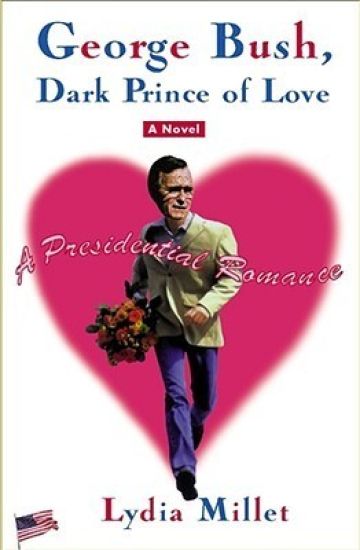
George Bush, Dark Prince of Love
Rosemary is an obese ex-con with no viable career prospects, a boyfriend old enough to be her grandfather, and a major obsession with the forty-first president, whom she fondly refers to as "G.B." Unexpectedly smitten during the inaugural address, Rosemary is soon anticipating G.B.'s public appearances with the enthusiasm she had once reserved for all-you-can-eat breakfast buffets. As her ardor and determination to gain G.B.'s affection grows, Rosemary embarks on a campaign that escalates from a series of personal letters to paid advertising, until she finally reaches the White House.Written with razor-sharp wit by the acclaimed author of Omnivores, and packed with wry observations of our times, our presidents, and our electorate, George Bush, Dark Prince of Love supplies a foolproof, hilarious antidote to the hype, hypocrisies, and horror shows sure to develop during this election year.
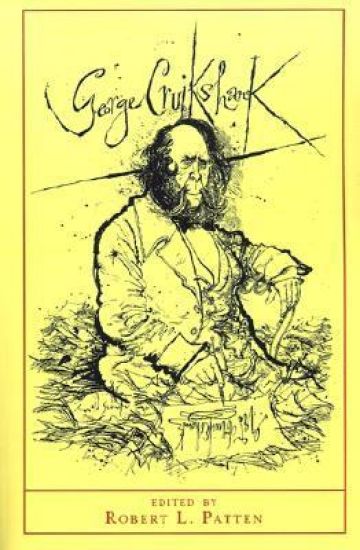
George Cruikshank

George Cruikshank

Princeton University Press
1992
pokkari
One of the most important British graphic artists of the nineteenth century, George Cruikshank (1792-1878) illustrated over 860 books, including several by Charles Dickens, and produced a vast number of etchings, paintings, and caricatures. The ten essays collected here first appeared in a special limited edition. In a new preface written for this paperback edition, Robert Patten shows how the insights of these seminal essays have been amplified by recent exhibitions and scholarship. The introduction by John Fowles has been retained and an index has been added. In addition to the many Cruikshank illustrations reproduced in the volume, there are original drawings by contemporary artists David Levine and Ronald Searle.
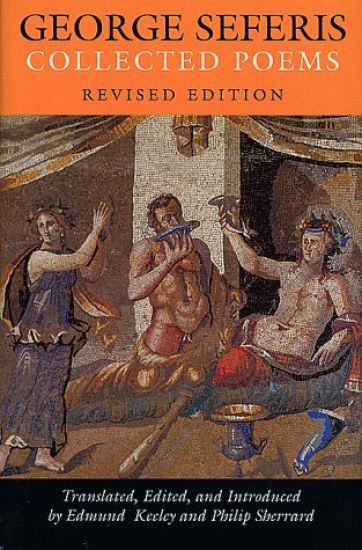
George Seferis

George Seferis

Edmund Keeley; Philip (EDT) Sherrard

Princeton University Press
1995
pokkari
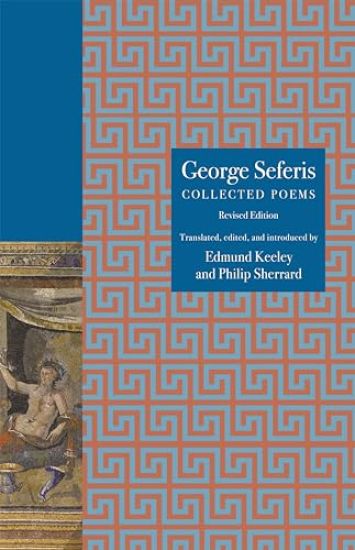
In this new edition of George Seferis's poems, the acclaimed translations by Edmund Keeley and Philip Sherrard are revised and presented in a compact, English-only volume. The revision covers all the poems published in Princeton's earlier bilingual edition, George Seferis: Collected Poems (expanded edition, 1981). Winner of the Nobel Prize for Literature in 1963, George Seferis (1900-71) has long been recognized as a major international figure, and Keeley and Sherrard are his ideal translators. They create, in the words of Archibald MacLeish, a "translation worthy of Seferis, which is to praise it as highly as it could be praised." Although Seferis was preoccupied with his tradition as few other poets of the same generation were with theirs, and although he was actively engaged in the immediate political aspirations of his nation, his value for readers lies in what he made of this preoccupation and this engagement in fashioning a broad poetic vision. He is also known for his stylistic purity, which allows no embellishment beyond that necessary for precise yet rich poetic statement.
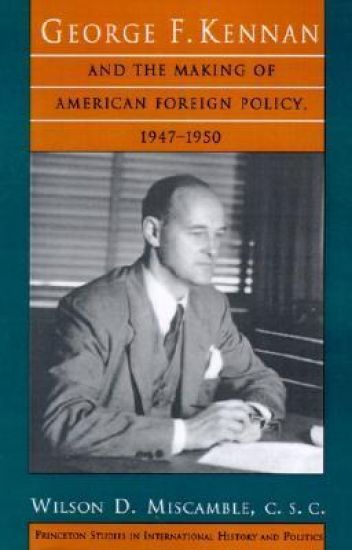
George F. Kennan and the Making of American Foreign Policy, 1947-1950
When George C. Marshall became Secretary of State in January of 1947, he faced not only a staggering array of serious foreign policy questions but also a State Department rendered ineffective by neglect, maladministration, and low morale. Soon after his arrival Marshall asked George F. Kennan to head a new component in the department's structure--the Policy Planning Staff. Here Wilson Miscamble scrutinizes Kennan's subsequent influence over foreign policymaking during the crucial years from 1947 to 1950.
George Berkeley

George Berkeley

Tom Jones

PRINCETON UNIVERSITY PRESS
2021
sidottu
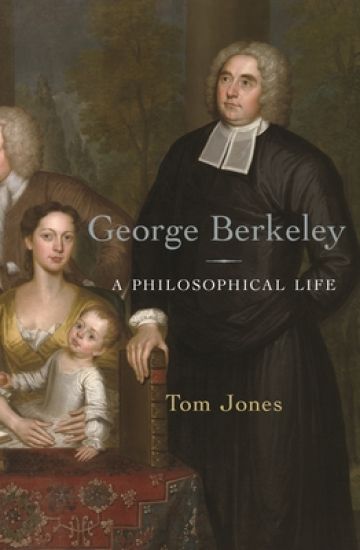
A comprehensive intellectual biography of the Enlightenment philosopherIn George Berkeley: A Philosophical Life, Tom Jones provides a comprehensive account of the life and work of the preeminent Irish philosopher of the Enlightenment. From his early brilliance as a student and fellow at Trinity College Dublin to his later years as Bishop of Cloyne, Berkeley brought his searching and powerful intellect to bear on the full range of eighteenth-century thought and experience.Jones brings vividly to life the complexities and contradictions of Berkeley’s life and ideas. He advanced a radical immaterialism, holding that the only reality was minds, their thoughts, and their perceptions, without any physical substance underlying them. But he put forward this counterintuitive philosophy in support of the existence and ultimate sovereignty of God. Berkeley was an energetic social reformer, deeply interested in educational and economic improvement, including for the indigenous peoples of North America, yet he believed strongly in obedience to hierarchy and defended slavery. And although he spent much of his life in Ireland, he followed his time at Trinity with years of travel that took him to London, Italy, and New England, where he spent two years trying to establish a university for Bermuda, before returning to Ireland to take up an Anglican bishopric in a predominantly Catholic country.Jones draws on the full range of Berkeley’s writings, from philosophical treatises to personal letters and journals, to probe the deep connections between his life and work. The result is a richly detailed and rounded portrait of a major Enlightenment thinker and the world in which he lived.
George Berkeley

George Berkeley

Tom Jones

PRINCETON UNIVERSITY PRESS
2025
pokkari
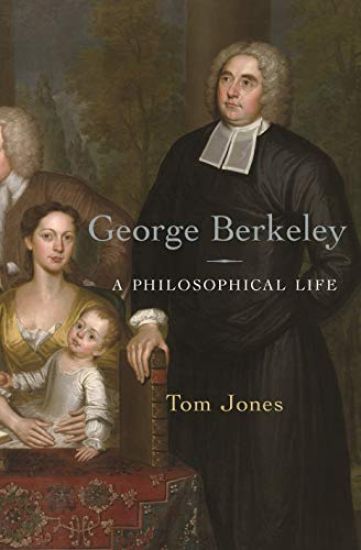
A comprehensive intellectual biography of the Enlightenment philosopherIn George Berkeley: A Philosophical Life, Tom Jones provides a comprehensive account of the life and work of the preeminent Irish philosopher of the Enlightenment. From his early brilliance as a student and fellow at Trinity College Dublin to his later years as Bishop of Cloyne, Berkeley brought his searching and powerful intellect to bear on the full range of eighteenth-century thought and experience.Jones brings vividly to life the complexities and contradictions of Berkeley’s life and ideas. He advanced a radical immaterialism, holding that the only reality was minds, their thoughts, and their perceptions, without any physical substance underlying them. But he put forward this counterintuitive philosophy in support of the existence and ultimate sovereignty of God. Berkeley was an energetic social reformer, deeply interested in educational and economic improvement, including for the indigenous peoples of North America, yet he believed strongly in obedience to hierarchy and defended slavery. And although he spent much of his life in Ireland, he followed his time at Trinity with years of travel that took him to London, Italy, and New England, where he spent two years trying to establish a university for Bermuda, before returning to Ireland to take up an Anglican bishopric in a predominantly Catholic country.Jones draws on the full range of Berkeley’s writings, from philosophical treatises to personal letters and journals, to probe the deep connections between his life and work. The result is a richly detailed and rounded portrait of a major Enlightenment thinker and the world in which he lived.
George Washington and Frederick the Great

George Washington and Frederick the Great

Jürgen Overhoff

PRINCETON UNIVERSITY PRESS
2026
sidottu
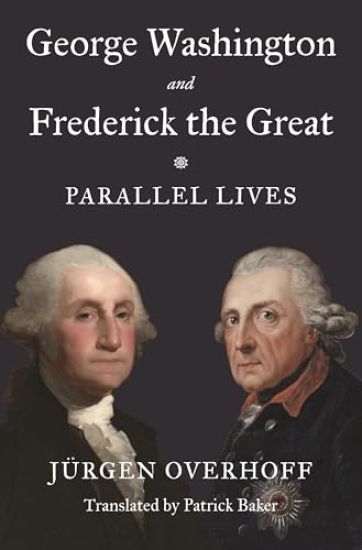
How Frederick the Great and George Washington embody the competition between liberal democracy and authoritarianism Both Frederick the Great and George Washington saw themselves as model rulers exemplifying different modes of enlightened governance. Frederick, absolute ruler of Prussia, styled himself as the embodiment of “enlightenment from above”; Washington, as the first president of the United States, held himself accountable to Congress, with the power of the presidency subject to checks and balances. In this unique study, Jürgen Overhoff traces the parallel lives of two of the most important and influential statesmen of the eighteenth century, from their early years to their ascension to political power and their historical legacies. Overhoff considers the significance of each man not only in the context of his own country but in the larger geopolitical space of Atlantic history. Overhoff describes how Washington admired Frederick’s actions during the Seven Years’ War (also known as the French and Indian War) in the 1750s, when Frederick allied with the British and North Americans. Later, Frederick was impressed by Washington’s leadership of the Continental Army during the American Revolution. Prussia and the United States even signed a friendship treaty after the war. But, as Overhoff shows, the two men had very different ideas about the principles of the Enlightenment, monarchy, and democracy. Despite his Enlightenment bona fides, Frederick ruled Prussia by edict and decree, always with the goal of maintaining his own power. Washington famously stepped down after two terms in office. Overhoff argues convincingly that the political trajectories of Frederick and Washington shed light on the contemporary clash between authoritarianism and democracy.
George Seferis

George Seferis

George Seferis

PRINCETON UNIVERSITY PRESS
2024
pokkari
In this new edition of George Seferis's poems, the acclaimed translations by Edmund Keeley and Philip Sherrard are revised and presented in a compact, English-only volume. The revision covers all the poems published in Princeton's earlier bilingual edition, George Seferis: Collected Poems (expanded edition, 1981). Winner of the Nobel Prize for Literature in 1963, George Seferis (1900-1971) has long been recognized as a major international figure, and Keeley and Sherrard are his ideal translators. They create, in the words of Archibald MacLeish, a "translation worthy of Seferis, which is to praise it as highly as it could be praised."Although Seferis was preoccupied with his tradition as few other poets of the same generation were with theirs, and although he was actively engaged in the immediate political aspirations of his nation, his value for readers lies in what he made of this preoccupation and this engagement in fashioning a broad poetic vision. He is also known for his stylistic purity, which allows no embellishment beyond that necessary for precise yet rich poetic statement.
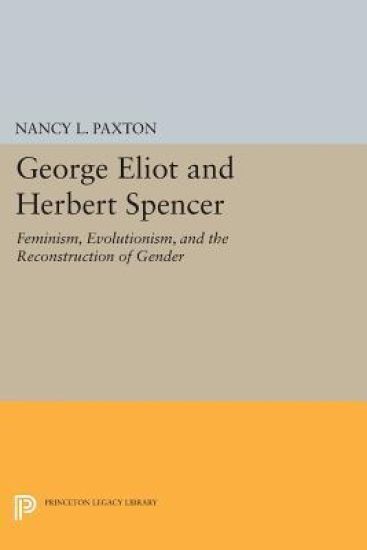
George Eliot and Herbert Spencer

George Eliot and Herbert Spencer

Nancy L. Paxton

Princeton University Press
2014
pokkari
This analysis of the writings of two major Victorian intellectuals examines the crucial place of gender in the larger Victorian debate about nature, religion, and evolutionary theory. Demonstrating the primacy of Herbert Spencer's influence on George Eliot's thought, Nancy Paxton discloses the continuous dialogue between this profoundly learned novelist and one of the most formidable and influential scientific authorities of her time. Using rarely cited first editions of Spencer's published works, Paxton reveals that Eliot and Spencer initially agreed in supporting several of the goals of early Victorian feminism when they met in 1851. Paxton surveys all of Spencer's writing to show when and why he repudiated his early feminism and demonstrates Eliot's determined resistance to the most conservative tendencies of evolutionary theory in her representation of female sexuality, motherhood, feminist ambition, and desire. In comparing Eliot's and Spencer's evolutionary "reconstruction of gender," the book draws on a wide variety of biographical, literary, and critical texts and on interdisciplinary scholarship about the relation between scientific and literary discourse in the nineteenth century. By thus reassessing Eliot's contribution to feminist thought, it presents a revolutionary reading of her novels which is informed by contemporary feminist criticism and the new historicism. "This is an important book because of the questions it raises, the issues it covers, and the illumination it brings to Eliot and Spencer and to crucial problems in the nineteenth century: Paxton looks at the ways scientific data get turned into arguments about the nature of women in society, about women and education, about women and sexuality. This work shows how truly current Eliot's novels are, no matter what their setting."--Barry Qualls, Rutgers University Originally published in 1991. The Princeton Legacy Library uses the latest print-on-demand technology to again make available previously out-of-print books from the distinguished backlist of Princeton University Press. These editions preserve the original texts of these important books while presenting them in durable paperback and hardcover editions. The goal of the Princeton Legacy Library is to vastly increase access to the rich scholarly heritage found in the thousands of books published by Princeton University Press since its founding in 1905.
George Seferis

George Seferis

George Seferis

Princeton University Press
2014
pokkari
This new bilingual edition of George Seferis: Collected Poems both supplements and revises the two earlier editions published in 1967 and 1969. It presents for the first time the complete Notes for a 'Week,' " Three Secret Poems, and three later poems that were not collected by the poet himself but whose English translation he authorized during his lifetime. Originally published in 1982. The Princeton Legacy Library uses the latest print-on-demand technology to again make available previously out-of-print books from the distinguished backlist of Princeton University Press. These editions preserve the original texts of these important books while presenting them in durable paperback and hardcover editions. The goal of the Princeton Legacy Library is to vastly increase access to the rich scholarly heritage found in the thousands of books published by Princeton University Press since its founding in 1905.