Kirjojen hintavertailu. Mukana 12 016 292 kirjaa ja 12 kauppaa.

Kirjahaku

Etsi kirjoja tekijän nimen, kirjan nimen tai ISBN:n perusteella.

1000 tulosta hakusanalla Gerald Durrell

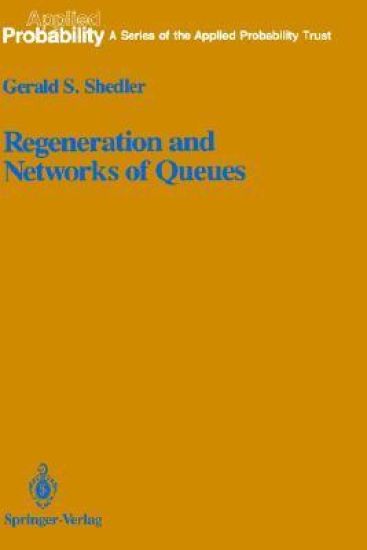
Regeneration and Networks of Queues

Regeneration and Networks of Queues

Gerald S. Shedler

Springer-Verlag New York Inc.
1986
sidottu
Networks of queues arise frequently as models for a wide variety of congestion phenomena. Discrete event simulation is often the only available means for studying the behavior of complex networks and many such simulations are non­ Markovian in the sense that the underlying stochastic process cannot be repre­ sented as a continuous time Markov chain with countable state space. Based on representation of the underlying stochastic process of the simulation as a gen­ eralized semi-Markov process, this book develops probabilistic and statistical methods for discrete event simulation of networks of queues. The emphasis is on the use of underlying regenerative stochastic process structure for the design of simulation experiments and the analysis of simulation output. The most obvious methodological advantage of simulation is that in principle it is applicable to stochastic systems of arbitrary complexity. In practice, however, it is often a decidedly nontrivial matter to obtain from a simulation information that is both useful and accurate, and to obtain it in an efficient manner. These difficulties arise primarily from the inherent variability in a stochastic system, and it is necessary to seek theoretically sound and computationally efficient methods for carrying out the simulation. Apart from implementation consider­ ations, important concerns for simulation relate to efficient methods for generating sample paths of the underlying stochastic process. the design of simulation ex­ periments, and the analysis of simulation output.

Integral, Probability, and Fractal Measures

Integral, Probability, and Fractal Measures

Gerald A. Edgar

Springer-Verlag New York Inc.
1997
sidottu
This book may be considered a continuation of my Springer-Verlag text Mea­ sure, Topology, and Fractal Geometry. It presupposes some elementary knowl­ edge of fractal geometry and the mathematics behind fractal geometry. Such knowledge might be obtained by study of Measure, Topology, and Fractal Ge­ ometry or by study of one of the other mathematically oriented texts (such as [13] or [87]). I hope this book will be appropriate to mathematics students at the beginning graduate level in the U.S. Most references are numbered and may be found at the end of the book; but Measure, Topology, and Fractal Geometry is referred to as [ MTFG]. One of the reviews of [MTFG] says that it "sacrific[es] breadth of coverage 1 for systematic development" -although I did not have it so clearly formulated as that in my mind at the time I was writing the book, I think that remark is exactly on target. That sacrifice has been made in this volume as well. In many cases, I do not include the most general or most complete form of a result. Sometimes I have only an example of an important development. The goal was to omit most material that is too tedious or that requires too much background.
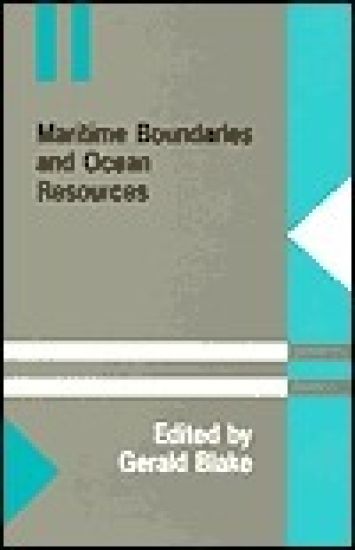
Maritime Boundaries and Ocean Resources

Maritime Boundaries and Ocean Resources

Gerald Blake

Barnes Noble Books-Imports, Div of Rowman Littlefield Pubs., Inc
1988
sidottu
Contents: 1. Worldwide Maritime Boundary Delimitation: The State of Play, Gerald H. Blake; 2. Delimitation of Maritime Boundaries: Emergent Legal Principles and Problems, Patricia Birnie; 3. Straight and Archipelagic Baselines, J.R.V. Prescott; 4. The Importance of Geographical Scale in Considering Offshore Boundary Problems, Ewan Anderson; 5. The Area Beyond National Jurisdiction: Limits of the Continental Shelf, P.R.R. Gardiner; 6. Maritime Boundaries and the Emerging Regional Bases of World Ocean Management, Hance D. Smith; 7. Common Fishery Resources and Maritime Boundaries: The Case of the Channel Islands, Stephen R. Langford; 8. European, National and Regional Concepts of Fishing Limits in the European Community, Mark Wise; 9. Offshore Jurisdictional Claims of the Republic of Ireland, Proinnsais Breathnach; 10. Maritime Boundary Problems in the Barents Sea, R.R. Churchill; 11. The United States Exclusive Economic Zone: Mineral Resources, Fillmore C.F. Earney; 12. Historical Geography and the Canada-United States Seaward Boundary on Georges Bank, Louis De Vorsey; 13. Maritime Boundaries in the Mediterranean: Aspects of Cooperation and Dispute, Nurit Kliot; 14. Defining the Indefinable: Antarctic Maritime Boundaries, Gerard J. Mangone; 15. Local Government Limits in the Coastal Zone of England and Wales, Joyce Halliday; Bibliography; Index^R
What I Can't Bear Losing

What I Can't Bear Losing

Gerald Stern

WW Norton Co
2004
sidottu
In a series of freewheeling rambles that combine autobiography and meditation, Gerald Stern explores significant and representative events in his life. He describes the dour Sundays of Calvinist Pittsburgh, punctuated by his parents' weekly battles. We have glimpses of him as a wilderness camp counselor, and later, having been declared 4-F, as a postwar draftee (a stint that includes jail). In the 1950s he savors the romance of Paris. Stern also tells of being shot in Newark—the bullet is still in his neck to prove it. Other scenes include being mistaken for Allen Ginsberg and encounters with Andy Warhol. And in the ineffably tender "The Ring," Stern recalls his mother's second engagement ring, "when they were a bit richer, if a bit broader and a bit more weary." As in his poetry, Stern discovers his subject as he goes along, relishing that discovery and expanding on it. There is no other voice like Gerald Stern's, funny and reflective and opinionated—and forgiving.
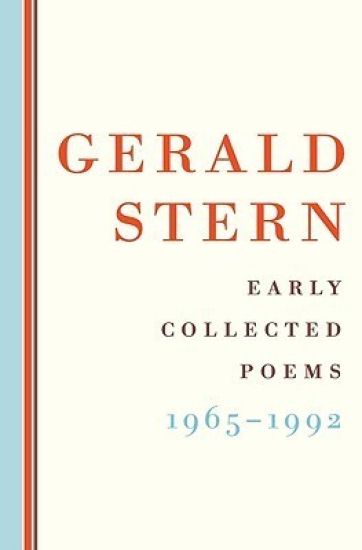
Early Collected Poems

Early Collected Poems

Gerald Stern

WW Norton Co
2010
sidottu
Early Collected Poems gathers the poems from the first six books of Gerald Stern’s body of work. A master poet, Stern has sought new language for the overlooked, neglected, and unseen facets of human experience. Whether writing about modern poets, Hebrew prophets, death, war, or love, “Stern’s literary songs are sharp, surprising, and unerring in their delivery” (Ploughshares, Editor’s Choice). from “The Red Coal” The coal has taken over, the red coal is burning between us and we are at its mercy— as if a power is finally dominating the two of us; as if we’re huddled up watching the black smoke and the ashes; as if knowledge is what we needed and now we have that knowledge. Now we have that knowledge.
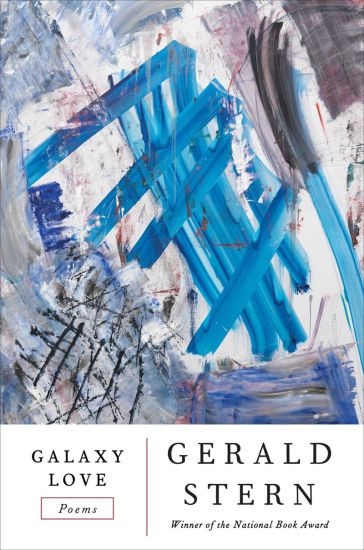
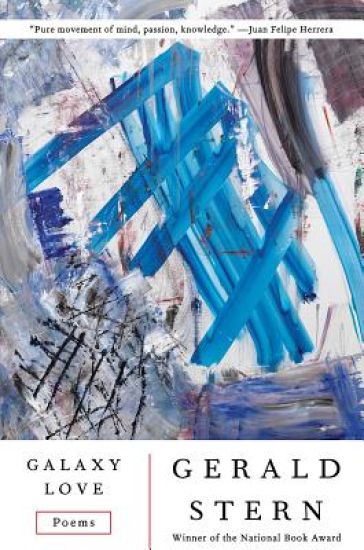
Galaxy Love

Galaxy Love

Gerald Stern

WW Norton Co
2017
sidottu
The poems in this new volume by the winner of the National Book Award span countries and centuries, reflecting on memory, aging, history, and mortality. “Hamlet Naked” traverses Manhattan in the 1960s from a Shakespeare play on 47th Street to the cellar of a Ukrainian restaurant in the East Village; “Thieves and Murderers” encompasses musings of the medieval French poet François Villon and Dwight Eisenhower; “Orson” recounts a meeting of the poet and Orson Welles, exiled in Paris. Gerald Stern recalls old cars he used to drive—“the 1950 Buick / with the small steering wheel / and the cigar lighter in the back seat”—as well as intimate portraits of his daily life “and the mussel-pooled and the heron-priested shore” of Florida. These are wistful, generous, lively love poems and elegies that capture the passage of time, the joys of a sensual life, and remembrances of the past.
Beyond the Culture Wars

Beyond the Culture Wars

Gerald Graff

WW Norton Co
1994
nidottu
Higher education should by a battleground of ideas: the real problem, Gerald Graff says, is that students are not getting more out of the battle. In this lively book, Graff argues that the "culture wars" now being fought over multiculturalism and political correctness are actually a sign of the intellectual vitality of American education—but they need to be used creatively, made part of the educational process itself.
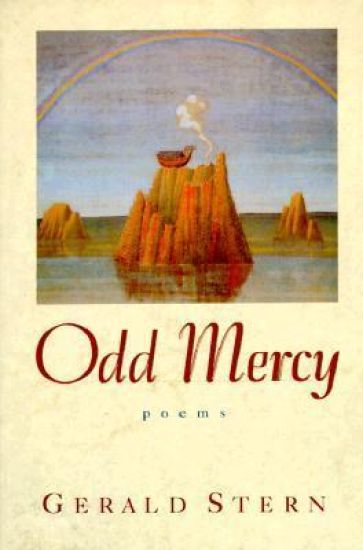
Odd Mercy

Odd Mercy

Gerald Stern

WW Norton Co
1997
nidottu
The centerpiece of Gerald Stern's ninth collection is a long poem titled "Hot Dog," named for a beautiful street woman who lives in and around Tompkins Square Park. Other characters in this poem are St. Augustine, Walt Whitman, Noah, Gerald Stern himself, and a ninety-year-old black preacher from the Midwest. In "Hot Dog," and throughout, Stern wrestles with the issues—hope, memory, faith—that have always occupied him.
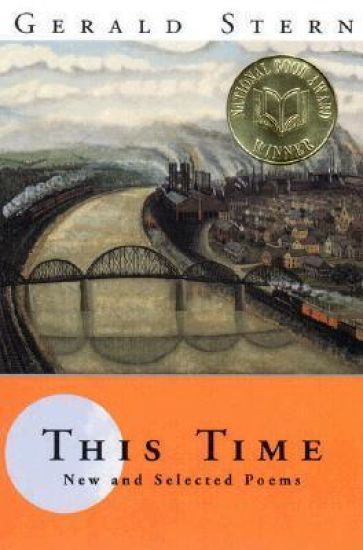
This Time

This Time

Gerald Stern

WW Norton Co
1999
nidottu
"This healthy collection of new poems and selections from seven previous volumes is remarkable for its generosity of spirit, manifested in a warm surrealism that is often turned with humor toward his own past as a way of understanding the recurrent questions of growing old: 'Why did it take so long / for me to get lenient? What does it mean one life / only?' " — Publishers Weekly (starred review) "Gerald Stern's achievement is immense. In this beautiful gathering . . . one encounters a poet who praises and mourns in turn and even at once." — Grace Schulman, The Nation "Stern is one of those rare poetic souls who makes it almost impossible to remember what our world was like before his poetry came to exalt it." — C. K. Williams
Last Blue

Last Blue

Gerald Stern

WW Norton Co
2001
nidottu
Following his National Book Award winner, This Time, Gerald Stern further explores history and memory, the casual miracles of relationships, and his irrevocable connection to the natural world. The weight of history and the bouyance of memory, the casual miracles of relationships, and his irrevocable connection to the natural world are some of Gerald Stern's ongoing themes in this new book. The poems in Last Blue range in tone from the joyously unrestrained to the quietly somber. A Stern poem can begin with the majestic cadences of an Old Testament psalm, turn on an almost invisible hinge, and bring into focus the smallest detail. Here is a radiant collection from an essential voice in American poetry.
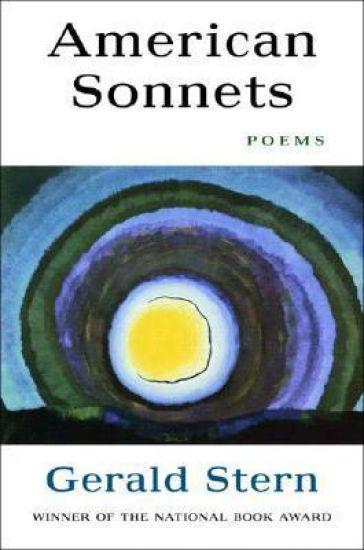
American Sonnets

American Sonnets

Gerald Stern

WW Norton Co
2003
nidottu
In his thirteenth collection, the 1998 National Book Award winner presents us with fifty-nine "Stern Sonnets," of twenty or so lines rather than the traditional fourteen. Using the events of his life as starting points, Gerald Stern deals with time and loss, with the dichotomy of light and darkness, and—always—with the possibility of joy. This stunning collection moves from autobiography to the visionary in surges of memory and language that draw the reader from one poem to the next.
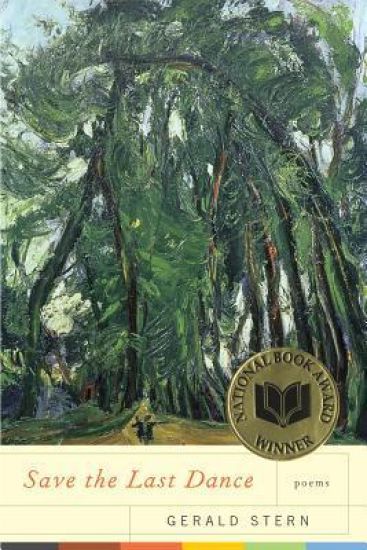
Save the Last Dance

Save the Last Dance

Gerald Stern

WW Norton Co
2010
nidottu
In Save the Last Dance, Gerald Stern gives us a stunning collection of his intimately personal—yet always universal, and always surprising—poems, rich with humor and insight. Shorter lyric poems in the first two parts continue the satirical and often redemptive vision of his last collection, Everything Is Burning, while never failing to carve out new emotional territory. In the third part, a long poem called "The Preacher," Stern takes the book of Ecclesiastes as a starting point for a meditation on loss, futility, and emptiness, represented here by the concept of a "hole" that resurfaces throughout.
In Beauty Bright

In Beauty Bright

Gerald Stern

WW Norton Co
2014
nidottu
The lyric poems of In Beauty Bright, although marked by the same passion and swiftness as Gerald Stern’s previous work, move into an area of knowledge—even wisdom—that reflects a long life of writing, teaching, and activism. They are poems of grief and anger, but the music is delicate and moving. from "In Beauty Bright": In beauty-bright and such it was like Blake’s lily and though an angel he looked absurd dragging a lily out of a beauty-bright store wrapped in tissue with a petal drooping, nor was it useless—you who know it know how useful it is—and how he would be dead in a minute if he were to lose it though how do you lose a lily?
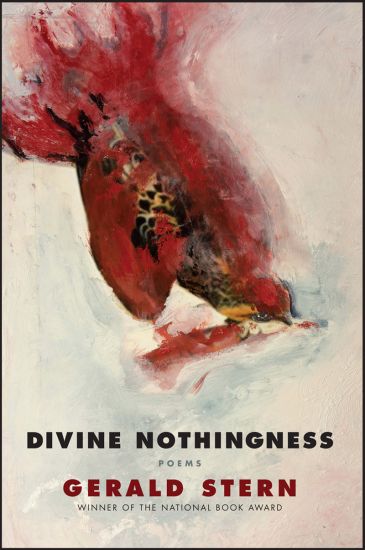
Divine Nothingness

Divine Nothingness

Gerald Stern

WW Norton Co
2016
nidottu
Divine Nothingness is a meditative reflection on the poet’s past and an elegy to love and the experience of the senses in the face of mortality. From the Jersey side of the Delaware River in Lambertville, Gerald Stern explores questions about who and why we are, locating nothingness in the divine and the divine in nothingness.
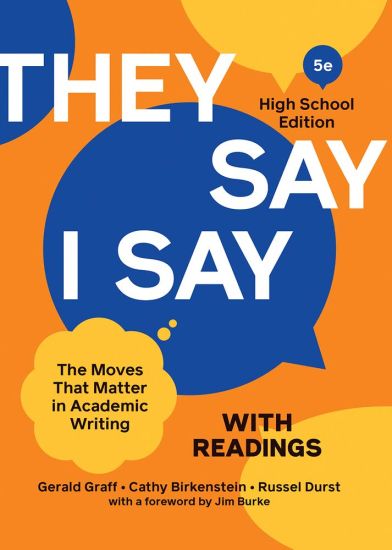
They Say / I Say with Readings: The Moves That Matter in Academic Writing

They Say / I Say with Readings: The Moves That Matter in Academic Writing

Gerald Graff; Cathy Birkenstein

W. W. Norton Company
2021
sidottu
Used and loved by millions of students for its lively and practical advice, this is the book that shows the key rhetorical moves in academic writing demystifies academic writing and explains how to engage with the views of others. With a new chapter on researching conversations, new exercises, expanded support for reading, and 23 new readings about five important questions that matter, this edition of "They Say / I Say" is an even more of a practical companion for students than ever before.