Evangelist and temperance advocate Emma Molloy moved to the Ozarks to establish a home for her family while she traveled and lectured throughout the United States. Trusting that her farm manager, George Graham, and his wife Cora could manage the farm and take care of her younger children, she left home and continued her crusade for temperance. Her trust was misplaced and the result was the "Graham Tragedy," so named when George's former wife Sarah was found dead on the Molloy farm. Emma's relationship with George, as well as her status as a respected public figure, placed her at the center of a scandal from which she never fully recovered.
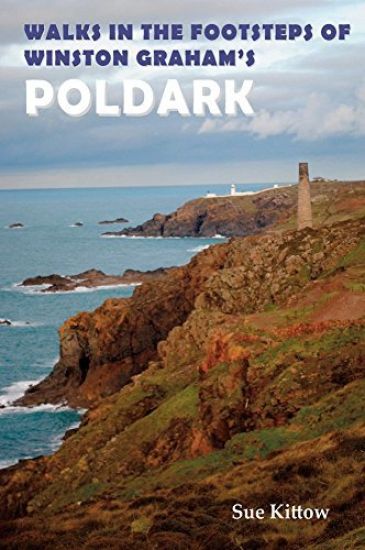
Walks in the Footsteps of Winston Graham's Poldark features 12 walks each associated with a different Poldark location from the books, a character, or where an event was filmed for the TV series.
LAPD Officer Agnes Graham and Hollywood P.I. Marlowe try to find the killer of Agnes' LAPD partner as she might be accused of the murder. They become involved in Hollywood Union politics, payoffs, cover-ups, mobsters, and the murder of a movie star's live-in boyfriend.
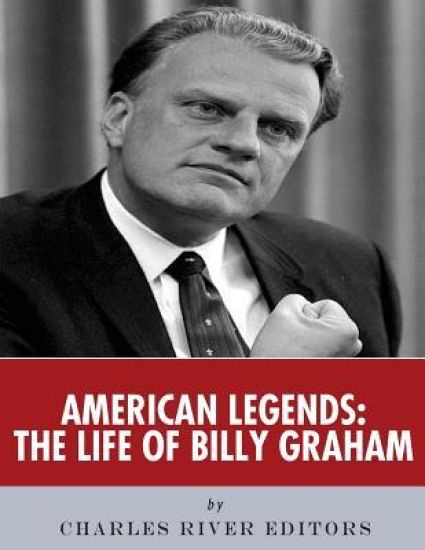
*Includes pictures *Includes Graham's quotes about his life and work *Includes online resources and a bibliography for further reading *Includes a table of contents "The greatest legacy one can pass on to one's children and grandchildren is not money or other material things accumulated in one's life, but rather a legacy of character and faith." - Billy Graham A lot of ink has been spilled covering the lives of history's most influential figures, but how much of the forest is lost for the trees? In Charles River Editors' American Legends series, readers can get caught up to speed on the lives of America's most important men and women in the time it takes to finish a commute, while learning interesting facts long forgotten or never known. In the 21st century, Americans are intimately familiar with televangelists and preachers with a national reputation, and their shows are ubiquitous, but in the middle of the 20th century, the phenomenon was popularized by the most famous evangelist in American history: Billy Graham. As biographer Grant Wacker put it, "By the middle 1960s, he had become the 'Great Legitimator'. ...His presence conferred sanctity on events, authority on presidents, acceptability on wars, desirability on decency, and] shame on indecency....By the middle 1970s, many deemed him 'America's pastor.'" By his mid-20s, Graham was a Baptist pastor in the Midwest, and throughout the 1940s, he began traveling across the country to spread his ministry and message through large gatherings that he termed "crusades." In time, these crusades would take place in nearly 200 nations and attract hundreds of millions of people, helping catapult him to international prominence and making him a household name. In the process, Graham became a figure of political importance, not only for his outspoken stances on issues like civil rights and other social issues but because he was close to political leaders like Dwight D. Eisenhower. At the same time, he was controversial among some, including Harry Truman, who was quoted as saying "I hadn't ought to say this, but he's one of those counterfeits I was telling you about. He claims he's a friend of all the Presidents, but he was never a friend of mine when I was President. I just don't go for people like that. All he's interested in is getting his name in the paper." When President Nixon's tapes were declassified, some of Graham's anti-Semitic comments to the president about Jews controlling the media were also made public, further tarnishing his image. Nonetheless, Graham continues to be a popular figure, and it's estimated that his message has reached more than 2 billion people through radio, television, and other media. In conjunction with that, it's believed that he has converted millions of people to Christianity. American Legends: The Life of Billy Graham examines the life and career of America's most famous evangelist. Along with pictures of important people, places, and events, you will learn about Billy Graham like never before, in no time at all.
Unlock the more straightforward side of The Heart of the Matter with this concise and insightful summary and analysis This engaging summary presents an analysis of The Heart of the Matter by Graham Greene, the tragic tale of one man's anguish as he gradually spirals into corruption and infidelity. The man in question is Major Scobie, a British police officer living in colonial Africa, who finds himself drawn into an affair with a younger woman while his wife is out of the country. When a local criminal threatens to make their affair public knowledge, Scobie is forced to abandon his personal integrity, setting him on a difficult path which ultimately leads to his doom. The Heart of the Matter is considered one of Graham Greene's seminal 'Catholic novels', and is also known for its portrayal of life in colonial Africa. Find out everything you need to know about The Heart of the Matter in a fraction of the time This in-depth and informative reading guide brings you: - A complete plot summary- Character studies- Key themes and symbols- Questions for further reflection Why choose BrightSummaries.com? Available in print and digital format, our publications are designed to accompany you on your reading journey. The clear and concise style makes for easy understanding, providing the perfect opportunity to improve your literary knowledge in no time. See the very best of literature in a whole new light with BrightSummaries.com
Das Buch reflektiert eine reine Studie ber Erinnerung und Erz hlung, James Olney legt den Finger auf einen der illustrativen Aspekte der Schriftsteller des zwanzigsten Jahrhunderts. Er behauptet, "dass die gequ lte Suche nach dem Selbst durch die wechselseitig reflexiven Akte der Erinnerung und des Erz hlens, begleitet von der qu lenden Angst, dass es von Anfang an unm glich ist, aber auch unm glich, es aufzugeben, das eigentliche Emblem unserer Zeit ist" (Olney 1998: xiv-xv). Olneys ist eine Studie ber das Genre der Autobiographie, und so mag es abwegig erscheinen, dieses Zitat als Ausgangspunkt f r eine Diskussion von Graham Greenes Roman Das Ende der Aff re zu verwenden. Als Roman weist Das Ende der Aff re jedoch viele Elemente auf, die gemeinhin dem Genre der Autobiographie zugerechnet werden, und als solches glaube ich, dass es Olneys Anspruch gerecht wird. Das Projekt und die Zwangslage, die Olney akzentuiert, fangen die Stimmung und Atmosph re des hier zu untersuchenden Romans auf sehr pr gnante Weise ein. Das Hauptziel dieser Arbeit wird sein, zu untersuchen und hoffentlich zu erhellen, wie Erinnerung und Erz hlung als zwei m chtige Komplexe in diesem Roman am Werk sind. Der 1904 geborene Greene wurde in ein Milieu hineingeworfen, das zumindest nach allgemeiner Auffassung