Kirjojen hintavertailu. Mukana 11 627 220 kirjaa ja 12 kauppaa.

Kirjahaku

Etsi kirjoja tekijän nimen, kirjan nimen tai ISBN:n perusteella.

1000 tulosta hakusanalla HENRY CONSTABLE

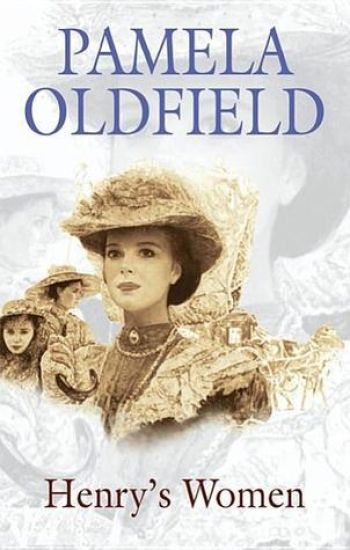
Henry's Women

Henry's Women

Oldfield Pamela

Severn House Large Print Books
2007
sidottu
Millie's fiance had been 'stolen' by her sister, Esme, leaving Millie to live at home, caring for her father. But when he dies in 1891, she's left without a penny and goes to live with Esme and Leo as a domestic. Leo wastes no time in revealing to Millie that he still loves her, more than he ever loved her sister. And Esme is looking elsewhere too, indulging in clandestine meetings with a man whom she knows only as Wally. Keen to become independent of her heartless sister, Millie is excited to meet Polly, a risque star at Tappers Supper House. Poppy invites Millie to come and share her luxurious flat - paid for by her married lover, Henry Granger. Not surprisingly, complications arise; and respected Victorian Member of Parliament Henry W. Granger is not as morally upstanding as he would like us to believe...
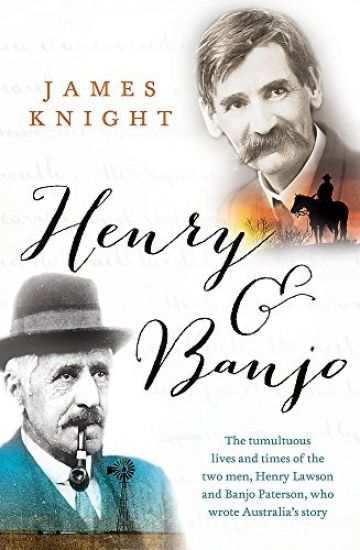
Henry and Banjo

Henry and Banjo

Knight James

Hachette Australia
2015
sidottu
Today most of us know that Henry Lawson and Andrew 'Banjo' Paterson were famous writers. We know about Matilda, Clancy of the Overflow and the Man from Snowy River; The Drover's Wife, While the Billy Boils and Joe Wilson and his mates, but little else. Here, in a compelling and engaging work, James Knight brings Henry and Banjo's own stories to life. And there is much to tell. Both were country born, just three years and three hundred kilometres apart, Henry on the goldfields of Grenfell and Banjo on a property near Orange, but their paths to literary immortality took very different routes - indeed at times their lives were ones of savage and all too tragic contrasts. Banjo, born into a life of comparative privilege, would rise from country boy to Sydney Grammar student, solicitor, journalist, war correspondent and revered man about town. Henry's formal education only began when his feminist mother finally won her battle for a local school but illness and subsequent deafness would make continuing his lessons difficult, seeing him find work as a labourer, a coach painter and a journalist, all the while wrestling with poverty, alcoholism and mental illness. Both men would become household names during their lifetimes. Both would have regrets. HENRY AND BANJO details two incredibly fascinating lives and delves into the famous (and not so famous) writings of the two men who had the power to influence and change Australia.
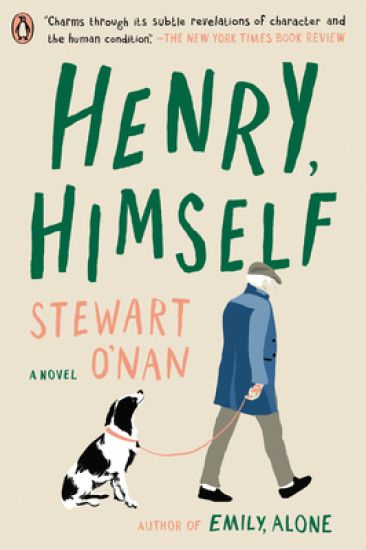
Henry, Himself

Henry, Himself

Stewart O'Nan

PENGUIN BOOKS
2020
nidottu
A member of the greatest generation looks back on the loves and losses of his past and comes to treasure the present anew in this poignant and thoughtful new novel from a modern master Stewart O'Nan is renowned for illuminating the unexpected grace of everyday life and the resilience of ordinary people with humor, intelligence, and compassion. In Henry, Himself, he offers an unsentimental, moving life story of a twentieth-century everyman. Soldier, son, lover, husband, breadwinner, churchgoer, Henry Maxwell has spent his whole life trying to live with honor. A native Pittsburgher and engineer, he's always believed in logic, sacrifice, and hard work. Now, seventy-five and retired, he feels the world has passed him by. It's 1998, the American century is ending, and nothing is simple anymore. His children are distant, their unhappiness a mystery. Only his wife Emily and dog Rufus stand by him. Once so confident, as Henry's strength and memory desert him, he weighs his dreams against his regrets and is left with questions he can't answer: Is he a good man? Has he done right by the people he loves? And with time running out, what, realistically, can he hope for? Like Emily, Alone, which The New York Times called "O'Nan's best novel yet," Henry, Himself is a wry, warmhearted portrait of an American original who believes he's reached a dead end only to discover life is full of surprises.
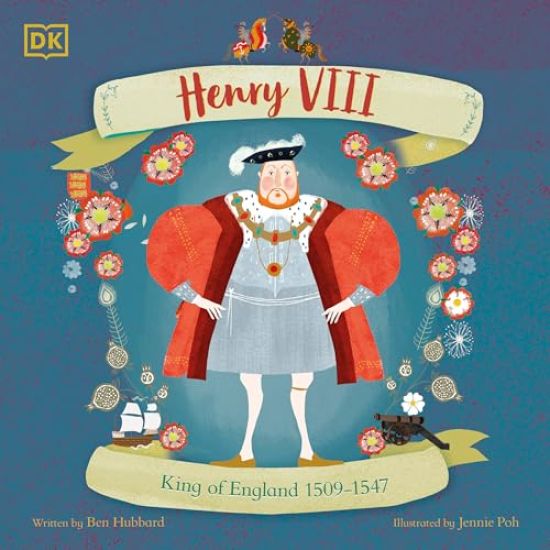
Henry VIII: King of England 1509 - 1547

Henry VIII: King of England 1509 - 1547

Ben Hubbard

DK Publishing (Dorling Kindersley)
2024
nidottu
Delve into the past and explore the life and reign of Henry VIII in this biography for children brought to you by the publisher of Queen Elizabeth: A Platinum Jubilee Celebration and King Charles III. The third book in this captivating series on British monarchs, Henry VIII covers all the key moments in the fascinating man's life, from his struggles to father a son and the fates of his six wives, to the formation of the Church of England and wars with France and Scotland. Bright, playful illustrations and simple, age-appropriate text ensure that this book is the perfect introduction to the infamous Tudor king for little historians everywhere. It will supplement your child's learning and curiosity as it reveals the secrets of a larger-than-life king from long ago.
Henry V - The Quarto  (Sos)

Henry V - The Quarto (Sos)

William Shakespeare; Graham Holderness; Loughrey Bryan

Prentice-Hall
1993
nidottu
One of a series on Shakespeare's original texts, including facsimile pages, this version of "Henry V" is claimed to be, in some ways, the most authentic version of the play that we have. Included are an introduction, notes, and a theoretical, historical and contextual critique. The original text - or First Quarto - of "Henry V", published in 1600, is missing the Chorus, a dramatic device which recent criticism has used to suggest a strikingly modern view of history and politics. These and other significant changes mean that critics can no longer assume that the play presents a distanced, ironic perspective on its own political and military action. If Elizabethan audiences saw in performance something closer to the First Folio than the 1623 Folio text, then their dramatic engagement with history was of a kind very different from that of the play's 20th-century interpreters. This new edition makes available the original text of "Henry V", in all its theatrical simplicity and historical difference.
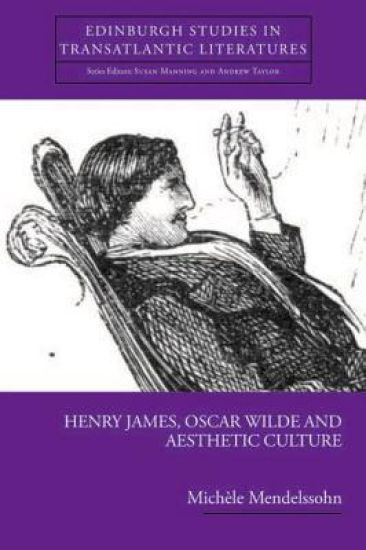
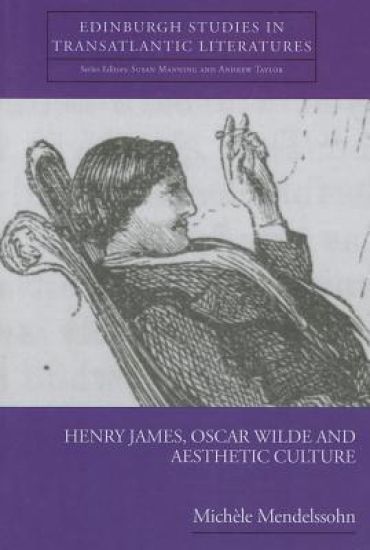
Henry James, Oscar Wilde and Aesthetic Culture

Henry James, Oscar Wilde and Aesthetic Culture

Michele Mendelssohn

Edinburgh University Press
2007
sidottu
In this engaging and provocative reading of the relations between two canonical Anglo-American authors and the aesthetic culture they helped create, Michele Mendelssohn challenges critical assumptions about the way Aestheticism responded to anxieties about nationality, sexuality, identity, influence, originality and morality. This book, the first fully sustained reading of Henry James's and Oscar Wilde's relationship, reveals why the antagonisms between both authors are symptomatic of the cultural oppositions within Aestheticism itself. The book also shows how these conflicting energies animated the late nineteenth century's most exciting transatlantic cultural enterprise. Richly illustrated and historically detailed, this study of James's and Wilde's intricate, decades-long relationship brings to light Aestheticism's truly transatlantic nature through close readings of both authors' works, as well as nineteenth-century art, periodicals and rare manuscripts. As Mendelssohn shows, both authors were deeply influenced by the visual and decorative arts, and by contemporary artists such as George Du Maurier and James McNeill Whistler. Henry James, Oscar Wilde and Aesthetic Culture offers a nuanced reading of a complex relationship that promises to transform the way in which we imagine late nineteenth-century British and American literary culture. Key Features * The first study devoted exclusively to Wilde and James, who are the most important Irish and American nineteenth-century authors * Rewrites standard assumptions about James's and Wilde's relationship and traces its implications for British and American Aestheticism * Redefines Aestheticism and offers full re-readings of late nineteenth-century literature, visual and material culture, theatre, as well as psychology and sexual identity * Refers to several previously unpublished letters by Henry James
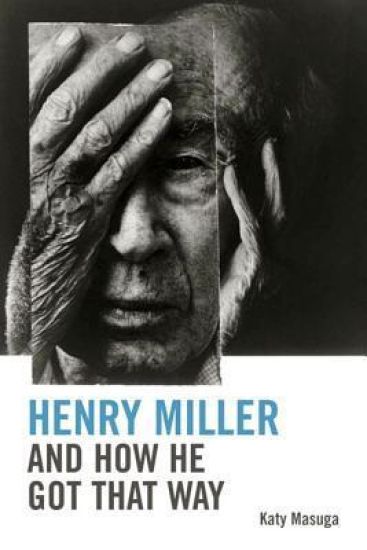
Henry Miller and How He Got That Way

Henry Miller and How He Got That Way

Katy Masuga

Edinburgh University Press
2011
sidottu
Identifying six significant writers - Whitman, Dostoevsky, Rimbaud, Lewis Carroll, Proust and D. H. Lawrence - Katy Masuga explores their influence on Miller's work as well as Miller's retroactive impact on their writing. She explores four forms of intertextuality in relation to each 'ancestral' author: direct allusions; unconscious style; reverse influence; and participation of the ancestral author as part of the story within the text. The study is informed by the theories of Bakhtin, Barthes and Kristeva on polyvocity and of Blanchot, Wittgenstein and Deleuze on language games and the indefatigability of writing. By presenting Miller in intertextual context, he emerges as a noteworthy modernist writer whose contributions to literature include the struggle to find a distinctive voice alongside a distinguished lineage of literary figures. Key Features * Major contribution to rehabilitating an important and often overlooked twentieth-century writer * Places Miller's work in thought-provoking intertextual relationships among a diverse range of writers * Provides an incisive critical approach to Miller's writing
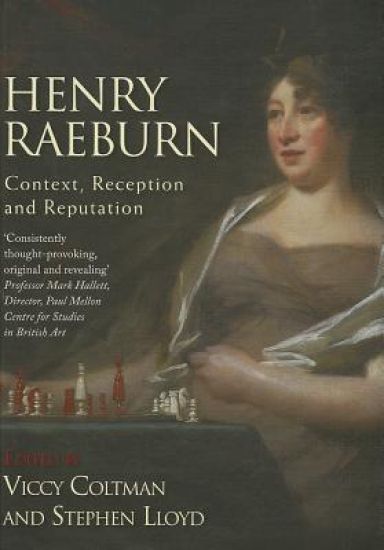
Henry Raeburn

Henry Raeburn

Edinburgh University Press
2012
nidottu
This is the first illustrated scholarly work devoted to the reception and reputation of Edinburgh's premier Enlightenment portrait painter. Sir Henry Raeburn (1756-1823) is especially well known in Scotland as the portrait painter of members of the Scottish Enlightenment. However, outside Scotland, the artist rarely makes more than a fleeting appearance in survey books about portraiture. Ten international scholars recover Raeburn from his artistic isolation by looking at his local and international reception and reputation, both in his lifetime and posthumously. It focuses as much on Edinburgh and Scotland as on metropolitan markets and cosmopolitan contexts. Previously unpublished archival material is brought to light for the first time, especially from the Innes of Stow papers and the archives of the dukes of Hamilton. It features 14 chapters, each looking at different aspects of Raeburn's professional career. There are international scholars contributing to Raeburn studies for the first time. It offers interdisciplinary perspectives setting a new agenda for Raeburn studies. It has traditional art analysis integrated with cultural, social, political and economic history. It includes much unpublished archival material.
Henry James, Oscar Wilde and Aesthetic Culture

Henry James, Oscar Wilde and Aesthetic Culture

Michele Mendelssohn

Edinburgh University Press
2014
nidottu
This book challenges critical assumptions about the way Aestheticism responded to anxieties about nationality, sexuality, identity, influence, originality and morality. This book, the first fully sustained reading of Henry James' and Oscar Wilde's relationship, reveals why the antagonisms between both authors are symptomatic of the cultural oppositions within Aestheticism itself. The book also shows how these conflicting energies animated the late 19th century's most exciting transatlantic cultural enterprise. Richly illustrated and historically detailed, this study of James' and Wilde's intricate, decades-long relationship brings to light Aestheticism's truly transatlantic nature through close readings of both authors' works, as well as 19th-century art, periodicals and rare manuscripts. As Mendelssohn shows, both authors were deeply influenced by the visual and decorative arts, and by contemporary artists such as George Du Maurier and James McNeill Whistler. Henry James, Oscar Wilde and Aesthetic Culture offers a nuanced reading of a co 19th-century British and American literary culture. This is the first study devoted exclusively to Wilde and James. It rewrites standard assumptions about James' and Wilde's relationship and traces its implications for British and American Aestheticism. It redefines Aestheticism and offers full re-readings of late 19th-century literature, visual and material culture, theatre, as well as psychology and sexual identity. It refers to several previously unpublished letters by Henry James.
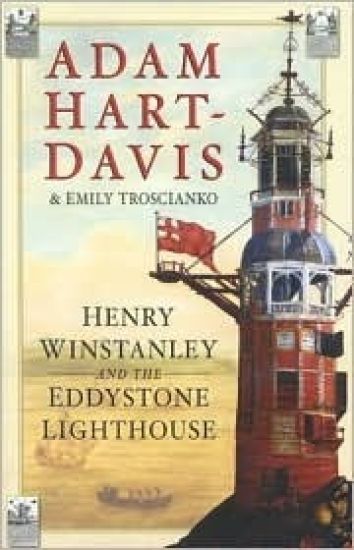
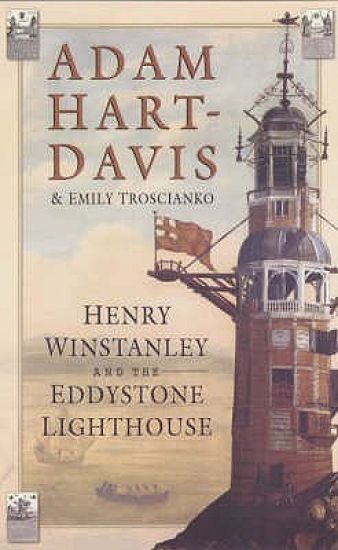
Henry Winstanley and the Eddystone Lighthouse

Henry Winstanley and the Eddystone Lighthouse

Adam Hart-Davis; Emily Troscianko

Sutton Publishing Ltd
2002
sidottu
On 26 November 1703, during the worst storm that Britain had ever seen, Henry Winstanley died in his pioneering lighthouse as it was blown apart. He had defied incredible odds to build the first Eddystone Lighthouse in 1698, saving the lives of many sailors from the fate of the thousands who previously died upon the rocks. The Great Gale not only destroyed the man and his lighthouse, but also saw complete devastation throughout the land. And at sea, some 8000 sailors were drowned that night, within yards of the land. Winstanley was an ingenious man. He owned a house of gadgets which was one of London's foremost attractions for decades. In 1695, two of his five ships were lost on Eddystone. He was determined that no more ships should founder and, though thwarted by weather and politics, he built a lighthouse, the first of its kind. It survived terrible winters and withstood devastating storms, guiding ships away from the treacherous rocks that lay ahead with its dim candlelight. After the great storm it was as if the lighthouse had never been. Ultimately, Winstanley's lighthouse led to the building of others on the Eddystone rocks and beyond, thus transforming the safety of shipping. This illustrated work vividly recreates the story of the Eddystone Lighthouse, the character of the man who built it with grim determination fighting against all odds, and the power of the elements that finally destroyed them both.
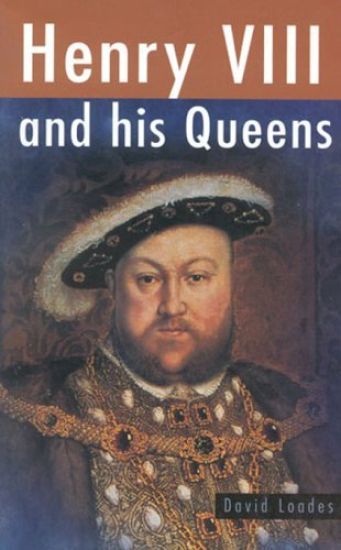
Henry VIII and His Queens

Henry VIII and His Queens

D. M. Loades

Sutton Publishing Ltd
2007
pokkari
Now in paperback, this intimate study views the well-known tale of Henry VIII and his wives from a political perspective, showing how each one of them played an important and often conscious role both in his political and personal development.
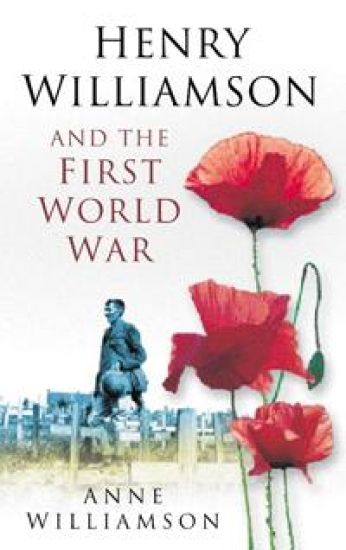
Henry Williamson and the First World War

Henry Williamson and the First World War

Anne Williamson

The History Press Ltd
2004
nidottu
Henry Williamson is known for his book 'Tarka the Otter', yet his time in World War I trenches affected him profoundly. This book draws on his letters, diaries, photographs and notebooks written at the time to give us a detailed account of life in the trenches of the First World War. It also offers us a rare insight into the making of a novelist.
Henry Ford: pocket GIANTS

Henry Ford: pocket GIANTS

David Long

The History Press Ltd
2014
nidottu
Why is Henry Ford a giant? Because he put the world on wheels. Henry Ford did not invent the motor car, nor for all the claims did he invent the assembly line or mass production. But more than anyone before or since he is remembered as the man who almost singlehandedly took an expensive contraption of doubtful utility and recast it as a machine which in a real and profound sense changed the world forever. In an industry with many giants –André Citroen, Louis Renault and Giovanni Agnelli of Fiat – Henry Ford stands tallest as the greatest ever motor mogul. A Michigan farmer’s son who became a dollar billionaire, a ruthlessly single-minded autocrat who became a folk hero, a pacifist who went on to inspire Adolf Hitler - he was a boss who paid his workers twice as much as his competitors yet waged an unrelenting war on unions and badly abused the power he had worked so hard to attain. David Long has been an author and journalist for thirty years, and has regularly appeared in The Times, Sunday Times and many magazines, here and abroad. He is a celebrated author of over twenty titles and has ghostwritten many more.
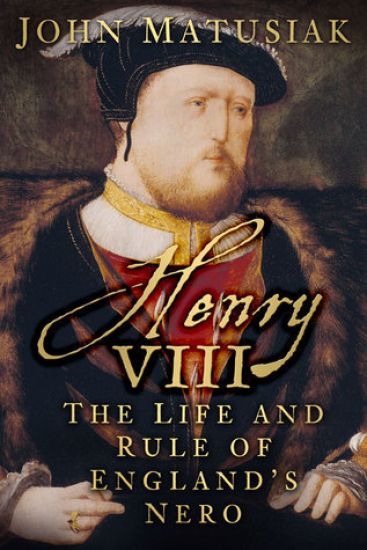
Henry VIII

Henry VIII

John Matusiak

The History Press Ltd
2014
nidottu
This compelling account of Henry VIII is by no means yet another history of the ‘old monster’ and his reign. The ‘monster’ displayed here is, at the very least, a newer type, more beset by anxieties and insecurities, and more tightly surrounded by those who equated loyalty with fear, self-interest and blind obedience. This ground-breaking book also demonstrates that Henry VIII’s priorities were always primarily martial rather than marital, and accepts neither the necessity of his all-consuming quest for a male heir nor his need ultimately to sever ties with Rome. As the story unfolds, Henry’s predicaments prove largely of his own making, the paths he chooses neither the only nor the best available. For Henry VIII was not only a bad man, but also a bad ruler who failed to achieve his aims and blighted the reigns of his two immediate successors. Five hundred years after he ascended the throne, the reputation of England’s best known king is being rehabilitated and subtly sanitized. Yet Tudor historian John Matusiak paints a colourful and absorbingly intimate portrait of a man wholly unfit for power.
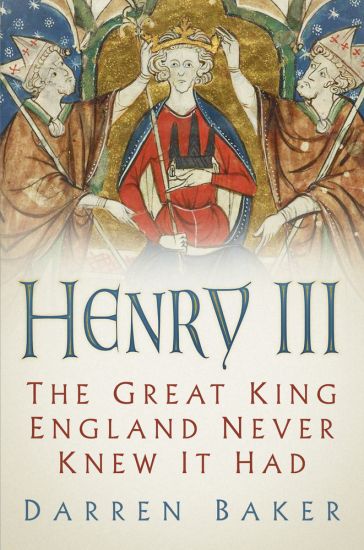
Henry III

Henry III

Darren Baker

The History Press Ltd
2019
nidottu
‘Henry III is generally classed among the weakest and most incompetent of England’s medieval kings. Darren Baker tells a different story.’ - Michael Clanchy, author of England and Its Rulers, 1066–1307‘A personal and detailed narrative…bring[s] alive the glamour and personalities of thirteenth-century England.’- Huw Ridgeway, author of ‘Henry III’, Oxford Dictionary of National Biography‘Enterprising, original and engaging.’ - David Carpenter, author of The Reign of King Henry III**Henry III (1207–72) reigned for 56 years, the longest-serving English monarch until the modern era.** Although knighted by William Marshal, he was no warrior king like his uncle Richard the Lionheart. He preferred to feed the poor to making war and would rather spend time with his wife and children than dally with mistresses and lord over roundtables. He sought to replace the dull projection of power imported by his Norman predecessors with a more humane and open-hearted monarchy. But his ambition led him to embark on bold foreign policy initiatives to win back the lands and prestige lost by his father King John. This set him at odds with his increasingly insular barons and clergy, now emboldened by the protections of Magna Carta. In one of the great political duels of history, Henry struggled to retain the power and authority of the crown against radical reformers like Simon de Montfort. He emerged victorious, but at a cost both to the kingdom and his reputation among historians. Yet his long rule also saw extraordinary advancements in politics and the arts, from the rise of the parliamentary state and universities to the great cathedrals of the land, including Henry’s own enduring achievement, Westminster Abbey.
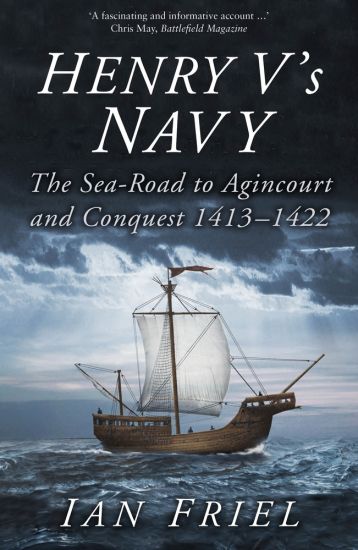
Henry V's Navy

Henry V's Navy

Ian Friel

The History Press Ltd
2020
nidottu
Without Henry V’s Navy, the Battle of Agincourt would never have happened. Henry’s fleet played a major – if often unrecognised – part in enabling the king to come within reach of final victory in the Hundred Years War against France. Henry’s navy was multinational, and comprised his own royal fleet, English merchantmen and many foreign vessels from the Netherlands, the Baltic and Venice. It was one of the most successful fleets deployed by England before the time of Elizabeth I. The royal fleet was transformed in Henry’s short reign from a few dilapidated craft into a powerful weapon of war, with over thirty fighting vessels, up-to-date technology and four of the biggest ships in Europe. With new insights derived from extensive research into documentary, pictorial and archaeological sources, Henry V’s Navy is about the men, ships and operations of Henry’s sea war. Ian Friel explores everything from shipboard food to how crews and their ships sailed and fought, and takes an in-depth look at the royal ships. He also tells the dramatic and bloody story of the naval conflict, which at times came close to humiliating defeat for the English.
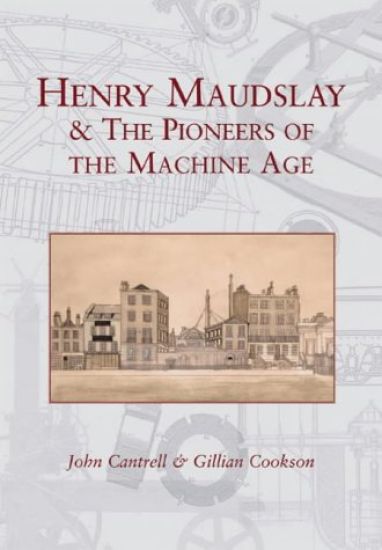
Henry Maudslay and the Pioneers of the Machine Age
In Georgian London, Henry Maudslay started an engineering works that was to become world famous, and not just for the engines it made, but also for the engineers who received their training there and went on to bigger and better things. At a time when engineering and machines were in their infancy, the designers and engineers at Maudslay's soon became famous. From Maudslay himself to Joseph Whitworth (who founded Armstrong Whitworth), David Napier (designer and builder of the first Cunard steamships), Richard Roberts (designer of power looms) and James Nasmyth (inventor of the steam hammer), the list of engineers of world repute is amazing. A fascinating study of what was the hotbed of British engineering in the early 1800s. Without these men the Industrial Revolution would not have been possible.