Kirjojen hintavertailu. Mukana 11 699 587 kirjaa ja 12 kauppaa.

Kirjahaku

Etsi kirjoja tekijän nimen, kirjan nimen tai ISBN:n perusteella.

1000 tulosta hakusanalla Henry Kitchell Webster

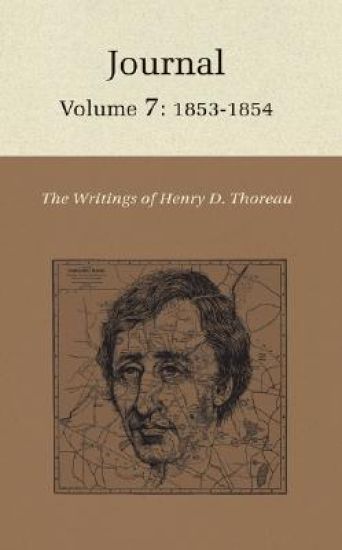
The Writings of Henry David Thoreau

The Writings of Henry David Thoreau

Henry David Thoreau

Princeton University Press
2009
sidottu
From 1837 to 1861, Henry D. Thoreau kept a Journal that would become the principal imaginative work of his career. The source of much of his published writing, the Journal is also a record of his interior life and of his monumental studies of the natural history of his native Concord, Massachusetts. Unlike earlier editions, the Princeton edition reproduces Thoreau's Journal in its original and complete form, in a text free of editorial interpolations and keyed to a comprehensive scholarly apparatus. This seventh volume of the Journal is edited from the 454-page manuscript that Thoreau kept from August 19, 1853, through February 12, 1854. During the six months covered here, Thoreau continued to add to his store of observations about local animals, plants, and weather. Most of the Journal is dedicated to describing natural phenomena, such as changes in leaf color and the ripening of berries, in the context of seasonal cycles. His observations create a detailed portrait of Concord and the surrounding areas that will be of interest to ecologists and others who study phenological patterns and variations. In addition, Thoreau integrates these observations with ethical reflections about living in harmony with nature, following the model of the Roman agricultural writers. The volume also includes Thoreau's account of a September 1853 trip to the Maine woods that appeared in 1858 as "Chesuncook"; the draft is published here for the first time.
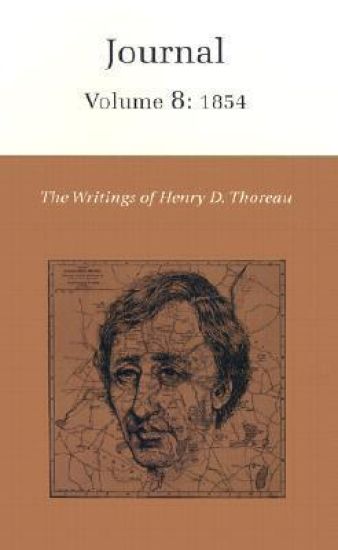
The Writings of Henry David Thoreau, Volume 8

The Writings of Henry David Thoreau, Volume 8

Henry David Thoreau

Princeton University Press
2002
sidottu
From 1837 to 1861, Thoreau kept a Journal that began as a conventional record of ideas, grew into a writer's notebook, and eventually became the principal imaginative work of his career. The source of much of his published writing, the Journal is also a record of his interior life and of his monumental studies of the natural history of his native Concord, Massachusetts. Unlike earlier editions, the Princeton edition reproduces the Journal in its original and complete form, in a reading text free of editorial interpolations but keyed to a comprehensive scholarly apparatus. Journal 8: 1854 is edited from the 467-page notebook that Thoreau kept February 13-September 3, 1854. It reveals him as an increasingly confident taxonomist creating lists that distill his observations about plant leafing and seasonal birds. Two particularly significant public events took place in his life in the summer of 1854. On July 4, at an antislavery rally at Framingham, Massachusetts, Thoreau appeared for the first time in the company of prominent abolitionists, delivering as heated a statement against slavery as he had yet made. And on August 9, Ticknor and Fields published Walden, the book Thoreau had been working on since 1846. In Journal 8 Thoreau indicates that these public accomplishments, though satisfying, took a toll on his creative life and did not fully compensate him for the hours spent away from the woods.
Henry Fuseli

Henry Fuseli

Martin Myrone; Henry Fuseli

Princeton University Press
2001
pokkari
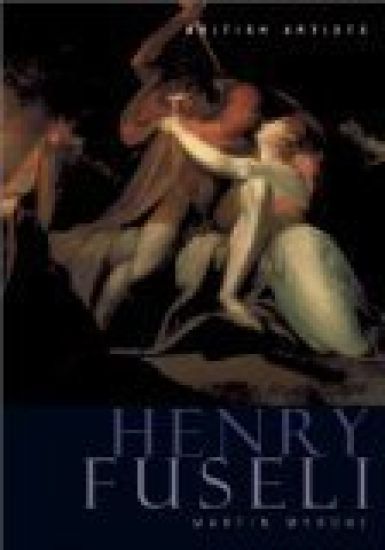
Painter, poet, critic and teacher, Henry Fuseli (1741-1825) is one of the most idiosyncratic and original figures in the history of British art. His work has always been the subject of speculation, gossip and fantasy. This book offers a completely new interpretation of the artist, placing him firmly in the context of a period of traumatic social, cultural and political revolution. Martin Myrone explores his career from his early work in London and Rome to his old age, the period of his greatest professional success when he exerted a profound influence on a whole generation of younger British artists. A vivid image of the artist emerges, revealing Fuseli as a seminal figure in the development of modern art.
Henry James Goes to Paris

Henry James Goes to Paris

Peter Brooks

Princeton University Press
2008
pokkari
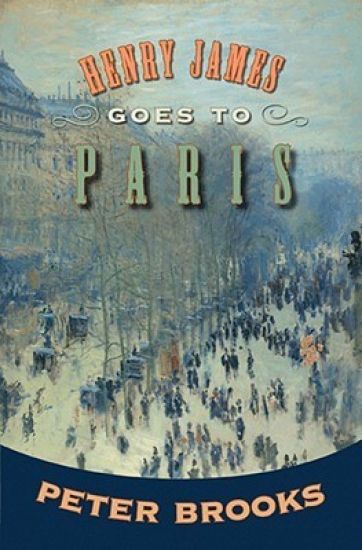
Henry James's reputation as The Master is so familiar that it's hard to imagine he was ever someone on whom some things really were lost. This is the story of the year--1875 to 1876--when the young novelist moved to Paris, drawn by his literary idols living at the center of the early modern movement in art. As Peter Brooks skillfully recounts, James largely failed to appreciate or even understand the new artistic developments teeming around him during his Paris sojourn. But living in England twenty years later, he would recall the aesthetic lessons of Paris, and his memories of the radical perspectives opened up by French novelists and painters would help transform James into the writer of his adventurous later fiction. A narrative that combines biography and criticism and uses James's writings to tell the story from his point of view, Henry James Goes to Paris vividly brings to life the young American artist's Paris year--and its momentous artistic and personal consequences. James's Paris story is one of enchantment and disenchantment. He initially loved Paris, he succeeded in meeting all the writers he admired (Turgenev, Flaubert, Zola, Maupassant, Goncourt, and Daudet), and he witnessed the latest development in French painting, Impressionism. But James largely found the writers disappointing, and he completely misunderstood the paintings he saw. He also seems to have fallen in and out of love in a more ordinary sense--with a young Russian aesthete, Paul Zhukovsky. Disillusioned, James soon retreated to England--for good. But James would eventually be changed forever by his memories of Paris.
The Correspondence of Henry D. Thoreau

The Correspondence of Henry D. Thoreau

Henry David Thoreau

Princeton University Press
2013
sidottu
This is the inaugural volume in the first full-scale scholarly edition of Thoreau's correspondence in more than half a century. When completed, the edition's three volumes will include every extant letter written or received by Thoreau--in all, almost 650 letters, roughly 150 more than in any previous edition, including dozens that have never before been published. Correspondence 1 contains 163 letters, ninety-six written by Thoreau and sixty-seven to him. Twenty-five are collected here for the first time; of those, fourteen have never before been published. These letters provide an intimate view of Thoreau's path from college student to published author. At the beginning of the volume, Thoreau is a Harvard sophomore; by the end, some of his essays and poems have appeared in periodicals and he is at work on A Week on the Concord and Merrimack Rivers and Walden. The early part of the volume documents Thoreau's friendships with college classmates and his search for work after graduation, while letters to his brother and sisters reveal warm, playful relationships among the siblings. In May 1843, Thoreau moves to Staten Island for eight months to tutor a nephew of Emerson's. This move results in the richest period of letters in the volume: thirty-two by Thoreau and nineteen to him. From 1846 through 1848, letters about publishing and lecturing provide details about Thoreau's first years as a professional author. As the volume closes, the most ruminative and philosophical of Thoreau's epistolary relationships begins, that with Harrison Gray Otis Blake. Thoreau's longer letters to Blake amount to informal lectures, and in fact Blake invited a small group of friends to readings when these arrived. Following every letter, annotations identify correspondents, individuals mentioned, and books quoted, cited, or alluded to, and describe events to which the letters refer. A historical introduction characterizes the letters and connects them with the events of Thoreau's life, a textual introduction lays out the editorial principles and procedures followed, and a general introduction discusses the significance of letter-writing in the mid-nineteenth century and the history of the publication of Thoreau's letters. Finally, a thorough index provides comprehensive access to the letters and annotations.
The Correspondence of Henry D. Thoreau

The Correspondence of Henry D. Thoreau

Henry David Thoreau

Princeton University Press
2018
sidottu
This is the second volume in the first full-scale scholarly edition of Thoreau’s correspondence in more than half a century. When completed, the edition’s three volumes will include every extant letter written or received by Thoreau—in all, almost 650 letters, roughly 150 more than in any previous edition, including dozens that have never before been published.Correspondence 2 contains 246 letters, 124 written by Thoreau and 122 written to him. Sixty-three are collected here for the first time; of these, forty-three have never before been published. During the period covered by this volume, Thoreau wrote the works that form the foundation of his modern reputation. A number of letters reveal the circumstances surrounding the publication of A Week on the Concord and Merrimack Rivers in May 1849 and Walden in August 1854, as well as the essays “Resistance to Civil Government” (1849; now known as “Civil Disobedience”) and “Slavery in Massachusetts” (1854), and two series, “An Excursion to Canada” (1853) and “Cape Cod” (1855). Writing and lecturing brought Thoreau a small group of devoted fans, most notably Daniel Ricketson, an independently wealthy Quaker and abolitionist who became a faithful correspondent. The most significant body of letters in the volume are those Thoreau wrote to Harrison Gray Otis Blake, a friend and disciple who elicited intense and complex discussions of the philosophical, ethical, and moral issues Thoreau explored throughout his life.Following every letter, annotations identify correspondents, individuals mentioned, and books quoted, and describe events to which the letters refer. A historical introduction characterizes the letters and connects them with the events of Thoreau’s life, a textual introduction lays out the editorial principles and procedures followed, and a general introduction discusses the history of the publication of Thoreau’s correspondence. Proper names, publications, events, and ideas found in both the letters and the annotations are included in the index, which provides full access to the contents of the volume.
The Correspondence of Henry D. Thoreau

The Correspondence of Henry D. Thoreau

Henry David Thoreau

PRINCETON UNIVERSITY PRESS
2026
sidottu
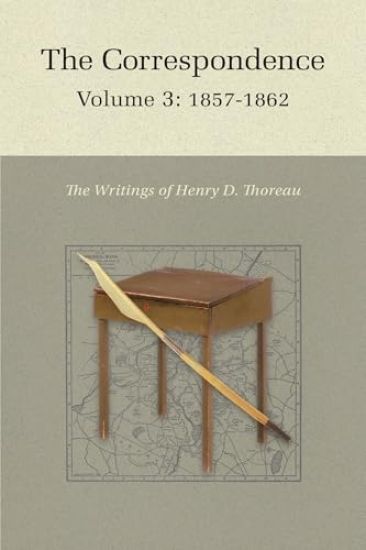
The final volume of the definitive edition of Thoreau’s correspondenceThis is the third and final volume of the first full-scale scholarly edition of Thoreau’s correspondence in more than half a century. Together, the volumes present every known letter written or received by Thoreau, almost 650 in all, including more than 100 that have never been published before.Correspondence 3: 1857–1862 contains 239 letters, 121 written by Thoreau and 118 written to him. Sixty-seven letters are collected here for the first time; of these, forty-four have not been published before, including five dated between 1837 and 1855 that are included in an addenda. During this period, Thoreau continued to pursue the interests and activities that had occupied him earlier in the 1850s. He was well established as a writer and lecturer. Letters document the publication of “Chesuncook” (1858) and “An Address on the Succession of Forest Trees” (1860), as well as his preparations, a few months before his death, for the posthumous publication of The Maine Woods and the essays “Walking,” “Autumnal Tints,” “Wild Apples,” and “Life without Principle.” Two weeks after John Brown’s raid on Harpers Ferry, he delivered the country’s first public defense of Brown’s character and actions; his address, “A Plea for Captain John Brown,” was published in 1860. Correspondents during this period include a robust network of friends, several of whom joined him on hiking and canoeing trips in 1857, 1858, and 1860. His ongoing phenological studies are reflected in letters to other scientific naturalists, and this volume contains letters indicating his appointment as an examiner for Harvard’s Department of Natural History in 1859 and 1860.Following every letter, annotations identify correspondents, individuals mentioned, and books quoted, and describe events to which the letter refers. A historical introduction sets the letters in the context of Thoreau’s life and times, a textual introduction lays out the editorial principles and procedures followed, and a general introduction discusses the history of the publication of Thoreau’s correspondence. Proper names, publications, events, and ideas found in both the letters and the annotations are included in a comprehensive index.
Henry at Work

Henry at Work

John Kaag; Jonathan van Belle

PRINCETON UNIVERSITY PRESS
2023
sidottu
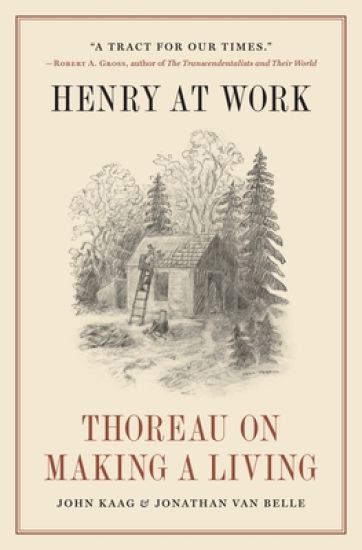
What Thoreau can teach us about working—why we do it, what it does to us, and how we can make it more meaningfulHenry at Work invites readers to rethink how we work today by exploring an aspect of Henry David Thoreau that has often been overlooked: Thoreau the worker. John Kaag and Jonathan van Belle overturn the popular misconception of Thoreau as a navel-gazing recluse who was scornful of work and other mundanities. In fact, Thoreau worked hard—surveying land, running his family’s pencil-making business, writing, lecturing, and building his cabin at Walden Pond—and thought intensely about work in its many dimensions. And his ideas about work have much to teach us in an age of remote work and automation, when many people are reconsidering what kind of working lives they want to have.Through Thoreau, readers will discover a philosophy of work in the office, factory, lumber mill, and grocery store, and reflect on the rhythms of the workday, the joys and risks of resigning oneself to work, the dubious promises of labor-saving technology, and that most vital and eternal of philosophical questions, “How much do I get paid?” In ten chapters, including “Manual Work,” “Machine Work,” and “Meaningless Work,” this personal, urgent, practical, and compassionate book introduces readers to their new favorite coworker: Henry David Thoreau.
Henry at Work

Henry at Work

John Kaag; Jonathan van Belle

PRINCETON UNIVERSITY PRESS
2025
pokkari
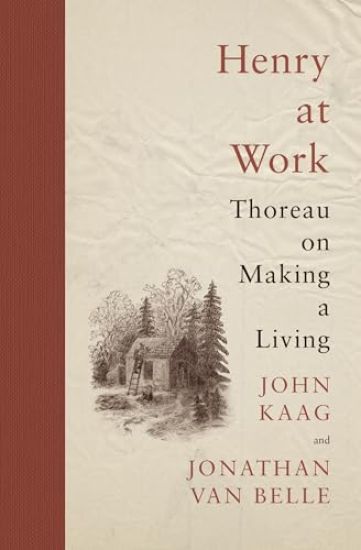
What Thoreau can teach us about working—why we do it, what it does to us, and how we can make it more meaningfulHenry at Work invites readers to rethink how we work today by exploring an aspect of Henry David Thoreau that has often been overlooked: Thoreau the worker. John Kaag and Jonathan van Belle overturn the popular misconception of Thoreau as a navel-gazing recluse who was scornful of work and other mundanities. In fact, Thoreau worked hard—surveying land, running his family’s pencil-making business, writing, lecturing, and building his cabin at Walden Pond—and thought intensely about work in its many dimensions. And his ideas about work have much to teach us in an age of remote work and automation, when many people are reconsidering what kind of working lives they want to have.Through Thoreau, readers will discover a philosophy of work in the office, factory, lumber mill, and grocery store, and reflect on the rhythms of the workday, the joys and risks of resigning oneself to work, the dubious promises of labor-saving technology, and that most vital and eternal of philosophical questions, “How much do I get paid?” In ten chapters, including “Manual Work,” “Machine Work,” and “Meaningless Work,” this personal, urgent, practical, and compassionate book introduces readers to their new favorite coworker: Henry David Thoreau.
Henry James

Henry James

Henry James

Princeton University Press
2014
pokkari
Originally written as three complete books, this one-volume edition includes A Small Boy and Others, Notes of a Son and Brother, and The Middle Years. Begun when James was sixty-eight years old, it was written at a time when his great critical mind was actively devoted to the understanding of his existence in its complicated wholeness. The reader will come away from the book with a picture of the man within the novelist--the intimate basis of James's themes and methods. Taking its place beside The Education of Henry Adams and Hawthorne's "The Custom House," the work is an important contribution to America's autobiographic literature. It is a highly personal account of the great novelist's discovery of Europe and of his artistic vocation, as well as a fascinating story of the life of one of the most remarkable families of the nineteenth century, the members of which experienced, in James's own words, "the classic years of the great Americano-European legend." Originally published in 1983. The Princeton Legacy Library uses the latest print-on-demand technology to again make available previously out-of-print books from the distinguished backlist of Princeton University Press. These editions preserve the original texts of these important books while presenting them in durable paperback and hardcover editions. The goal of the Princeton Legacy Library is to vastly increase access to the rich scholarly heritage found in the thousands of books published by Princeton University Press since its founding in 1905.
Henry Vaughan

Henry Vaughan

Jonathan F.S. Post

Princeton University Press
2014
pokkari
Combining historical scholarship and intertextual criticism, this study reassesses Henry Vaughan's entire literary career with particular reference to his relationship to George Herbert. Originally published in 1982. The Princeton Legacy Library uses the latest print-on-demand technology to again make available previously out-of-print books from the distinguished backlist of Princeton University Press. These editions preserve the original texts of these important books while presenting them in durable paperback and hardcover editions. The goal of the Princeton Legacy Library is to vastly increase access to the rich scholarly heritage found in the thousands of books published by Princeton University Press since its founding in 1905.
Henry James

Henry James

Henry James

Princeton University Press
2016
sidottu
Originally written as three complete books, this one-volume edition includes A Small Boy and Others, Notes of a Son and Brother, and The Middle Years. Begun when James was sixty-eight years old, it was written at a time when his great critical mind was actively devoted to the understanding of his existence in its complicated wholeness. The reader will come away from the book with a picture of the man within the novelist--the intimate basis of James's themes and methods. Taking its place beside The Education of Henry Adams and Hawthorne's "The Custom House," the work is an important contribution to America's autobiographic literature. It is a highly personal account of the great novelist's discovery of Europe and of his artistic vocation, as well as a fascinating story of the life of one of the most remarkable families of the nineteenth century, the members of which experienced, in James's own words, "the classic years of the great Americano-European legend." Originally published in 1983. The Princeton Legacy Library uses the latest print-on-demand technology to again make available previously out-of-print books from the distinguished backlist of Princeton University Press. These editions preserve the original texts of these important books while presenting them in durable paperback and hardcover editions. The goal of the Princeton Legacy Library is to vastly increase access to the rich scholarly heritage found in the thousands of books published by Princeton University Press since its founding in 1905.
Henry Vaughan

Henry Vaughan

Jonathan F.S. Post

Princeton University Press
2016
sidottu
Combining historical scholarship and intertextual criticism, this study reassesses Henry Vaughan's entire literary career with particular reference to his relationship to George Herbert. Originally published in 1982. The Princeton Legacy Library uses the latest print-on-demand technology to again make available previously out-of-print books from the distinguished backlist of Princeton University Press. These editions preserve the original texts of these important books while presenting them in durable paperback and hardcover editions. The goal of the Princeton Legacy Library is to vastly increase access to the rich scholarly heritage found in the thousands of books published by Princeton University Press since its founding in 1905.
Henry's Search Begins

Henry's Search Begins

Amanda Heim

Cathy Mason
2018
sidottu
The secret life of Henry will take readers on a delightful adventure while he hides his identity and lifestyle.This colorfully illustrated childrens book transport young readers through a wonderful journey with a bigfoot.Henry the main character begins his travels by moonlight. He is very tired and scared that he might not findthe perfect forever home. A large variety of animals and wildlife with intersting personalites spend time with Henry while he searches to find his new home.
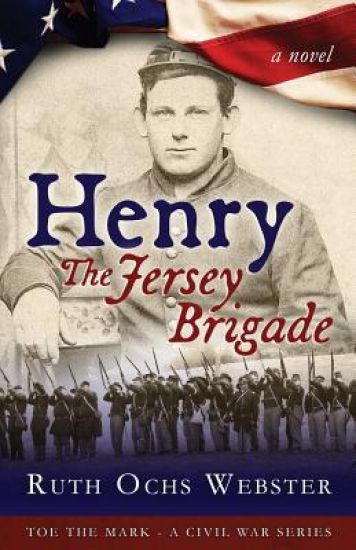
Henry: The Jersey Brigade

Henry: The Jersey Brigade

Ruth Ochs Webster

Ancestrals
2017
nidottu
FIRST PLACE WINNER: Historical Fiction. 2017 TAZ Book Awards. Henry Marts was 19 years old when he defied his Quaker faith and answered the call from President Lincoln to defend the Union. Fully expecting to be home in a matter of months, Henry left behind his parents, his work as an oysterman, his sea captain brother Will, and his sweetheart Christiana. Henry, and his comrades in the 3rd Regiment New Jersey Volunteer Infantry, would experience some of the most compelling moments of the Eastern campaigns. Experience their triumphant surge up South Mountain at Crampton's Gap. Bear their frustration as they are held in fitful reserve at Antietam. Feel the pain of being the somber rear guard during the long, bitter retreat from Fredericksburg. Witness Pickett's Charge from their hilltop vantage point. Be knee-deep in action at Bull Run Bridge, Chancellorsville, and the Wilderness. And advance up Laurel Hill at Spotsylvania Courthouse. There Henry would face his enemies and inner demons in one final struggle... Historical fiction: based on the military record and life of Henry W. Marts and the regimental record of the Jersey 3rd. First in the Civil War Series "Toe the Mark."
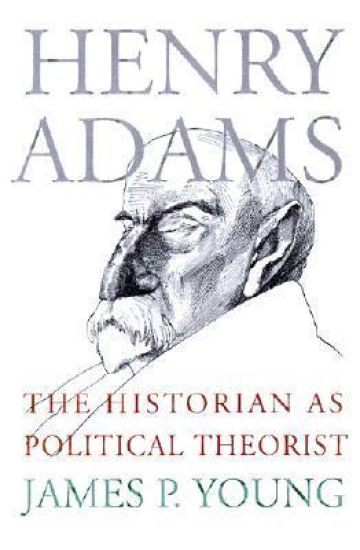
Henry Adams

Henry Adams

James P. Young

University Press of Kansas
2001
sidottu
Henry Adams has been a neglected figure in recent years. The Education of Henry Adams is widely accepted as a classic of American letters, but his other work is little read except by specialists. His brilliant journalism is out of print, while Mont Saint Michel and Chartres and the novels Democracy and Esther receive little attention. Even the monumental History of the Administrations of Thomas Jefferson and James Madison, considered by some to be the greatest history written by any American, seems noticed only by scholars of that period. James P. Young, author of the highly regarded Reconsidering American Liberalism, seeks to revive interest in the thought of Adams by extracting core ideas from his writings concerning both American political development and the course of world history and then showing their relevance to the contemporary longing for a democratic revival. In this revisionist study, Young denies that Adams was a reactionary critic of democracy and instead contends that he was an idealistic, though often disappointed, advocate of representative government. Young focuses on Adams's belief that capitalist industrial development during the Gilded Age had debased American ideals and then turns to a careful study of Adams's famous contrast of the unity of medieval society with the fragmentation of modern technological society. Though fully aware of Adam's concerns about technology, Young rejects the idea that Adams was bitterly opposed to twentieth century developments in that field. He shows that though a liberal democrat with inclinations toward reform, Adams is much too sophisticated to be captured by any simple label.