Kirjojen hintavertailu. Mukana 12 016 292 kirjaa ja 12 kauppaa.

Kirjahaku

Etsi kirjoja tekijän nimen, kirjan nimen tai ISBN:n perusteella.

1000 tulosta hakusanalla Immersion Languages

Healing Rain – Immersing Yourself in Christ`s Love to Find Wholeness of Mind, Body, and Heart
Do you long for health, wholeness, and freedom?Do you continue to hit walls of resistance as you pursue healing? Sue Detweiler, prophet and host of the popular Healing Rain podcast, has helped thousands of believers move from the trenches of despair and sickness into the fields of freedom--and she wants to empower you, too.Full of wisdom, incredible testimonies, discussion questions, prayers, and keys to healing, this biblical guide points to the words, actions, and miracles of Jesus, giving you the confidence to trust His presence and discover how to· overcome trauma and destructive thoughts· open pathways to spiritual encounters with Jesus· receive the power of His blood to heal every area of your life· and moreHere is everything you need to tend to your heart and experience healing in your body, mind, and emotions."Skillfully delves into healing for the whole of who we are, enabling us to arise healed and victorious."--PATRICIA BOOTSMA, national outreach director, Catch the Fire USA; global prayer director, JH Israel "Healing Rain will guide you on a pathway to be soaked in His presence, healed by His Word."--MICHAEL MILLER, founder and senior pastor of Upperroom"Masterfully weaves together biblical truth with personal testimony."--KIM MAAS, CEO and founder of Kim Maas Ministries, Inc."Your faith will be strengthened."--BOB SORGE, author and speaker"Get ready to heal your head, address burnout, stop agreeing with sickness, and activate your faith!"--LAURA HARRIS SMITH, N.D., naturopathic doctor, author, host of theTHREE
Char Davies's Immersive Virtual Art and the Essence of Spatiality
In this first book-length study of the internationally renowned Canadian artist Char Davies, Laurie McRobert examines the digital installations Osmose and Ephémère in the context of Davies' artistic and conceptual inspirations. Davies, originally a painter, turned to technology in an effort to create the effect of osmosis between self and world. By donning a head-mounted display unit and a body vest to monitor breathing and balance, participants are immersed in 3D-virtual space where they interact with abstract images of nature while manoeuvring in an artificial spatial environment.Char Davies' Immersive Virtual Art and the Essence of Spatiality explores spatiality through a broad scope of disciplines, including philosophy, mythology, biology, and visual studies, in order to familiarize the reader with virtual reality art - how it differs from traditional artistic media and why immersive virtual art promises to expand our imaginative horizons. This original study provides us with an important exposition of two of Char Davies' acclaimed projects and an exploration of the future impact of digital virtual art on our worldviews.
The Discourse Function of Inversion in English
First published in 1997. This dissertation presents a discourse-functional account of English inversion, based on an empirical study of natural language data. The central finding is that inversion is subject to a pragmatic constraint on the information status of its constituents; specifically, the information represented by the preposed constituent must be at least as familiar within the discourse as is that represented by the postposed constituent.
Escape Rooms and Other Immersive Experiences in the Library
By one count, there are more than 7,200 escape room environments in 1,445 cities in 105 countries. So why not in libraries? Sharpening participants’ problem solving and collaboration skills by mashing up real-time adventure, immersive theater, gaming, and old-fashioned entertainment, they’re a natural for libraries. And, as Kroski demonstrates in this fun guide, they’re feasible for a range of audiences and library budgets. Whether you’re already an escape room aficionado who’s eager to replicate the experience at your own institution, or an intrigued novice looking for ways to enliven your programing, Kroski has got you covered. This book;discusses the differences between escape rooms, which are highly structured, and immersive experiences, which are more casual;shows how these unique experiences can be used to teach information literacy skills, add unique youth programming, bring adults into the library, and instruct patrons about library resources in the form of puzzles and challenges;profiles several successful library projects, from large scale programs like New York Public Libraries’ Find the Future: The Game to smaller ones like Search for Alexander Hamilton;offers dozens of programming ideas and examples that can be tailored to fit a variety of libraries and budgets; andprovides information on game kits available for purchase, tips for partnering with local Escape Room businesses, and links to additional resources.With the assistance of Kroski’s guide, libraries everywhere can offer their own take on these exciting forms of entertainment, engagement, and education.
Hegel's Inversion of Philosophy

Hegel's Inversion of Philosophy

W.Clark Wolf

Cambridge University Press
2026
sidottu
Hegel's philosophy is often presented as a reconciliation between thought and the world, and thus logic and metaphysics. But what is the basis of this reconciliation? In this book, Clark Wolf argues that the key to Hegel's transformation of philosophy lies in his recognition of the special logical basis of the humanly made world. Human artifacts and institutions are not merely represented by concepts; concepts are necessary for their very existence. For this reason, Hegel sees the human world, the world of spirit or Geist, as more central in philosophy than the mind-independent world of nature. Hegel's philosophy is thus a humanism. Wolf argues that this humanistic conception of philosophy is justified in Hegel's Science of Logic, since its logical basis is his theory of concepts. Through a detailed interpretation of the Doctrine of the Concept, this book sheds new light on Hegelian idealism.
Numerical Methods of Matrix Inversion

Numerical Methods of Matrix Inversion

Keith Donald Rush

Hassell Street Press
2021
nidottu
This work has been selected by scholars as being culturally important and is part of the knowledge base of civilization as we know it.This work is in the public domain in the United States of America, and possibly other nations. Within the United States, you may freely copy and distribute this work, as no entity (individual or corporate) has a copyright on the body of the work.Scholars believe, and we concur, that this work is important enough to be preserved, reproduced, and made generally available to the public. To ensure a quality reading experience, this work has been proofread and republished using a format that seamlessly blends the original graphical elements with text in an easy-to-read typeface.We appreciate your support of the preservation process, and thank you for being an important part of keeping this knowledge alive and relevant.
Difficult Heritage and Immersive Experiences
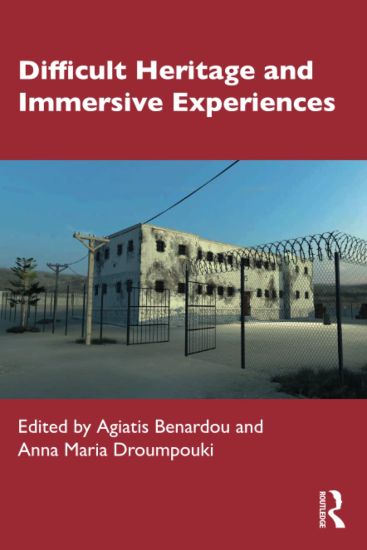
Difficult Heritage and Immersive Experiences examines the benefits involved in designing and employing immersive technologies to reconstruct difficult pasts at heritage sites around the world.Presenting interdisciplinary case studies of heritage sites and museums from across a range of different contexts, the volume analyzes the ways in which various types of immersive technologies can help visitors to contextualize and negotiate difficult or sensitive heritage and traumatic pasts. Demonstrating that some of the most creative applications of immersive experiences appear in and at museums and heritage sites, the book showcases how immersive technologies offer the possibility of confronting and disputing presumptions and prejudices, triggering responses, delivering new knowledge, initiating dialogue and challenging preexistingnotions of collective identity. The book provides a conceptual, as well as a hands-on, approach to understanding the use of immersive technologies at sensitive sites around the globe.Difficult Heritage and Immersive Experiences is essential reading for researchers and students who are interested in, or engaged in the study of, cultural heritage, memory, history, politics, dark tourism, design and digital media or immersive technologies. The book will also be of interest to museum and heritage practitioners.
Difficult Heritage and Immersive Experiences
Difficult Heritage and Immersive Experiences examines the benefits involved in designing and employing immersive technologies to reconstruct difficult pasts at heritage sites around the world.Presenting interdisciplinary case studies of heritage sites and museums from across a range of different contexts, the volume analyzes the ways in which various types of immersive technologies can help visitors to contextualize and negotiate difficult or sensitive heritage and traumatic pasts. Demonstrating that some of the most creative applications of immersive experiences appear in and at museums and heritage sites, the book showcases how immersive technologies offer the possibility of confronting and disputing presumptions and prejudices, triggering responses, delivering new knowledge, initiating dialogue and challenging preexistingnotions of collective identity. The book provides a conceptual, as well as a hands-on, approach to understanding the use of immersive technologies at sensitive sites around the globe.Difficult Heritage and Immersive Experiences is essential reading for researchers and students who are interested in, or engaged in the study of, cultural heritage, memory, history, politics, dark tourism, design and digital media or immersive technologies. The book will also be of interest to museum and heritage practitioners.
Critical Encounters with Immersive Storytelling

Critical Encounters with Immersive Storytelling

Alke Gröppel-Wegener; Jenny Kidd

Taylor Francis Ltd
2021
nidottu
A uniquely interdisciplinary look at storytelling in digital, analogue, and hybridised contexts, this book traces different ways stories are experienced in our contemporary mediascape. It uses an engaging range of current examples to explore interactive and immersive narratives.Critical Encounters with Immersive Storytelling considers exciting new forms of storytelling that are emerging in contemporary popular culture. Here, immersion is being facilitated in a variety of ways and in a multitude of contexts, from 3D cinema to street games, from immersive theatre plays to built environments such as theme parks, as well as in a multitude of digital formats. The book explores diverse modes and practices of immersive storytelling, discussing what is gained and lost in each of these ‘genres’. Building on notions of experience and immersion, it suggests a framework within which we might begin to understand the quality of being immersed. It also explores the practical and ethical aspects of this exciting and evolving terrain.This accessible and lively study will be of great interest to students and researchers of media studies, digital culture, games studies, extended reality, experience design, and storytelling.
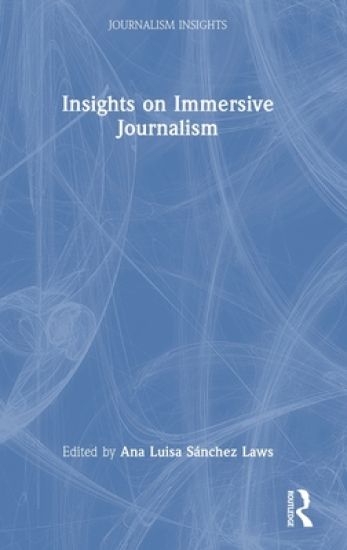
Insights on Immersive Journalism
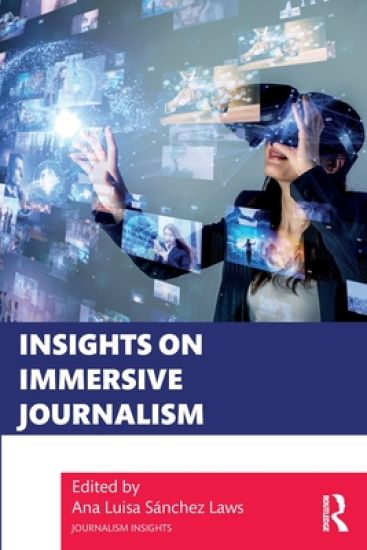
Bringing together theory and practice, this collection critically examines emerging conceptual, methodological and production frameworks for the study of immersive journalism. Having first begun in academia, the practice of virtual reality/360° video immersive journalism has seen a steep rise in the professional arena in recent years. Uniting contributions from scholars and practitioners at the cutting-edge of this vibrant field, this book provides a summary of the history, development and key debates in immersive journalism and considers issues such as conceptualising and researching immersive journalism, teaching and producing immersive journalism, and situating immersive journalism in a wider theoretical and ethical context. Each chapter introduces readers to the key terms and concepts in that area and provides study questions to help them engage with the text. Encouraging further enquiry and theorisation, and experimental design and production, Insights on Immersive Journalism is an invaluable resource for students and scholars interested in Immersive Journalism and Media.
Insights on Immersive Journalism
Bringing together theory and practice, this collection critically examines emerging conceptual, methodological and production frameworks for the study of immersive journalism. Having first begun in academia, the practice of virtual reality/360° video immersive journalism has seen a steep rise in the professional arena in recent years. Uniting contributions from scholars and practitioners at the cutting-edge of this vibrant field, this book provides a summary of the history, development and key debates in immersive journalism and considers issues such as conceptualising and researching immersive journalism, teaching and producing immersive journalism, and situating immersive journalism in a wider theoretical and ethical context. Each chapter introduces readers to the key terms and concepts in that area and provides study questions to help them engage with the text. Encouraging further enquiry and theorisation, and experimental design and production, Insights on Immersive Journalism is an invaluable resource for students and scholars interested in Immersive Journalism and Media.
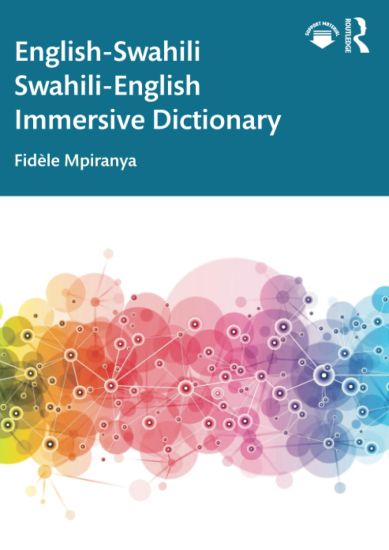
English-Swahili Swahili-English Immersive Dictionary

English-Swahili Swahili-English Immersive Dictionary

Fidèle Mpiranya

TAYLOR FRANCIS LTD
2023
sidottu
Organized in an English-Swahili section and a Swahili-English section, English-Swahili Swahili-English Immersive Dictionary is a comprehensive presentation of Swahili usual lexicon.In both sections, entries are presented in clusters, based on the connections between the words of the target language (Swahili) in terms of meaning or origin. This meaning-driven presentation allows target language terms that are relatively similar in meaning, and therefore easily confused, as well as terms derived from the same base, to appear together in parallel contrastive lines. This creates an immersion effect that is particularly stimulating for language learning, since the user gets the opportunity to discover the words of the learned language group-by-group, rather than one-by-one, and is constantly reminded of subtle differences between different terms. It will help the learner master the vocabulary at a faster pace and with a better understanding of the rules that shape the lexicon of the target language. In addition, the introduction to the dictionary presents key grammatical points of Swahili that will help the reader make a productive use of information provided in the body of the dictionary. Additional grammatical information about the target language words such as the agreement pattern, the register of speech, or the level of use, is also provided in both sections to make it immediately accessible to the non-native user. The book is ideal for English-speaking learners of Swahili.
English-Swahili Swahili-English Immersive Dictionary

English-Swahili Swahili-English Immersive Dictionary

Fidèle Mpiranya

TAYLOR FRANCIS LTD
2023
nidottu
Organized in an English-Swahili section and a Swahili-English section, English-Swahili Swahili-English Immersive Dictionary is a comprehensive presentation of Swahili usual lexicon.In both sections, entries are presented in clusters, based on the connections between the words of the target language (Swahili) in terms of meaning or origin. This meaning-driven presentation allows target language terms that are relatively similar in meaning, and therefore easily confused, as well as terms derived from the same base, to appear together in parallel contrastive lines. This creates an immersion effect that is particularly stimulating for language learning, since the user gets the opportunity to discover the words of the learned language group-by-group, rather than one-by-one, and is constantly reminded of subtle differences between different terms. It will help the learner master the vocabulary at a faster pace and with a better understanding of the rules that shape the lexicon of the target language. In addition, the introduction to the dictionary presents key grammatical points of Swahili that will help the reader make a productive use of information provided in the body of the dictionary. Additional grammatical information about the target language words such as the agreement pattern, the register of speech, or the level of use, is also provided in both sections to make it immediately accessible to the non-native user. The book is ideal for English-speaking learners of Swahili.
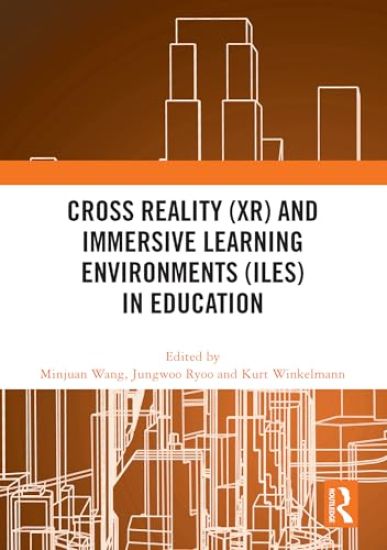
Cross Reality (XR) and Immersive Learning Environments (ILEs) in Education
This timely volume highlights the novel ways in which cutting-edge virtual and augmented reality (VR and AR) technology is being used in STEM education.Today, there are many exciting advances occurring in Immersive Learning Environments (ILEs) and innovative applications in STEM education. Recent breakthroughs in technologies such VR, AR, and Mixed Reality (MR) as well as Cross Reality (XR) that leverages VR, AR, and MR are finally making it feasible for educators in STEM to adopt ILEs in their classrooms in a scalable manner. Edited by experienced XR researchers in STEM education, Wang, Ryoo, and Winkelmann, the book focuses on the use of ILEs for creating experiences that excite, inspire, and engage learners in STEM disciplines. Chapters include research studies and practical applications addressing the challenges and opportunities associated with adopting technologies. This book covers the entire spectrum of immersive platform types and ILEs such as desktop, mobile, wearable, and room-based. It helps advance research and practice in the novel adoption of ILE technologies into STEM education from technical, theoretical/conceptual, empirical, and/or methodological perspectives.Cross Reality (XR) and Immersive Learning Environments (ILE) in Education will be a key resource for academics, researchers, and advanced students of education, STEM education, instructional design and technology, educational research, educational technology, research methods, information and communications technology, and curriculum and instruction. This book was originally published as a special issue of Interactive Learning Environments.
Cross Reality (XR) and Immersive Learning Environments (ILEs) in Education
This timely volume highlights the novel ways in which cutting-edge virtual and augmented reality (VR and AR) technology is being used in STEM education.Today, there are many exciting advances occurring in Immersive Learning Environments (ILEs) and innovative applications in STEM education. Recent breakthroughs in technologies such VR, AR, and Mixed Reality (MR) as well as Cross Reality (XR) that leverages VR, AR, and MR are finally making it feasible for educators in STEM to adopt ILEs in their classrooms in a scalable manner. Edited by experienced XR researchers in STEM education, Wang, Ryoo, and Winkelmann, the book focuses on the use of ILEs for creating experiences that excite, inspire, and engage learners in STEM disciplines. Chapters include research studies and practical applications addressing the challenges and opportunities associated with adopting technologies. This book covers the entire spectrum of immersive platform types and ILEs such as desktop, mobile, wearable, and room-based. It helps advance research and practice in the novel adoption of ILE technologies into STEM education from technical, theoretical/conceptual, empirical, and/or methodological perspectives.Cross Reality (XR) and Immersive Learning Environments (ILE) in Education will be a key resource for academics, researchers, and advanced students of education, STEM education, instructional design and technology, educational research, educational technology, research methods, information and communications technology, and curriculum and instruction. This book was originally published as a special issue of Interactive Learning Environments.
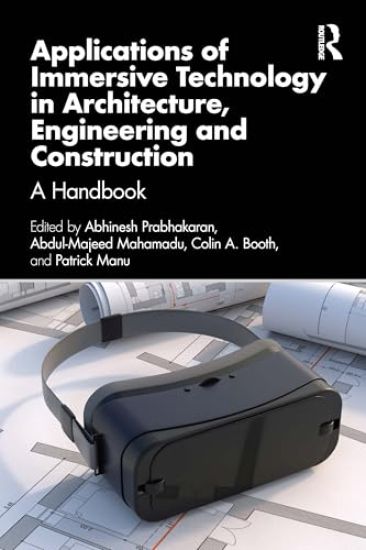
Applications of Immersive Technology in Architecture, Engineering and Construction
This edited book addresses a gap in literature by advancing current understandings of the applications of immersive technology within the architecture, engineering and construction (AEC) sector.Globally, the architecture, engineering and construction (AEC) sector makes an enormous contribution to the socio-economic development of nations, which is primarily evidenced by its creation/provision of the built environment. The sector has, however, often been criticised for inefficiencies, waste and diverse forms of adverse impacts that are associated with the lifecycle of the provision of built assets – design, construction, operations and maintenance and end-of-life phases. Over the years, the inefficiencies, waste and adverse impacts have often been a catalyst for calls and initiatives to transform the AEC sector. The advent of the fourth industrial revolution (commonly referred to as, ‘Industry 4.0’), which entails the automation and digitalisation of production, presents opportunities to leverage emerging technologies to improve the image and productivity of the sector. Prominent among the emerging technologies in the Industry 4.0 era is that of immersive technology, which includes virtual reality, mixed reality and augmented reality. The capability of immersive technology to deliver beneficial impacts for multiple construction sector stakeholders throughout the construction lifecycle has been acknowledged within the industry and this continues to stimulate interest amongst practitioners, policymakers and researchers. Despite this phenomenon, at present there is no dedicated compendium of research-informed text that focusses on the multifaceted applications of immersive technology throughout the lifecycle of the provision of built assets right from concept design to end-of-life.This book thus addresses this gap in literature by advancing current understanding of the applications of immersive technology within the AEC industry. Readers will understand how the technologies are applied, the resulting array of impacts including benefits, drawbacks, challenges and future directions for applications, research and development.
Seismic Imaging and Inversion: Volume 1

Seismic Imaging and Inversion: Volume 1

Robert H. Stolt; Arthur B. Weglein

Cambridge University Press
2012
sidottu
Extracting information from seismic data requires knowledge of seismic wave propagation and reflection. The commonly used method involves solving linearly for a reflectivity at every point within the Earth, but this book follows an alternative approach which invokes inverse scattering theory. By developing the theory of seismic imaging from basic principles, the authors relate the different models of seismic propagation, reflection and imaging - thus providing links to reflectivity-based imaging on the one hand and to nonlinear seismic inversion on the other. The comprehensive and physically complete linear imaging foundation developed presents new results at the leading edge of seismic processing for target location and identification. This book serves as a fundamental guide to seismic imaging principles and algorithms and their foundation in inverse scattering theory, and is a valuable resource for working geoscientists, scientific programmers and theoretical physicists.
Seismic Imaging and Inversion: Volume 2

Seismic Imaging and Inversion: Volume 2

Arthur B. Weglein; Robert H. Stolt

Cambridge University Press
2026
sidottu
This second volume of Seismic Imaging and Inversion supersedes the first with direct nonlinear inverse theory – where all the assumptions and shortcomings of the linear theory are removed. Chapters follow the processing sequence, including predicting the reference and scattered wavefields; de-ghosting; removing multiples; Q compensation; depth imaging; and direct non-linear inversion of target mechanical properties. Every step in the processing chain is achieved directly without knowing, estimating, or determining any subsurface information, including a velocity model. No other seismic concept or methodology has that capability. Taken together, the two volumes provide researchers and industry practitioners with a solid understanding of current mainstream methods as well as a new and more capable methodology that reduces to conventional methods when the prerequisites and assumptions within those are satisfied. This provides new options in the seismic toolbox that facilitate target identification across a broader set of seismic offshore and onshore plays.
Seismic Imaging and Inversion: Volume 1

Seismic Imaging and Inversion: Volume 1

Robert H. Stolt; Arthur B. Weglein

Cambridge University Press
2018
pokkari
Extracting information from seismic data requires knowledge of seismic wave propagation and reflection. The commonly used method involves solving linearly for a reflectivity at every point within the Earth, but this book follows an alternative approach which invokes inverse scattering theory. By developing the theory of seismic imaging from basic principles, the authors relate the different models of seismic propagation, reflection and imaging - thus providing links to reflectivity-based imaging on the one hand and to nonlinear seismic inversion on the other. The comprehensive and physically complete linear imaging foundation developed presents new results at the leading edge of seismic processing for target location and identification. This book serves as a fundamental guide to seismic imaging principles and algorithms and their foundation in inverse scattering theory, and is a valuable resource for working geoscientists, scientific programmers and theoretical physicists.