The gripping story of the man who was the American Revolution's moral compass--Ira Stoll tells readers who Samuel Adams was, why he has been forgotten, and why he must be remembered. Thomas Jefferson called Samuel Adams "truly the man of the Revolution." Adams, filled with religious fervor, inspired others to fight on and overcome the challenges of the Revolutionary War. He was the editor of the influential Boston Gazette, planner of the Boston Tea Party, and signer of the Declaration of Independence, and yet, he is largely ignored and unknown today. Understanding the leading part Adams played in building and sustaining support for the revolutionary cause gives readers new insight into the way religion motivated the founding of America.
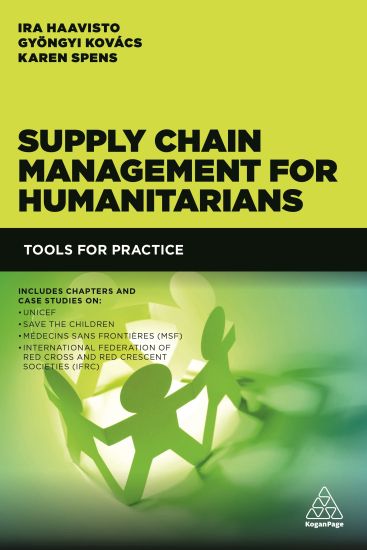
Supply Chain Management for Humanitarians provides an in-depth insight into the management of supply chains in the context of humanitarian logistics. This accessible and practical book considers humanitarian logistics from a strategic and operational perspective. The overarching theme is collaboration and coordination, one of the biggest challenges in the humanitarian community. Supply Chain Management for Humanitarians takes a problem-based learning approach, featuring real cases and examples from leading organizations including Oxfam, Unicef, and The Red Cross. Each chapter is self-standing, relating the content in each chapter to the supply chain as a whole. This enables the reader to easily dip into different sections. At the end of each chapter, there is a case study written by a leading practitioner currently working in the humanitarian field. Supply Chain Management for Humanitarians fills a much needed gap in the market and is essential reading for humanitarians worldwide.
This book is about the concept of intelligence which derives virtually all of its significance from an occurrence use of mental conduct adverbs. The Concept of Intelligence provides an episodic rather than a dispositional analysis, while at the same time, agreeing that intelligence has "outer criteria" of meaning. It reinforces the "nature" as opposed to the "nurture" side of the popular debate on intelligence by showing what the concept signifies in ordinary language, and so, dovetails with the controversial "The Bell Curve."
This book is about the concept of intelligence which derives virtually all of its significance from an occurrence use of mental conduct adverbs. But an occurrence or episodic use of mental concepts does not open the way toward viewing mental events as 'ghostly processes,' for as far as the concept of intelligence is concerned, the occurrences are publicly observable; the significance of 'intelligence' is predicted on outward criteria. The Concept of Intelligence provides an episodic rather than a dispositional analysis, while at the same time, agreeing that intelligence has 'outer criteria' of meaning. It reinforces the 'nature' as opposed to the 'nurture' side of the popular debate on intelligence by showing what the concept signifies in ordinary language, and so, dovetails with the controversial 'The Bell Curve^D>.'The book is intended for courses in the philosophy of mind, philosophical psychology, cognitive science, analytic philosophy, psychology, psychometrics, and artificial intelligence.
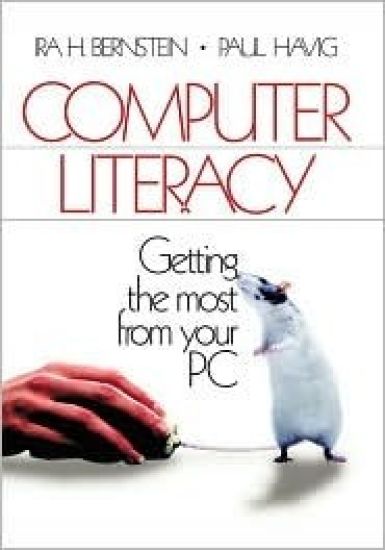
Using a horizontal organization (i.e., by task rather than program) Computer Literacy introduces students in the behavioral sciences to the computer resources they use on campus to do their work. Beginning with an introduction to computers, authors Ira H. Bernstein and Paul Havig use numerous examples with demonstrations (such as how to export an Excel file to a Word file) to show the reader how to select between programs for their specific needs, how to use the computer for communication and literature search purposes, how to use computers for databases and statistical programming, and some basics of computer programming. To enhance your students reading, the authors provide:
Using a horizontal organization (i.e., by task rather than program) Computer Literacy introduces students in the behavioral sciences to the computer resources they use on campus to do their work. Beginning with an introduction to computers, authors Ira H. Bernstein and Paul Havig use numerous examples with demonstrations (such as how to export an Excel file to a Word file) to show the reader how to select between programs for their specific needs, how to use the computer for communication and literature search purposes, how to use computers for databases and statistical programming, and some basics of computer programming. To enhance your students reading, the authors provide:
What should you see when you're analyzing real data using one of the major statistical packages, such as SPSS, SAS or Microsoft Excel? This book will show you, and will walk you through the output from a variety of statistical outcomes, such as data reflecting a single common factor. Through the use of actual demonstrations, the authors supply readers with the computer programs necessary to simulate data sets with the statistical properties (usually multivariate) that are often assumed of real data. The reader is then shown how to analyze these data sets and how to interpret the results. The book begins with a general introduction to doing research and tips for using the three statistical packages. The authors next explore how to create data structures and perform univariate, bivariate, and multivariate simulations. They then show how to use the simulations to understand common statistical algorithms and their outputs when doing a basic correlation analysis, exploratory factor analysis, confirmatory factor analysis, multidimensional scaling, multiple regression, discriminate analysis, classification analysis and MANOVA. Throughout the book, the authors provide the reader with helpful guides, such as: *Hint boxes to give readers tips for executing particular techniques using the statistical software packages. *Steps that show each stage of a procedure, such as importing an Excel file into SAS. *Problems end each chapter so the reader can practice the techniques described. *Web Site with the SAS and SPSS programs and sample data.
What should you see when you're analyzing real data using one of the major statistical packages, such as SPSS, SAS or Microsoft Excel? This book will show you, and will walk you through the output from a variety of statistical outcomes, such as data reflecting a single common factor. Through the use of actual demonstrations, the authors supply readers with the computer programs necessary to simulate data sets with the statistical properties (usually multivariate) that are often assumed of real data. The reader is then shown how to analyze these data sets and how to interpret the results. The book begins with a general introduction to doing research and tips for using the three statistical packages. The authors next explore how to create data structures and perform univariate, bivariate, and multivariate simulations. They then show how to use the simulations to understand common statistical algorithms and their outputs when doing a basic correlation analysis, exploratory factor analysis, confirmatory factor analysis, multidimensional scaling, multiple regression, discriminate analysis, classification analysis and MANOVA. Throughout the book, the authors provide the reader with helpful guides, such as: *Hint boxes to give readers tips for executing particular techniques using the statistical software packages. *Steps that show each stage of a procedure, such as importing an Excel file into SAS. *Problems end each chapter so the reader can practice the techniques described. *Web Site with the SAS and SPSS programs and sample data.
New Edition Available 8/1/2013 The principles and practice of toxicology have contributed to protecting not only the individual at work or at home, but populations, communities, and our delicate terrestrial and aquatic environments as well. Principles and Practice of Toxicology in Public Health is the ideal text for a first course in toxicology for the public health student. In five sections, it offers an introduction to the field, as well as the basics of toxicology principles, chemical toxicity, ecotoxicology, and toxicology practice. The text is immediately readable for the student with little technical background.
Here is what could be the largest collection of vintage cigarette lighters ever assembled. It is a fascinating chronicle of cigarette lighters' Golden Age. This era begins with the primitive lighters made at the turn of the 20th century and continues through to the contemporary Scripto Vu-Lighters of the 1960s. These popular personal accessories were made by the most widely known and respected manufacturers of the time including Dunhill, Ronson (Art Metal Works Company), Evans, Scripto, and Zippo, as well as many smaller, specialized manufacturers. Stunningly photographed, the book is illustrated with over 1000 color photographs of vintage lighters including the debonair "Town and Country" gentlemen's lighters, beautiful and fanciful Art Deco lighters, whimsical figural lighters to one of a kind Zippos. Invaluable as a reference for collectors and antique dealers, it is conveniently organized by country of origin and includes essays by noted experts in the lighter collecting field. Current values as well as detailed descriptions are included in the captions.
The classic Business of Shipping (now in its ninth edition) remains North America’s most comprehensive industry-focused book that explains and analyzes marine transportation and related industries, both domestic and international. This is an authoritative text that is required reading for a newcomer looking to understand basic shipping operations, regulations, and international cargo movement, or a specialized professional seeking insight into other industry segments. Revised and fully updated, the ninth edition reaffirms its status as the cornerstone text in marine transportation education.
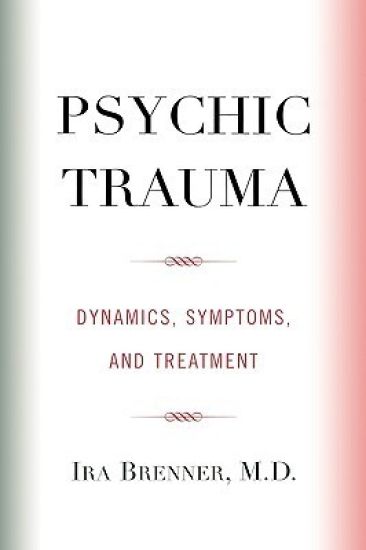
This book offers a clinical study of psychic trauma and provides a framework through which to understand the long term effects of overwhelming life experiences. Ira Brenner draws on two different populations, those affected by early physical and sexual abuse, as well as those affected by genocidal persecution during the Holocaust.
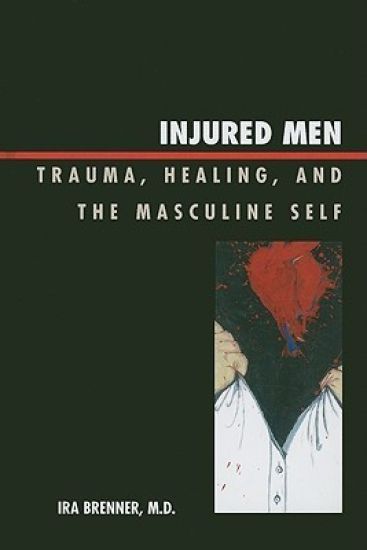
Injured Men is a unique casebook of clinical material pertaining to men who have sustained trauma. With the exception of those publications dealing with the military, clinical vignettes of traumatized individuals are overwhelmingly female. By comparison, little has been written about the plight of men. Injured Men begins to fill that void. Richly illustrated with both brief and extensively detailed analytic case reports, Injured Men describes the manifestations of such phenomena as physical and sexual abuse, unresolved grief, genocidal persecution, intergenerational transmission of trauma, and of course, combat. With his perspective on dissociation and dissociative disorders, Brenner also presents a traumatic pathway to the development of a masculine self in those with female bodies. In dealing with the long term effects of trauma, he advocates a pluralistic approach, which he demonstrates in the final chapter of this fascinating volume.
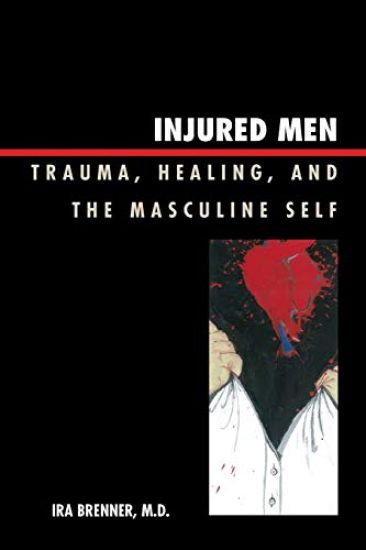
Injured Men is a unique casebook of clinical material pertaining to men who have sustained trauma. With the exception of those publications dealing with the military, clinical vignettes of traumatized individuals are overwhelmingly female. By comparison, little has been written about the plight of men. Injured Men begins to fill that void. Richly illustrated with both brief and extensively detailed analytic case reports, Injured Men describes the manifestations of such phenomena as physical and sexual abuse, unresolved grief, genocidal persecution, intergenerational transmission of trauma, and of course, combat. With his perspective on dissociation and dissociative disorders, Brenner also presents a traumatic pathway to the development of a masculine self in those with female bodies. In dealing with the long term effects of trauma, he advocates a pluralistic approach, which he demonstrates in the final chapter of this fascinating volume.